Industrial Policy is a red-hot topic once again with many policymakers and pundits of different ideological leanings lining up to support ambitious new state planning for various sectors — especially 5G, artificial intelligence, and semiconductors. A remarkably bipartisan array of people and organizations are advocating for government to flex its muscle and begin directing more spending and decision-making in various technological areas. They all suggest some sort of big plan is needed, and it is not uncommon for these industrial policy advocates to suggest that hundreds of billions will need to be spent in pursuit of those plans.
Others disagree, however, and I’ll be using this post to catalog some of their concerns on an ongoing basis. Some of the criticisms listed here are portions of longer essays, many of which highlight other types of steps that governments can take to spur innovative activities. Industrial policy is an amorphous term with many definitions of a broad spectrum of possible proposals. Almost everyone believes in
some form of industrial policy if you define the term broadly enough. But, as I argued in a September 2020 essay “On Defining ‘Industrial Policy‘,” I believe it is important to narrow the focus of the term such that we can continue to use the term in a rational way. Toward that end, I believe a proper understanding of industrial policy refers to targeted and directed efforts to plan for specific future industrial outputs and outcomes.
The collection of essays below is merely an attempt to highlight some of the general concerns about the most ambitious calls for expansive industrial policy, many of which harken back to debates I was covering in the late 1980s and early 1990s, when I first started a career in policy analysis. During that time, Japan and South Korea were the primary countries of concern cited by industrial policy advocates. Today, it is China’s growing economic standing that is fueling calls for ambitious state-led targeted investments in “strategic” sectors and technologies. To a lesser extent, grandiose European industrial policy proposals are also prompting new US counter-proposals.
All this activity is what has given rise to many of the critiques listed below. If you have suggestions for other essays I might add to this list, please feel free to pass them along. FYI: There’s no particular order here.
Calls for revitalizing American industrial policy have multiplied in recent years, with many pundits and policymakers suggesting that the U.S. should consider taking on Europe and China by emulating their approaches to technological development. The goal would be to have Washington formulate a set of strategic innovation goals and mobilize government planning and spending around them.
We continue on to argue that what most of these advocates miss is that:
China’s targeting efforts are often antithetical to both innovation and liberty, and involve plenty of red tape and bureaucracy. China has become a remarkably innovative country for many reasons, including its greater tolerance for risk-taking, even as the Chinese Communist Party continues to pump resources into strategic sectors. But most Chinese innovation is permissible only insomuch as it furthers the party’s objectives, a strategy the U.S. obviously wouldn’t want to copy.
We discuss the problems associated with some of those Chinese efforts as well as proposed US responses, like the recently released 756 page report from the National Security Commission on Artificial Intelligence. The report takes an everything-and-the-kitchen-sink approach to state direction for new AI-related efforts and spending. While that report says the government now must “drive change through top-down leadership” in order to “win the AI competition that is intensifying strategic competition with China,” we argue that there could be some serious pitfalls with top-down, high price tag approaches.
Jump over to the
Discourse site to read the full essay, as well as our previous essay, which asked, “Can European-Style Industrial Policies Create Tech Supremacy?” These two essay build on the research Connor and I have been doing on global artificial intelligence policies in the US, China, and the EU. In a much longer forthcoming white paper, we explore both the regulatory and industrial policy approaches for AI being adopted in the US, China, and the EU. Stay tuned for more.
Over at Discourse magazine, Connor Haaland and I have an new essay (“Can European-Style Industrial Policies Create Tech Supremacy?”) examining Europe’s effort to develop national champion in a variety of tech sectors using highly targeted industrial policy efforts. The results have not been encouraging, we find.
Thus far, however, the Europeans don’t have much to show for their attempts to produce home-grown tech champions. Despite highly targeted and expensive efforts to foster a domestic tech base, the EU has instead generated a string of industrial policy failures that should serve as a cautionary tale for U.S. pundits and policymakers, who seem increasingly open to more government-steered innovation efforts.
We examine case studies in internet access, search, GPS, video services, and the sharing economy. We then explore newly-proposed industrial policy efforts aimed at developing their domestic AI market. We note how:
no amount of centralized state planning or spending will be able to overcome Europe’s aversion to technological risk-taking and disruption. The EU’s innovation culture generally values stability—of existing laws, institutions and businesses—over disruptive technological change. […]
There are no European versions of Microsoft, Google or Apple, even though Europeans obviously demand and consume the sort of products and services those U.S.-based companies provide. It’s simply not possible given the EU’s current regulatory regime.
It seems unlikely that Europe will have much better luck developing home-grown champions in AI and robotics using this same playbook. “American academics and policymakers with an affinity for industrial policy might want to consider a model other than Europe’s misguided combination of fruitless state planning and heavy-handed regulatory edicts,” we conclude.
This report was a major undertaking that involved dozens of interviews, extensive historic research, several events and presentations, and then numerous revisions before the final product was released. The final PDF version of the journal article is attached.
I wanted to bring to your attention this Federalist Society podcast discussion I hosted a few weeks ago on, “Tech Policy Under the Biden Administration and 117th Congress.” I was joined by Jennifer Huddleston, Director of Technology & Innovation Policy at the American Action Forum, and Blake Reid, Clinical Professor at the University of Colorado Law School.
We discussed key policy debates – such as antitrust and “Big Tech,” online speech and Section 230, and the race to 5G – and considered how the new presidential administration and Congress might approach innovation and the tech industry in 2021 and beyond. Note: You might also want to check out this earlier essay by Jennifer on, “5 Tech Policy Topics to Follow in the Biden Administration and 117th Congress.”
[This article originally appeared at Discourse on January 6, 2021.]
Time magazine recently declared 2020 “The Worst Year Ever.” By historical standards that may be a bit of hyperbole. For America’s digital technology sector, however, that headline rings true. After a remarkable 25-year run that saw an explosion of innovation and the rapid ascent of a group of U.S. companies that became household names across the globe, politicians and pundits in 2020 declared the party over.
“We now are on the cusp of a new era of tech policy, one in which the policy catches up with the technology,” says Darrell M. West of the Brookings Institution in a recent essay, “The End of Permissionless Innovation.” West cites the House Judiciary Antitrust Subcommittee’s October report on competition in digital markets—where it equates large tech firms with the “oil barons and railroad tycoons” of the Gilded Age—as the clearest sign that politicization of the internet and digital technology is accelerating.
It is hardly the only indication that America is set to abandon permissionless innovation and revisit the era of heavy-handed regulation for information and communication technology (ICT) markets. Equally significant is the growing bipartisan crusade against Section 230, the provision of the 1996 Telecommunications Act that shields “interactive computer services” from liability for information posted or published on their systems by users. No single policy has been more important to the flourishing of online speech or commerce than Sec. 230 because, without it, online platforms would be overwhelmed by regulation and lawsuits.
But now, long knives are coming out for the law, with plenty of politicians and academics calling for it to be gutted. Calls to reform or repeal Sec. 230 were once exclusively the province of left-leaning academics or policymakers, but this year it was conservatives in the White House, on Capitol Hill and at the Federal Communications Commission (FCC) who became the leading cheerleaders for scaling back or eliminating the law. President Trump railed against Sec. 230 repeatedly on Twitter, and most recently vetoed the annual National Defense Authorization Act in part because Congress did not include a repeal of the law in the measure.
Meanwhile, conservative lawmakers in Congress such as Sens. Josh Hawley and Ted Cruz have used subpoenas, angry letters and heated hearings to hammer digital tech executives about their content moderation practices. Allegations of anti-conservative bias have motivated many of these efforts. Even Supreme Court Justice Clarence Thomas questioned the law in a recent opinion.
Other proposed regulatory interventions include calls for new national privacy laws, an “Algorithmic Accountability Act” to regulate artificial intelligence technologies, and a growing variety of industrial policy measures that would open the door to widespread meddling with various tech sectors. Some officials in the Trump administration even pushed for a nationalized 5G communications network in the name of competing with China.
This growing “techlash” signals a bipartisan “Back to the Future” moment, with the possibility of the U.S. reviving a regulatory playbook that many believed had been discarded in history’s dustbin. Although plenty of politicians and pundits are taking victory laps and giving each other high-fives over the impending end of the permissionless innovation era, it is worth considering what America will be losing if we once again apply old top-down, permission slip-oriented policies to the technology sector. Continue reading →
With many conservative policymakers and organizations taking a sudden pro-censorial turn and suggesting that government regulation of social media platforms is warranted, it’s a good time for them to re-read President Ronald Reagan’s 1987 veto of Fairness Doctrine legislation. Here’s the key line:
History has shown that the dangers of an overly timid or biased press cannot be averted through bureaucratic regulation, but only through the freedom and competition that the First Amendment sought to guarantee.
That wisdom is just as applicable today when some conservatives suggest that government intervention is needed to address what they regardless as “bias” or “unfair” treatment on Twitter, Facebook, YouTube, or whatever else. Ignoring the fact that such meddling would likely violate property rights and freedom of contract — principles that most conservatives say they hold dear — efforts to empower the Federal Communications Commission, the Federal Trade Commission, or other regulators would be hugely misguided on First Amendment grounds.
President Reagan understood that there was a better way to approach these issues that was rooted in innovation and First Amendment protections. Here’s hoping that conservatives remember his sage advice. Read his entire veto message here.
Interoperability is a topic that has long been of interest to me. How networks, platforms, and devices work with each other–or sometimes fail to–is an important engineering, business, and policy issue. Back in 2012, I spilled out over 5,000 words on the topic when reviewing John Palfrey and Urs Gasser’s excellent book, Interop: The Promise and Perils of Highly Interconnected Systems.
I’ve always struggled with the interoperability issues, however, and often avoided them became of the sheer complexity of it all. Some interesting recent essays by sci-fi author and digital activist Cory Doctorow remind me that I need to get back on top of the issue. His latest essay is a call-to-arms in favor of what he calls “adversarial interoperability.” “[T]hat’s when you create a new product or service that plugs into the existing ones without the permission of the companies that make them,” he says. “Think of third-party printer ink, alternative app stores, or independent repair shops that use compatible parts from rival manufacturers to fix your car or your phone or your tractor.”
Doctorow is a vociferous defender of expanded digital access rights of many flavors and his latest essays on interoperability expand upon his previous advocacy for open access and a general freedom to tinker. He does much of this work with the Electronic Frontier Foundation (EFF), which shares his commitment to expanded digital access and interoperability rights in various contexts.
I’m in league with Doctorow and EFF on some of these things, but also find myself thinking they go much too far in other ways. At root, their work and advocacy raise a profound question: should there be any general right to exclude on digital platforms? Although he doesn’t always come right out and say it, Doctorow’s work often seems like an outright rejection of any sort of property rights in networks or platforms. Generally speaking, he does not want the law to recognize any right for tech platforms to exclude using digital fences of any sort. Continue reading →
There is a war going on in the conservative movement over free speech issues and FCC Commissioner Mike O’Reilly just became a causality of that skirmish. Neil Chilson and I just posted a new essay about this over on the Federalist Society blog. As we note there:
Plenty of people claim to favor freedom of expression, but increasingly the First Amendment has more fair-weather friends than die-hard defenders. Michael O’Rielly, a Commissioner at the Federal Communications Commission (FCC), found that out the hard way this week.
Last week, O’Rielly delivered an important speech before the Media Institute highlighting a variety of problematic myths about the First Amendment, as well as “a particularly ominous development in this space.” In a previous political era, O’Rielly’s remarks would have been mainstream conservative fare. But his well-worded warnings are timely with many Democrats and Republicans – including some in the White House – looking to resurrect analog-era speech mandates and let Big Government reassert control over speech decisions in the United States.
Shortly after delivering his remarks, the White House yanked O’Rielly’s nomination to be reappointed to the agency. It was a shocking development that was likely motivated by growing animosities between Republicans on the question of how much control the federal government–and the FCC in particular–should exercise over speech platforms, including platforms that the FCC has no authority to regulate.
For the 30 years that I have been covering media and technology policy, I’ve heard conservatives rail against the Fairness Doctrine, Net Neutrality and arbitrary Big Government only to see many of them now reverse suit and become the biggest defenders of these things as it pertains to speech controls and FCC regulation. It will certainly be interesting to see what a potential future Biden Administration does with the various new regulations that some in the GOP are seeking to impose. Continue reading →
On July 23rd, the U.S. Department of Transportation (DoT) released Pathways to the Future of Transportation, which was billed as “a policy document that is intended to serve as a roadmap for innovators of new cross modal technologies to engage with the Department.” This guidance document was created by a new body called the Non-Traditional and Emerging Transportation Technology (NETT) Council, which was formed by U.S. Transportation Secretary Elaine L. Chao last year. The NETT Council is described as “an internal deliberative body to identify and resolve jurisdictional and regulatory gaps that may impede the deployment of new technologies.”
The creation of NETT Council and the issuance of its first major report highlight the continued growth of “soft law” as a major governance trend for emerging technology in the US. Soft law refers to informal, collaborative, and constantly evolving governance mechanisms that differ from hard law in that they lack the same degree of enforceability. A partial inventory of soft law methods includes: multistakeholder processes, industry best practices or codes of conduct, technical standards, private certifications, agency workshops and guidance documents, informal negotiations, and education and awareness efforts. But this list of soft law mechanisms is amorphous and ever-changing.
Soft law systems and processes are multiplying at every level of government today: federal, state, local, and even globally. Such mechanisms are being tapped by government bodies today to deal with fast-moving technologies that are evolving faster than the law’s ability to keep up.
The US Department of Transportation has become a leading candidate for Soft Law Central at the federal level. The agency has been tapping a variety of soft law mechanisms and approaches to deal with driverless cars and drone policy issues in particular. (See the essays listed down below for more details).
The NETT Council represents the next wave of this governance trend. We might consider it an effort to bring a greater degree of formality and coordination to the agency’s soft law efforts. Continue reading →
The Technology Liberation Front is the tech policy blog dedicated to keeping politicians' hands off the 'net and everything else related to technology. Learn more about TLF →


 With many conservative policymakers and organizations taking a sudden pro-censorial turn and suggesting that government regulation of social media platforms is warranted, it’s a good time for them to re-read
 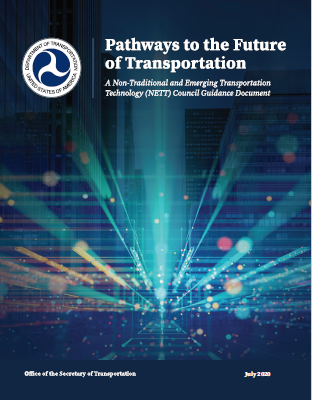 On July 23rd, the U.S. Department of Transportation (DoT) released
  The Technology Liberation Front is the tech policy blog dedicated to keeping politicians' hands off the 'net and everything else related to technology.