As noted here last week, as part of their Marginal Revolution University online courses, Tyler Cowen and Alex Tabarrok have been rolling out several classes on “Economics of the Media.” I think TLF readers will be interested in checking out their lessons on “Bundling” and “Cable TV Regulation” since these are topics we have frequently discussed here over the years. I’ve embedded those two presentations below, but please go the MRU site and watch all the videos in their media economics course when you get a chance. They are excellent.
Last week on his personal blog, Peter Fleischer, Global Privacy Counsel for Google, posted an interesting essay entitled “We Need a Better, Simpler Narrative of US Privacy Laws.” Fleischer says that Europe has done a better job marketing its privacy regime to the world than the United States and argues that “The US has to figure out how to explain its privacy laws on the global stage” since “Europe is convincing many countries around the world to implement privacy laws that follow the European model.” He notes that “in the last year alone, a dozen countries in Latin America and Asia have adopted euro-style privacy laws [while] not a single country, anywhere, has followed the US model.” Fleischer argues that this has ramifications for long-term trade policy and global Internet regulation more generally.
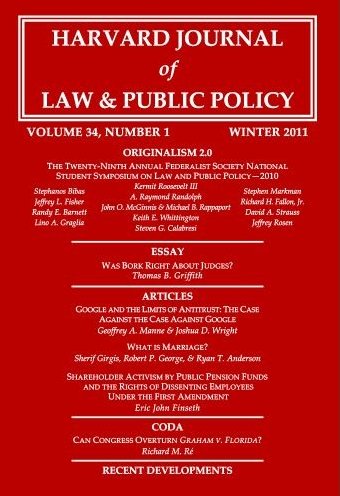
I found this essay very interesting because I deal with some of these issues in my latest law review article, “The Pursuit of Privacy in a World Where Information Control is Failing” (Harvard Journal of Law & Public Policy, vol. 36, no. 2, Spring 2013). In the article, I suggest that the U.S. does have a unique privacy regime and it is one that is very similar in character to the regime that governs online child safety issues. Whether we are talking about online safety or digital privacy, the defining characteristics of the U.S. regime are that it is bottom-up, evolutionary, education-based, empowerment-focused, and resiliency-centered. It focuses on responding to safety and privacy harms after exhausting other alternatives, including market responses and the evolution of societal norms.
The EU regime, by contrast, is more top-down in character and takes a more static, inflexible view of privacy rights. It tries to impose a one-size-fits-all model on a diverse citizenry and it attempts to do so through heavy-handed data directives and ongoing “agency threats.” It is a regime that makes more sweeping pronouncements about rights and harms and generally recommends a “precautionary principle” approach to technological change in which digital innovation is more “permissioned.”
Put simply, the U.S. regime is
reactive in character while the E.U. regime is more preemptive. The U.S. system focuses on responding to safety and privacy problems using a more diverse toolbox of solutions, some of which are governmental in character while others are based on evolving social and market norms and responses. To be clear, law does enter the picture here in the U.S., but it does so in a very different way than it does in the E.U. Continue reading →
At Mobile World Congress in Barcelona last month, I was surprised that nobody had access to 4G mobile Internet services. How could Barcelona, the second largest city in Spain and host to the “world’s premier mobile industry event,” lack access to 4G? In the opening day keynote session, Vittorio Colao, Vodafone’s CEO, said Europe has only 6% of the world’s LTE connections, and Telefónica’s CEO, César Alierta, said only 17% of European mobile subscribers have smartphones. European mobile operators agreed they are lagging the world in 4G deployment and penetration due to existing price regulations that discourage new infrastructure investments.
Europe now stands at a crossroads: Does it adopt the modern, investment-based approach toward wireless markets that made the US the world’s 4G leader, or does it further increase regulation and impose new obligations on “over the top” (
e.g., Skype) services? Our history with the regulation of rural telephone companies demonstrates the perils of the second option. Yet European mobile operators appear ready to embrace new regulations as a means to enhance their business and create a “balanced relationship” with “US companies” that provide over the top (OTT) services. Continue reading →
Susan W. Brenner, associate dean and professor of law at the University of Dayton School of Law, discusses her new paper published in the Minnesota Journal of Law, Science & Technology entitled “Cyber-threats and the Limits of Bureaucratic Control.”
Brenner argues that the approach the United States, like other countries, uses to control threats in real-space is ill-suited for controlling cyberthreats. She explains that because this approach evolved to deal with threat activity in a physical environment, it is predicated on a bureaucratic organizations. This is not an effective way of approaching cyber-threat control, she argues.
Brenner also explains why congressional efforts at cybersecurity legislation are flawed and why U.S. authorities persist in pursuing antiquated strategies that cannot provide an effective cyberthreats defense system. She outlines an alternative approach to the task of protecting the country from cyberthreats, and approach that is predicated on older, more fluid threat control strategies.
I’m excited to announce the release of my latest law review article, “The Pursuit of Privacy in a World Where Information Control is Failing,” which appears in the next edition (vol. 36) of the Harvard Journal of Law & Public Policy. This is the first of two complimentary law review articles that I will be releasing this year dealing with privacy policy. The second, which will be published later this summer by the George Mason University Law Review, is entitled, “A Framework for Benefit-Cost Analysis in Digital Privacy Debates.” (FYI: Both articles focus on privacy claims made against private actors — namely, efforts to limit private data collection — and not on privacy rights against governments.)
The new
Harvard Journal article is divided into three major sections. Part I focuses on some of normative challenges we face when discussing privacy and argues that there may never be a widely accepted, coherent legal standard for privacy rights or harms here in the United States. It also explores the tensions between expanded privacy regulation and online free speech. Part II turns to the many enforcement challenges that are often ignored when privacy policies are being proposed or formulated and argues that legislative and regulatory efforts aimed at protecting privacy must now be seen as an increasingly intractable information control problem. Most of the problems policymakers and average individuals face when it comes to controlling the flow of private information online are similar to the challenges they face when trying to control the free flow of digitalized bits in other information policy contexts, such as online safety, cybersecurity, and digital copyright.
If the effectiveness of law and regulation is limited by the normative considerations discussed in Part I and the practical enforcement complications discussed in Part II, what alternatives remain to assist privacy-sensitive individuals? I address that question in Part III of the paper and argue that the approach America has adopted to deal with concerns about objectionable online speech and child safety offers a path forward on the privacy front as well. Continue reading →
I hope that you’ve all been watching the terrific videos on “Economics of the Media” that Tyler Cowen and Alex Tabarrok have put together as part of their Marginal Revolution University online courses. They divide their media economics lessons into four groupings: (1) Basic economics of media; (2) Media bias; (3) Media and government; and (4) Media and economic development. Tyler and Alex asked Jerry Brito and me to contribute two videos on Net neutrality for the project. Jerry’s course offers an overview of Net neutrality as a general engineering principle. My video explores Net neutrality as a regulatory proposal and couches it in a broader discussion of network economics. Each video lasts approximately 6-7 minutes. Here they are:
In an opinion published in the Wall Street Journal last week, Federal Communications Commission Chairman Julius Genachowski admonished us to keep “discussions focused on solving problems, and on facts and data” when evaluating his spectrum policy proposals. That sounds reasonable, and it could be persuasive, if the FCC based its spectrum policy on consistently applied facts and data.
The FCC has instead chosen to selectively manipulate the facts and data to support its desired policy outcomes. Within a single quarter, the FCC has simultaneously concluded that:
194 MHz of spectrum in the 2.5 GHz band is available for mobile broadband services (note: when the FCC wants to show licensed spectrum in the US compares favorably with licensed spectrum on a global basis and that the ratio of licensed to unlicensed spectrum in the US is relatively balanced), and
Only 55 MHz of the same 194 MHz in the 2.5 GHz band is available for mobile broadband services (note: when the FCC wants to deny a merger or limit the amount of spectrum available to disfavored competitors).
Neither the laws of physics and economics nor the regulations governing the 2.5 GHz band changed the actual facts and data in the intervening period between these inconsistent conclusions. The only things that changed were the results the FCC wanted to reach and the “facts and data” the FCC decided to present to the public. Continue reading →
The project is looking at the emerging ecosystem for innovation based on disruptive technologies. It expands on work we have done separately and now together over the last fifteen years.
Our chief finding is that the nature of innovation has changed dramatically, calling into question much of the conventional wisdom on business strategy and competition, especially in information-intensive industries–which is to say, these days, every industry.
The drivers of this new ecosystem are ever-cheaper, faster, and smaller computing devices, cloud-based virtualization, crowdsourced financing, collaborative development and marketing, and the proliferation of mobile everything. There will soon be more smartphones sold than there are people in the world. And before long, each of over one trillion items in commerce will be added to the network.
The result is that new innovations now enter the market cheaper, better, and more customizable than products and services they challenge. (For example, smartphone-based navigation apps versus standalone GPS devices.) In the strategy literature, such innovation would be characterized as thoroughly “undiscplined.” It shouldn’t succeed. But it does. Continue reading →
Christopher S. Yoo, the John H. Chestnut Professor of Law, Communication, and Computer & Information Science at the University of Pennsylvania and author of the new book, The Dynamic Internet: How Technology, Users, and Businesses are Transforming the Network, explains that the Internet that we knew in its early days—one with a client-server approach, with a small number of expert users, and a limited set of applications and business cases—has radically changed, and so it may be that the architecture underlying the internet may as well.
According to Yoo, the internet we use today barely resembles the original Defense Department and academic network from which it emerged. The applications that dominated the early Internet—e-mail and web browsing—have been joined by new applications such as video and cloud computing, which place much greater demands on the network. Wireless broadband and fiber optics have emerged as important alternatives to transmission services provided via legacy telephone and cable television systems, and mobile devices are replacing personal computers as the dominant means for accessing the Internet. At the same time, the networks comprising the Internet are interconnecting through a wider variety of locations and economic terms than ever before.
These changes are placing pressure on the Internet’s architecture to evolve in response, Yoo says. The Internet is becoming less standardized, more subject to formal governance, and more reliant on intelligence located in the core of the network. At the same time, Internet pricing is becoming more complex, intermediaries are playing increasingly important roles, and the maturation of the industry is causing the nature of competition to change. Moreover, the total convergence of all forms of communications into a single network predicted by many observers may turn out to be something of a myth. Policymakers, Yoo says, should allow room for this natural evolution of the network to take place.
Today marks the seventeenth birthday of the Telecommunications Act of 1996. Since it became law nearly two decades ago, the 1996 Act has largely succeeded in meeting its principal goals. Ironically, its success is becoming its potential failure.
By the time most teenagers turn seventeen, they have already begun planning their future after high school. Their primary school achievements are only a beginning in a lifetime of future possibilities. For most legislation, however, there is no future after the initial goals of Congress are achieved. Fortunately, the seventeen year-old 1996 Act isn’t like most legislation.
Congress recognized that when the goals of the 1996 Act were achieved, many of its regulations would no longer be necessary. In its wisdom, Congress provided the FCC with statutory authority to adapt our communications laws to future changes in the communications market. This authority includes the ability for the FCC to forbear from applying an unnecessary or outdated law.
Unfortunately, the FCC has been very reluctant to exercise this authority. It has instead preferred to remain within the familiar walls of stagnant regulations while the opportunity of Internet transformation knocks on the door. If the FCC refuses to use its forbearance authority, the only future for the 1996 Act is to live in the proverbial parents’ basement and eat 20
th Century leftovers. If the FCC instead chooses to act, it could accelerate investment in new broadband infrastructure and the transition to an all-Internet future. Continue reading →
The Technology Liberation Front is the tech policy blog dedicated to keeping politicians' hands off the 'net and everything else related to technology. Learn more about TLF →


 The Technology Liberation Front is the tech policy blog dedicated to keeping politicians' hands off the 'net and everything else related to technology.