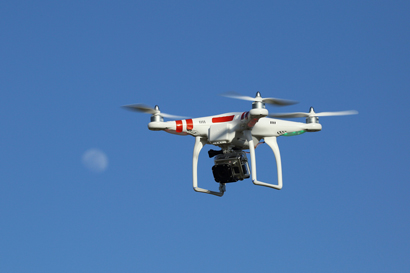
 If you want a devastating portrait of how well-intentioned regulation sometimes has profoundly deleterious unintended consequences, look no further than the Federal Aviation Administration’s (FAA) current ban on commercial drones in domestic airspace. As Jack Nicas reports in a story in today’s Wall Street Journal (“Regulation Clips Wings of U.S. Drone Makers“), the FAA’s heavy-handed regulatory regime is stifling America’s ability to innovate in this space and remain competitive internationally. As Nicas notes:
as unmanned aircraft enter private industry—for purposes as varied as filming movies, inspecting wind farms and herding cattle—many U.S. drone entrepreneurs are finding it hard to get off the ground, even as rivals in Europe, Canada, Australia and China are taking off.
The reason, according to interviews with two-dozen drone makers, sellers and users across the world: regulation. The FAA has banned all but a handful of private-sector drones in the U.S. while it completes rules for them, expected in the next several years. That policy has stifled the U.S. drone market and driven operators underground, where it is difficult to find funding, insurance and customers.
Outside the U.S., relatively accommodating policies have fueled a commercial-drone boom. Foreign drone makers have fed those markets, while U.S. export rules have generally kept many American manufacturers from serving them.
Of course, the FAA simply responds that they are looking out for the safety of the skies and that we shouldn’t blame them. Continue reading →
Last week, I participated in a program co-sponsored by the Progressive Policy Institute, the Lisbon Council, and the Georgetown Center for Business and Public Policy on “Growing the Transatlantic Digital Economy.”
The complete program, including keynote remarks from EU VP Neelie Kroes and U.S. Under Secretary of State Catherine A. Novelli, is available below.
My remarks reviewed worrying signs of old-style interventionist trade practices creeping into the digital economy in new guises, and urged traditional governments to stay the course (or correct it) on leaving the Internet ecosystem largely to its own organic forms of regulation and market correctives: Continue reading →
There are several “flavors” of net neutrality–Eli Noam at Columbia University estimates there are seven distinct meanings of the term–but most net neutrality proponents agree that reinterpreting the 1934 Communications Act and “classifying” Internet service providers as Title II “telecommunications” companies is the best way forward. Proponents argue that ISPs are common carriers and therefore should be regulated much like common carrier telephone companies. Last week I filed a public interest comment about net neutrality and pointed out why the Title II option is unwise and possibly illegal. Continue reading →
 Today, Ryan Hagemann and I filed comments with the Federal Aviation Administration (FAA) in its proceeding on the “Interpretation of the Special Rule for Model Aircraft.” This may sound like a somewhat arcane topic but it is related to the ongoing policy debate over the integration of unmanned aircraft systems (UASs)—more commonly referred to as drones—into the National Airspace System. As part of the FAA Modernization and Reform Act of 2012, Congress required the FAA to come up with a plan by September 2015 to accomplish that goal. As part of that effort, the FAA is currently accepting comments on its enforcement authority over model aircraft. Because the distinction between “drones” and “model aircraft” is blurring rapidly, the outcome of this proceeding could influence the outcome of the broader debate about drone policy in the United States.
In our comment to the agency, Hagemann and I discuss the need for the agency to conduct a thorough review of the benefits and costs associated with this rule. We argue this is essential because airspace is poised to become a major platform for innovation if the agency strikes the right balance between safety and innovation. To achieve that goal, we stress the need for flexibility and humility in interpreting older standards, such as “line of sight” restrictions, as well as increasingly archaic “noncommercial” vs. “commercial” distinctions or “hobbyists” vs. “professional” designations.
We also highlight the growing tension between the agency’s current regulatory approach and the First Amendment rights of the public to engage in peaceful, information-gathering activities using these technologies. (Importantly, on that point, we attached to our comments a new Mercatus Center working paper by Cynthia Love, Sean T. Lawson, and Avery Holton entitled, “News from Above: First Amendment Implications of the Federal Aviation Administration Ban on Commercial Drones.” See my coverage of the paper here.)
Finally, Hagemann and I close by noting the important role that voluntary self-regulation and codes of conduct already play in governing proper use of these technologies. We also argue that other “bottom-up” remedies are available and should be used before the agency imposes additional restrictions on this dynamic, rapidly evolving space.
You can download the complete comment on the Mercatus Center website
here. (Note: The Mercatus Center filed comments with the FAA earlier about the prompt integration of drones into the nation’s airspace. You can read those comments here.)
Continue reading →
If there are two general principles that unify my recent work on technology policy and innovation issues, they would be as follows. To the maximum extent possible:
- We should avoid preemptive and precautionary-based regulatory regimes for new innovation. Instead, our policy default should be innovation allowed (or “permissionless innovation”) and innovators should be considered “innocent until proven guilty” (unless, that is, a thorough benefit-cost analysis has been conducted that documents the clear need for immediate preemptive restraints).
- We should avoid rigid, “top-down” technology-specific or sector-specific regulatory regimes and/or regulatory agencies and instead opt for a broader array of more flexible, “bottom-up” solutions (education, empowerment, social norms, self-regulation, public pressure, etc.) as well as reliance on existing legal systems and standards (torts, product liability, contracts, property rights, etc.).
I was very interested, therefore, to come across two new essays that make opposing arguments and proposals. The first is this recent
Slate oped by John Frank Weaver, “We Need to Pass Legislation on Artificial Intelligence Early and Often.” The second is Ryan Calo’s new Brookings Institution white paper, “The Case for a Federal Robotics Commission.”
Weaver argues that new robot technology “is going to develop fast, almost certainly faster than we can legislate it. That’s why we need to get ahead of it now.” In order to preemptively address concerns about new technologies such as driverless cars or commercial drones, “we need to legislate early and often,” Weaver says. Stated differently, Weaver is proposing “precautionary principle”-based regulation of these technologies. The precautionary principle generally refers to the belief that new innovations should be curtailed or disallowed until their developers can prove that they will not cause any harms to individuals, groups, specific entities, cultural norms, or various existing laws, norms, or traditions.
Calo argues that we need “the establishment of a new federal agency to deal with the novel experiences and harms robotics enables” since there exists “distinct but related challenges that would benefit from being examined and treated together.” These issues, he says, “require special expertise to understand and may require investment and coordination to thrive.
I’ll address both Weaver and Calo’s proposals in turn. Continue reading →
The use of unmanned aircraft systems, or “drones,” for private and commercial uses remains the subject of much debate. The issue has been heating up lately after Congress ordered the Federal Aviation Administration (FAA) to integrate UASs into the nation’s airspace system by 2015 as part of the FAA Modernization and Reform Act of 2012.
The debate has thus far centered mostly around the safety and privacy-related concerns associated with private use of drones. The FAA continues to move slowly on this front based on a fear that private drones could jeopardize air safety or the safety of others on the ground. Meanwhile, some privacy advocates are worried that private drones might be used in ways that invade private spaces or even public areas where citizens have a reasonable expectation of privacy. For these and other reasons, the FAA’s current ban on private operation of drones in the nation’s airspace remains in place.
But what about the
speech-related implications of this debate? After all, private and commercial UASs can have many peaceful, speech-related uses. Indeed, to borrow Ithiel de Sola Pool’s term, private drones can be thought of as “technologies or freedom” that expand and enhance the ability of humans to gather and share information, thus in turn expanding the range of human knowledge and freedom.
A new Mercatus Center at George Mason University working paper, “News from Above: First Amendment Implications of the Federal Aviation Administration Ban on Commercial Drones,” deals with these questions. This 59-page working paper was authored by Cynthia Love, Sean T. Lawson, and Avery Holton. (Love is currently a Law Clerk for Judge Carolyn B. McHugh in 10th Circuit U.S. Court of Appeals. Lawson and Holton are affliated with the Department of Communication at the University of Utah.)
“To date, little attention has been paid to the First Amendment implications of the [FAA] ban,” note Love, Lawson, and Holton. Their article argues that “aerial photography with UASs, whether commercial or not, is protected First Amendment activity, particularly for news-gathering purposes. The FAA must take First Amendment-protected uses of this technology into account as it proceeds with meeting its congressional mandate to promulgate rules for domestic UASs.” They conclude by noting that “The dangers of [the FAA’s] regulatory approach are no mere matter of esoteric administrative law. Rather, as we have demonstrated, use of threats to enforce illegally promulgated rules, in particular a ban on journalistic use of UASs, infringes upon perhaps our most cherished constitutional right, that of free speech and a free press.” Continue reading →
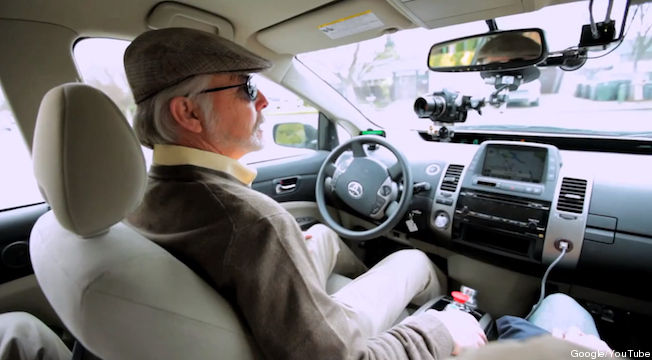 I’m pleased to announce that the Mercatus Center at George Mason University has just released my latest working paper, “Removing Roadblocks to Intelligent Vehicles and Driverless Cars.” This paper, which was co-authored with Ryan Hagemann, has been accepted for publication in a forthcoming edition of the Wake Forest Journal of Law & Policy.
In the paper, Hagemann and I explore the growing market for both “connected car” technologies as well as autonomous (or “driverless”) vehicle technology. We argue that intelligent-vehicle technology will produce significant benefits. Most notably, these technologies could save many lives. In 2012, 33,561 people were killed and 2,362,000 injured in traffic crashes, largely as a result of human error. Reducing the number of accidents by allowing intelligent vehicle technology to flourish would constitute a major public policy success. As Philip E. Ross noted recently at IEEE Spectrum, thanks to these technologies, “eventually it will be positively hard to use a car to hurt yourself or others.” The sooner that day arrives, the better.
These technologies could also have positive environmental impacts in the form of improved fuel economy, reduced traffic congestion, and reduced parking needs. They might also open up new mobility options for those who are unable to drive, for whatever reason. Any way you cut it, these are exciting technologies that promise to substantially improve human welfare.
Of course, as with any new disruptive technology, connected cars and driverless vehicles raise a variety of economic, social, and ethical concerns. Hagemann and I address some of the early policy concerns about these technologies (safety, security, privacy, liability, etc.) and we outline a variety of “bottom-up” solutions to ensure that innovation continues to flourish in this space. Importantly, we also argue that policymakers should keep in mind that individuals have gradually adapted to similar disruptions in the past and, therefore, patience and humility are needed when considering policy for intelligent-vehicle systems. Continue reading →
On Thursday, it was my great pleasure to present a draft of my forthcoming paper, “The Internet of Things & Wearable Technology: Addressing Privacy & Security Concerns without Derailing Innovation,” at a conference that took place at the Federal Communications Commission on “Regulating the Evolving Broadband Ecosystem.” The 3-day event was co-sponsored by the American Enterprise Institute and the University of Nebraska College of Law.
The 65-page working paper I presented is still going through final peer review and copyediting, but I posted a very rough first draft on SSRN for conference participants. I expect the paper to be released as a Mercatus Center working paper in October and then I hope to find a home for it in a law review. I will post the final version once it is released. [UPDATE:The final version of this working paper was released on November 19, 2014.]
In the meantime, however, I thought I would post the 46 slides I presented at the conference, which offer an overview of the nature of the Internet of Things and wearable technology, the potential economic opportunities that exist in this space, and the various privacy and security challenges that could hold this technological revolution back. I also outlined some constructive solutions to those concerns. I plan to be very active on these issues in coming months.
Continue reading →
My latest law review article is entitled, “Privacy Law’s Precautionary Principle Problem,” and it appears in Vol. 66, No. 2 of the Maine Law Review. You can download the article on my Mercatus Center page, on the Maine Law Review website, or via SSRN. Here’s the abstract for the article:
Privacy law today faces two interrelated problems. The first is an
information control problem. Like so many other fields of modern cyberlaw—intellectual property, online safety, cybersecurity, etc.—privacy law is being challenged by intractable Information Age realities. Specifically, it is easier than ever before for information to circulate freely and harder than ever to bottle it up once it is released.
This has not slowed efforts to fashion new rules aimed at bottling up those information flows. If anything, the pace of privacy-related regulatory proposals has been steadily increasing in recent years even as these information control challenges multiply.
This has led to privacy law’s second major problem:
the precautionary principle problem. The precautionary principle generally holds that new innovations should be curbed or even forbidden until they are proven safe. Fashioning privacy rules based on precautionary principle reasoning necessitates prophylactic regulation that makes new forms of digital innovation guilty until proven innocent.
This puts privacy law on a collision course with the general freedom to innovate that has thus far powered the Internet revolution, and privacy law threatens to limit innovations consumers have come to expect or even raise prices for services consumers currently receive free of charge. As a result, even if new regulations are pursued or imposed, there will likely be formidable push-back not just from affected industries but also from their consumers.
In light of both these information control and precautionary principle problems, new approaches to privacy protection are necessary. Continue reading →
I’ve spent a lot of time here through the years trying to identify the factors that fuel moral panics and “technopanics.” (Here’s a compendium of the dozens of essays I’ve written here on this topic.) I brought all this thinking together in a big law review article (“Technopanics, Threat Inflation, and the Danger of an Information Technology Precautionary Principle”) and then also in my new booklet, “Permissionless Innovation: The Continuing Case for Comprehensive Technological Freedom.”
One factor I identify as contributing to panics is the fact that “bad news sells.” As I noted in the book, “Many media outlets and sensationalist authors sometimes use fear-based tactics to gain influence or sell books. Fear mongering and prophecies of doom are always effective media tactics; alarmism helps break through all the noise and get heard.”
In line with that, I want to highly recommend you check out this excellent new oped by John Stossel of Fox Business Network on “Good News vs. ‘Pessimism Porn‘.” Stossel correctly notes that “the media win by selling pessimism porn.” He says:
Are you worried about the future? It’s hard not to be. If you watch the news, you mostly see violence, disasters, danger. Some in my business call it “fear porn” or “pessimism porn.” People like the stuff; it makes them feel alive and informed.
Of course, it’s our job to tell you about problems. If a plane crashes — or disappears — that’s news. The fact that millions of planes arrive safely is a miracle, but it’s not news. So we soak in disasters — and warnings about the next one: bird flu, global warming, potential terrorism. I won Emmys hyping risks but stopped winning them when I wised up and started reporting on the overhyping of risks. My colleagues didn’t like that as much.
He continues on to note how, even though all the data clearly proves that humanity’s lot is improving, the press relentlessly push the “pessimism porn.” Continue reading →

 The Technology Liberation Front is the tech policy blog dedicated to keeping politicians' hands off the 'net and everything else related to technology.