2014 was quite the year for high-profile hackings and puffed-up politicians trying to out-ham each other on who is tougher on cybercrime. I thought I’d assemble some of the year’s worst hits to ring in 2015.
In no particular order:
Home Depot: The 2013 Target breach that leaked around 40 million customer financial records was unceremoniously topped by Home Depot’s breach of over 56 million payment cards and 53 million email addresses in July. Both companies fell prey to similar infiltration tactics: the hackers obtained passwords from a vendor of each retail giant and exploited a vulnerability in the Windows OS to install malware in the firms’ self-checkout lanes that collected customers’ credit card data. Millions of customers became vulnerable to phishing scams and credit card fraud—with the added headache of changing payment card accounts and updating linked services. (Your intrepid blogger was mysteriously locked out of Uber for a harrowing 2 months before realizing that my linked bank account had changed thanks to the Home Depot hack and I had no way to log back in without a tedious customer service call. Yes, I’m still miffed.)
The Fappening: 2014 was a pretty good year for creeps, too. Without warning, the prime celebrity booties of popular starlets like Scarlett Johansson, Kim Kardashian, Kate Upton, and Ariana Grande mysteriously flooded the Internet in the September event crudely immortalized as “The Fappening.” Apple quickly jumped to investigate its iCloud system that hosted the victims’ stolen photographs, announcing shortly thereafter that the “celebrity accounts were compromised by a very targeted attack on user names, passwords and security questions” rather than any flaw in its system. The sheer volume produced and caliber of icons violated suggests this was not the work of a lone wolf, but a chain reaction of leaks collected over time triggered by one larger dump. For what it’s worth, some dude on 4chan claimed the Fappening was the product of an “underground celeb n00d-trading ring that’s existed for years.” While the event prompted a flurry of discussion about online misogyny, content host ethics, and legalistic tugs-of-war over DMCA takedown requests, it unfortunately did not generate a productive conversation about good privacy and security practices like I had initially hoped.
The Snappening: The celebrity-targeted Fappening was followed by the layperson’s “Snappening” in October, when almost 100,000 photos and 10,000 personal videos sent through the popular Snapchat messaging service, some of them including depictions of underage nudity, were leaked online. The hackers did not target Snapchat itself, but instead exploited a third-party client called SnapSave that allowed users to save images and videos that would normally disappear after a certain amount of time on the Snapchat app. (Although Snapchat doesn’t exactly have the best security record anyways: In 2013, contact information for 4.6 million of its users were leaked online before the service landed in hot water with the FTC earlier this year for “deceiving” users about their privacy practices.) The hackers received access to 13GB library of old Snapchat messages and dumped the images on a searchable online directory. As with the Fappening, discussion surrounding the Snappening tended to prioritize scolding service providers over promoting good personal privacy and security practices to consumers.
Continue reading →
Over the course of the year, I collect some of my favorite (and least favorite) tech policy essays and put them together in an end-of-year blog post so I will remember notable essays in the future. (Here’s my list from 2013.) Here are some of the best tech policy essays I read in 2014 (in chronological order).
- Joel Mokyr – “The Next Age of Invention,” City Journal, Winter 2014. (An absolutely beautiful refutation of the technological pessimism that haunts our age. Mokry concludes by noting that, “technology will continue to develop and change human life and society at a rate that may well dwarf even the dazzling developments of the twentieth century. Not everyone will like the disruptions that this progress will bring. The concern that what we gain as consumers, viewers, patients, and citizens, we may lose as workers is fair. The fear that this progress will create problems that no one can envisage is equally realistic. Yet technological progress still beats the alternatives; we cannot do without it.” Mokyr followed it up with a terrific August 8 Wall Street Journal oped, “What Today’s Economic Gloomsayers Are Missing.“)
- Michael Moynihan – “
Can a Tweet Put You in Prison? It Certainly Will in the UK
,”
The Daily Beast
, January 23, 2014. (Great essay on the right and wrong way to fight online hate. Here’s the kicker: “There is a presumption that ugly ideas are contagious and if the already overburdened police force could only disinfect the Internet, racism would dissipate. This is arrant nonsense.”)
- Hanni Fakhoury –
“
The U.S. Crackdown on Hackers Is Our New War on Drugs,”
Wired
, January 23, 2014.
(“We shouldn’t let the government’s fear of computers justify disproportionate punishment. . . . It’s time for the government to learn from its failed 20th century experiment over-punishing drugs and start making sensible decisions about high-tech punishment in the 21st century.”)
- Carole Cadwalladr – “Meet Cody Wilson, Creator of the 3D-gun, Anarchist, Libertarian,” Guardian/Observer, February 8, 2014. (Entertaining profile of one of the modern digital age’s most fascinating characters. “There are enough headlines out there which ask: Is Cody Wilson a terrorist? Though my favourite is the one that asks: ‘Cody Wilson: troll, genius, patriot, provocateur, anarchist, attention whore, gun nut or Second Amendment champion.’ Though it could have added, ‘Or b) all of the above?'”)
Continue reading →
What sort of public policy vision should govern the Internet of Things? I’ve spent a lot of time thinking about that question in essays here over the past year, as well as in a new white paper (“The Internet of Things and Wearable Technology: Addressing Privacy and Security Concerns without Derailing Innovation”) that will be published in the Richmond Journal of Law & Technology early next year.
But I recently heard three policymakers articulate their recommended vision for the Internet of Things (IoT) and I found their approach so inspiring that I wanted to discuss it here in the hopes that it will become the foundation for future policy in this arena.
Last Thursday, it was my pleasure to attend a Center for Data Innovation (CDI) event on “How Can Policymakers Help Build the Internet of Things?” As the title implied, the goal of the event was to discuss how to achieve the vision of a more fully-connected world and, more specifically, how public policymakers can help facilitate that objective. It was a terrific event with many excellent panel discussions and keynote addresses.
Two of those keynotes were delivered by Senators Deb Fischer (R-Neb.) and Kelly Ayotte (R-N.H.). Below I will offer some highlights from their remarks and then relate them to the vision set forth by Federal Trade Commission (FTC) Commissioner Maureen K. Ohlhausen in some of her recent speeches. I will conclude by discussing how the Ayotte-Fischer-Ohlhausen vision can be seen as the logical extension of the Clinton Administration’s excellent 1997
Framework for Global Electronic Commerce, which proposed a similar policy paradigm for the Internet more generally. This shows how crafting policy for the IoT can and should be a nonpartisan affair. Continue reading →
 The Mercatus Center at George Mason University has just released my latest working paper, “The Internet of Things and Wearable Technology: Addressing Privacy and Security Concerns without Derailing Innovation.” The “Internet of Things” (IoT) generally refers to “smart” devices that are connected to both the Internet and other devices. Wearable technologies are IoT devices that are worn somewhere on the body and which gather data about us for various purposes. These technologies promise to usher in the next wave of Internet-enabled services and data-driven innovation. Basically, the Internet will be “baked in” to almost everything that consumers own and come into contact with.
Some critics are worried about the privacy and security implications of the Internet of Things and wearable technology, however, and are proposing regulation to address these concerns. In my new 93-page article, I explain why preemptive, top-down regulation would derail the many life-enriching innovations that could come from these new IoT technologies. Building on a recent book of mine, I argue that “permissionless innovation,” which allows new technology to flourish and develop in a relatively unabated fashion, is the superior approach to the Internet of Things.
As I note in the paper and my earlier book, if we spend all our time living in fear of the worst-case scenarios — and basing public policies on them — then best-case scenarios can never come about. As the old saying goes: nothing ventured, nothing gained. Precautionary principle-based regulation paralyzes progress and must be avoided. We instead need to find constructive, “bottom-up” solutions to the privacy and security risks accompanying these new IoT technologies instead of top-down controls that would limit the development of life-enriching IoT innovations. Continue reading →
Last week, it was my pleasure to speak at a Cato Institute event on “The End of Transit and the Beginning of the New Mobility: Policy Implications of Self-Driving Cars.” I followed Cato Institute Senior Fellow Randal O’Toole and Marc Scribner, a Research Fellow at the Competitive Enterprise Institute. They provided a broad and quite excellent overview of all the major issues at play in the debate over driverless cars. I highly recommend you read the excellent papers that Randal and Marc have published on these issues.
My role on the panel was to do a deeper dive into the privacy and security implications of not just the autonomous vehicles of our future, but also the intelligent vehicle technologies of the present. I discussed these issues in greater detail in my recent Mercatus Center working paper, “Removing Roadblocks to Intelligent Vehicles and Driverless Cars,” which was co-authored with Ryan Hagemann. (That article will appear in a forthcoming edition of the Wake Forest Journal of Law & Policy.) I’ve embedded the video of the event down below (my remarks begin at the 38:15 mark) as well as my speaking notes. Again, please consult the longer paper for details.
Continue reading →
Last week, I participated in a program co-sponsored by the Progressive Policy Institute, the Lisbon Council, and the Georgetown Center for Business and Public Policy on “Growing the Transatlantic Digital Economy.”
The complete program, including keynote remarks from EU VP Neelie Kroes and U.S. Under Secretary of State Catherine A. Novelli, is available below.
My remarks reviewed worrying signs of old-style interventionist trade practices creeping into the digital economy in new guises, and urged traditional governments to stay the course (or correct it) on leaving the Internet ecosystem largely to its own organic forms of regulation and market correctives: Continue reading →
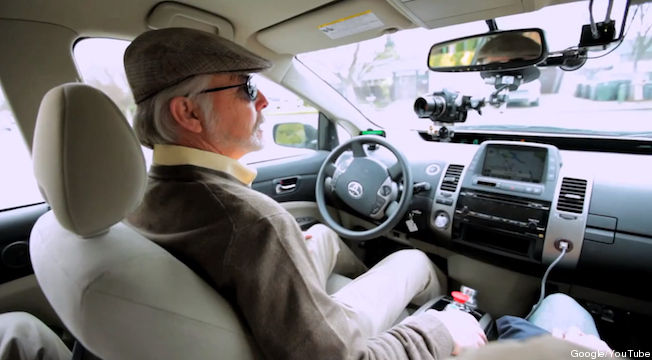 I’m pleased to announce that the Mercatus Center at George Mason University has just released my latest working paper, “Removing Roadblocks to Intelligent Vehicles and Driverless Cars.” This paper, which was co-authored with Ryan Hagemann, has been accepted for publication in a forthcoming edition of the Wake Forest Journal of Law & Policy.
In the paper, Hagemann and I explore the growing market for both “connected car” technologies as well as autonomous (or “driverless”) vehicle technology. We argue that intelligent-vehicle technology will produce significant benefits. Most notably, these technologies could save many lives. In 2012, 33,561 people were killed and 2,362,000 injured in traffic crashes, largely as a result of human error. Reducing the number of accidents by allowing intelligent vehicle technology to flourish would constitute a major public policy success. As Philip E. Ross noted recently at IEEE Spectrum, thanks to these technologies, “eventually it will be positively hard to use a car to hurt yourself or others.” The sooner that day arrives, the better.
These technologies could also have positive environmental impacts in the form of improved fuel economy, reduced traffic congestion, and reduced parking needs. They might also open up new mobility options for those who are unable to drive, for whatever reason. Any way you cut it, these are exciting technologies that promise to substantially improve human welfare.
Of course, as with any new disruptive technology, connected cars and driverless vehicles raise a variety of economic, social, and ethical concerns. Hagemann and I address some of the early policy concerns about these technologies (safety, security, privacy, liability, etc.) and we outline a variety of “bottom-up” solutions to ensure that innovation continues to flourish in this space. Importantly, we also argue that policymakers should keep in mind that individuals have gradually adapted to similar disruptions in the past and, therefore, patience and humility are needed when considering policy for intelligent-vehicle systems. Continue reading →
On Thursday, it was my great pleasure to present a draft of my forthcoming paper, “The Internet of Things & Wearable Technology: Addressing Privacy & Security Concerns without Derailing Innovation,” at a conference that took place at the Federal Communications Commission on “Regulating the Evolving Broadband Ecosystem.” The 3-day event was co-sponsored by the American Enterprise Institute and the University of Nebraska College of Law.
The 65-page working paper I presented is still going through final peer review and copyediting, but I posted a very rough first draft on SSRN for conference participants. I expect the paper to be released as a Mercatus Center working paper in October and then I hope to find a home for it in a law review. I will post the final version once it is released. [UPDATE:The final version of this working paper was released on November 19, 2014.]
In the meantime, however, I thought I would post the 46 slides I presented at the conference, which offer an overview of the nature of the Internet of Things and wearable technology, the potential economic opportunities that exist in this space, and the various privacy and security challenges that could hold this technological revolution back. I also outlined some constructive solutions to those concerns. I plan to be very active on these issues in coming months.
Continue reading →
My latest law review article is entitled, “Privacy Law’s Precautionary Principle Problem,” and it appears in Vol. 66, No. 2 of the Maine Law Review. You can download the article on my Mercatus Center page, on the Maine Law Review website, or via SSRN. Here’s the abstract for the article:
Privacy law today faces two interrelated problems. The first is an
information control problem. Like so many other fields of modern cyberlaw—intellectual property, online safety, cybersecurity, etc.—privacy law is being challenged by intractable Information Age realities. Specifically, it is easier than ever before for information to circulate freely and harder than ever to bottle it up once it is released.
This has not slowed efforts to fashion new rules aimed at bottling up those information flows. If anything, the pace of privacy-related regulatory proposals has been steadily increasing in recent years even as these information control challenges multiply.
This has led to privacy law’s second major problem:
the precautionary principle problem. The precautionary principle generally holds that new innovations should be curbed or even forbidden until they are proven safe. Fashioning privacy rules based on precautionary principle reasoning necessitates prophylactic regulation that makes new forms of digital innovation guilty until proven innocent.
This puts privacy law on a collision course with the general freedom to innovate that has thus far powered the Internet revolution, and privacy law threatens to limit innovations consumers have come to expect or even raise prices for services consumers currently receive free of charge. As a result, even if new regulations are pursued or imposed, there will likely be formidable push-back not just from affected industries but also from their consumers.
In light of both these information control and precautionary principle problems, new approaches to privacy protection are necessary. Continue reading →
I recently did a presentation for Capitol Hill staffers about emerging technology policy issues (driverless cars, the “Internet of Things,” wearable tech, private drones, “biohacking,” etc) and the various policy issues they would give rise to (privacy, safety, security, economic disruptions, etc.). The talk is derived from my new little book on “Permissionless Innovation,” but in coming months I will be releasing big papers on each of the topics discussed here.
Additional
Reading:

 The Technology Liberation Front is the tech policy blog dedicated to keeping politicians' hands off the 'net and everything else related to technology.