Posts tagged as:

In a recent Senate Commerce Committee hearing on the Internet of Things, Senators Ed Markey (D-Mass.) and Richard Blumenthal (D-Conn.) “announced legislation that would direct the National highway Traffic Safety Administration (NHTSA) and the Federal Trade Commission (FTC) to establish federal standards to secure our cars and protect drivers’ privacy.” Spurred by a recent report from his office (Tracking and Hacking: Security and Privacy Gaps Put American Drivers at Risk) Markey argued that Americans “need the equivalent of seat belts and airbags to keep drivers and their information safe in the 21st century.”

Among the many conclusions reached in the report, it says, “nearly 100% of cars on the market include wireless technologies that could pose vulnerabilities to hacking or privacy intrusions.” This comes across as a tad tautological given that everything from smartphones and computers to large-scale power grids are prone to being hacked, yet the Markey-Blumenthal proposal would enforce a separate set of government-approved, and regulated, standards for privacy and security, displayed on every vehicle in the form of a “Cyber Dashboard” decal.

Leaving aside the irony of legislators attempting to dictate privacy standards, especially in the post-Snowden world, it would behoove legislators like Markey and Blumenthal to take a closer look at just what it is they are proposing and ask whether such a law is indeed necessary to protect consumers. Continue reading →

The Obama Administration has just released a draft “Consumer Privacy Bill of Rights Act of 2015.” Generally speaking, the bill aims to translate fair information practice principles (FIPPs) — which have traditionally been flexible and voluntary guidelines — into a formal set of industry best practices that would be federally enforced on private sector digital innovators. This includes federally-mandated Privacy Review Boards, approved by the Federal Trade Commission, the agency that will be primarily responsible for enforcing the new regulatory regime.

Many of the principles found in the Administration’s draft proposal are quite sensible as best practices, but the danger here is that they could soon be converted into a heavy-handed, bureaucratized regulatory regime for America’s highly innovative, data-driven economy.

No matter how well-intentioned this proposal may be, it is vital to recognize that restrictions on data collection could negatively impact innovation, consumer choice, and the competitiveness of America’s digital economy.

Online privacy and security is vitally important, but we should look to use alternative and less costly approaches to protecting privacy and security that rely on education, empowerment, and targeted enforcement of existing laws. Serious and lasting long-term privacy protection requires a layered, multifaceted approach incorporating many solutions.

That is why flexible data collection and use policies and evolving best practices will ultimately serve consumers better than one-size-fits all, top-down regulatory edicts. Continue reading →

by Adam Thierer & Andrea Castillo

Cybersecurity policy is a big issue this year, so we thought it be worth reminding folks of some contributions to the literature made by Mercatus Center-affiliated scholars in recent years. Our research, which can be found here, can be condensed to these five core points:

1)         Institutions, societies, and economies are more resilient than we give them credit for and can deal with adversity, even cybersecurity threats.

See: Sean Lawson, “Beyond Cyber-Doom: Assessing the Limits of Hypothetical Scenarios in the Framing of Cyber-Threats,” December 19, 2012.

2)         Companies and organizations have a vested interest in finding creative solutions to these problems through ongoing experimentation and they are pursing them with great vigor.

See: Eli Dourado, “Internet Security Without Law: How Service Providers Create Order Online,” June 19, 2012.

3)         Over-arching, top-down “cybersecurity frameworks” threaten to undermine dynamism in cybersecurity and Internet governance, and could promote rent-seeking and corruption. Instead, the government should foster continued dynamic cybersecurity efforts through the development of a robust private-sector cybersecurity insurance market.

See: Eli Dourado and Andrea Castillo, “Why the Cybersecurity Framework Will Make Us Less Secure,” April 17, 2014.

4)         The language sometimes used to describe cybersecurity threats sometimes borders on “techno-panic” rhetoric that is based on “threat inflation.

See the Lawson paper already cited as well as: Jerry Brito & Tate Watkins “Loving the Cyber Bomb? The Dangers of Threat Inflation in Cybersecurity Policy,” April 10, 2012; and Adam Thierer, “Technopanics, Threat Inflation, and the Danger of an Information Technology Precautionary Principle,” January 25, 2013.

5)         Finally, taking these other points into account, our scholars have conclude that academics and policymakers should be very cautious about how they define “market failure” in the cybersecurity context. Moreover, to the extent they propose new regulatory controls to address perceived problems, those rules should be subjected to rigorous benefit-cost analysis.

See: Eli Dourado, “Is There a Cybersecurity Market Failure,” January 23, 2012.


Continue reading →

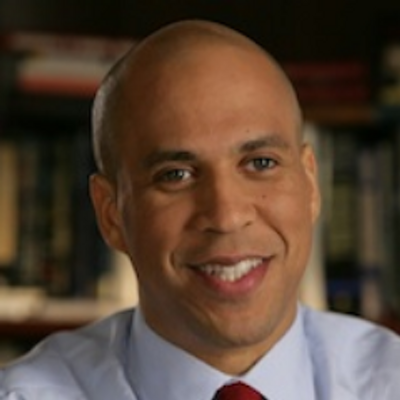
Cory BookerLast Wednesday, it was my great pleasure to testify at a Senate Commerce Committee hearing entitled, “The Connected World: Examining the Internet of Things.” The hearing focused “on how devices… will be made smarter and more dynamic through Internet technologies. Government agencies like the Federal Trade Commission, however, are already considering possible changes to the law that could have the unintended consequence of slowing innovation.”

But the session went well beyond the Internet of Things and became a much more wide-ranging discussion about how America can maintain its global leadership for the next-generation of Internet-enabled, data-driven innovation. On both sides of the aisle at last week’s hearing, one Senator after another made impassioned remarks about the enormous innovation opportunities that were out there. While doing so, they highlighted not just the opportunities emanating out of the IoT and wearable device space, but also many other areas, such as connected cars, commercial drones, and next-generation spectrum.

I was impressed by the energy and nonpartisan vision that the Senators brought to these issues, but I wanted to single out the passionate statement that Sen. Cory Booker (D-NJ) delivered when it came his turn to speak because he very eloquently articulated what’s at stake in the battle for global innovation supremacy in the modern economy. (Sen. Booker’s remarks were not published, but you can watch them starting at the 1:34:00 mark of the hearing video.) Continue reading →

This morning at 9:45, the Senate Committee on Commerce, Science, and Transportation is holding a full committee hearing entitled, “The Connected World: Examining the Internet of Things.” According to the Committee press release, the hearing “will focus on how devices — from home heating systems controlled by users online, to wearable devices that track health and activity with the help of Internet-based analytics — will be made smarter and more dynamic through Internet technologies. Government agencies like the Federal Trade Commission, however, are already considering possible changes to the law that could have the unintended consequence of slowing innovation.”

It is my pleasure to have been invited to testify at this hearing. I’ve long had an interest in the policy issues surrounding the Internet of Things. All my relevant research products can be found online here, including my latest law review article, “The Internet of Things and Wearable Technology Addressing Privacy and Security Concerns without Derailing Innovation.

My testimony, which can be found on the Mercatus Center website here, begins by highlighting the three general conclusions of my work:

  1. First, the Internet of Things offers compelling benefits to consumers, companies, and our country’s national competitiveness that will only be achieved by adopting a flexible policy regime for this fast-moving space.
  2. Second, while there are formidable privacy and security challenges associated with the Internet of Things, top-down or one-size-fits-all regulation will limit innovative opportunities.
  3. Third, with those first two points in mind, we should seek alternative and less costly approaches to protecting privacy and security that rely on education, empowerment, and targeted enforcement of existing legal mechanisms. Long-term privacy and security protection requires a multifaceted approach incorporating many flexible solutions.

Continue reading →

do not panicOn Sunday night, 60 Minutes aired a feature with the ominous title, “Nobody’s Safe on the Internet,” that focused on connected car hacking and Internet of Things (IoT) device security. It was followed yesterday morning by the release of a new report from the office of Senator Edward J. Markey (D-Mass) called Tracking & Hacking: Security & Privacy Gaps Put American Drivers at Risk,  which focused on connected car security and privacy issues. Employing more than a bit of techno-panic flare, these reports basically suggest that we’re all doomed.

On 60 Minutes, we meet former game developer turned Department of Defense “cyber warrior” Dan (“call me DARPA Dan”) Kaufman–and learn his fears of the future: “Today, all the devices that are on the Internet [and] the ‘Internet of Things’ are fundamentally insecure. There is no real security going on. Connected homes could be hacked and taken over.”

60 Minutes reporter Lesley Stahl, for her part, is aghast. “So if somebody got into my refrigerator,” she ventures, “through the internet, then they would be able to get into everything, right?” Replies DARPA Dan, “Yeah, that’s the fear.” Prankish hackers could make your milk go bad, or hack into your garage door opener, or even your car.

This segues to a humorous segment wherein Stahl takes a networked car for a spin. DARPA Dan and his multiple research teams have been hard at work remotely programming this vehicle for years. A “hacker” on DARPA Dan’s team proceeded to torment poor Lesley with automatic windshield wiping, rude and random beeps, and other hijinks. “Oh my word!” exclaims Stahl. Continue reading →

Yesterday, the Federal Trade Commission (FTC) released its long-awaited report on “The Internet of Things: Privacy and Security in a Connected World.” The 55-page report is the result of a lengthy staff exploration of the issue, which kicked off with an FTC workshop on the issue that was held on November 19, 2013.

I’m still digesting all the details in the report, but I thought I’d offer a few quick thoughts on some of the major findings and recommendations from it. As I’ve noted here before, I’ve made the Internet of Things my top priority over the past year and have penned several essays about it here, as well as in a big new white paper (“The Internet of Things and Wearable Technology: Addressing Privacy and Security Concerns without Derailing Innovation”) that will be published in the Richmond Journal of Law & Technology shortly. (Also, here’s a compendium of most of what I’ve done on the issue thus far.)

I’ll begin with a few general thoughts on the FTC’s report and its overall approach to the Internet of Things and then discuss a few specific issues that I believe deserve attention. Continue reading →

FPF logoThis week, the Future of Privacy Forum (FPF) released a new white paper entitled, “A Practical Privacy Paradigm for Wearables,” which I believe can help us find policy consensus regarding the privacy and security concerns associated with the Internet of Things (IoT) and wearable technologies. I’ve been monitoring IoT policy developments closely and I recently published a big working paper (“The Internet of Things and Wearable Technology: Addressing Privacy and Security Concerns without Derailing Innovation”) that will appear shortly in the Richmond Journal of Law & Technology. I have also penned several other essays on IoT issues. So, I will be relating the FPF report to some of my own work.

The new FPF report, which was penned by Christopher Wolf, Jules Polonetsky, and Kelsey Finch, aims to accomplish the same goal I had in my own recent paper: sketching out constructive and practical solutions to the privacy and security issues associated with the IoT and wearable tech so as not to discourage the amazing, life-enriching innovations that could flow from this space. Flexibility is the key, they argue. “Premature regulation at an early stage in wearable technological development may freeze or warp the technology before it achieves its potential, and may not be able to account for technologies still to come,” the authors note. “Given that some uses are inherently more sensitive than others, and that there may be many new uses still to come, flexibility will be critical going forward.” (p. 3)

That flexible approach is at the heart of how the FPF authors want to see Fair Information Practice Principles (FIPPs) applied in this space. The FIPPs generally include: (1) notice, (2) choice, (3) purpose specification, (4) use limitation, and (5) data minimization. The FPF authors correctly note that, Continue reading →

Over at the International Association of Privacy Professionals (IAPP) Privacy Perspectives blog, I have two “Dispatches from CES 2015” up. (#1 & #2) While I was out in Vegas for the big show, I had a chance to speak on a panel entitled, “Privacy and the IoT: Navigating Policy Issues.” (Video can be found here. It’s the second one on the video playlist.) Federal Trade Commission (FTC) Chairwoman Edith Ramirez kicked off that session and stressed some of the concerns she and others share about the Internet of Things and wearable technologies in terms of the privacy and security issues they raise.

Before and after our panel discussion, I had a chance to walk the show floor and take a look at the amazing array of new gadgets and services that will soon hitting the market. A huge percentage of the show floor space was dedicated to IoT technologies, and wearable tech in particular. But the show also featured many other amazing technologies that promise to bring consumers a wealth of new benefits in coming years. Of course, many of those technologies will also raise privacy and security concerns, as I noted in my two essays for IAPP. Continue reading →

I’ve spent much of the past year studying the potential public policy ramifications associated with the rise of the Internet of Things (IoT). As I was preparing some notes for my Jan. 6th panel discussing on “Privacy and the IoT: Navigating Policy Issues” at this year’s 2015 CES show, I went back and collected all my writing on IoT issues so that I would have everything in one place. Thus, down below I have listed most of what I’ve done over the past year or so. Most of this writing is focused on the privacy and security implications of the Internet of Things, and wearable technologies in particular.

I plan to stay on top of these issues in 2015 and beyond because, as I noted when I spoke on a previous CES panel on these issues, the Internet of Things finds itself at the center of what we might think of a perfect storm of public policy concerns: Privacy, safety, security, intellectual property, economic / labor disruptions, automation concerns, wireless spectrum issues, technical standards, and more. When a new technology raises one or two of these policy concerns, innovators in those sectors can expect some interest and inquiries from lawmakers or regulators. But when a new technology potentially touches all of these issues, then it means innovators in that space can expect an avalanche of attention and a potential world of regulatory trouble. Moreover, it sets the stage for a grand “clash of visions” about the future of IoT technologies that will continue to intensify in coming months and years.

That’s why I’ll be monitoring developments closely in this field going forward. For now, here’s what I’ve done on this issue as I prepare to head out to Las Vegas for another CES extravaganza that promises to showcase so many exciting IoT technologies. Continue reading →