Posts tagged as:

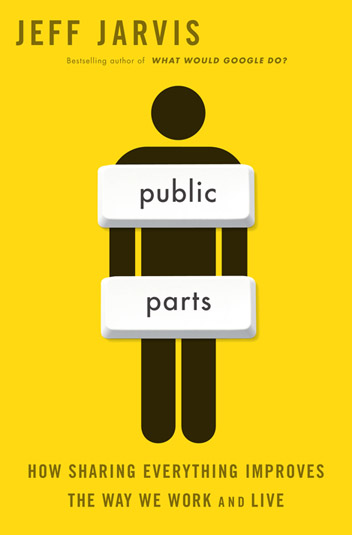
In his latest weekly Wall Street Journal column, Gordon Crovitz has penned a review of the new Jeff Jarvis book, Public Parts: How Sharing in the Digital Age Improves the Way We Work and Live . Gordon’s review closely tracks my own thoughts on the book, which I laid out last week in my Forbes essay, “Is Privacy Overrated?”  Gordon’s essay is entitled “Are We Too Hung Up on Privacy” and he finds, like I do, that Jarvis makes compelling case for understanding the benefits of publicness as the flip-side of privacy. Instead of repeating all the arguments we make in our reviews here, I’ll just ask people go check out both of our essays if they are interested.

I did, however, want to elaborate on one thing I didn’t have time to discuss in my review of the Jarvis book. While I like the approach he used in the book, I thought Jarvis could have spent a bit more time exploring some the thorny legal issues in play when advocates of privacy regulation look to enshrine into law quite expansive views of privacy “rights.”

One of the things that both Crovitz and I appreciated about the Jarvis book was the way he tries to get us to think about privacy in the context of ethics instead of law. “Privacy is an ethic governing the choices made by the recipient of someone else’s information,” Jarvis argues, while “publicness is an ethic governing the choices made by the creator of one’s own information,” he says. In my review, I explained why this was so important: Continue reading →

On Wednesday afternoon, it was my great pleasure to make some introductory remarks at a Family Online Safety Institute (FOSI) event that was held at the Yahoo! campus in Sunnyvale, CA. FOSI CEO Stephen Balkam asked me to offer some thoughts on a topic I’ve spent a great deal of time thinking about in recent years: Who needs parental controls? More specifically, what role do parental control tools and methods play in the upbringing of our children? How should we define or classify parental control tools and methods? Which are most important / effective? Finally, what should the role of public policy be toward parental control technologies on both the online safety and privacy fronts?

In past years, I spent much time writing and updating a booklet on these issues called Parental Controls & Online Child Protection: A Survey of Tools & Methods. It was an enormous undertaking, however, and I have abandoned updating it after I hit version 4.0. But that doesn’t mean I’m not still putting a lot of thought into these issues. My focus has shifted over the past year more toward the privacy-related concerns and away from the online safety issues. Of course, all these issues intersect and many people now (rightly) considered them to largely be the same debate.

Anyway, to kick off the FOSI event, I offered three provocations about parental control technologies and the state of the current debate over them. I buttressed some of my assertions with findings from a recent FOSI survey of parental attitudes about parental controls and online safety. Continue reading →

Yesterday, the Federal Trade Commission (FTC) released its long-awaited proposed revisions to the Children’s Online Privacy Protection rule (the “COPPA Rule”). Below I offer a few brief thoughts on the draft document. My remarks assume a basic level of knowledge about COPPA so that I don’t have to spend pages explaining the intricacies of this complex law and regulatory regime. If you need background on the COPPA law and rule, please check out this paper by Berin Szoka and me: “COPPA 2.0: The New Battle over Privacy, Age Verification, Online Safety & Free Speech.”

Dodging the COPA / Mandatory Age Verification Bullet

The most important takeaway from yesterday’s proposal involves something the FTC chose not to do: They agency very wisely decided to ignore some requests to extend the coverage of COPPA’s regulatory provisions from children under 13 all the way up to teens up to 18.  An effort to expand COPPA’s “verifiable parental consent” requirements to all teens would have raised thorny First Amendment issues as well as a host of practical enforcement concerns.  In essence, it would have required Internet-wide age verification of children and adults in order to ensure that everyone was exactly who they claimed to be online. We already had an epic decade-long legal battle over that issue when the constitutionality of the Children’s Online Protection Act (COPA), another 1998 law sometimes confused with COPPA, was tested many times over and always found to be in violation of the First Amendment.

Regardless, the FTC didn’t go there yesterday, so this concern is off the table for now. The agency deserves credit for avoiding this constitutional thicket. Continue reading →

My latest Mercatus Center white paper is entitled “Kids, Privacy, Free Speech & the Internet: Finding The Right Balance.” From the intro:

Concerns about children’s privacy are an important part of [the ongoing privacy debate]. The Children’s Online Privacy Protection Act of 1998 (COPPA) already mandates certain online-privacy protections for children under the age of 13. The goal of COPPA was to enhance parents’ involvement in their children’s online activities and better safeguard kids’ personal information online. The FTC is currently considering an expansion of COPPA, and lawmakers in the House of Representatives introduced legislation that would expand COPPA and apply additional FIPPS regulations to teenagers. Some state-based measures also propose expanding COPPA While well-intentioned, efforts to expand privacy regulation along these lines would cause a number of unintended consequences of both a legal and economic nature. In particular, expanding COPPA raises thorny issues about online free speech and anonymity. Ironically, it might also require that more information about individuals be collected to enforce the law’s parental-consent provisions. There are better ways to protect the privacy of children online than imposing burdensome new regulatory mandates on the Internet and online consumers. Education, empowerment, and targeted enforcement of unfair and deceptive practice policies represent the better way forward.

The paper can be downloaded on SSRN, Scribd, or directly from the Mercatus website at the link above.

This podcast, put together by the high-performance folks at the Performance Marketing Association, is pretty good, though I do use the word “hedonic” at one point, which is a bit much.

The European Commission has a new report out today on “Implementation of the Safer Social Networking Principles for the EU.” It’s a status report on the implementation of “Safer Social Networking Principles for the EU“, a “self-regulatory” agreement the EC brokered with 17 social networking sites and other online operators back in 2009. (Co-regulatory would be more accurate here, since the EC is steering, and industry is simply rowing.) The goal was to make the profiles of minors more private and provide other safeguards.

Generally speaking, the EC’s evaluation suggests that great progress has been made, although there’s always room for improvement. For example, the report found that “13 out of the 14 sites tested provide safety information, guidance and/or educational materials specifically targeted at minors;” “Safety information for minors is quite clear and age-appropriate on all sites that provide it, good progress since the first assessment last year; “Reporting mechanisms are more effective now than in 2010;” and most sites have improved Terms of Use that are easy for minors to understand and/or a child-friendly version of the Terms of Use or Code of Conduct; and many “provide safety information for children and parents which is both easy to find and to understand.” Again, there’s always room for improvement, but the general direction is encouraging, especially considering how new many of these sites are.

Unfortunately, Neelie Kroes, Vice President of the European Commission for the Digital Agenda, spun the report in the opposite direction. She issued a statement saying: Continue reading →

If you’re like me, you woke up at the crack of dawn today to maximize your enjoyment of World IPv6 Day. Don’t want to miss a minute! If you’re like me, you’ll also say untruthful things as a very dry form of sarcasm. I hope you got that.

Whatever your interest in IPv6—learn more by reading this heresy—you should take interest in whether the next generation of the Internet protocol will erode or enhance your ability to protect privacy. That’s a question that’s been gnawing at me for a long time.

IPv4 was designed without enough numbers to accommodate the worldwide, multiple-device Internet we’ve got today. IPv5 seems to have disappeared—and I’m desperate to know what happened to it. (see above re: sarcasm) Now we’re talking about IPv6, a major feature of which is that it has enough numbers to assign one to every device on the globe.

IPv6’s ginormous number space is great for simplifying the maintenance of quality communications on the modern Internet, but it could suck for privacy. You see, if every device can be assigned a permanent number, that number will act as a permanent identifier, and lots of privacy-reducing inferences can be drawn. I.e., “If I saw this IP number before, it’s probably the same device and the same person I dealt with before.” Communications and interactions that don’t require or benefit from tracking become trackable anyway. We lose a structural protection of privacy.

Luckily, the designers of the IPv6 protocol thought of that. Christopher Parsons explains in a thorough post from last year that the IPv6 protocol calls for rolling assignment of randomized numbers for initiators of communications. A Web server has to have a fixed address, of course. It’s the target of communications requests, and people need to know where to find it. But the computers that ask for content from such servers do not. IPv6 allows those devices to have transient, pretty darn random numbers that change with regularity. This way, the records of your surfing that come to rest in servers all over the world cannot be combined into a dossier of everything you ever did online. Your computer’s IP address does not become your de facto worldwide identifier.

But here’s the question: To what extent is this part of IPv6 being implemented? Are the organizations implementing IPv6 including randomized numbers for initiators of communications? Parsons has a clever turn of phrase suggesting one reason why they may not: “the ‘security institutions’ are better at dissolving privacy protections than the privacy community is at enshrining privacy in law.” It could also be simply that there’s some cost associated with IPv6’s randomization.

So, does anyone know the status of randomization in the IPv6 protocol? Is it being implemented?

The good news, I think, is that it seems fairly easy to test whether an ISP is deploying IPv6 in full or short-cutting on randomization. Set up a server out there, ping it with a consistent communication, and see if it sees the communication coming from a consistent IP address. If it does, then IPv6 randomization is not working. That’s a problem.

Given the wisdom of “trust but verify,” I suppose this is not only an appeal for information about present practice, but a request that some group of technical smarties out there set up a system for routine verification that IPv6 randomization is fully and properly implemented by Internet service providers and other major deployers of Internet protocol. If you’ve already done it, do tell! Thanks!
On May 26th, it was my great pleasure to participate in a panel discussion on “Growing Up with the Mobile Net,” which was co-sponsored by the Congressional Internet Caucus and Common Sense Media. It was a conversation about kids’ privacy, online safety, teen free speech rights, anonymity, and the possibility of expanding the Children’s Online Privacy Protection Act (COPPA) and implementing the so-called “Internet Eraser Button.”

I was joined on the panel by Jules Polonetsky, Co-chair and Director of the Future of Privacy Forum, and Alan Simpson, Vice President of Policy at Common Sense Media. And the session was very ably moderated, as always, by the supremely objective Tim Lordan.*  We really unpacked the “Eraser Button” and “right to be forgotten” notion and thought through the ramifications. And the discussion about the extent of First Amendment rights for teenagers was also interesting.

The video for this 48-minute session can be found on the Congressional Internet Caucus YouTube page here and is embedded below.

Note: During the session, Tim Lordan claimed that he takes no position and that if anyone says he take positions on issues that he will slap a super-injunction on them. Well, I say Tim Lordan is brimming with positions and he’s letting them fly at every juncture. In fact, I’ve never met someone so full of controversial positions in my life as Tim Lordan! OK, so sue me Tim!

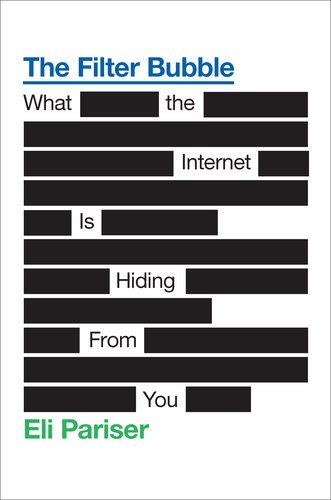
In my latest weekly Forbes column is entitled “The Internet Isn’t Killing Our Culture or Democracy” and it’s a short review of the new book, The Filter Bubble: What the Internet is Hiding from You, by MoveOn.org board president Eli Pariser. As I note in my essay, Pariser’s book covers some very familiar ground already plowed by others in the burgeoning Internet pessimism movement:

[The Filter Bubble] restates a thesis developed a decade ago in both Cass Sunstein’s Republic.com and Andrew L. Shapiro’s The Control Revolution, that increased personalization is breeding a dangerous new creature—Anti-Democratic Man. “Democracy requires citizens to see things from one another’s point of view,” Pariser notes, “but instead we’re more and more enclosed in our own bubbles.”  Pariser worries that personalized digital “filters” like Facebook, Google, Twitter, Pandora, and Netflix are narrowing our horizons about news and culture and leaving “less room for the chance encounters that bring insights and learning.” “Technology designed to give us more control over our lives is actually taking control away,” he fears.
Pariser joins a growing brigade of Internet pessimists. Almost every year for the past decade a new book has been published warning that the Internet is making us stupid, debasing our culture, or destroying social interaction.  Many of these Net pessimists—whose ranks include Andrew Keen (The Cult of the Amateur), Lee Siegel (Against the Machine), Jaron Lanier (You Are Not a Gadget) and Nicholas Carr (The Shallows)—lament the rise of “The Daily Me,” or the rise of hyper-personalized news, culture, and information. They claim increased information and media customization will lead to close-mindedness, corporate brainwashing, an online echo-chamber, or even the death of deliberative democracy.

If you’ve read anything I’ve written on this topic in recent years, you will not be surprised to hear that I disagree with Pariser and these other Net pessimists when it comes to fears about hyper-personalization and user customization. As I noted in my recent book chapter, ” The Case for Internet Optimism, Part 1 – Saving the Net From Its Detractors“: Continue reading →

It might be tempting to laugh at France’s ban on words like “Facebook” and Twitter” in the media. France’s Conseil Supérieur de l’Audiovisuel recently ruled that specific references to these sites (in stories not about them) would violate a 1992 law banning “secret” advertising. The council was created in 1989 to ensure fairness in French audiovisual communications, such as in allocation of television time to political candidates, and to protect children from some types of programming.

Sure, laugh at the French. But not for too long. The United States has similarly busy-bodied regulators, who, for example, have primly regulated such advertising themselves. American regulators carefully oversee non-secret advertising, too. Our government nannies equal the French in usurping parents’ decisions about children’s access to media. And the Federal Communications Commission endlessly plays footsie with speech regulation.

In the United States, banning words seems too blatant an affront to our First Amendment, but the United States has a fairly lively “English only” movement. Somehow, regulating an entire communications protocol doesn’t have the same censorious stink.

So it is that our Federal Communications Commission asserts a right to regulate the delivery of Internet service. The protocols on which the Internet runs are communications protocols, remember. Withdraw private control of them and you’ve got a more thoroughgoing and insidious form of speech control: it may look like speech rights remain with the people, but government controls the medium over which the speech travels.

The government has sought to control protocols in the past and will continue to do so in the future. The “crypto wars,” in which government tried to control secure communications protocols, merely presage struggles of the future. Perhaps the next battle will be over BitCoin, an online currency that is resistant to surveillance and confiscation. In BitCoin, communications and value transfer are melded together. To protect us from the scourge of illegal drugs and the recently manufactured crime of “money laundering,” governments will almost certainly seek to bar us from trading with one another and transferring our wealth securely and privately.

So laugh at France. But don’t laugh too hard. Leave the smugness to them.