I attended the Federal Trade Commission hearing about the state of intellectual property on Friday, and wrote a piece about the event, “With US Patent Overhaul Dead, Agencies Ponder Changes As Industry Debates Role Of ‘Trolls’.”
The piece appeared in ip-watch.org, the excellent Geneva-based publication run by my friend and former colleague William New. Those of you who aren’t familiar yet with ip-watch.org should definitely begin following it: it’s a must-read for practitioners, advocates and activists concerned about all forms of intellectual property.
Arts+Labs, a new coalition “committed to a better, safer internet that works for both artists and consumers,” has written up Friday’s Cato Institute book forum on The Crime of Reason on their ArtLab blog. Author Robert B. Laughlin of Stanford University will present his book, then we’ll have comments from Tom Sydnor of the Progress and Freedom Foundation.
I’ve gotten a glimpse at the slides Dr. Laughlin will be using, and this Nobel laureate in physics also turns out to be something of an artist.
Join us Friday to learn what this drawing is all about.
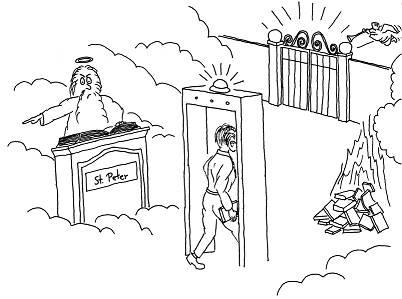
If you find the title of this post provocative, you’ll be interested in a Cato Institute book forum on Friday, October 10th.
In
The Crime of Reason, Nobel laureate in physics Robert Laughlin argues that intellectual property laws and government security demands threaten the development of new knowledge. Without change, we risk bequeathing our heirs a world where knowledge is criminalized and our intellectual tradition of unfettered inquiry is lost.
The event should be a fascinating inquiry into the role of information and information rules in our society. Thomas Syndor of the Progress & Freedom Foundation will comment. I’ll be your humble moderator. It’s noon on Friday, October 10th, at the Cato Institute, 1000 Massachusetts Avenue, NW, Washington, D.C. Luncheon to follow.
You can register for the event here.

 The Technology Liberation Front is the tech policy blog dedicated to keeping politicians' hands off the 'net and everything else related to technology.