What Unites Advocates of Speech Controls & Privacy Regulation? [pdf]
by Adam Thierer & Berin Szoka
The Progress & Freedom Foundation,
Progress on Point No. 16.19
Anyone who has spent time following debates about speech and privacy regulation comes to recognize the striking parallels between these two policy arenas. In this paper we will highlight the common rhetoric, proposals, and tactics that unite these regulatory movements. Moreover, we will argue that, at root, what often animates calls for regulation of both speech and privacy are two remarkably elitist beliefs:
- People are too ignorant (or simply too busy) to be trusted to make wise decisions for themselves (or their children); and/or,
- All or most people share essentially the same values or concerns and, therefore, “community standards” should trump household (or individual) standards.
While our use of the term “elitism” may unduly offend some understandably sensitive to populist demagoguery, our aim here is not to launch a broadside against elitism as
Time magazine culture critic William H. Henry once defined it: “The willingness to assert unyieldingly that one idea, contribution or attainment is better than another.”[1] Rather, our aim here is to critique that elitism which rises to the level of political condescension and legal sanction. We attack not so much the beliefs of some leaders, activists, or intellectuals that they have a better idea of what it in the public’s best interest than the public itself does, but rather the imposition of those beliefs through coercive, top-down mandates.
That sort of elitism—elitism enforced by law—is often the objective of speech and privacy regulatory advocates. Our goal is to identify the common themes that unite these regulatory movements, explain why such political elitism is unwarranted, and make it clear how it threatens individual liberty as well as the future of free and open Internet. As an alternative to this elitist vision, we advocate an empowerment agenda: fostering an environment in which users have the tools and information they need to make decisions for themselves and their families. Continue reading →
I’ve just had a new article published by the American Legislative Exchange Council (ALEC) in which I make the case against “techno-panics,” which refers to public and political crusades against the use of new media or technologies by the young. The article is entitled “Parents, Kids & Policymakers in the Digital Age: Safeguarding Against ‘Techno-Panics‘” and it appears in the July 2009 Inside ALEC newsletter. This is something I have spent a lot of time writing about here in recent years (See 1, 2, 3, 4, 5) and I finally got around to putting it altogether in a concise essay here. I have pasted the full text below. [And I just want to send a shout-out to my friend Anne Collier of Net Family News.org, whose work on this topic has been very influential on my thinking.]
“Parents, Kids & Policymakers in the Digital Age: Safeguarding Against ‘Techno-Panics‘”
by Adam Thierer
A cursory review of the history of media and communications technologies reveals a reoccurring cycle of “techno-panics” — public and political crusades against the use of new media or technologies by the young. From the waltz to rock-and-roll to rap music, from movies to comic books to video games, from radio and television to the Internet and social networking websites, every new media format or technology has spawned a fresh debate about the potential negative effects they might have on kids.
Inevitably, fueled by media sensationalism and various activist groups, these social and cultural debates quickly become political debates. Indeed, each of the media technologies or outlets mentioned above was either regulated or threatened with regulation at some point in its history. And the cycle continues today. During recent sessions of Congress, countless hearings were held and bills introduced on a wide variety of media and content-related issues. These proposals dealt with broadcast television and radio programming, cable and satellite television content, video games, the Internet, social networking sites, and much more. State policymakers, especially state Attorneys General (AGs), have also joined in such crusades on occasion. The recent push by AGs for mandatory age verification for all social networking sites is merely the latest example.
What is perhaps most ironic about these techno-panics is how quickly yesterday’s boogeyman becomes tomorrow’s accepted medium, even as the new villains replace old ones. For example, the children of the 1950s and 60s were told that Elvis’s hip shakes and the rock-and-roll revolution would make them all the tools of the devil. They grew up fine and became parents themselves, but then promptly began demonizing rap music and video games in the ‘80s and ‘90s. And now those aging Pac Man-era parents are worried sick about their kids being abducted by predators lurking on MySpace and Facebook. We shouldn’t be surprised if, a decade or two from now, today’s Internet generation will be decrying the dangers of virtual reality.
Continue reading →
 My friend Larry Magid, the co-director of ConnectSafely.org (with Anne Collier) and founder of SafeKids.com, has a sharp new piece up at CBS News.com entitled, “Stop Cyberbullying with Education,” in which he rightly points out how “we need to be careful with legislation that would outlaw cyberbullying.” He points out that although cyberbullying is “not an epidemic and it’s not killing our children”:
Bullying has always been a problem among adolescents and, sadly, so has suicide. In the few known cases of suicide after cyberbullying, there are other contributing factors. That’s not to diminish the tragedy or suggest that the cyberbullying didn’t play a role but–as with all online youth risk, we need to look at what else was going on in the child’s life. Even when a suicide or other tragic event doesn’t occur, cyberbullying is often accompanied by a pattern of offline bullying and sometimes there are other issues including long-term depression, problems at home, and self-esteem issues.
He goes on to provide some solid advice:
Continue reading →
 John Stuart Mill’s On Liberty turns 150 this year. Published in 1859, this slender manifesto for human liberty went on to become a classic of modern philosophy and political science. It remains a beautiful articulation of the core principles of human liberty and a just society.
Anyone familiar with the book recognizes the importance of the opening chapter and Mill’s “one very simple principle” for “the dealings of society with the individual in the way of compulsion and control, whether the means used be physical force in the form of legal penalties, or the moral coercion of public opinion”:
That principle is, that the sole end for which mankind are warranted, individually or collectively, in interfering with the liberty of action of any of their number, is self-protection. That the only purpose for which power can be rightfully exercised over any member of a civilized community, against his will, is to prevent harm to others. His own good, either physical or moral, is not a sufficient warrant. He cannot rightfully be compelled to do or forbear because it will be better for him to do so, because it will make him happier, because, in the opinions of others, to do so would be wise, or even right. These are good reasons for remonstrating with him, or reasoning with him, or persuading him, or entreating him, but not for compelling him, or visiting him with any evil in case he do otherwise. To justify that, the conduct from which it is desired to deter him, must be calculated to produce evil to some one else. The only part of the conduct of any one, for which he is amenable to society, is that which concerns others. In the part which merely concerns himself, his independence is, of right, absolute. Over himself, over his own body and mind, the individual is sovereign.
Mill went on to outline “the appropriate region of human liberty,” and divided it into:
- “liberty of conscience, in the most comprehensive sense; liberty of thought and feeling; absolute freedom of opinion and sentiment on all subjects, practical or speculative, scientific, moral, or theological. The liberty of expressing and publishing opinions may seem to fall under a different principle, since it belongs to that part of the conduct of an individual which concerns other people; but, being almost of as much importance as the liberty of thought itself, and resting in great part on the same reasons, is practically inseparable from it.”
- “liberty of tastes and pursuits; of framing the plan of our life to suit our own character; of doing as we like, subject to such consequences as may follow: without impediment from our fellow-creatures, so long as what we do does not harm them, even though they should think our conduct foolish, perverse, or wrong”
- “freedom to unite, for any purpose not involving harm to others”
Bringing it altogether, he argued:
The only freedom which deserves the name, is that of pursuing our own good in our own way, so long as we do not attempt to deprive others of theirs, or impede their efforts to obtain it. Each is the proper guardian of his own health, whether bodily, or mental and spiritual. Mankind are greater gainers by suffering each other to live as seems good to themselves, than by compelling each to live as seems good to the rest.
To this day, I do not believe there has been a more eloquent or concise summation of the central principles of libertarianism than those passages from Chapter 1 of the book.
But what many fail to remember or appreciate is the equally powerful second chapter of Mill’s treatise, “On the Liberty of Thought and Discussion.” It was a bold defense of freedom of speech and expression that was many decades ahead of its time. And it still has lessons and warnings worth heeding in our modern Information Age.
Continue reading →
In an earlier post, I mentioned an important new online child safety task force report that has just been released from the “Point Smart. Click Safe.” Blue Ribbon Working Group. It’s a great report and I encourage you to read the whole thing. It was my great pleasure to serve on this task force, and as we started finalizing our conclusions and recommendations, I started thinking about how much of what we were finding and recommending was consistent with what past online safety task forces had also concluded.
By way of background, over the past decade, five major online safety task forces or blue ribbon commissions have been convened to study online safety issues. Two of these task forces were convened in the United States and issued reports in 2000 (“COPA Commission”) and 2002 (“Thornburgh Commission“). Another was commissioned by the British government in 2007 and issued in a major report in March 2008 (“Byron Review“). Finally, two additional online safety task forces were formed in the U.S. in 2008 and concluded their work, respectively, in January (“Internet Safety Technical Task Force“) and July (“Point Smart. Click Safe.“) of 2009. [And yet another task force — the Online Safety Technology Working Group — was recently formed and has now gotten underway.]
In a new PFF white paper, ”
Five Online Safety Task Forces Agree: Education, Empowerment & Self-Regulation Are the Answer,” I walk through a chronological summary of each of these past task forces [click on covers of each report below to read them in their entirety] and highlight some of the similar themes and recommendations from them.
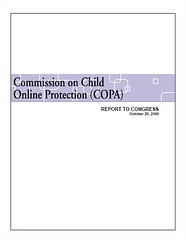
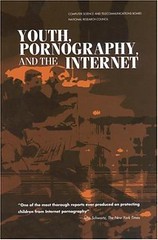
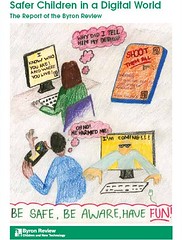

 Continue reading →
A major new online child safety task report by the “Point Smart. Click Safe.” Blue Ribbon Working Group has just been released. First, some background. In June 2007, the National Cable & Telecommunications Association (NCTA), the principal trade association of the cable industry in the United States, announced “Cable Puts You in Control: PointSmart. ClickSafe.” a new campaign by its members to offer parents assistance in keeping their children safe online. As part of the initiative, the NCTA hosted a major online child safety summit and also announced the formation of the “Point Smart. Click Safe. Blue Ribbon Working Group” in partnership with the Internet KeepSafe Coalition (iKeepSafe) and Common Sense Media. These three organizations, along with the cable industry’s “Cable in the Classroom” program, agreed to bring together a collection of online safety experts from many disciplines to study these issues and develop a set of “best practice” recommendations that could be implemented across the Internet industry. [Disclosure: It was my pleasure to serve as a member of this blue ribbon working group.]
Today, the “Point Smart. Click Safe.” working group produced its final report and concluded that:
Ensuring children’s online safety is a difficult and complex task that calls for input from and action by a wide variety of stakeholders. There is no “silver bullet”—no single technology or approach that has proved effective. Rather, what is required is:
- A combination of different technologies,
- Continuing digital literacy education for parents, educators, and children, and
- Active participation by all concerned companies, groups and individuals.
Similarly, a singular focus on safety is insufficient. Children must learn to minimize risks but also learn appropriate and ethical behaviors in this digital world. In addition, they need an understanding of media literacy, in order to be able to think critically about the content they consume and increasingly create. Therefore, best practices must be part of a larger effort to provide an entertaining, educational, and safe experience for children.
Compared to previous online child safety task forces, which I will discuss in a subsequent post, the major contribution of this task force was its focus on detailed industry best practices that various online providers could adopt to help parents, policymakers, and law enforcement better keep kids safe online. As the working group’s final report noted:
Continue reading →
Lori Drew was convicted late last year on charges related to her role in a cruel hoax that led to the tragic suicide of thirteen-year old Megan Meier in Missouri in 2006. But today, at her sentencing, the judge threw out her convictions. Millions around the world were horrified by Megan’s fate, and many will probably be upset that Drew might go unpunished. But we need to separate three questions in this case:
- Should the federal anti-hacking law under which she was convicted really be applied in such cases?
- What, precisely, was Drew’s involvement?
- The key question: What should be done about the general problems of cyberbullying and cyberharassment?
Misuse of the Anti-Hacking Statute
Judge Wu has yet to issue his written opinion but seems to have agreed with the various experts on Internet law who argued that, however tragic the Meier case was, the Computer Fraud & Abuse Act (CFAA) should not have been applied to Drew. Most notably, the Electronic Frontier Foundation filed an Amicus Brief in support of Drew’s motion to dismiss the charges against her—summarized by Groklaw and the Harvard Journal of Law & Technology. Orin Kerr, a leading Internet law professor, felt so strongly about the consequences of using the CFAA to criminalize violations of privately written terms of service that he joined Drew’s defense team. Kerr demonstrated the problems of essentially allowing private parties to create the grounds for criminal offenses (if violated by users) by suggesting obviously ridiculous new terms of service for the Volokh Conspiracy, the group blog he writes on.
Hard as it may be for those who want to “see justice done” in this case, the CFAA just isn’t the right law to apply—which raises the question of whether new laws are needed, discussed below.
Uncertainty About Drew’s Role
The judge may also have been influenced by uncertainty as to Drew’s actual role in the case. Initial coverage of the story suggested that Drew created the fake MySpace persona of a teen boy (“Josh Evans”), then used that profile to woo Meier, a classmate of Drew’s daughter, only to deliberately—and cruelly—break her heart. After Missouri prosecutors and the FBI declined to press charges against Drew, federal prosecutors in California decided to do so, but Drew consistently maintained that it was not her idea to create the account. Continue reading →
As I noted recently, Berin Szoka and I just released a big PFF white paper (PDF) entitled, “Cyberbullying Legislation: Why Education is Preferable to Regulation,” which examines two very different federal approaches to the issue. One approach is focused on the creation of a new federal crime to punish cyberbullying, which would include fines and jail time for violators. One approach, set forth by Rep. Linda Sánchez (D-CA) in H.R. 1966 (originally H.R. 6123), the “Megan Meier Cyberbullying Prevention Act,” would create a new federal felony: “Whoever transmits in interstate or foreign commerce any communication, with the intent to coerce, intimidate, harass, or cause substantial emotional distress to a person, using electronic means to support severe, repeated, and hostile behavior, shall be fined under this title or imprisoned not more than two years, or both.”
The other legislative approach is education-based and would create an Internet safety education grant program to address the issue in schools and communities. In mid-May, the “School and Family Education about the Internet (SAFE Internet) Act” (S. 1047) was introduced in the Senate by Sen. Robert Menendez (D-NJ) and in the House by Rep. Debbie Wasserman Schultz (D-FL). The measure proposes an Internet safety education grant program that will be administered by the Department of Justice, in concurrence with the Department of Education, and the Department of Health & Human Services.
On June 12, the Family Online Safety Institute (FOSI) hosted a discussion about these bill on Cap Hill, which was moderated by FOSI CEO Stephen Balkam. Representatives from both Rep. Sanchez’s and Sen. Menendez’s offices were on hand to discuss their bills, and I provided some feedback based upon what Berin and I concluded in our paper. It was a good discussion and I encourage you to watch the whole thing because there were some good questions from the audience later in the show.
http://www.youtube.com/v/FsCpOgwTqQM&hl=en&fs=1&
Adam Thierer and I have been trying to drive home a simple message in the ongoing debate about targeted online advertising and privacy: “There is no Free Lunch!” We don’t have a lot of friends in this debate, since nearly everyone else seems to assume that online content and services will just continue to fall like manna from heaven if politicians strangle advertising online. So I was particularly heartened to read the following from Shelly Palmer:
This is the most serious question facing content producers today. Content costs money to produce. Third-party advertising/sponsor support is one model, promoting your own products is another, subscription is a third. At the end of the day, there are only three ways it works: I pay, you pay or someone else pays. Unfortunately, there is no business model called “no one pays.” In the case of MediaBytes, the model is “I pay.” It works for me as stated above. But, apparently, a fairly large number of people in my audience are uninterested in seeing even relevant product offerings. Is advertising over? If so, what’s next?
Amen! Shelly hosts a daily Internet talk show on technology and media called MediaBytes. He recently tried inserting a short ad at the beginning of the show to cover the significant costs of production:
The show is produced every business day and requires a research staff, a writer (me), an editor, an encoding/distribution manager and an affiliate relations staff. The reason for the production overview is that, this particular two-minutes may look like a talking head combined with some graphics and clips, but the work flow for any given show takes approximately 6 hour and all of the people involved in the production are on salary here at Advanced Media Ventures Group. And, for the record, MediaBytes, and the associated production materials, takes up approximately 25% of my day.
Unfortunately, Shelly’s audience seemed to feel entitled to receive the fruit of his hard work for free—without suffering the
agony of watching… horror of horrors: advertising!. Continue reading →
By Berin Szoka & Adam Thierer
 We’ve just released a new PFF white paper (PDF) entitled, “Cyberbullying Legislation: Why Education is Preferable to Regulation.” In this 24-page study we note that, compared to previous fears about online predation, which have been greatly overblown, concerns about cyberbullying are more well-founded. Evidence suggests the cyberbullying is on the rise and that it can have profoundly damaging consequences for children.
Unsurprisingly, in the wake of a handful of high-profile cyberbullying incidents that resulted in teen/tween suicides, some state lawmakers began floating legislation to address the issue. More recently, two very different federal approaches have been proposed. One approach is focused on the creation of a new federal crime to punish cyberbullying, which would include fines and jail time for violators. In April 2008, Rep. Linda Sánchez (D-CA) introduced H.R. 1966 (originally H.R. 6123), the “Megan Meier Cyberbullying Prevention Act,” a bill that would create a new federal felony:
“Whoever transmits in interstate or foreign commerce any communication, with the intent to coerce, intimidate, harass, or cause substantial emotional distress to a person, using electronic means to support severe, repeated, and hostile behavior, shall be fined under this title or imprisoned not more than two years, or both.”
The other legislative approach is education-based and would create an Internet safety education grant program to address the issue in schools and communities. In mid-May, the “School and Family Education about the Internet (SAFE Internet) Act” (S. 1047) was introduced in the Senate by Sen. Robert Menendez (D-NJ) and in the House by Rep. Debbie Wasserman Schultz (D-FL). The measure proposes an Internet safety education grant program that will be administered by the Department of Justice, in concurrence with the Department of Education, and the Department of Health & Human Services. These agencies will also work in consultation with education, Internet safety, and other relevant experts to administer a five-year grant program, under which each grant will be awarded for a two-year period.
Continue reading →

 The Technology Liberation Front is the tech policy blog dedicated to keeping politicians' hands off the 'net and everything else related to technology.