By Adam Thierer & Berin Szoka
In a series of upcoming essays, we will be examining proposals being put forward today that would have the government play a greater role in sustaining struggling media enterprises, “saving journalism,” or promoting more “public interest” content. The reason we’re working up this multi-part series is because, with many traditional media operators struggling, and questions being raised about how journalism in particular will be supported in the future, Washington policymakers are currently considering what role government can and should play in helping media providers reinvent themselves in the face of tumultuous technological change wrought by the Digital Revolution.
For example, the Federal Communications Commission (FCC) recently kicked off a new “Future of Media” effort with a workshop on “Serving the Public Interest in the Digital Era.” (The filing deadline for the FCC’s “Future of Media” proceeding is May 7th). Likewise, the Federal Trade Commission (FTC) has hosted two workshops asking “How Will Journalism Survive the Internet Age?” Meanwhile, the Senate has already held hearings about “the future of journalism,” and Senator Benjamin L. Cardin (D-MD) recently introduced the “Newspaper Revitalization Act,” which would allow newspapers to become tax-exempt non-profits in an effort to help them stay afloat.
Thus, in light of Washington’s sudden interest in the future of media and journalism, we will be taking a hard look at several issues and proposals that are being floated today, including:
- Taxes on media devices, mobile phones, or broadband bills to channel money to media enterprises / content;
- Taxes / fees on broadcasters to funnel support to their public sector competitors or to public interest programs;
- “News vouchers” or “public interest vouchers” that would encourage citizens to channel support to media providers;
- Taxes on private advertising to subsidize non-commercial / public media content;
- Expanded postal subsidies for media mail; and
- Targeted welfare programs for out-of-work journalists or corporate welfare in the form of bailouts for failing media enterprises.
You won’t be surprised to hear that we are generally quite skeptical of most of these ideas, but we promise to give each one serious consideration. We’ll kick things off tomorrow with our essay on why taxing media devices or distribution systems to fund media content is not a particularly good idea.

Tim Wu: Not Looking Happy about Being So Wrong
Three years ago this month, Columbia University Law School professor Tim Wu released a controversial white paper in conjunction with the New America Foundation entitled, “Wireless Net Neutrality: Cellular Carterfone and Consumer Choice in Mobile Broadband.” It contained a litany of accusations regarding supposed corporate shenanigans in the mobile marketplace, including: intentional crippling of features and functionality; refusal to allow 3rd party attachments or intentional curtailment of a market for 3rd party application developers; and various concerns about “discrimination” of one sort or another.
Here at the TLF, we responded quite forcefully. I think every one of us piled on this study in one way or another. (ex: Hance, Jerry, James, Tim Lee, me x 2, + a podcast). I called his proposal “a declaration of surrender” since Prof. Wu was essential calling the game early and raising the white flag on mobile competition. Further, I argued he was essentially asking for “the forced commoditization of cellular networks” which “would necessitate at return to the rate-of-return regulatory methods of the past.” Others were a bit more kind to him, but we were all pretty skeptical of his gloomy claims. However, each of us here also argued that the wireless market (especially the applications side of the market) was still developing and that we’d have to check back in a few years to see how well the hands-off approach worked out.
Well, thankfully, we now know for certain that Tim Wu’s was much too lugubrious in his outlook and far too quick to call for regulatory intervention to solve a non-crisis. On the occasion of the 3rd anniversary of the release of Prof. Wu’s paper, CTIA-The Wireless Association filed a short paper with the FCC taking stock of just how far the mobile marketplace has come in just three short years. The results are really quite remarkable, as CTIA’s letter notes: Continue reading →

Worth It?
OK, time for a quick rant. What is all this confusion and consternation over early termination fees (ETFs) for high-end smartphones? I mean, seriously, how hard is this process to understand? The FCC has worked itself into a lather over this and is bombarding wireless operators and Google with hate mail letters of inquiry harassing asking them about their ETF policies. I just don’t get it. Let’s review some simple realities:
- Smartphones — especially high-end devices like the iPhone, the Droid, and the Nexus One — are basically mobile mini computers.
- Mini mobile computers do not grow on trees; someone has to make them and sell them at a profit or else no one would offer them to begin with.
- But the people who make and sell these devices (and wireless service for these devices) want to ensure rapid, widespread distribution to win over customers and recoup their costs.
- So, they offer a classic business inducement — an upfront subsidy for the product in exchange for monthly payments to amortize the upfront “loan” they have given the customer;
- AND THEN THEY FORM A CONTRACT WITH THE BUYER TO MAKE THE DEAL WORK. And that contract obligates both sides to live up to their end of the deal.
- Hey… did I mention they need to form a contract to make the deal worth it? OK, good, wanted to make sure I got that point across.
- Then they give you a nice shiny new mobile mini-computer that for some reason we Americans still insist on calling a cell phone.
- Then you start paying off the “loan” they’ve given you for that device over the span of the service contract. This is called “prorating.”
- But, if you default on that loan by breaking your contract, you’ll be hit with a penalty — an early termination fee — since it would leave the carrier without a way to recoup the cost of that shiny new mobile mini-computer that they handed you on the cheap when you just absolutely had to have the hot new toy in town.
Is this process really all that complicated? And why is it so controversial? It certainly shouldn’t be. Prorating happens every day in countless ways in a capitalist economy. And yet in the apparent techno-entitlement society we live in these days, some people seem to think there’s something scandalous about this process when it happens with our beloved mobile devices. In reality, the smartphone subsidy and prorated contract system is really one of the great pro-consumer accomplishments of our time. Continue reading →
I’ve always generally agreed with the conventional wisdom about micropayments as a method of funding online content or services: Namely, they won’t work. Clay Shirky, Tim Lee, and many others have made the case that micropayments face numerous obstacles to widespread adoption. The primary issue seems to be the “mental transaction cost” problem: People don’t want to be diverted–even for just a few seconds–from what they are doing to pay a fee, no matter how small. [That is why advertising continues to be the primary monetization engine of the Internet and digital services.]
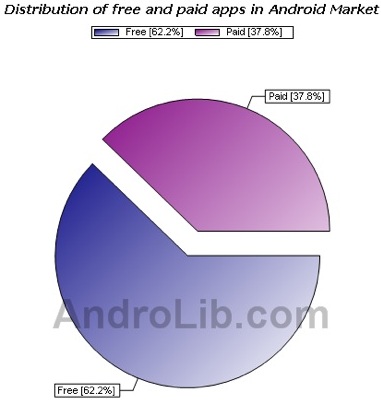 That being said, I keep finding examples of how micropayments do work in some contexts and it has kept me wondering if there’s still a chance for micropayments to work in other contexts (like funding media content). For example, I mentioned here before how shocked I was when I went back and looked at my eBay transactions for the past couple of years and realized how many “small-dollar” purchases I had made via PayPal (mostly dumb stickers and other little trinkets). And the micropayment model also seems to be doing reasonably well in the online music world. In January 2009, Apple reported that the iTunes Music Store had sold over 6 billion tracks.
And then there are mobile application stores. Just recently I picked up a Droid and I’ve been taking advantage of the rapidly growing Android marketplace, which recently hit the 20,000 apps mark. Like Apple’s 100,000-strong App Store, there’s a nice mix of paid and free apps, and even though I’m downloading mostly freebies, I’ve started buying more paid apps. Many of them are “upsells” from free apps I downloaded. In most cases, they are just 99 cents. A few examples of paid apps I’ve downloaded or considered buying: Stocks Pro, Mortgage Calc Pro, Currency Guide, Photo Vault, Weather Bug Elite, and Find My Phone. And there are all sorts of games, clocks, calendars, ringtones, heath apps, sports stuff, utilities, and more that are 99 cents or $1.99. Some are more expensive, of course.
Continue reading →
PFF has just released the transcript of an excellent panel discussion I moderated last week entitled, “Let’s Make a Deal: Broadcasters, Mobile Broadband, and a Market in Spectrum.” As I’ve mentioned here before, one of the hottest issues in DC right now is the question of broadcast TV spectrum reallocation. Blair Levin, who serves as the Executive Director of the Omnibus Broadband Initiative at the Federal Communications Commission, recently raised the possibility of reallocating a portion of broadcast television spectrum for alternative purposes, namely, mobile broadband. Such a “cash-for-spectrum” swap would give mobile broadband providers to spectrum they need to roll out next generation wireless broadband networks while making sure broadcaster receive compensation for any spectrum they hand over. The FCC just recently released a public notice on “Data Sought on Users of Spectrum,” (NBP Public Notice # 26) that looks into the matter. “This inquiry,” the agency says,” takes into account the value that the United States puts on free, over-the-air television, while also exploring market-based mechanisms for television broadcasters to contribute to the broadband effort any spectrum in excess of that which they need to meet their public interest obligations and remain financially viable.” Meanwhile, the House Energy and Commerce Communications Subcommittee is set to hold a hearing on the issue next Tuesday.
PFF’s panel discussion on this issue featured an all-star cast of characters, including opening remarks by Blair Levin, and a terrific discussion ensued. [You can hear the full audio from the event here.] Down below I have highlighted some of the major points each speaker made during the discussion and also embedded the complete transcript in a Scribd reader. Also, just a reminder that my PFF colleague Barbara Esbin and I authored a short paper on this issue recently: “An Offer They Can’t Refuse: Spectrum Reallocation That Can Benefit Consumers, Broadcasters & the Mobile Broadband Sector.”
Continue reading →
It’s truly amazing how fast mobile broadband demand is expanding. A couple of things caught my eye yesterday that really drove that home. First, I was reading Bernstein Research’s weekly (subscription-only) newsletter and Craig Moffett, one of America’s top media and communications analysts, summarized the growing mobile bandwidth crunch as follows:
To fully grasp the challenge facing wireless providers as we make the transition from wireless voice to wireless data, it is helpful to put some ballpark numbers around current usage levels. Today, the average voice-only customer consumes something like 50 megabytes of data every month. For that, they pay about $40, or about $0.80 per megabyte. That’s 70% of wireless industry revenues. Text messaging generates another $10 per month for a minuscule amount of data (in fact, arguably no throughput at all, since text messaging travels in a signaling band rather than in the carrier band itself). Let’s call it $1,000 per megabyte. That’s another 15% of industry revenues. On a blended basis, then, that’s $1.00 per megabyte for 85% of industry revenues.
And then there’s the iPhone. By some estimates, the average iPhone user consumes as much as 800 megabytes per month. Take out their 50 Mb for voice and you’re looking at 750 Mb of data… for an additional $30. For the mathematically challenged, that’s a princely sum of… wait for it… four cents per megabyte. Worse, we noted that the FCC’s wireless net neutrality policies posed the risk of “bandwidth arbitrage,” where low bandwidth services (at $1.00 per megabyte) would be replaced with free or almost free applications that ride on $0.04 per megabyte data plans, and where carriers’ hands would be tied to prevent it. Taking a business that is currently getting $1.00 per megabyte down to just $0.04 per megabyte is, well, hard. And lest anyone think that this threat is idle fear-mongering, Google’s acquisition last week of Gizmo5, a wireless VoIP specialist, should give one pause.
Those are stunning numbers. And then I saw this new filing by CTIA listing some other statistics about growing mobile broadband demand:
Continue reading →
As I noted in a recent paper with my PFF colleague Barbara Esbin (“An Offer They Can’t Refuse: Spectrum Reallocation That Can Benefit Consumers, Broadcasters & the Mobile Broadband Sector“) an official at the Federal Communications Commission (Blair Levin) recently suggested that it might be possible to craft a grand bargain whereby television broadcasters get cash for some (or all) of their current spectrum if they return it to the FCC for reallocation and auction. Such a deal could, eventually, open up significant amounts of prime spectrum for next-generation mobile broadband and data services.
Is such a deal feasible and in the best interests of broadcasters? Is the arrangement necessary to encourage growth in broadband penetration consistent with the goals of the Recovery Act? Will Congress go along with the deal, or would it be blocked as contrary to “the public interest?” Alternatively, would lawmakers back the deal but seek a significant cut of the auction proceeds, leaving less available for broadcasters? These and other policy issues will be discussed at “
Let’s Make a Deal: Broadcasters, Mobile Broadband, and a Market in Spectrum,” a congressional seminar hosted by The Progress & Freedom Foundation. The event will be held Tuesday, December 1st from 9:00am to 11:00am in the Holeman Lounge, 13th Floor, at the National Press Club, 529 14th Street, NW in Washington, DC.
Panelists confirmed so far for the event include:
- Blair Levin, Executive Director, Omnibus Broadband Initiative, Federal Communications Commission
- Coleman Bazelon, Principal, The Brattle Group
- David Donovan, President, Association for Maximum Service Television
- Kostas Liopiros, Principal, The Sun Fire Group
- John K. Hane, Counsel, Pillsbury Winthrop Shaw Pittman LLP
- and 1 or 2 more to come!
I will be moderating the event. Those interested in attending can
register here. Should be a spirited debate.
Along with my colleague Barbara Esbin, the Director of PFF’s Center for Communications and Competition Policy, I have just released a new paper on discussing the possibility of reallocating a portion of broadcast television spectrum for alternative purposes, namely, mobile broadband. As I discussed here before, Blair Levin, the Executive Director of the FCC’s Omnibus Broadband Initiative, has been suggesting that it might be possible to craft a grand bargain whereby broadcasters get cash for some (or all) of their current spectrum allocations if they return spectrum to the FCC for reallocation and re-auction, likely to mobile broadband services.
In our paper, “An Offer They Can’t Refuse: Spectrum Reallocation That Can Benefit Consumers, Broadcasters & the Mobile Broadband Sector,” [PDF] Barbara and I argue that:
the benefits of such a deal could be enormous for wireless broadband providers, developers of digital technologies, and consumers. Expanding the pool of spectrum available for next-generation wireless broadband offerings will ensure that innovative new networks, devices, and services are made available to the public on a timely basis. Ultimately, that will mean more high-speed choices for consumers, especially those in rural areas harder to reach with high-speed wireline networks. Finally, more generally, anything that moves us in the direction of a freer market in spectrum is a good thing.
But fairness to broadcasters lies at the heart of this spectrum reallocation plan. If a deal can’t be structured that broadcasters would find acceptable, they should not be forced to come to the table. When we speak of an offer they can’t refuse, we mean one so attractive that no rational businessperson or investor would pass it up. It is essential broadcasters be willing partners in the deal, and be full participants in the process of shaping its contours.
Read the entire thing here, or below the fold as a Scribd document. Continue reading →
I’ve ranted on here before about technological etiquette, or that lack thereof by many people. (See my tedious screed from 3 years ago: “A Few Snooty Words about Technological Etiquette.” Man, I was really angry when I wrote that piece!) As much as I love technology and defend its unrestricted use, I think it’s important to encourage social norms about proper technology use to make it less likely people will call government in to act as a nanny.
That’s why I found this new “Intel Holiday Mobile Etiquette” poll so intriguing. According to the poll, which was conducted by Harris Interactive and sponsored by Intel:
most online U.S. adults (80 percent) feel there are unspoken rules about mobile technology usage, and approximately 7 in 10 (69 percent) agreed that violations of these unspoken mobile etiquette guidelines, such as checking e-mails, sending text messages and making phone calls while in the company of others, are unacceptable.
Hmmm… While I’m glad that such a large majority still have a sense of propriety about such things,
this sounds like a case of people saying one thing when they likely do quite another. Then again, my perspective might be biased by life in a big city where people have PDAs practically glued to their hands full-time. I’ve even grown accustomed to people staring at their digital devices more than me during conversations and meetings. Of course, that could just be because I am so damn boring. [My colleague Jim Harper will, no doubt, suggest the latter.] Regardless, I just remain shocked by how people feel they simply must take every call, answer every email, or do whatever else on their devices in the presence of crowds or others. In my rant from 3 years ago, I offered “Two Simple Rules of Techno-Etiquette” that I will reiterate here as the first steps down the path to techno-etiquette recovery:
(1) If you absolutely MUST take that cell phone call or answer that e-mail right away, try saying this: “Excuse me, do you mind if I do this real quick?”
(2) Do not EVER, under any circumstances, answer a cell phone call while you are in a restaurant, movie theater or other public establishment where relative quiet is expected. If you have to take the call, go outside.
Seriously, would that be so hard?
 Wal-Mart is often cast as a villain by some labor unions, local politicians and small retailers, but for the average consumer Wal-Mart has been a savior: A relentless price-cutting machine that instantly changes the dynamics of every market it touches. Indeed, when Wal-Mart decides to jump into a sector by offering a new good or service in its stores, something akin to “the Southwest effect” on steroids kicks in: That market segment is often transformed overnight in that the good or service Wal-Mart starts delivering is essentially instantly commoditized. For the seller of that good or service, this is both a blessing and a curse: They gain the massive market reach that goes along with being in Wal-Mart’s 8,000 retail stores. On the other hand, they instantly surrender any semblance of pricing power they once had. And this typically also puts downward pressure on prices not just for the particular good carried in the Wal-Mart stores, but for that entire market segment more generally. [This exact scenario is currently playing out in the book marketplace as Wal-Mart has gone to war with Amazon in cost-cutting bonanza.]
The reason I bring all this up is because, as most of you probably already heard, Wal-Mart jumped into the prepaid cell phone business this week with the launch of Straight Talk:
a new solution in no-contract cellular, exclusively at more than 3,200 Walmart stores nationwide starting October 18, 2009. Straight Talk will bring to the market a new low price for no-contract wireless service with two prepaid plans now available to customers nationwide at $30 and $45 a month. Straight Talk will only be available in Walmart stores and online at www.Walmart.com and www.StraightTalk.com. The average U.S. adult spends $78 on his or her cell phone bill to receive 1000 minutes a month. By switching to the $30 Straight Talk plan, for example, the average 1,000 minutes-per-month consumer could save more than $500 per year and still be on a reliable nationwide network.
I don’t want to overplay the significance of this development, but I really do believe that Wal-Mart’s presence in this field is significant, at least for entry-level mobile phones. While it would be easy for those of us who use more advanced smartphones to shrug off the Wal-Mart announcement, it would be a mistake for reasons made clear by David Worthington over at Technologizer: Continue reading →

 The Technology Liberation Front is the tech policy blog dedicated to keeping politicians' hands off the 'net and everything else related to technology.