 When the only tool you have is a hammer, as the old cliché goes, everything looks like a nail.
Net neutrality, as I first wrote in 2006, is a complicated issue at the accident-prone intersection of technology and policy. But some of its most determined—one might say desperate—proponents are increasingly anxious to simplify the problem into political slogans with no melody and sound bites with no nutritional value. Even as—perhaps precisely because—a “win-win-win” compromise seems imminent, the rhetorical excess is being amplified. The feedback is deafening.
In one of the most bizarre efforts yet to make everything be about net neutrality, Public Knowledge issued several statements this week “condemning” Fox’s decision to prohibit access to its online programming from Cablevision internet users. In doing so, the organization claims, Fox has committed “the grossest violations of the open Internet committed by a U.S. company.”
This despite the fact that the open Internet rules (pick whatever version you like) apply only to Internet access providers. Indeed, the rules are understood principally as a protection for content providers. You know, like Fox. Continue reading →
“There’s no question [cable news is] contributing to the splintering of the political system and the means by which people get information about that system,” said Robert Thompson, who runs the Bleier Center for Television and Popular Culture at Syracuse University. “If there’s no standard base line of fact and reporting, where can the conversation go?”
This, from “Cable News Chatter is Changing the Electoral Landscape,” by Howard Kurtz and Karen Tumulty in today’s Washington Post.
Cable news and, of course, the Internet are definitely splintering the media environment. But there’s a big difference between the political system and the means by which people get information about it. Why on earth should there be a standard base line on which all political conversation must rest?
Speaking of earth, people used to think that the earth was at the center of the universe. Other planets moved erratically with relation to ours, and that was difficult to explain. Now we know that it is the sun at the center of our solar system, and the movements of planets, stars, and galaxies have been rationalized.
Many of us occupy different political and ideological planets, some of which have similar orbits, some very different. Slowly, sometimes, we can align our orbits by inquiring and debating about the nature of humankind, what is good, and the social systems that produce the greatest good for the greatest number.
Finding out that we should have these debates is not a threat to the political system. It’s a threat to the geocentric model of the political system, in which the three major networks provided the “standard base line of fact and reporting.”
The media universe is still not splintered enough, in my opinion. But, increasingly, the conversation will more easily go wherever it is supposed to go, unhindered by the false authority of a small number of news executives.
Interesting article in the New York Times today about how the radical media activist group Free Press is now working with an organization called The Harmony Institute toward the goal of “Adding Punch to Influence Public Opinion.” The way they want to “add punch” is through entertainment propaganda. The Times article notes that Harmony’s mission is “aimed at getting filmmakers and others to use the insights and techniques of behavioral psychology in delivering social and political messages through their work.” And now they want to use such “behavioral psychology” and “political messaging” (read: propaganda) techniques in pursuit of Net neutrality regulation.
More on that agenda in a second. First, I just have to note the irony of Harmony’s founder John S. Johnson citing “The Day After Tomorrow” as a model for the sort of thing he wants to accomplish. According to the
Times interview with him, he says the movie’s “global warming message [and] rip-roaring story, appeared to alter attitudes among young and undereducated audiences who would never see a preachy documentary.” I love this because “The Day After Tomorrow” was such a shameless piece of globe warming doomsday propaganda that it must have even made the people at Greenpeace blush in embarrassment. After all, here is a movie that claims global warming will result in an instantaneous global freeze (how’s that work again?) and leave kids scurrying for the safety of New York City libraries until a quick thaw comes a couple of weeks later. (Seriously, have you seen that movie? That’s the plot!) So apparently we can expect some pretty sensational, fear-mongering info-tainment from Harmony and Free Press.
But here’s what’s better: Do you know who produced “The Day After Tomorrow”? Oh, that’s right… Rupert Murdoch’s News Corporation financed and distributed that movie!! The man that Free Press casts as the nefarious media overlord set to take over all media and program our brains gave us the greatest piece of radical environmental propaganda of modern times. Now, which does that prove: (A) Rupert Murdoch is hell-bent on programming our minds to embrace a sweeping global warming regulatory agenda, or (B) Rupert Murdoch is out to entertain people and make money? If you answered B, congratulations for being a sensible person. If you answered A, then click here now to start giving money to the Free Press!
OK, so let’s get back to Free Press and what they are up to with the Harmony Institute (which I originally thought was an online dating site). Free Press apparently hired Harmony to research public attitudes about Net neutrality and how to influence them. Harmony’s Johnson tells the
Times they got interested in the Net neutrality because Free Press and the Pacific Foundation paid them handsomely to do so. And it appears Free Press got their money’s worth. Continue reading →
Over at MediaFreedom.org, a new site devoted to fighting the fanaticism of radical anti-media freedom groups like Free Press and other “media reformistas,” I’ve started rolling out a 5-part series of essays about “The Battle for Media Freedom.” In Part 1 of the series, I defined what real media freedom is all about, and in Part 2 I discussed the rising “cyber-collectivist” threat to media freedom. In my latest installment, I offer an analytical framework that better explains the major differences between the antagonists in the battle over media freedom.
Understanding the Origins of Political Struggles
 In his many enlightening books, Thomas Sowell, a great economist and an even better political scientist, often warns of the triumph of good intentions over good economics. It’s a theme that F.A. Hayek and Milton Friedman both developed extensively before him. But Sowell has taken this analysis to an entirely differently level in books like A Conflict of Visions: Ideological Origins of Political Struggles, and
The Vision of the Anointed: Self-Congratulation as a Basis for Social Policy
. Sowell teaches us that no matter how noble one’s intentions might be, it does not mean that those ideas will translate into sound public policy. Nonetheless, since “the anointed” believe their own intentions are pure and their methods are sound, they see nothing wrong with substituting their will for the will of millions of individuals interacting spontaneously and voluntarily in the marketplace. The result is an expansion of the scope of public decision-making and a contraction of the scope of private, voluntary action. As a result, mandates replace markets, and freedom gives way central planning.
In his many enlightening books, Thomas Sowell, a great economist and an even better political scientist, often warns of the triumph of good intentions over good economics. It’s a theme that F.A. Hayek and Milton Friedman both developed extensively before him. But Sowell has taken this analysis to an entirely differently level in books like A Conflict of Visions: Ideological Origins of Political Struggles, and
The Vision of the Anointed: Self-Congratulation as a Basis for Social Policy
. Sowell teaches us that no matter how noble one’s intentions might be, it does not mean that those ideas will translate into sound public policy. Nonetheless, since “the anointed” believe their own intentions are pure and their methods are sound, they see nothing wrong with substituting their will for the will of millions of individuals interacting spontaneously and voluntarily in the marketplace. The result is an expansion of the scope of public decision-making and a contraction of the scope of private, voluntary action. As a result, mandates replace markets, and freedom gives way central planning.
Sowell developed two useful paradigms to help us better understand “the origins of political struggles.” He refers to the “constrained” versus “unconstrained” vision and separates these two camps according to how they view the nature of man, society, economy, and politics:
| “Constrained Vision” |
“Unconstrained Vision” |
| Man is inherently constrained; highly fallible and imperfect |
Man is inherently unconstrained; just a matter of trying hard enough; man & society are perfectible |
| Social and economic order develops in bottom-up, spontaneous fashion. Top down planning is hard because planners aren’t omnipotent. |
Order derives from smart planning, often from top-down. Elites can be trusted to make smart social & economic interventions. |
| Trade-offs & incentives matter most; wary of unintended consequences |
Solutions & intentions matter most; less concern about costs or consequences of action |
| Opportunities count more than end results; procedural fairness is key; Liberty trumps |
Outcomes matter most; distributive or “patterned” justice is key; Equality trumps liberty |
| Prudence and patience are virtues. There are limits to human reason. |
Passion for, and pursuit of, high ideals trumps all. Human reason has boundless potential. |
| Law evolves and is based on the experience of ages. |
Law is made by trusted elites. |
| Markets offer benefit of experience & experimentation and help develop knowledge over time. |
Markets cannot ensure desired results; must be superseded by planning & patterned justice |
| Exponents: Aristotle, Adam Smith, Edmund Burke, James Madison, Lord Acton, F.A. Hayek, Ludwig von Mises, Milton Friedman, James Buchanan, Robert Nozick |
Exponents: Plato, Rousseau, William Godwin, Voltaire, Robert Owen, John Kenneth Galbraith, John Dewey, Earl Warren, Bertrand Russell, John Rawls |

[cross-posted from BigGovernment.com]
In the battle over media and communications freedom, no group poses a more serious threat to a free and independent press than the insultingly misnamed regulatory activist group Free Press. Along with their founders, the prolific neo-Marxist media theorist Robert W. McChesney and Nation correspondent John Nichols, Free Press has engaged in relentless agitation for a truly radical media and communications policy agenda, and their influence is now spreading throughout the Obama Administration.
The Free Press-McChesney blueprint for media “reform” reads more like a script for State servitude. On the regulatory side, they call for media ownership restrictions, “localism” mandates, “Net neutrality” regulations, price controls on broadband, advertising and copyright restrictions, and layers of additional regulatory edicts. Once all that red tape smothers the life out the independent press and private communications providers, they plan to have the State step in become the primary benefactor of the Fourth Estate and high-tech infrastructure. For starters, McChesney and Nichols advocate a $35 billion annual “public works” program for the press modeled after the Works Progress Administration of the New Deal era. Their media WPA would include a “News AmeriCorps” for out-of-work journalists, a “Citizenship News Voucher” to funnel taxpayer support to struggling media entities, a significant expansion of postal subsidies, a massive new subsidy for journalism schools, corporate welfare for newspapers sufficient to pay 50 percent of the salaries of all “journalistic employees,” municipal government ownership of press and infrastructure, and many more bureaucratic programs. Continue reading →
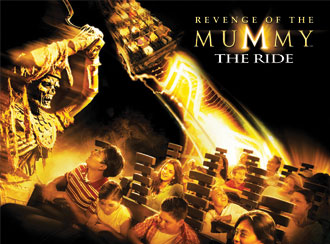 I’m hoping to get some input from readers as I look to finish up an amicus brief for the forthcoming Schwarzenegger v. EMA video game case. (Respondent briefs are due in mid-Sept and the State of California just filed its brief with the Court today). You will recall that the Supreme Court accepted the case for review in April, meaning it will be the first major case regarding video game speech rights heard by our nation’s highest court. It raises questions about the First Amendment status of games and what rights minors have to buy or play “violent” video games. One section I hope to include in the brief I’m working on deals with how other forms of media content are increasingly intertwined with video game content. In it, I explain how video games are less of a discreet category of visual entertainment than they once were. I’d welcome ideas for other examples to use relative to the ones you see below.
I begin by discussing games that were inspired by major motion pictures, such as both the recent
Star Wars and Lord of the Rings movie trilogies, for example. I also note that many games were inspired by notable books, such as the LotR games being inspired by Tolkien, and The Godfather video games that were inspired by Mario Puzo’s novel of the same name. I also make mention of The Terminator movies starring California Governor Arnold Schwarzenegger, which inspired a wide variety of video games, many of which featured his likeness.
More importantly, I highlight how many video games are now inspiring movies, music, books, and comics, including:
Prince of Persia, Max Payne, Resident Evil, Tomb Raider, Doom, Final Fantasy, Halo, and Gears of War. The characters and storylines in the books, comics, and movies based on these games often closely track the video games that inspired them. Increasingly, therefore, games are developed along parallel tracks with these other forms of content. Thus, to regulate games under the standard California proposes in this case raises the question of whether those other types of media should be regulated in a similar fashion. Should every iteration of the original game title be regulated under the standard California has suggested if those books, comics, or movies contain violent themes?
Continue reading →
 I’ve been so busy trying to cover breaking developments related to Washington’s new efforts to “save journalism” (FTC) and steer the “future of media” (FCC) — see all my recent essays & papers here — that I forgot to do a formal book review of the book that is partially responsible for whipping policymakers into a lather about this issue: The Death and Life of American Journalism, the media-takeover manifesto by the neo-Marxist media scholar Robert W. McChesney and Nation editor John Nichols. Their book is horrifying in its imperial ambitions since it invites the government become the High Lord and Protector of the Fourth Estate. [For an in-depth look at all of McChesney’s disturbing views on these issues, see: “Free Press, Robert McChesney & the “Struggle” for Media.”] Anyway, I put together a formal review of the book for City Journal. It’s online here and I’ve also pasted it down below.
A Media Welfare State?
by Adam Thierer
Imagine a world of “post-corporate” newsrooms, where the state serves as the primary benefactor of the Fourth Estate. Billions flow from bureaucracies to media entities and individual journalists in the name of sustaining a “free press.” And this new media welfare state is funded by steep taxes on our mobile phones, broadband connections, and digital gadgets.
Sound Orwellian? Well, it’s the blueprint for a press takeover drawn up by Robert W. McChesney and John Nichols in their new book,
The Death and Life of American Journalism. McChesney, the prolific neo-Marxist media scholar who teaches at the University of Illinois at Urbana-Champaign, and Nichols, a journalist with The Nation, aren’t shy about their intentions. Along with Free Press, the absurdly misnamed regulatory activist group they co-founded, McChesney and Nichols outline a self-described “radical” agenda for what they hope will become a media “revolution.” And, shockingly, some folks in the Obama administration are listening. Continue reading →
So, I’m sitting here at today’s Federal Trade Commission (FTC) workshop, “Will Journalism Survive the Internet Age?” and several panelists have argued that private “professional” media is toast, not just because of the rise of the Net and digital media, but also because the inherent cross-subsidy that advertising has traditionally provided is drying up. It very well could be the case that both statements are true and that private media operators are in some trouble because of it. But what nobody seems to be acknowledging is that our government is currently on the regulatory warpath against advertising and that this could have profound impact on the outcome of this debate.
As Berin Szoka and I noted in a recent paper, “The Hidden Benefactor: How Advertising Informs, Educates & Benefits Consumers,” the FTC, the FCC, the FDA, and Congress are all considering, or already imposing, a host of new rules that will seriously affect advertising markets. This article in
AdAge today confirms this:
The advertising industry is heading for a “tsunami” of regulation and is at a “tipping point” of greatly increased scrutiny, warned a panel on social media and privacy at the American Advertising Federation conference here [in Orlando].
The reason this is so important for the ongoing debate about the future of media and journalism is because, as Berin and I argued in our paper: Continue reading →
Just a reminder that tomorrow the Federal Trade Commission (FTC) will be hosting the 3rd workshop in its ongoing event series, “Will Journalism Survive the Internet Age?” This workshop will feature various experts discussing the FTC’s 47-page “staff discussion draft,” which outlines “Potential Policy Recommendations to Support the Reinvention of Journalism.” In these two recent essays, I discussed the controversy surrounding some of the recommendations in that discussion draft:
According to this press release announcing the event,”The workshop is free and open to the public, but space is limited and attendees will be admitted on a first-come basis. The workshop will be held at: The National Press Club, 549 14th Street NW, 13th Floor, Washington, DC. Members of the public and press who wish to participate but who cannot attend can view a live webcast. A link will be available on the day of the workshop at: http://www.ftc.gov/opp/workshops/news/index.shtml.”
Unless I am missing something, the FTC has still not posted an agenda or list of speakers, which is a bit strange. But apparently Rick Edmonds of the Poynter Institute will be participating. He’s got a nice piece up over at Poynter Online (“FTC Future-of-Journalism Inquiry Wraps Up With Little Momentum for Major Intervention“) summarizing some of what he’ll say tomorrow. I particularly liked his conclusion, which echoes the call Berin Szoka and I have made for allowing continuing marketplace evolution and experimentation: Continue reading →
Note to Washington regulators and would-be censors… Don’t look now but parenting is happening! Yes, it really is true: Parents are parenting. That’s the result of this new survey by Yahoo & Ipsos OTX. Please pardon my snarky-ness, but I’ve been going at it for years with mobs of people here in DC who think that all parents are asleep at the wheel and kids are heading straight for the moral abyss. It’s a bunch of bunk, as I’ve pointed out here before. This new Yahoo!/Ipsos survey illustrates that, once again, parents are monitoring what their kids are up to online and taking an active role in mentoring them about web use:
- 78% of parents are concerned about their children’s online safety.
- 70% of parents talk to their children about online safety at least 2-3 times a year; 45% talk to their children at least once a month.
- 74% of parents are connected to their children’s profiles on social networking sites.
- 71% of parents have taken at least one action to manage their children’s use of the Internet or cell phones such as: Check to see where children are searching online; Set time limits for children’s use of computers or cell phones; Set parental controls on video sites; Use filters to limit where children go on the Web.
These results are consistent with what I have found and described in my ongoing PFF special report, Parental Controls & Online Child Protection: A Survey of Tools and Methods. Obviously, many parents utilize the growing diversity of parental control technologies that are at their disposal to better control/monitor their children’s online activities/interactions. But what’s really impressive (and far more important) is that so many surveys and studies continue to show that the vast majority of parents utilize a variety of household “media consumption rules” as a substitute for, or compliment to, parental control technologies. Continue reading →

 The Technology Liberation Front is the tech policy blog dedicated to keeping politicians' hands off the 'net and everything else related to technology.