The success of the Internet and the modern digital economy was due to its open, generative nature, driven by the ethos of “permissionless innovation.” A “light-touch” policy regime helped make this possible. Of particular legal importance was the immunization of online intermediaries from punishing forms of liability associated with the actions of third parties.
As “software eats the world” and the digital revolution extends its reach to the physical world, policymakers should extend similar legal protections to other “generative” tools and platforms, such as robotics, 3D printing, and virtual reality.
In other words, we need a Section 230 for the “maker” movement. Continue reading →
 The Mercatus Center at George Mason University has just released my latest working paper, “The Internet of Things and Wearable Technology: Addressing Privacy and Security Concerns without Derailing Innovation.” The “Internet of Things” (IoT) generally refers to “smart” devices that are connected to both the Internet and other devices. Wearable technologies are IoT devices that are worn somewhere on the body and which gather data about us for various purposes. These technologies promise to usher in the next wave of Internet-enabled services and data-driven innovation. Basically, the Internet will be “baked in” to almost everything that consumers own and come into contact with.
Some critics are worried about the privacy and security implications of the Internet of Things and wearable technology, however, and are proposing regulation to address these concerns. In my new 93-page article, I explain why preemptive, top-down regulation would derail the many life-enriching innovations that could come from these new IoT technologies. Building on a recent book of mine, I argue that “permissionless innovation,” which allows new technology to flourish and develop in a relatively unabated fashion, is the superior approach to the Internet of Things.
As I note in the paper and my earlier book, if we spend all our time living in fear of the worst-case scenarios — and basing public policies on them — then best-case scenarios can never come about. As the old saying goes: nothing ventured, nothing gained. Precautionary principle-based regulation paralyzes progress and must be avoided. We instead need to find constructive, “bottom-up” solutions to the privacy and security risks accompanying these new IoT technologies instead of top-down controls that would limit the development of life-enriching IoT innovations. Continue reading →
If there are two general principles that unify my recent work on technology policy and innovation issues, they would be as follows. To the maximum extent possible:
- We should avoid preemptive and precautionary-based regulatory regimes for new innovation. Instead, our policy default should be innovation allowed (or “permissionless innovation”) and innovators should be considered “innocent until proven guilty” (unless, that is, a thorough benefit-cost analysis has been conducted that documents the clear need for immediate preemptive restraints).
- We should avoid rigid, “top-down” technology-specific or sector-specific regulatory regimes and/or regulatory agencies and instead opt for a broader array of more flexible, “bottom-up” solutions (education, empowerment, social norms, self-regulation, public pressure, etc.) as well as reliance on existing legal systems and standards (torts, product liability, contracts, property rights, etc.).
I was very interested, therefore, to come across two new essays that make opposing arguments and proposals. The first is this recent
Slate oped by John Frank Weaver, “We Need to Pass Legislation on Artificial Intelligence Early and Often.” The second is Ryan Calo’s new Brookings Institution white paper, “The Case for a Federal Robotics Commission.”
Weaver argues that new robot technology “is going to develop fast, almost certainly faster than we can legislate it. That’s why we need to get ahead of it now.” In order to preemptively address concerns about new technologies such as driverless cars or commercial drones, “we need to legislate early and often,” Weaver says. Stated differently, Weaver is proposing “precautionary principle”-based regulation of these technologies. The precautionary principle generally refers to the belief that new innovations should be curtailed or disallowed until their developers can prove that they will not cause any harms to individuals, groups, specific entities, cultural norms, or various existing laws, norms, or traditions.
Calo argues that we need “the establishment of a new federal agency to deal with the novel experiences and harms robotics enables” since there exists “distinct but related challenges that would benefit from being examined and treated together.” These issues, he says, “require special expertise to understand and may require investment and coordination to thrive.
I’ll address both Weaver and Calo’s proposals in turn. Continue reading →
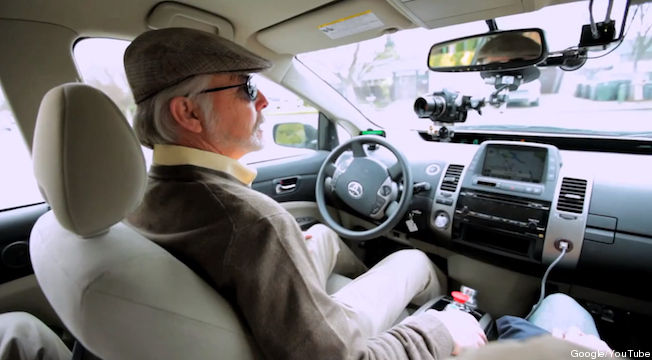 I’m pleased to announce that the Mercatus Center at George Mason University has just released my latest working paper, “Removing Roadblocks to Intelligent Vehicles and Driverless Cars.” This paper, which was co-authored with Ryan Hagemann, has been accepted for publication in a forthcoming edition of the Wake Forest Journal of Law & Policy.
In the paper, Hagemann and I explore the growing market for both “connected car” technologies as well as autonomous (or “driverless”) vehicle technology. We argue that intelligent-vehicle technology will produce significant benefits. Most notably, these technologies could save many lives. In 2012, 33,561 people were killed and 2,362,000 injured in traffic crashes, largely as a result of human error. Reducing the number of accidents by allowing intelligent vehicle technology to flourish would constitute a major public policy success. As Philip E. Ross noted recently at IEEE Spectrum, thanks to these technologies, “eventually it will be positively hard to use a car to hurt yourself or others.” The sooner that day arrives, the better.
These technologies could also have positive environmental impacts in the form of improved fuel economy, reduced traffic congestion, and reduced parking needs. They might also open up new mobility options for those who are unable to drive, for whatever reason. Any way you cut it, these are exciting technologies that promise to substantially improve human welfare.
Of course, as with any new disruptive technology, connected cars and driverless vehicles raise a variety of economic, social, and ethical concerns. Hagemann and I address some of the early policy concerns about these technologies (safety, security, privacy, liability, etc.) and we outline a variety of “bottom-up” solutions to ensure that innovation continues to flourish in this space. Importantly, we also argue that policymakers should keep in mind that individuals have gradually adapted to similar disruptions in the past and, therefore, patience and humility are needed when considering policy for intelligent-vehicle systems. Continue reading →
On Thursday, it was my great pleasure to present a draft of my forthcoming paper, “The Internet of Things & Wearable Technology: Addressing Privacy & Security Concerns without Derailing Innovation,” at a conference that took place at the Federal Communications Commission on “Regulating the Evolving Broadband Ecosystem.” The 3-day event was co-sponsored by the American Enterprise Institute and the University of Nebraska College of Law.
The 65-page working paper I presented is still going through final peer review and copyediting, but I posted a very rough first draft on SSRN for conference participants. I expect the paper to be released as a Mercatus Center working paper in October and then I hope to find a home for it in a law review. I will post the final version once it is released. [UPDATE:The final version of this working paper was released on November 19, 2014.]
In the meantime, however, I thought I would post the 46 slides I presented at the conference, which offer an overview of the nature of the Internet of Things and wearable technology, the potential economic opportunities that exist in this space, and the various privacy and security challenges that could hold this technological revolution back. I also outlined some constructive solutions to those concerns. I plan to be very active on these issues in coming months.
Continue reading →
My latest Forbes column is a celebration of 47 U.S.C. §230, otherwise known as “Section 230.” Sec. 230 turns 15 years old this year and I argue that this important law has “helped foster the abundance of informational riches that lies at our fingertips today” and has served as “the foundation of our Internet freedoms.” Sadly, however, few people have even heard of it. Worse yet, as I note in my essay, this important law is under attack from various academics and organizations who want it modified to address a variety of online problems. But, as I note:
If the threat of punishing liability is increased, the chilling effect on the free exchange of views and information would likely be quite profound. Many site administrators would immediately start removing massive amounts of content to avoid liability. More simply, they might just shut down any interactive features on their sites or limit service in other ways.
Head over to
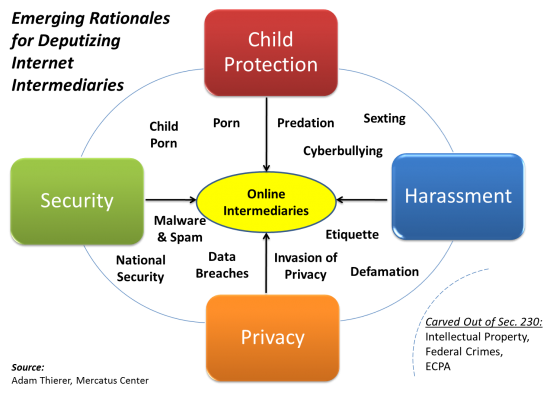
Forbes to read the rest. And here’s a graphic I put together illustrating all the new fault lines in the war against Sec. 230. It will be included in a new paper on the issue that I am wrapping up right now.
This week I will be attending two terrific conferences on Sec. 230 and Internet intermediary liability issues. On Thursday, the Stanford Technology Law Review hosts an all-day event on “Secondary and Intermediary Liability on the Internet” at the Stanford Law School. It includes 3 major panels on intermediary liability as it pertains to copyright, trademark, and privacy. On Friday, the amazing Eric Goldman and his colleagues at the Santa Clara Law School’s High Tech Law Institute host an all-star event on “47 U.S.C. § 230: a 15 Year Retrospective.” Berin Szoka and Jim Harper will also be attending both events (Harper is speaking at Stanford event) and Larry Downes will be at the Santa Clara event. So if you also plan to attend, come say ‘Hi’ to us. We don’t bite! (We have, however, been known to snarl.)
In the meantime, down below, I just thought I would post a few links to the many things we have said about Section 230 and online intermediary liability issues here on the TLF in the past as well as this graphic depicting some of the emerging threats to Sec. 230 from various proposals to “deputize the online middleman.” As we’ve noted here many times before, Sec. 230 is the “cornerstone of Internet freedom” that has allowed a “utopia of utopias” to develop online. It would be a shame if lawmakers rolled back its protections and opted for an onerous new legal/regulatory approach to handling online concerns. Generally speaking, education and empowerment should trump regulation and punishing liability.
Deputization of the Middleman http://d1.scribdassets.com/ScribdViewer.swf
Continue reading →
By Adam Thierer & Berin Szoka
Short but very important essay here from Santa Clara University Law School Prof. Eric Goldman about calls to alter Sec. 230 of the Communications Decency Act (CDA) to address concerns about online harassment. Generally speaking, Sec. 230 immunizes online intermediaries from punishing liability for the content that travels over their networks / services. Specifically, Sec. 230 stipulates that “No provider or user of an interactive computer service shall be treated as the publisher or speaker of any information provided by another information content provider.” In other words: Don’t shoot the messenger!
As we’ve noted here before, it is probably not an overstatement to think of Sec. 230 as the very cornerstone of Internet Freedom, since it makes possible an online “utopia for utopias,” to borrow a phrase from our favorite modern political philosopher, the late Robert Nozick. Without Sec. 230, intermediaries would likely be forced to shut down many avenues of communication and would have to become deputized conduct and morality police for every cyber-street corner.
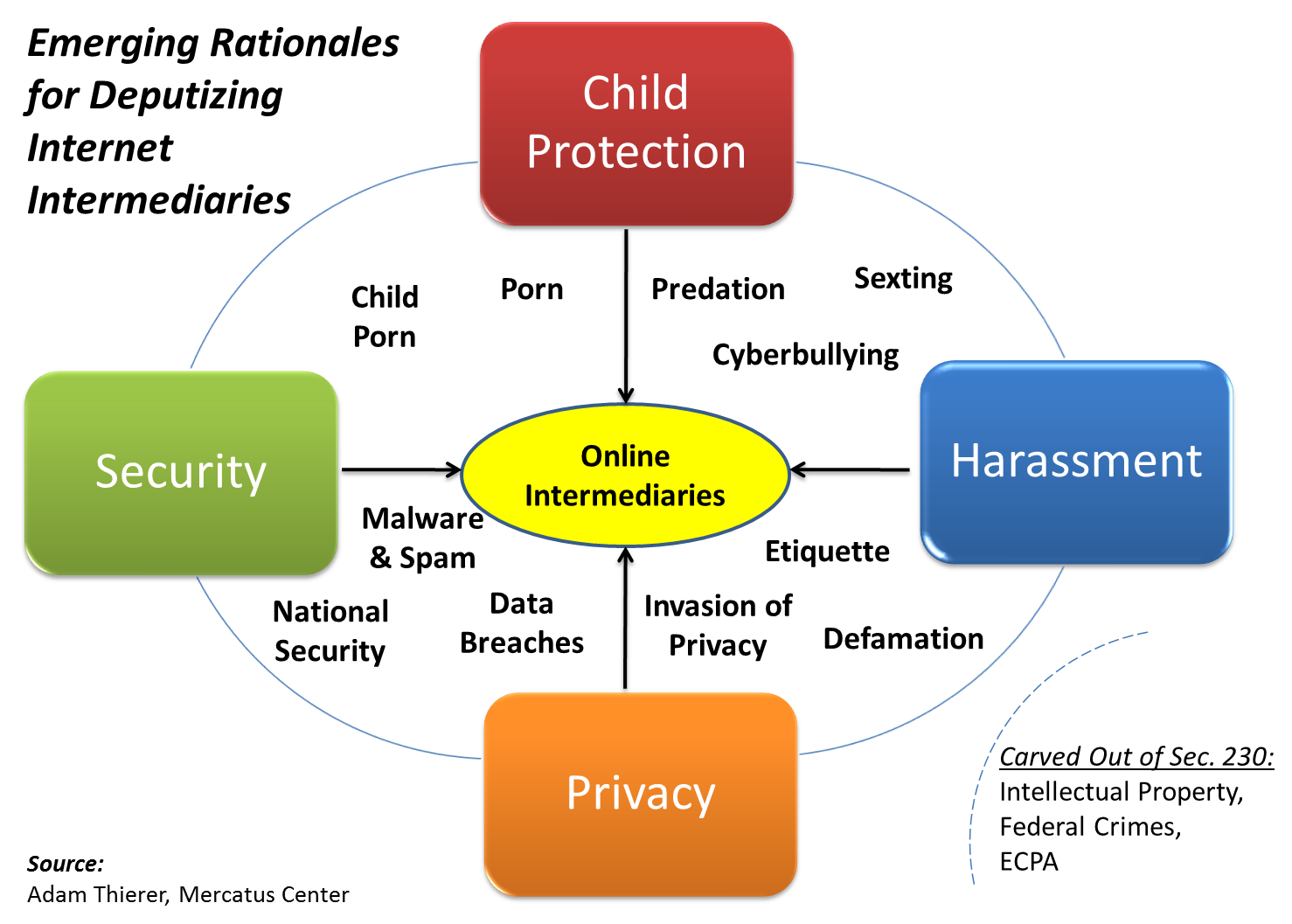
Goldman, America’s leading expert on Sec. 230-related jurisprudence, correctly notes that, “Frequently, § 230’s critics do not attack the immunization generally, but instead advocate a new limited exception for their pet concern.” He’s got that right. Indeed, we are increasingly hearing calls from numerous quarters these days to “tweak 230” for one pet concern after another. We’ve illustrated some of those concerns in this exhibit.
Deputization of the Middleman http://d1.scribdassets.com/ScribdViewer.swf
Regulatory advocates can be found for each of these issues who like to see the protections afforded by Sec. 230 scaled back by Congress or he courts. But Goldman rightly warns:
Continue reading →
I’ve been working closely with PFF Adjunct Fellow & former ICANN Board member Michael D. Palage on ICANN issues. Michael had this to say about the ongoing saga of ICANN’s attempt to create new gTLDs.
During the recent ICANN Board meeting in Mexico City, the Board authorized the creation and funding of an Implementation Recommendation Team (IRT). This team was to be comprised of “an internationally diverse group of persons with knowledge, expertise, and experience in the fields of trademark, consumer protection, or competition law, and the interplay of trademarks and the domain name system to develop and propose solutions to the overarching issue of trademark protection in connection with the introduction of new gTLDs.” This IRT is tasked to produce a report for consideration by the ICANN community at the Sydney meeting.
The IRT consists of 24 members:
- Chairwoman Caroline G. Chicoine; and
- Seventeen members; and
- Six ex officio members: Four IPC-elected officers and two-GNSO elected Board Directors (Bruce Tonkin and Rita Rodin Johnston).
I have a number of friends and colleagues serving on this team and I wish them well in their important endeavor.
I’ve previously proposed a number of rights-protection mechanisms that IRT should consider. Today, I offer a few suggestions that I hope will guide IRT as they embark on their important work tomorrow. In particular, I hope they’ll implement some of my suggestions intended to make the IRT process more transparent-so the rest of the global Internet can follow along with their important work and provide constructive input where possible.
Continue reading →
 Ars Technica has just posted the transcript of a friendly debate I recently engaged in with Harvard University law professor John Palfrey about the future of Section 230 of the Communications Decency Act and online liability more generally. Our debate got started last fall, shortly after I penned a favorable review of John’s excellent new book (with Urs Gasser), Born Digital: Understanding the First Generation of Digital Natives. [Listen to my podcast with John about it here.] Although I enjoyed John’s book, I also raised some concerns about his call in the book to reopen and revise Section 230, specifically to address child safety concerns. At the time, John and I were working together on the Berkman Center’s “Internet Safety Technical Task Force” and we decided to begin an e-mail exchange about the future of 230 and online liability norms more generally. The result was the debate that Ars has just published.
In our exchange, I begin by asking John to more fully develop some statements and proposals he sets forth in
Born Digital. Specifically, he and co-author Urs Gasser argue that: “The scope of the immunity the CDA provides for online service providers is too broad” and that the law “should not preclude parents from bringing a claim of negligence against [a social networking site] for failing to protect the safety of its users.” They also suggest that “There is no reason why a social network should be protected from liability related to the safety of young people simply because its business operates online.” Specifically, the call for “strengthening private causes of action by clarifying that tort claims may be brought against online service providers when safety is at stake,” although they do not define those instances.
Using those proposals as a launching point for our discussion, I challenge John as follows:
I’m troubled by your proposals because I believe Section 230 has been crucial to the success of the Internet and the robust marketplace of online freedom of speech and expression. In many ways — whether intentional or not — Section 230 was the legal cornerstone that gave rise to many of the online freedoms we enjoy today. I fear that the proposal you have set forth could reverse that. It could lead to crushing liability for many online operators-and not just giants like MySpace or Facebook-that might not be able to absorb the litigation costs. Could you elaborate a bit more about your proposal and explain why you think the time has come to alter Section 230 and online liability norms?
And John does and then we go back-and-forth from there. Again, you can read the whole exchange over at Ars.
It was a great pleasure to engage in this exchange with Prof. Palfrey and I look forward to what others have to say in response to our debate. I am working on a longer paper looking broadly at the rising threats to Sec. 230 and the increasing calls for expanded online liability and middleman deputization. I will use whatever feedback I get from this exchange to refine my paper and proposals.

 The Technology Liberation Front is the tech policy blog dedicated to keeping politicians' hands off the 'net and everything else related to technology.