In an earlier post, I mentioned an important new online child safety task force report that has just been released from the “Point Smart. Click Safe.” Blue Ribbon Working Group. It’s a great report and I encourage you to read the whole thing. It was my great pleasure to serve on this task force, and as we started finalizing our conclusions and recommendations, I started thinking about how much of what we were finding and recommending was consistent with what past online safety task forces had also concluded.
By way of background, over the past decade, five major online safety task forces or blue ribbon commissions have been convened to study online safety issues. Two of these task forces were convened in the United States and issued reports in 2000 (“COPA Commission”) and 2002 (“Thornburgh Commission“). Another was commissioned by the British government in 2007 and issued in a major report in March 2008 (“Byron Review“). Finally, two additional online safety task forces were formed in the U.S. in 2008 and concluded their work, respectively, in January (“Internet Safety Technical Task Force“) and July (“Point Smart. Click Safe.“) of 2009. [And yet another task force — the Online Safety Technology Working Group — was recently formed and has now gotten underway.]
In a new PFF white paper, ”
Five Online Safety Task Forces Agree: Education, Empowerment & Self-Regulation Are the Answer,” I walk through a chronological summary of each of these past task forces [click on covers of each report below to read them in their entirety] and highlight some of the similar themes and recommendations from them.
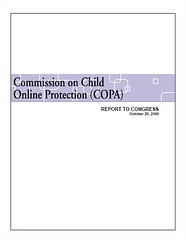
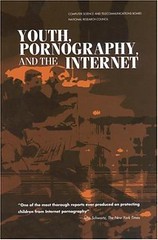
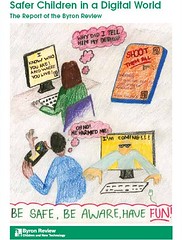
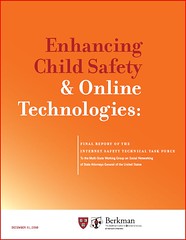
 Continue reading →
The painful issue of cyberbullying has recently taken center stage in the ongoing debate about online child safety. Last week I wrote about Lori Drew’s acquittal on charges related to Megan Meier’s tragic suicide, suggesting that the judge in the case was right to overturn her conviction on a very expansive reading of the federal anti-hacking statute. While I think that decision was necessary on legal grounds, it’s sure to add “fuel to the fire” of calls for “action” in Congress. Thus, I emphasized that observers of the case need to separate their understandable outrage from the from the questions of (1) whether that statute was properly applied and (2) how the law should treat such cases in the future.
On the second question, Adam and I recently released a major entitled, “Cyberbullying Legislation: Why Education is Preferable to Regulation.” We distinguish among:
- Cyberbullying: kid-on-kid abuse online
- Cyberharassment generally: people of all ages using the Internet to harass each other
- Adult-on-kid cyberharassment: For example, Lori Drew’s alleged (but still unclear) role in the Megan Meier case
In a nutshell, we argue that education is the better approach to cyberbullying (Problem #1)—an approach taken by a bill introduced in the Senate by Sen. Robert Menendez (D-NJ) and in the House by Rep. Debbie Wasserman Schultz (D-FL) . We go on to argue that, while it would be difficult to create criminal sanctions for cyberharassment generally (Problem #2) without infringing free speech and due process rights, it might be possible to craft laws narrowly tailored to cyberharassment of kids by adults (Problem #3). Continue reading →
Lori Drew was convicted late last year on charges related to her role in a cruel hoax that led to the tragic suicide of thirteen-year old Megan Meier in Missouri in 2006. But today, at her sentencing, the judge threw out her convictions. Millions around the world were horrified by Megan’s fate, and many will probably be upset that Drew might go unpunished. But we need to separate three questions in this case:
- Should the federal anti-hacking law under which she was convicted really be applied in such cases?
- What, precisely, was Drew’s involvement?
- The key question: What should be done about the general problems of cyberbullying and cyberharassment?
Misuse of the Anti-Hacking Statute
Judge Wu has yet to issue his written opinion but seems to have agreed with the various experts on Internet law who argued that, however tragic the Meier case was, the Computer Fraud & Abuse Act (CFAA) should not have been applied to Drew. Most notably, the Electronic Frontier Foundation filed an Amicus Brief in support of Drew’s motion to dismiss the charges against her—summarized by Groklaw and the Harvard Journal of Law & Technology. Orin Kerr, a leading Internet law professor, felt so strongly about the consequences of using the CFAA to criminalize violations of privately written terms of service that he joined Drew’s defense team. Kerr demonstrated the problems of essentially allowing private parties to create the grounds for criminal offenses (if violated by users) by suggesting obviously ridiculous new terms of service for the Volokh Conspiracy, the group blog he writes on.
Hard as it may be for those who want to “see justice done” in this case, the CFAA just isn’t the right law to apply—which raises the question of whether new laws are needed, discussed below.
Uncertainty About Drew’s Role
The judge may also have been influenced by uncertainty as to Drew’s actual role in the case. Initial coverage of the story suggested that Drew created the fake MySpace persona of a teen boy (“Josh Evans”), then used that profile to woo Meier, a classmate of Drew’s daughter, only to deliberately—and cruelly—break her heart. After Missouri prosecutors and the FBI declined to press charges against Drew, federal prosecutors in California decided to do so, but Drew consistently maintained that it was not her idea to create the account. Continue reading →
As I noted recently, Berin Szoka and I just released a big PFF white paper (PDF) entitled, “Cyberbullying Legislation: Why Education is Preferable to Regulation,” which examines two very different federal approaches to the issue. One approach is focused on the creation of a new federal crime to punish cyberbullying, which would include fines and jail time for violators. One approach, set forth by Rep. Linda Sánchez (D-CA) in H.R. 1966 (originally H.R. 6123), the “Megan Meier Cyberbullying Prevention Act,” would create a new federal felony: “Whoever transmits in interstate or foreign commerce any communication, with the intent to coerce, intimidate, harass, or cause substantial emotional distress to a person, using electronic means to support severe, repeated, and hostile behavior, shall be fined under this title or imprisoned not more than two years, or both.”
The other legislative approach is education-based and would create an Internet safety education grant program to address the issue in schools and communities. In mid-May, the “School and Family Education about the Internet (SAFE Internet) Act” (S. 1047) was introduced in the Senate by Sen. Robert Menendez (D-NJ) and in the House by Rep. Debbie Wasserman Schultz (D-FL). The measure proposes an Internet safety education grant program that will be administered by the Department of Justice, in concurrence with the Department of Education, and the Department of Health & Human Services.
On June 12, the Family Online Safety Institute (FOSI) hosted a discussion about these bill on Cap Hill, which was moderated by FOSI CEO Stephen Balkam. Representatives from both Rep. Sanchez’s and Sen. Menendez’s offices were on hand to discuss their bills, and I provided some feedback based upon what Berin and I concluded in our paper. It was a good discussion and I encourage you to watch the whole thing because there were some good questions from the audience later in the show.
http://www.youtube.com/v/FsCpOgwTqQM&hl=en&fs=1&
By Berin Szoka & Adam Thierer
 We’ve just released a new PFF white paper (PDF) entitled, “Cyberbullying Legislation: Why Education is Preferable to Regulation.” In this 24-page study we note that, compared to previous fears about online predation, which have been greatly overblown, concerns about cyberbullying are more well-founded. Evidence suggests the cyberbullying is on the rise and that it can have profoundly damaging consequences for children.
Unsurprisingly, in the wake of a handful of high-profile cyberbullying incidents that resulted in teen/tween suicides, some state lawmakers began floating legislation to address the issue. More recently, two very different federal approaches have been proposed. One approach is focused on the creation of a new federal crime to punish cyberbullying, which would include fines and jail time for violators. In April 2008, Rep. Linda Sánchez (D-CA) introduced H.R. 1966 (originally H.R. 6123), the “Megan Meier Cyberbullying Prevention Act,” a bill that would create a new federal felony:
“Whoever transmits in interstate or foreign commerce any communication, with the intent to coerce, intimidate, harass, or cause substantial emotional distress to a person, using electronic means to support severe, repeated, and hostile behavior, shall be fined under this title or imprisoned not more than two years, or both.”
The other legislative approach is education-based and would create an Internet safety education grant program to address the issue in schools and communities. In mid-May, the “School and Family Education about the Internet (SAFE Internet) Act” (S. 1047) was introduced in the Senate by Sen. Robert Menendez (D-NJ) and in the House by Rep. Debbie Wasserman Schultz (D-FL). The measure proposes an Internet safety education grant program that will be administered by the Department of Justice, in concurrence with the Department of Education, and the Department of Health & Human Services. These agencies will also work in consultation with education, Internet safety, and other relevant experts to administer a five-year grant program, under which each grant will be awarded for a two-year period.
Continue reading →
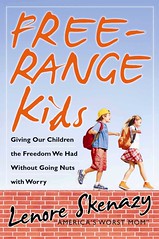 When it comes to theories about how to best raise kids, I’m a big believer in what might be referred to “a resiliency approach” to child-rearing. That is, instead of endlessly coddling our children and hovering over them like “helicopter parents,” as so many parents do today, I believe it makes more sense to instill some core values and common sense principles and then give them some breathing room to live life and learn lessons from it. Yes, that includes making mistakes. And, oh yes, your little darlings might actually gets some bump and bruises along the way — or at least have their egos bruised in the process. But this is how kids learn lessons and become responsible adults and citizens. Wrapping them in bubble wrap and filling their heads without nothing but fear about the outside would will ultimately lead to the opposite: sheltered, immature, irresponsible, and unprepared young adults — many of whom expect someone else (the government, their college, their employer, or still their parents!) to be there to take care of them well into their 20’s or even 30’s. Again, you gotta let kids live a little and learn from their experiences.
This explains why I find Lenore Skenazy’s new book,
Free-Range Kids: Giving Our Children the Freedom We Had Without Going Nuts with Worry
, to be such a breath of fresh air. [Here’s her blog of the same name.] She argues that “if we try to prevent every possible danger of difficult in our child’s everyday life, that child never gets a chance to grow up.” (p. 5) As she told
Salon recently:
You want kids to feel like the world isn’t so dangerous. You want to teach them how to cross the street safely. You want to teach them that you never go off with a stranger. You teach them what to do in an emergency, and then you assume that generally emergencies don’t happen, but they’re prepared if they do. Then, you let them go out.
The fun of childhood is not holding your mom’s hand. The fun of childhood is when you don’t have to hold your mom’s hand, when you’ve done something that you can feel proud of. To take all those possibilities away from our kids seems like saying: “I’m giving you the greatest gift of all, I’m giving you safety. Oh, and by the way I’m taking away your childhood and any sense of self-confidence or pride. I hope you don’t mind.”
Exactly right, in my opinion. Again, let kids live and learn from it. Teach lessons but then encourage ‘learning by doing’ and let them understand these things for themselves. That is resiliency theory in a nutshell.
Continue reading →
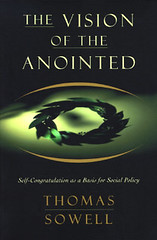 Berin recently encouraged me to re-read Thomas Sowell’s The Vision of the Anointed: Self-Congratulation as a Basis for Social Policy, which I hadn’t looked at since I first read it back in 1995 or 96. I’m glad I did since Sowell’s work has always been profoundly influential on my thinking (especially his masterpiece, A Conflict of Visions) and I had forgotten how useful The Vision of the Anointed was in helping me understand the reoccurring model that drives ideological crusades to expand government power over our lives and economy.
“The great ideological crusades of the twentieth-century intellectuals have ranged across the most disparate fields,” Sowell noted in the book. But what they all had in common, he argued, was “their moral exaltation of the anointed above others, who are to have their different views nullified and superseded by the views of the anointed, imposed via the power of government.” (p. 5) These elitist, government-expanding crusades shared several key elements, which Sowell identified as follows:
- Assertion of a great danger to the whole society, a danger to which the masses of people are oblivious.
- An urgent need for government action to avert impending catastrophe.
- A need for government to drastically curtail the dangerous behavior of the many, in response to the prescient conclusions of the few.
- A disdainful dismissal of arguments to the contrary as either uninformed, irresponsible, or motivated by unworthy purposes.
You can see this model at work on a daily basis today with our government’s various efforts to reshape our economy, but I think this model is equally applicable to debates over social policy and speech control. In particular, the various “technopanics” I have been writing about recently fit this model. (See 1, 2, 3, 4, 5). For example, consider how this plays out in the debate over online social networking:
Continue reading →
As faithful readers no doubt know, I’m a big fan of Section 230 and believe it has been the foundation of a great many of the online freedoms we enjoy (dare I say, take for granted?) today. That’s why I’m increasingly concerned about some of the emerging thinking and case law I am seeing on this front, which takes a decidedly anti-230 tone.
Consider, for example, how some might weaken Sec. 230 in the name of “child safety.” You will recall the friendly debate about the future of Sec. 230 that I engaged in with Harvard’s John Palfrey. Prof. Palfrey has argued that: “The scope of the immunity the CDA provides for online service providers is too broad” and that the law “should not preclude parents from bringing a claim of negligence against [a social networking site] for failing to protect the safety of its users.” Similarly, Andrew LaVallee of The Wall Street Journal reported from a conference this week that Sec. 230 became everyone’s favorite whipping boy, with several participants suggesting that the law needs to be re-opened and altered to somehow solve online “cyber-bullying” problems.
Continue reading →
Today, the U.S. Department of Commerce’s National Telecommunications and Information Administration (NTIA) announced the members of the new Online Safety and Technology Working Group (OSTWG). I am honored to be among those chosen to participate in this new task force and I look forward to continuing the work started last year with the Harvard Berkman Center’s Internet Safety Technical Task Force (ISTTF), which I also served on. I was very proud of the work done by the ISTTF and the impressive final report that Prof. John Palfrey crafted to reflect our findings. I am eager to investigate these issues further and take a look at the latest research and technologies that can help us better understand how to protect our kids online while also protecting the free speech and privacy rights of Netizens.
The new NTIA working group, which was established under the “Protecting Children in the 21st Century Act,” will report to the Assistant Secretary of Commerce for Communications and Information on industry-implemented online child safety tools and efforts. Within a year of convening its first meeting, the group will submit a report of its findings and make recommendations on how to increase online safety measures.
Below the fold I have listed the complete roster of OSTWG task force members. I very much looking forward to working with this outstanding group. And I’m happy to report that my TLF blogging colleague Braden Cox will be joining me on this task force!
Continue reading →
What would it take to create a more secure Internet? That’s what John Markoff explores in his latest New York Times article, “Do We Need a New Internet?” Echoing some of the same fears Jonathan Zittrain articulates in his new book The Future of the Internet, Markoff wonders if online viruses and other forms of malware have gotten so out-of-control that extreme measures may be necessary to save the Net. Compared to when cyber-security attacks first started growing over 20 years ago, Markoff argues that:
[T]hings have gotten much, much worse. Bad enough that there is a growing belief among engineers and security experts that Internet security and privacy have become so maddeningly elusive that the only way to fix the problem is to start over.
Like many others, Markoff fingers anonymity as one potential culprit:
The Internet’s current design virtually guarantees anonymity to its users. (As a New Yorker cartoon noted some years ago, “On the Internet, nobody knows that you’re a dog.”) But that anonymity is now the most vexing challenge for law enforcement. An Internet attacker can route a connection through many countries to hide his location, which may be from an account in an Internet cafe purchased with a stolen credit card. “As soon as you start dealing with the public Internet, the whole notion of trust becomes a quagmire,” said Stefan Savage, an expert on computer security at the University of California, San Diego.
Consequently, Markoff suggests that:
A more secure network is one that would almost certainly offer less anonymity and privacy. That is likely to be the great tradeoff for the designers of the next Internet. One idea, for example, would be to require the equivalent of drivers’ licenses to permit someone to connect to a public computer network. But that runs against the deeply held libertarian ethos of the Internet.
Indeed, not only does it run counter to the ethos of the Net, but as Markoff rightly notes, “Proving identity is likely to remain remarkably difficult in a world where it is trivial to take over someone’s computer from half a world away and operate it as your own. As long as that remains true, building a completely trustable system will remain virtually impossible.” I’ve spent a lot of time writing about that fact here and won’t belabor the point other than to say that efforts to eliminate anonymity for the entire Internet would prove extraordinarily intrusive and destructive — of both the Internet’s current architecture and the rights of its users. There’s just something about a “show-us-you-papers,” national ID card-esque system of online identification that creeps most of us out. That’s why I spend so much time fighting age verification mandates for social networking sites and other websites; it’s the first step down a very dangerous road.
But what if we could apply such solutions in a narrower sense? That is, could we create more secure communities within the overarching Internet superstructure that might provide greater security? Markoff starts thinking along those lines when he suggests…
Continue reading →

 The Technology Liberation Front is the tech policy blog dedicated to keeping politicians' hands off the 'net and everything else related to technology.