 Along with my friends John Morris and Sophia Cope of the Center for Democracy & Technology, I have just submitted an amicus brief to the Supreme Court in the potentially historic free speech case FCC v. Fox, which will be heard in November.
[Reminder: The
FCC v. Fox case is the indecency case involving the FCC’s new policy for “fleeting expletives.” I wrote about the Second Circuit Court of Appeals decision here. The full decision is here. By contrast, the so-called “Janet Jackson case” — CBS v. FCC — took place in the Third Circuit Court of Appeals and that court recently handed down a decision that also went against the FCC. I wrote about the Third Circuit’s decision here.]
The
FCC v. Fox case could become the most important First Amendment-related Supreme Court case since FCC v. Pacifica Foundation, which just turned 30 years old last month. Of course, it could be that the Supreme Court simply sticks to the procedural questions regarding whether the FCC moved too far, too fast in reversing it’s long-standing policy of restraint regarding “fleeting expletives.” That’s essentially what the Second Circuit did. On the other hand, the Supremes might reach the substantive First Amendment issues tied up in the Pacifica case. We just won’t know for sure until the case is handed down.
Regardless, in the joint CDT-PFF amicus brief filed today, we argue that the FCC has both gone too far procedurally and that “the time is rapidly approaching for this Court to find that broadcast, like the Internet and other means of mass communication, ‘is entitled to the highest protection from government intrusion’ and that there is no longer a factual ‘basis for qualifying the level of First Amendment scrutiny that should be applied to this medium.'” Citing
Reno v. ACLU, 521 U.S. at 863, 870.”
A more detailed summary of our argument follows below.
Continue reading →
Om Malik has a hot-headed screed on his blog today about the supposed evils of capitalism, full of tales of corporate conspiracies and the such. But I love the way most of his reader have taken him to task for calling on FCC Chairman Kevin Martin to become a true “21st century Robin Hood who is looking out for the U.S. Internet consumer” by “putting an end to this metered broadband nonsense right now.”
Just jump past Om’s irrational rant and go right the really excellent discussion taking place among his readers in the comments. It’s the best discussion I have seen on the issue in a long time.
This week I was pleased to join a diverse collection of think tanks and public interest groups in submitting joint comments to the FCC opposing the proposed content filtering mandate that would be part of a future AWS-3 auction. That’s the proposed auction that would create a “free” nationwide wireless broadband service. As part of the deal, the company would need to need to take steps to provide a “clean” Internet connection by filtering content. This joint filing points out why that is a bad idea:
- the reach of the filtering mandate is extraordinarily broad, and would attempt to censor content far beyond any content regulation regime that has been previously upheld in the face of constitutional challenge.
- even if the scope of the filtering mandate were more narrowly focused, it would conflict with the First Amendment analysis that the Supreme Court applied to Internet access in the seminal
Reno v. ACLU decision.
- even if the Commission were to require filtering on an “opt out” or “opt in” basis, the Constitutional problems would not be avoided. Opt-out filtering would impose an unconstitutional burden on listeners and recipients of Internet communications, and both opt-out and opt-in filtering would violate the First Amendment rights of speakers and other content providers on the Internet. Simply put, the First Amendment does not allow a government mandated “blacklist” of websites to be blocked.
- would also violate the terms and intent of two federal statutes – 47 U.S.C. § 326 (which prohibits the Commission from “interfer[ing] with the right of free speech”) and 47 U.S.C. § 230 (which promotes user control over content and limits burdens on service providers).
- would also limit what people could do online using the free AWS-3 service so dramatically that the usefulness of the service would be radically reduced.
- would also certainly lead to legal challenges that would delay the implementation of the proposed access service.
Continue reading →
It is a difficult thing for me to say, but I am man enough to do it: I must congratulate our intellectual opponents on their amazing victory in the battle to impose Net neutrality regulations on the Internet. With the Wall Street Journal reporting last night that the FCC is on the verge of acting against Comcast based on the agency’s amorphous Net neutrality principles, it is now clear that the folks at the Free Press, Public Knowledge, and the many other advocates of comprehensive Internet regulation have succeeded in convincing a Republican-led FCC to get on the books what is, in essence, the nation’s first Net Neutrality law. It is quite an accomplishment when you think about it.
Even though, as Jerry Brito has noted, “the FCC has no authority to enforce a non-binding policy statement,” it is clear that is not about to stop the activist-minded FCC Chairman Kevin Martin or his allies on the Left from advancing the cause of arbitrary, bureaucratic governance of the Internet. And that means the “Hands Off the Net” era will gradually start giving way to the “Hands All Over the Net” era. As I told Bob Fernandez of the Philadelphia Inquirer when he called to interview me for a story about these developments:
“This is the foot in the door for big government to regulate the Internet,” […] “This is the beginning of a serious regulatory regime. For the first time, the FCC is making law around net neutrality.”
And now that they have that foot in the door, I fully expect that it will be exploited for everything it’s worth to grow the scope of the FCC’s coercive bureaucratic authority over all things digital. The Left is salivating at the prospect of imposing their top-down vision of forced egalitarianism on the the Net, while the Right is figuring out how quickly they can exploit this to impose speech controls on anything they don’t want the public to see or hear.
It is a historic moment in the history of communications and media regulation, and freedom has lost—miserably. The tentacles of the regulatory Leviathan have grown infinitely longer and a little bit more of the Net’s freedom died today. And, again, what’s most amazing about this is that we have a Republican FCC to thank for that. So much for the GOP being for smaller government.
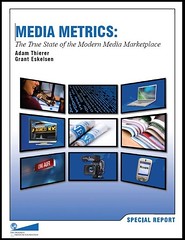 Faithful readers will recall that, several months ago, I penned a 7-part “Media Metrics” series that took a hard look at the health of the media marketplace. Today, the Progress & Freedom Foundation is releasing a greatly expanded version of these essays that I have put together with my PFF colleague Grant Eskelsen. In this 100-page special report, “Media Metrics: The True State of the Modern Media Marketplace,” we begin by noting that heated debates about the state of the media marketplace continue to rage in Washington, and opinions seem to range from grim to outright apocalyptic. As we note on pg. 1:
Many people—including a large number of legislators and regulators—argue that America’s media marketplace is in a miserable state. Some claim that citizens lack choice in media outlets and that options are just as scarce as ever. Others believe that media “localism” is dead or that many groups or niches go underserved because of a lack of true “diversity” in media. Others argue that the market is hopelessly over-concentrated in the hands of a few evil media barons who are hell-bent on force-feeding us corporate propaganda. And still others say that the quality of news and entertainment in our society has deteriorated because of a combination of all of the above. It all sounds quite troubling, but is any of it true?
After taking an objective look at the true state of America’s media marketplace, we conclude that such pessimism is unwarranted. Indeed, a careful review of the facts reveals that—contrary to what those media critics suggest—we have more media choice, more media competition, and more media diversity than ever before. Indeed, to the extent there was ever a “golden age” of media in America, we are living in it today. The media sky has never been brighter and it is getting brighter with each passing year.
Continue reading →
Berin Szoka and I just released a short article on the FCC’s proposed follow-up to the failed 700 mhz D Block auction: a
free,
nationwide wireless service that would serve public safety users as well as consumers. It’s attached down below or the PDF can be found here.
What’s Worse Than Rigged Auctions & Internet Censorship?
How About Both in One Package!
a PFF
Progress Snapshot
Release 4.12 June 2008
by Adam Thierer and Berin Szoka
The big spectrum policy debate in town these days continues to be the fight about how to redo the botched D block auction. As we all know, FCC Chairman Kevin Martin’s previous effort to micro-manage that auction failed miserably. Sadly, the follow-up plan isn’t much better, as the Wall Street Journal notes in an editorial today:
You’d think Chairman Martin would have learned from this experience. It’s not the role of regulators to pick winners and losers to achieve their preferred social outcomes. Private competition and the price mechanism can most fairly and efficiently find the best use for scarce spectrum. The FCC’s clumsy attempt at social engineering resulted in a failed auction that has prevented otherwise desirable spectrum from being put to commercial use.
Alas, Mr. Martin has now proposed another wireless auction for a separate piece of spectrum. And this time he wants to require the winner to offer free Internet access that filters out pornography–conditions that obviously would decrease the value of the license and turn off potential bidders. It just so happens that Mr. Martin’s proposed auction seems tailor-made for the business plan put forward by M2Z, another politically connected Silicon Valley start-up looking to enter the wireless broadband telecom market.
Continue reading →
As I mentioned yesterday, James Gattuso and I penned an editorial for National Review this week about the growth of FCC regulation and spending in recent years. In the op-ed, we also noted that, “For whatever reason, a disproportionate number of these [new regulatory proposals] have been aimed at cable television, so much so that press and industry analysts now speak of Chairman Martin’s ongoing ‘war on cable.'”
Today, the editors at
National Review have chimed in with an editorial of their own on the issue entitled, “Pulling the Cable on Martin’s Crusade.” Specifically, the editors address what most pundits believe really motivates the Chairman’s crusade against cable: His desire to force cable companies to offer consumers channels on “a la carte” basis in an effort to “clean up” cable TV. “Martin should abandon this particular crusade,” the NR editors argue. “While we are sympathetic to parents’ desire to get the channels they want without having to buy access to racier fare, using economic regulation to restructure an industry is the wrong approach.” They continue:
Continue reading →
With the release last month of its report on Violent Television Programming and Its Impact on Children, the FCC teed up the issue of regulating televised violence and tossed it over to Congress with a recommendation that lawmakers go ahead and swing for the fences. And Congress appears ready to oblige, although not necessarily in the way some at the FCC had originally envisioned.
You will recall that FCC Chairman Kevin Martin used the FCC’s violence report as another opportunity to engage in his monomaniacal, Moby Dick-like quest to impose a la carte regulation on cable and satellite operators. Martin argued that “Requiring cable and satellite television providers to offer programming in a more a la carte manner would be a more content neutral means for Congress to regulate violent programming and therefore would raise fewer constitutional issues.” But it doesn’t appear that the chairman is going to get his whale this time around.
Continue reading →

 The Technology Liberation Front is the tech policy blog dedicated to keeping politicians' hands off the 'net and everything else related to technology.