 Over the past couple of years here, I have relentlessly hammered Harvard’s dynamic duo of digital doom, Jonathan Zittrain (see 1, 2, 3, 4, 5, 6) and Lawrence Lessig (see 1, 2, 3), for their extraordinarily gloomy predictions about the Internet creating a world of “perfect control.” In the hyper-pessimistic Lessig-Zittrain view of things, cyberspace is perpetually haunted by the specter of nefarious corporate schemers out to suffocate innovation, screw consumers, and quash dissent. In the 1990s, Lessig’s big-bad-bogeyman was AOL. Today, Zittrain casts Apple in the lead role of Cyber-Big Brother. The problem with their thesis? In a word: Reality. As Tim Lee has pointed out before, “Lessig’s specific predictions in Code turned out to be… spectacularly wrong”:
Lessig was absolutely convinced that a system of robust user authentication would put an end to the Internet’s free-wheeling, decentralized nature. Not only has that not happened, but I suspect that few would seriously defend Lessig’s specific prediction will come to pass.
Absolutely correct, and the same is true of the fears and predictions Zittrain tosses around in The Future of the Internet. And yet, as we saw most recently during my debate with Lessig and Zittrain over at Cato Unbound upon the occasion of the 10th anniversary of the publication Code, neither of them have relented one bit. Indeed, they have actually been escalating their morose rhetoric recently.
The fact that Zittrain casts Apple as the central villain in his drama is particularly interesting because millions upon millions of people absolutely love the company and its amazingly innovative products — even if I’m not one of them. And there is absolutely no way Zittrain can continue to sell us this story of Apple quashing innovation when, in just one year’s time, there were 1.5 Billion iPhone Store downloads of over 65,000 free and paid apps by consumers in 77 countries. I mean, seriously, is there any application you cannot get for the iPhone these days?
Apparently not, because over at the
Wall Street Journal “Digits” blog, Andrew LaVallee writes of the latest innovative application to pop up in the Apple iPhone Store, iPot — a tool to help you find dope shops in California!!
Continue reading →
Seems like every week the tech rumor mills unveil some new smartphone that’s supposedly going to give the iPhone a run for its money. Over the past couple years, dozens of advanced handsets have been released with much fanfare — the LG Voyager, Palm Pre, Blackberry Storm, Samsung Omnia, to name a few — but time and time again, we end up with a device that can’t hold a candle to the iPhone’s amazing browser, massive app store, and sleek multi-touch interface.
But all this could change later this year. A number of handsets are due for release on several major networks over the next few months that run on Android, Google’s open source mobile operating system. Android is currently available on only a single device, the HTC G1. It’s a decent phone, but it lacks the polish of the iPhone and is only available with a contract from T-Mobile, which lags behind Sprint, AT&T, and Verizon in terms of 3G coverage.
I’m especially excited about the Android 2.0-based Motorola “Sholes,” a great-looking phone that’s supposedly due for release in November 2009 from Verizon. If rumors pan out, the Sholes should come with a slide-out keyboard, an extremely high-res display, a 5MP camera, and all-around solid specs. Via Android and Me:
Continue reading →
We’ve discussed extensively the controversy that recently erupted when Apple rejected Google Voice applications from the iPhone App Store. With the FCC sniffing around and tech pundits around the blogosphere weighing in on the merits of possible government intervention, it’s important to remember that jailbreaking an iPhone may be illegal under the Digital Millenium Copyright Act (DMCA). In other words, if you use a hack or workaround that enables you to run banned apps like Google Voice on your iPhone, you could be violating federal law.
The DMCA hasn’t stopped millions of iPhone owners from jailbreaking their phones and installing Cydia, an unofficial alternative to the official iPhone App Store. Cydia, which lets users download banned iPhone apps like Google Voice, has been installed on a whopping one in ten iPhones, according to its developers.
But jailbreaking programs and applications like Cydia are in risky legal territory. Developers who circumvent the iPhone’s copy protection systems are at risk of being sued by Apple, as are users who run jailbreaking software. Apple maintains that jailbreaking software is illegal under federal law, though it has not taken legal action against any unauthorized iPhone developers to date.
To clear up the muddy legal waters surrounding iPhone jailbreaking, Fred von Lohmann of the Electronic Frontier Foundation has asked the U.S. Copyright Office to grant a legal exemption to iPhone jailbreaking on the grounds that users should be able to install apps of their choice on the phone without risking civil or criminal sanctions. In a recent DeepLinks post, von Lohmann argues that the FCC should throw its weight behind EFF’s call for exempting jailbreaking from anti-circumvention rules.
Continue reading →
 Despite my frequent disagreements with his policy conclusions, Farhad Manjooo of Slate is one of the most gifted tech policy pundits around today and everything he writes is worth reading (and I whole-heartedly agreed with his recent article on the high-tech and antitrust). Alas, I find myself again disagreeing with him again today.
In his latest column, “The Great iPhone Lockdown: Should the FCC force Apple to sell Google’s apps?” Manjoo responds to a recent essay by TLF contributor Ryan Radia (“Newsflash to FCC: The iPhone is a Closed Platform, and Consumers Love It“). In that essay, Ryan generally argued that: (a) a lot of people own and love the iPhone despite some silly restrictions on certain apps; and (b) if they don’t like that, there are plenty of other options from which they can choose. Consequently, regulation seems unwarranted and likely highly misguided in light of the potential unitended consequences in might yield. It’s an argument I very much agree with, of course. Anyway, Manjoo responds:
Radia’s argument isn’t crazy. Just the other day, I argued that the government shouldn’t go after Google for antitrust violations because the tech industry is fluid; companies that are on top today can fall tomorrow. So what if Apple rejects apps capriciously? If its actions are so terrible, consumers will eventually abandon it.
But then Manjoo counters that argument and goes completely off-the-rails with several assertions that I find quite perplexing: Continue reading →
Just when you thought the FCC’s investigation of the wireless industry couldn’t get any stranger, TechCrunch reports that the Commission has sent letters to AT&T, Apple, and Google inquiring about Apple’s recent decision to reject the Google Voice app from the iPhone App Store (as Berin discussed yesterday).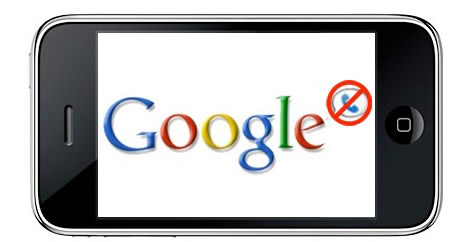
It’s been over two years since the original iPhone was launched, but it seems the FCC still doesn’t get it: the iPhone is very clearly a closed platform — a prototypical walled garden — and Apple has the final say on what applications users can install. When you buy an iPhone, you’re not simply buying a piece of hardware, but actually a package deal that includes software, hardware, and a wireless contract. Is this anti-consumer? 26 million consumers don’t think so. The iPhone 3GS, the latest version of the phone, is selling so fast that Apple’s CFO says they can’t make enough to meet demand!
Of course, the iPhone model isn’t for everyone. I, for one, don’t own one because I’m an obsessive tinkerer and prefer a phone that’s as open as possible. But not everyone shares my preferences. As mentioned above, over 26 million iPhones have been sold since June 2007, so openness clearly isn’t make-or-break for a lot of consumers. Who knows, maybe some people actually trust Apple and like the comfort of knowing that every app they can get comes with a seal of approval from Cupertino.
The FCC’s letter to Apple demands an explanation for why Google Voice was rejected. If Apple’s explanation doesn’t satisfy the FCC’s criteria — which, by the way, are entirely unclear — then what? Will the FCC force Apple to accept Google Voice? Say what you will about Apple’s app store track record, but the prospect of federal regulators having the final word on which applications smartphone owners can install hardly seems pro-consumer. The FCC can’t even figure out how to run its own website!
In some ways, the iPhone has perhaps been too successful for its own good. It’s so popular that many consumers seem to no longer view it as just another product but instead as an item to which they are entitled. Thus, bureaucrats and Congresscritters in search of political points are making a big fuss over the fact that the iPhone isn’t everything to everyone. Why can’t it be wide open? Why isn’t in available on every carrier nationwide? Why is it so expensive to purchase without a service contract?
Continue reading →
The iPhone-obsessed blogosphere is atwitter about the Apple”s exclusion of the Google voice application from the iPhone app store. On Friday, the FCC sent letters of inquiry to the two companies as well as AT&T.
Whatever one thinks about whether Apple and AT&T should be able to operate their own networks as they see fit, this cat-fight should at least demonstrate the pointlessness of the investigation opened by the FTC in May as to whether Apple and Google are violating the antitrust laws by having two members of their boards of directors in common: Google CEO Eric Schmidt and former Genentech CEO Art Levinson. If the two companies were, in fact, trying to collude in an anti-competitive manner, they don’t seem to be doing a very good job of it!
Meanwhile, if you don’t like how Apple runs its app store, don’t get an iPhone! If you already have one, you could follow the lead of TechCrunch’s Michael Arrington and simply cancel your existing iPhone contract to get a more “open” phone—such as one powered by Google’s Android operating system.
Me, I’m just waiting for Google Voice to offer number portability so I can start using the service without having to change the number I’ve had for the last five years—and plan to take to my ashen grave (somewhere beyond low Earth orbit).
Well, here we go again. Harvard’s Jonathan Zittrain has penned another gloomy essay about how “freedom is at risk in the cloud” and the future of the Internet is in peril because nefarious digital schemers like Apple, Facebook, and Google are supposedly out to lock you into their services and take away your digital rights. And so, as I have done here many times before (see 1, 2, 3, 4, 5 + video!), I will offer a response arguing that Jonathan’s cyber-Chicken Little-ism is largely unwarranted.
Zittrain’s latest piece is entitled “Lost in the Cloud” and it appears in today’s New York Times. It closely tracks the arguments he has set forth in his book The Future of the Internet–And How to Stop It, which I named the most important technology policy book of 2008, but not because I agreed with its central thesis. Zittrain’s book and his new NYT essay are the ultimate exposition of Lessigite technological pessimism. I don’t know what they put in the water up at the Berkman Center to make these guys so remarkably cranky and despondent about the future of of the Internet, but starting with Lawrence Lessig’s Code in 1999 and running through to Zittrain’s Future of the Internet we have been forced to endure endless Tales of the Coming Techno-Apocalypse from these guys. Back in the late 90s, Prof. Lessig warned us that AOL and some other companies would soon take over the new digital frontier since “Left to itself, cyberspace will become a perfect tool of control.” Ah yes, how was it that we threw off the chains of our techno-oppressors and freed ourselves from that wicked walled garden hell? Oh yeah, we clicked our mouses and left! And that was pretty much the end of AOL’s “perfect control” fantasies. [See my recent debate with Prof. Lessig over at Cato Unbound for more about this “illusion of perfect control,” as I have labeled it.]
But Zittrain is the equivalent of the St. Peter upon which the Church of Lessigism has been built and, like any good disciple, he’s still vociferously preaching to the unconverted and using fire and brimstone sermons to warn of our impending digital damnation. In fact, he’s taken it to all new extremes. In
Future of the Internet, Jonathan argues that we run the risk of seeing the glorious days of the generative, open Net and digital devices give way to more “sterile, tethered devices” and closed networks. The future that he hopes to “stop” is one in which Apple, TiVo, Facebook, and Google — the central villains in his drama — are supposedly ceded too much authority over our daily lives because of a combination of (a) their wicked ways and (b) our ignorant ones.
Continue reading →
Last summer, my PFF colleague Barbara Esbin and I explained that, while many consumers dislike not being able to get popular smartphones like the iPhone on the wireless network of their choice, such exclusive deals actually benefit consumers. Barbara summarizes her testimony (PDF) as follows:
the dynamic created by the exclusive arrangement between Apple and AT&T that produced the iPhone allowed the two companies to bridge the gap between the technologies of today and the disruptive innovations of tomorrow. Moreover, it is undeniable that the breakthrough success of the iPhone has spurred a wave of competitors. If every wireless carrier had been able to sell the iPhone when it was initially released, I noted, it seems unlikely there would have been as much carrier support for developing competing products like the Google G1, RIM Blackberry Storm, Samsung Instinct or Palm Pre.
I’ve posted another response in the Cato Unbound online debate over the impact of Lawrence Lessig’s Code and Other Laws of Cyberspace upon the book’s 10th anniversary. You will recall that I went fairly hard on Prof. Lessig in my essay, “Code, Pessimism, and the Illusion of ‘Perfect Control,’” and Lessig responded with a counter-punch that went after me for it. I respond in a new essay about “Our Conflict of Cyber-Visions.” In the piece, I address Lessig’s assertion that I just didn’t understand the central teachings of Code, as well as his reluctance to accept the “cyber-collectivism” label that I affixed to his book and life’s work. Again, please hop over to Cato Unbound for my complete response.
But one thing from the essay that I thought worth reproducing here is my effort to better define the key principles that separate the cyber-libertarian and cyber-collectivist schools of thinking. I argue that it comes down to this:
The cyber-libertarian believes that “code failures” are ultimately better addressed by voluntary, spontaneous, bottom-up, marketplace responses than by coerced, top-down, governmental solutions. Moreover, the decisive advantage of the market-driven approach to correcting code failure comes down to the rapidity and nimbleness of those response(s).
Of course, another key difference relates to how quickly one jumps to the conclusion that “code failures” are actually occurring at all. I argue:
Continue reading →
The week-long Cato Unbound online debate about the 10th anniversary of Lawrence Lessig’s Code and Other Laws of Cyberspace continues today with Prof. Lessig’s response to Declan McCullagh’s opening essay, “What Larry Didn’t Get,” Jonathan Zittrain’s follow-up essay, and my essay on, “Code, Pessimism, and the Illusion of ‘Perfect Control.’” Needless to say, Prof. Lessig isn’t too happy with my response. You should jump over to the Cato site to read the entire thing, but here are a couple of excerpts and my response.
To my suggestion that there is a qualitative difference between law and code, Prof. Lessig says:
I’ve argued that things aren’t quite a simple as some libertarians would suggest. That there’s not just bad law. There’s bad code. That we don’t need to worry just about Mussolini. We also need to worry about DRM or the code AT&T deploys to help the government spy upon users. That public threats to liberty can be complemented by private threats to liberty. And that the libertarian must be focused on both. […]
Of course, law is law. Who could be oblivious to that? And who would need a book to explain it? But the fact that “law is law” does not imply that it has a “much greater impact in shaping markets and human behavior.” Sometimes it does — especially when that “law” is delivered by a B1 bomber. But ask the RIAA whether it is law or code that is having a “greater impact in shaping markets” for music. Or ask the makers of Second Life whether the citizens of that space find themselves more constrained by the commercial code of their geo-jurisdiction or by the fact that the software code of Second Life doesn’t permit you simply to walk away (so to speak) with another person’s scepter. Whether and when law is more effective than code is an empirical matter — something to be studied, and considered, not dismissed by banalities spruced up with italics.
Well, I beg the professor’s pardon for excessive use of italics. [I won’t ask for an apology for misspelling my last name in his piece!] Regardless, it’s obvious that we’ll just never see eye-to-eye on the crucial distinction between law and code. Again, as I stated in my essay: “With code, escape is possible. Law, by contrast, tends to lock in and limit; spontaneous evolution is supplanted by the stagnation of top-down, one-size-fits-all regulatory schemes.”
Lessig largely dismisses much of this with that last line above, suggesting that we just need to keep studying the matter to determine the right mix of what works best. To be clear, while I’m all for studying the impact of law vs. code as “an empirical matter,” that in turn begs the question of how we define effectiveness or success. I suspect that the professor and I would have a “values clash” over some rather important first principles in that regard. This is, of course, a conflict of visions that we see throughout the history of philosophy; a conflict between those who put the individual and the individual’s rights at the core of any ethical political system versus those who would place the rights of “the community,” “the public” or some other amorphous grouping(s) at the center of everything. It’s a classic libertarian vs. communitarian / collectivist debate.
Continue reading →

 The Technology Liberation Front is the tech policy blog dedicated to keeping politicians' hands off the 'net and everything else related to technology.