Over at Silicon Alley Insider, Gregory Galant has a wonderful post about “18 Awesome Tech Things We Didn’t Have 10 Years Ago.” It serves as another great example of the amazing technological progress we have witnessed over the past decade. He’s asking people for suggestions for what else should be on the list, so head over there and let him know. Seems like wi-fi technologies should be on there somehow. FiOS deserves a shout-out, too. And where’s Firefox & Chrome? Also, I’ll put in a special word for some amazing new home theater technologies: high-def flat-screens and projectors; media servers & Windows Media Center; BluRay; and 3 incredible gaming / media consoles (Wii, PS3, & XBox). Anyway, here’s Galant’s list:
Wikipedia
Gmail
Facebook
YouTube
Twitter
AdWords
Amazon AWS
RSS (started in ‘99 but didn’t catch on till the ’00s)
Meetup
iPod
Google Maps
Podcasts
Mint
Skype/VOIP
iPhone
Google Docs
Creative Commons
Flickr
Arik Hesseldahl has an interesting piece in
Business Week about Apple’s control of the iPhone App approval process in which he asks: “Is a smartphone gatekeeper needed?” Plenty of people don’t think so and have raised a stink about Apple trying to play that role for the iPhone. It certainly could be true, as some critics suggest, that Apple is being too heavy-handed on occasion when rejecting apps, but it’s always easy for those of us on the outside of the process to think that. Hesseldahl notes that:
it’s tempting to consider the implications of a less hands-on approach, as is the case with Macs, Microsoft (MSFT) Windows PCs, or other smartphones, including those running the Google (GOOG)-backed Android operating system. The software market for personal computing has existed in this way for nearly three decades, and while there have certainly been some problems along the way, I’d argue that overall we’re better off without Microsoft or Apple or some other organization approving software applications before they’re released to the market. PC users have learned to be careful about what they put on their computers through unhappy trial and error.
But he also notes that there is another side to the story: Continue reading →
It’s truly amazing how fast mobile broadband demand is expanding. A couple of things caught my eye yesterday that really drove that home. First, I was reading Bernstein Research’s weekly (subscription-only) newsletter and Craig Moffett, one of America’s top media and communications analysts, summarized the growing mobile bandwidth crunch as follows:
To fully grasp the challenge facing wireless providers as we make the transition from wireless voice to wireless data, it is helpful to put some ballpark numbers around current usage levels. Today, the average voice-only customer consumes something like 50 megabytes of data every month. For that, they pay about $40, or about $0.80 per megabyte. That’s 70% of wireless industry revenues. Text messaging generates another $10 per month for a minuscule amount of data (in fact, arguably no throughput at all, since text messaging travels in a signaling band rather than in the carrier band itself). Let’s call it $1,000 per megabyte. That’s another 15% of industry revenues. On a blended basis, then, that’s $1.00 per megabyte for 85% of industry revenues.
And then there’s the iPhone. By some estimates, the average iPhone user consumes as much as 800 megabytes per month. Take out their 50 Mb for voice and you’re looking at 750 Mb of data… for an additional $30. For the mathematically challenged, that’s a princely sum of… wait for it… four cents per megabyte. Worse, we noted that the FCC’s wireless net neutrality policies posed the risk of “bandwidth arbitrage,” where low bandwidth services (at $1.00 per megabyte) would be replaced with free or almost free applications that ride on $0.04 per megabyte data plans, and where carriers’ hands would be tied to prevent it. Taking a business that is currently getting $1.00 per megabyte down to just $0.04 per megabyte is, well, hard. And lest anyone think that this threat is idle fear-mongering, Google’s acquisition last week of Gizmo5, a wireless VoIP specialist, should give one pause.
Those are stunning numbers. And then I saw this new filing by CTIA listing some other statistics about growing mobile broadband demand:
Continue reading →
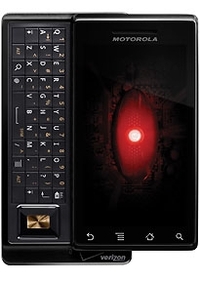 Seems like everywhere I turn someone is gushing about their new Droid phone, including my TLF colleagues Berin Szoka, Braden Cox, and Ryan Radia, who all had great fun rubbing their new toys in my nose over the past couple of days. And why not, it’s a very cool little device. It makes my HTC Touch seems positively archaic in some ways, and it’s only a year old. Apparently, 100,000 people already picked up a Droid in just its first weekend on the market.
But here’s the first thing that pops in my mind every time I see someone showing off their new Droid: How can a device like this even exist when America’s leading cyberlaw experts have been telling us that the whole digital world is increasingly going to hell because of “closed” devices, proprietary code, and managed networks? I’m speaking, of course, about the lamentations of Harvard professors Lawrence Lessig, Jonathan Zittrain, and their many disciples. As faithful readers will recall, I have relentlessly hammered this crew for their unwarranted cyber-Chicken Little-ism and hyper techno-pessimism. (See my many battles with Zittrain [1, 2, 3, 4, 5, 6 + video] and my 2-part debate with Lessig earlier this year).
“Left to itself,” Lessig warned in Code, “cyberspace will become a perfect tool of control.” He went on to forecast a dystopian future in which nefarious corporate schemers would quash our digital liberties unless benevolent public philosopher kings stepped in to save our poor souls. Code was the Old Testament of cyber-collectivism. The New Testament arrived last year with Zittrain’s
The Future of the Internet and How to Stop It. In it, we hear the grim prediction that “sterile and tethered” digital technologies and networks will triumph over the more “open and generative” devices and systems of the past. The iPhone and TiVo are cast as villains in Zittrain’s drama since they apparently represent the latest manifestations of Lessig’s “perfect control” paranoia.
Apple’s “Angel of Death”
How completely out-of-control has this thinking gotten? Well, here’s David Weinberger — another Harvard Berkman Center worrywart — talking about that supposed satanic font of all evil, the Apple AppStore: Continue reading →
Potentially huge FCC development here, and one they actually has some sense to it. According to Kim McAvoy over at TV News Check.com:
FCC broadband czar Blair Levin earlier this month met with leading TV broadcasters in Washington to discuss the nation’s urgent need for more spectrum for wireless broadband access to the Internet and the possibility of broadcasters’ relinquishing most of their spectrum to help meet that demand. According to sources familiar with the Oct. 8 meeting with the board of the Association for Maximum Service Television (MSTV), Levin suggested broadcasters might want to consider returning their spectrum in exchange for a share in the billions of dollars that would come from the auction of the spectrum to the wireless industry.
Broadcasting would retain just enough spectrum so that each station could provide a lifeline standard-definition service to the millions of TV viewers who still rely on over-the-air reception. Broadcasters could no longer offer over-the-air HD and second channels and mobile video would be off the table, but they could continue to provide a single channel of TV to every home in their markets as they do today — in full-blown HD via cable and satellite carriage and SD via the over-the-air lifeline service.
Wow, this is a very big deal, folks, since we are talking about a mother lode of prime spectrum that could be put to any variety of excellent alternative uses. The problem is, broadcasters will—rightly, in my opinion—protest that they have occupied that spectrum for a long, long time and they have something akin to a property right in their allocations. Of course, paying them to relocate might be a very sensible way to get them off that spectrum voluntarily. But the question is whether they should be
forced off of it and whether that is even legal. No doubt, any attempt to force them off would be held up in court for many years because of inevitable legal challenges.
There is another solution: Just give the broadcasters a full, unencumbered property right in their spectrum and let them sell it or use it however they wish. Some will protest that it’s not “fair” and that the broadcasters should never be given a property right in something they did not pay for to begin with. Yet, at some point we have to stop the endless search for what I have referred to as a “spectrum reparations policy” and just get on with life.
I think everyone can now agree that the old command-and-control regulatory regime for “zoning” spectrum has retarded innovation. Imagine if we told Apple back in the 1980s that, because they started in the PC business, they could never leave the PC business and offer other innovations. That would have been nuts! We’d never have the iPhone today. But that’s U.S. spectrum policy for broadcasting in a nutshell. As a broadcaster, it is
illegal for you to repurpose your spectrum for alternative uses. Stated different, spectrum innovation is a crime. How pathetic.
It’s time to change the rules and move forward. I applaud Blair Levin and the FCC for offering at least one solution, but if it doesn’t work, we should try the other: property rights and flexible use rights in spectrum. And here are 4 or 5 other ways to get the job done.
The smell of high-tech regulation is increasingly in the air these days and many lawmakers and some activist groups now have the mobile marketplace in their regulatory cross-hairs. Critics make a variety of claims about the wireless market supposedly lacking competition, choice, innovation, or reasonable pricing. Consequently, they want to wrap America’s wireless sector in a sea of red tape. Two important new studies thoroughly debunk these assertions and set the record straight regarding the state of wireless competition and innovation in the U.S. today. These reports are must-reading for Washington policymakers and FCC officials who are currently contemplating regulatory action.
First, Gerald Faulhaber and Dave Farber have a new report out entitled “Innovation in the Wireless Ecosystem: A Customer-Centric Framework.” Here’s what Faulhaber and Farber find:
the three segments of the wireless marketplace (applications, devices, and core network) have exhibited very substantial innovation and investment since its inception. Perhaps more interesting, innovation in each segment is highly dependent upon innovation in the other segments. For example, new applications depend upon both advances in device hardware capabilities and advances in spectral efficiency of the core network to provide the network capacity to serve those applications. Further, we find that the three segments of the industry are also highly competitive. There are many players in each segment, each of which aggressively seeks out customers through new technology and new business methods. The results of this competition are manifest: (i) firms are driven to innovate and invest in order to win in the competitive marketplace; (ii) new business models have emerged that give customers more choice; and (iii) firms have opened new areas such as wireless broadband and laptop wireless in order to expand their strategic options.
They continue on to address the policy issues in play here and discuss the “consumer-centric” approach they recommend that the FCC adopt: Continue reading →
Over at his new blog, our old TLF colleague Tim Lee has an interesting post up about “The Problem with Top-Down ‘App Stores’” in which he argues that “when app store approval becomes mandatory, it becomes a major impediment to the success of high-tech platforms.” But I have to wonder if the facts support that assertion. Here’s how I commented on his site:
Tim… What I don’t hear you articulating here is your vision of what a “bottom-up” app store would look like and why it would really produce vastly superior results. Nor do I hear you saying anything about the legitimate concerns that the handset makers might have about the security or stability factors associated with certain applications. I’m not saying those problems are extensive, but at the margins they could be real depending on the nature of the program and how it interacts with the handset and/or network.
Second, there needs to be some sense of proportionality here, at least about the iPhone (I can’t speak for the Palm experience). In just a little over a year, there’s been 2 billion downloads of over 85,000 apps from over 125,000 developers. So, when you talk about Apple’s approval process being “plagued by.. problems” and “rejections for trivial or non-sensical reasons” and “long delays in the review process have become a staple of the tech blogosphere” I think you are giving the impression that this is somehow the norm when it is very much the exception to the rule. Perhaps you would be willing to itemize the examples for us. Once you do, I’d appreciate you doing the math on what that looks like as a percentage of the total 85,000 apps that are already out there on the market today. I am willing to bet the result is something like 0.000001%.
Again, a sense of proportionality is really key here. While I am not an Apple fan and agree they have a bit too much of a control streak for my tastes, it’s hard to argue with results. In this case, a closed, top-down system has produced some fairly spectacular results.
I’m sure Tim will have more to say so head over to his blog for more discussion.
Interesting piece here from Slate’s Farhad Manjoo on why AT&T should dump unlimited data plans and end what he calls the “iPhone all-you-can-eat buffet.” He notes that: “The typical smartphone customer consumes about 40 to 80 megabytes of wireless capacity a month. The typical iPhone customer uses 400 MB a month. AT&T’s network is getting crushed by that demand.” Because “some iPhone owners are hogging the network” and causing “a slowed-down wireless network,” Manjoo recommends a congestion pricing model as a method of balancing supply and demand:
How would my plan work? I propose charging $10 a month for each 100 MB you upload or download on your phone, with a maximum of $40 per month. In other words, people who use 400 MB or more per month will pay $40 for their plan, or $10 more than they pay now. Everybody else will pay their current rate—or less, as little as $10 a month. To summarize: If you don’t use your iPhone very much, your current monthly rates will go down; if you use it a lot, your rates will increase. (Of course, only your usage of AT&T’s cellular network would count toward your plan; what you do on Wi-Fi wouldn’t matter.)
To understand the advantages of tiered pricing, let’s look at AT&T’s current strategy of spending billions to build more network space. Why won’t this work? For the same reason building more roads doesn’t reduce traffic—more capacity increases the attractiveness of driving, which brings a lot more cars to the road, which leads to more gridlock.
Congestion pricing and metering is something I’ve written quite a bit about here in the context of wireline broadband (1, 2, 3), but Manjoo is equally correct that it could be applied for wireless data plans. It has the added value of taking pressure off lawmakers to impose Net neutrality regulation since pricing of the pipe becomes an effective substitute for most other forms of network management. In other words, price, don’t block bandwidth-hogging customers and applications. The problem, Manjoo explains: Continue reading →
In a week in which neutrality regulation is making a lot of news, I hope that Robert Hahn and Hal Singer’s terrific new study, “Why the iPhone Won’t Last Forever and What the Government Should Do to Promote its Successor” gets some attention. It provides a wonderful overview of how dynamically competitive the mobile marketplace has been over the past two decades and why critics are wrong to get worked up about the short-term “dominance” of Apple’s iPhone. Here’s the abstract of their paper:
Because of the overwhelming, positive response to the iPhone as compared to other smart phones, exclusive agreements between handset makers and wireless carriers have come under increasing scrutiny by regulators and lawmakers. In this paper, we document the myriad revolutions that have occurred in the mobile handset market over the past twenty years. Although casual observers have often claimed that a particular innovation was here to stay, they commonly are proven wrong by unforeseen developments in this fast-changing marketplace. We argue that exclusive agreements can play an important role in helping to ensure that another must-have device will soon come along that will supplant the iPhone, and generate large benefits for consumers. These agreements, which encourage risk taking, increase choice, and frequently lower prices, should be applauded by the government. In contrast, government regulation that would require forced sharing of a successful break-through technology is likely to stifle innovation and hurt consumer welfare.
“New technologies often seemingly emerge from nowhere, but also frequently lose their luster quickly,” Hahn and Singer go on to argue. As evidence they cite the recent examples of Second Life and MySpace, which were hyped as potentially become dominant providers in their respective areas just a few years ago, but now are subjected to intense competition. “[T]he the mobile handset market is subject to these same disruptive forces,” they argue: Continue reading →
Over at TechDirt, Mike Masnick has an interesting post asking “Why Did Apple Approve Spotify?” which builds on an AdAge column asking a similar question: “Did Apple Sacrifice ITunes With Latest Apps?” As the title of that AdAge piece suggests, some folks are wondering if Apple shot itself in the foot by approving Spotify, a music streaming app that some regard as a potential iTunes killer. I don’t really have any comment on the business angle here, rather, I wanted to just comment on Mike’s suggestion that one possible explanation for Apple’s approval of the app is that:
As we noted when the app was approved, Apple appears to be somewhat gunshy, following the FCC inquiry into why it “blocked” Google Voice on the iPhone (and, yes, Apple still insists it didn’t actually block the app, but Google says otherwise). Given the scrutiny, Apple probably realized that it was in for some serious political trouble if it blocked an app like Spotify, which would have received a lot of press attention. Oddly, the AdAge article doesn’t mention this at all.
Indeed, it is odd that
AdAge didn’t bother mentioning that fact. But what I find doubly odd here is that nobody is even blinking an eye at the prospect of such political meddling with — or even possible FCC regulation of — Apple, iTunes, or music streaming market in general! Seriously, have we gotten to the point now in our Bold New World of Neutrality Regulation that innovative high-tech companies must live in fear of constant regulatory intervention even when they completely lack any statutory authority to play these games? Moreover, does anyone think that the a bunch of Beltway bureaucrats can micro-manage music and high-tech application markets and give us more options than we have today?
I know the prospect of such meddling makes some academics and regulatory activists groups happy, but I can’t see how this ends well for consumers or high-tech markets more generally. Regardless, for those of you who laugh when we suggest that the slippery slope of regulation is real, consider this case to be Exhibit A. Or perhaps it’s Exhibit B since the Google Voice spat with Apple was already moving the FCC in the direction of becoming a device regulator and applying “handset neutrality” principles that have no basis in law. It’s your anything-goes government at work.

 The Technology Liberation Front is the tech policy blog dedicated to keeping politicians' hands off the 'net and everything else related to technology.