In my latest column for The Hill, I consider that dangers of government gambling our tax dollars on risky industrial policy programs. I begin by noting:
Roll the dice at a casino enough times, and you are bound to win a few games. But knowing the odds are not in your favor, how much are you willing to risk losing by continuing to gamble?
This is the same issue governments confront when they gamble taxpayer dollars on industrial policy efforts, which can best be described as targeted and directed efforts to plan for specific future industrial outputs and outcomes. Throwing enough money at risky ventures might net a few wins, but at what cost? Could those resources have been better spent? And do bureaucrats really make better bets than private investors?
I continue on to note that, while the US is embarking on a major new industrial policy push, history does not provide us with a lot of hope regarding Uncle Sam’s betting record when he starts rolling those industrial policy dice. “How much tolerance should the public have for government industrial policy gambling?” I ask. I continue on:
Generally speaking, “basic” support (broad-based funding for universities and research labs) is wiser than “applied” (targeted subsidies for specific firms or sectors). With basic R&D funding, the chances of wasting resources on risky investments can be contained, at least as compared to highly targeted investments in unproven technologies and firms.
I also argue that “The riskiest bets on new technologies and sectors are better left to private investors,” and note how, “America’s venture capital industry remains the envy of the world because it continues to power world-beating advanced technology.” Accordingly, I conclude: Continue reading →
Discourse magazine has just published my latest essay, “‘Japan Inc.’ and Other Tales of Industrial Policy Apocalypse.” It is a short history of the hysteria surrounding the growth of Japan in the 1980s and early 1990s and its various industrial policy efforts. I begin by noting that, “American pundits and policymakers are today raising a litany of complaints about Chinese industrial policies, trade practices, industrial espionage and military expansion. Some of these concerns have merit. In each case, however, it is easy to find identical fears that were raised about Japan a generation ago.” I then walk through many of the leading books, opeds, movies, and other things from that past era to show how that was the case.
“Hysteria” is not too strong a word to use in this case. Many pundits and politicians were panicking about the rise of Japan economically and more specifically about the way Japan’s Ministry of International Trade and Industry (MITI) was formulating industrial policy schemes for industrial sectors in which they hoped to make advances. This resulted in veritable “MITI mania” here in America. “U.S. officials and market analysts came to view MITI with a combination of reverence and revulsion, believing that it had concocted an industrial policy cocktail that was fueling Japan’s success at the expense of American companies and interests,” I note. Countless books and essays were being published with breathless titles and predictions. I go through dozens of them in my essay. Meanwhile, the debate in policy circles and Capitol Hill even took on an ugly racial tinge, with some lawmakers calling the the Japanese “leeches.” and suggesting the U.S. should have dropped more atomic bombs on Japan during World War II. At one point, several members of Congress gathered on the lawn of the U.S. Capitol in 1987 to smash Japanese electronics with sledgehammers. Continue reading →
Over at Discourse magazine, my Mercatus Center colleague Matt Mitchell and I have a new essay on, “Industrial Policy is a Very Old, New Idea.” We argue that, despite having a long history of disappointments and failures, that isn’t stopping many policymakers from proposing it industrial policies again. We compare national industrial policy efforts alongside state-based economic development policies, noting their many similarities. In both cases, the crucial issue comes down to targeting versus generality in terms of how policymakers go about encouraging innovation and economic growth. We note how:
The building blocks of the general approach—a mix of broadly applicable tax, spending, regulatory and legal rules—are often rejected because they seem less exciting than targeting specific companies or industries for help. Pundits and policymakers are fond of using machine-like metaphors to suggest they can “fine-tune” innovation or “dial-in” economic development according to a precise formula they believe they have concocted. They also savor the attention that goes along with ribbon-cutting ceremonies and the big headlines often generated by political targeting efforts.
We discuss the spectrum of economic development options (depicted in chart below) in more detail and explain the many pitfalls associated with some of the most highly targeted efforts. “The predicament for policymakers is that, while it is wiser to focus on the generalized approaches, the temptation will remain strong to jump to targeted gambles that may grab headlines but are far more risky and costly,” we argue. Head over to
Discourseto read the entire thing.
Industrial Policy is a red-hot topic once again with many policymakers and pundits of different ideological leanings lining up to support ambitious new state planning for various sectors — especially 5G, artificial intelligence, and semiconductors. A remarkably bipartisan array of people and organizations are advocating for government to flex its muscle and begin directing more spending and decision-making in various technological areas. They all suggest some sort of big plan is needed, and it is not uncommon for these industrial policy advocates to suggest that hundreds of billions will need to be spent in pursuit of those plans.
Others disagree, however, and I’ll be using this post to catalog some of their concerns on an ongoing basis. Some of the criticisms listed here are portions of longer essays, many of which highlight other types of steps that governments can take to spur innovative activities. Industrial policy is an amorphous term with many definitions of a broad spectrum of possible proposals. Almost everyone believes in
some form of industrial policy if you define the term broadly enough. But, as I argued in a September 2020 essay “On Defining ‘Industrial Policy‘,” I believe it is important to narrow the focus of the term such that we can continue to use the term in a rational way. Toward that end, I believe a proper understanding of industrial policy refers to targeted and directed efforts to plan for specific future industrial outputs and outcomes.
The collection of essays below is merely an attempt to highlight some of the general concerns about the most ambitious calls for expansive industrial policy, many of which harken back to debates I was covering in the late 1980s and early 1990s, when I first started a career in policy analysis. During that time, Japan and South Korea were the primary countries of concern cited by industrial policy advocates. Today, it is China’s growing economic standing that is fueling calls for ambitious state-led targeted investments in “strategic” sectors and technologies. To a lesser extent, grandiose European industrial policy proposals are also prompting new US counter-proposals.
All this activity is what has given rise to many of the critiques listed below. If you have suggestions for other essays I might add to this list, please feel free to pass them along. FYI: There’s no particular order here.
[This article originally appeared at Discourse on January 6, 2021.]
Time magazine recently declared 2020 “The Worst Year Ever.” By historical standards that may be a bit of hyperbole. For America’s digital technology sector, however, that headline rings true. After a remarkable 25-year run that saw an explosion of innovation and the rapid ascent of a group of U.S. companies that became household names across the globe, politicians and pundits in 2020 declared the party over.
“We now are on the cusp of a new era of tech policy, one in which the policy catches up with the technology,” says Darrell M. West of the Brookings Institution in a recent essay, “The End of Permissionless Innovation.” West cites the House Judiciary Antitrust Subcommittee’s October report on competition in digital markets—where it equates large tech firms with the “oil barons and railroad tycoons” of the Gilded Age—as the clearest sign that politicization of the internet and digital technology is accelerating.
It is hardly the only indication that America is set to abandon permissionless innovation and revisit the era of heavy-handed regulation for information and communication technology (ICT) markets. Equally significant is the growing bipartisan crusade against Section 230, the provision of the 1996 Telecommunications Act that shields “interactive computer services” from liability for information posted or published on their systems by users. No single policy has been more important to the flourishing of online speech or commerce than Sec. 230 because, without it, online platforms would be overwhelmed by regulation and lawsuits.
But now, long knives are coming out for the law, with plenty of politicians and academics calling for it to be gutted. Calls to reform or repeal Sec. 230 were once exclusively the province of left-leaning academics or policymakers, but this year it was conservatives in the White House, on Capitol Hill and at the Federal Communications Commission (FCC) who became the leading cheerleaders for scaling back or eliminating the law. President Trump railed against Sec. 230 repeatedly on Twitter, and most recently vetoed the annual National Defense Authorization Act in part because Congress did not include a repeal of the law in the measure.
Meanwhile, conservative lawmakers in Congress such as Sens. Josh Hawley and Ted Cruz have used subpoenas, angry letters and heated hearings to hammer digital tech executives about their content moderation practices. Allegations of anti-conservative bias have motivated many of these efforts. Even Supreme Court Justice Clarence Thomas questioned the law in a recent opinion.
Other proposed regulatory interventions include calls for new national privacy laws, an “Algorithmic Accountability Act” to regulate artificial intelligence technologies, and a growing variety of industrial policy measures that would open the door to widespread meddling with various tech sectors. Some officials in the Trump administration even pushed for a nationalized 5G communications network in the name of competing with China.
This growing “techlash” signals a bipartisan “Back to the Future” moment, with the possibility of the U.S. reviving a regulatory playbook that many believed had been discarded in history’s dustbin. Although plenty of politicians and pundits are taking victory laps and giving each other high-fives over the impending end of the permissionless innovation era, it is worth considering what America will be losing if we once again apply old top-down, permission slip-oriented policies to the technology sector. Continue reading →
Interoperability is a topic that has long been of interest to me. How networks, platforms, and devices work with each other–or sometimes fail to–is an important engineering, business, and policy issue. Back in 2012, I spilled out over 5,000 words on the topic when reviewing John Palfrey and Urs Gasser’s excellent book, Interop: The Promise and Perils of Highly Interconnected Systems.
I’ve always struggled with the interoperability issues, however, and often avoided them became of the sheer complexity of it all. Some interesting recent essays by sci-fi author and digital activist Cory Doctorow remind me that I need to get back on top of the issue. His latest essay is a call-to-arms in favor of what he calls “adversarial interoperability.” “[T]hat’s when you create a new product or service that plugs into the existing ones without the permission of the companies that make them,” he says. “Think of third-party printer ink, alternative app stores, or independent repair shops that use compatible parts from rival manufacturers to fix your car or your phone or your tractor.”
Doctorow is a vociferous defender of expanded digital access rights of many flavors and his latest essays on interoperability expand upon his previous advocacy for open access and a general freedom to tinker. He does much of this work with the Electronic Frontier Foundation (EFF), which shares his commitment to expanded digital access and interoperability rights in various contexts.
I’m in league with Doctorow and EFF on some of these things, but also find myself thinking they go much too far in other ways. At root, their work and advocacy raise a profound question: should there be any general right to exclude on digital platforms? Although he doesn’t always come right out and say it, Doctorow’s work often seems like an outright rejection of any sort of property rights in networks or platforms. Generally speaking, he does not want the law to recognize any right for tech platforms to exclude using digital fences of any sort. Continue reading →
This month’s Cato Unbound symposium features a conversation about the continuing relevance of Albert Hirschman’s Exit, Voice and Loyalty: Responses to Decline in Firms, Organizations, and States, fifty years after its publication. It was a slender by important book that has influenced scholars in many different fields over the past five decades. The Cato symposium features a discussion between me and three other scholars who have attempted to use Hirschman’s framework when thinking about modern social, political, and technological developments.
My lead essay considers how we might use Hirschman’s insights to consider how entrepreneurialism and innovative activities might be reconceptualized as types of voice and exit. Response essays by Mikayla Novak, Ilya Somin, and Max Borders broaden the discussion to highlight how to think about Hirschman’s framework in various contexts. And then I returned to the discussion this week with a response essay of my own attempting to tie those essays together and extend the discussion about how technological innovation might provide us with greater voice and exit options going forward. Each contributor offers important insights and illustrates the continuing importance of Hirschman’s book.
I encourage you to jump over to Cato Unbound to read the essays and join the conversations in the comments.
“The world should think better about catastrophic and existential risks.” So says a new feature essay in The Economist. Indeed it should, and that includes existential risks associated with emerging technologies.
The primary focus of my research these days revolves around broad-based governance trends for emerging technologies. In particular, I have spent the last few years attempting to better understand how and why “soft law” techniques have been tapped to fill governance gaps. As I noted in this recent post compiling my recent writing on the topic;
soft law refers to informal, collaborative, and constantly evolving governance mechanisms that differ from hard law in that they lack the same degree of enforceability. Soft law builds upon and operates in the shadow of hard law. But soft law lacks the same degree of formality that hard law possess. Despite many shortcomings and criticisms, compared with hard law, soft law can be more rapidly and flexibly adapted to suit new circumstances and address complex technological governance challenges. This is why many regulatory agencies are tapping soft law methods to address shortcomings in the traditional hard law governance systems.
I argued in recent law review articles as well as my latest book, despite its imperfections, I believe that soft law has an important role to play in filling governance gaps that hard law struggles to address. But there are some instances where soft law simply will not cut it. Continue reading →
On July 23rd, the U.S. Department of Transportation (DoT) released Pathways to the Future of Transportation, which was billed as “a policy document that is intended to serve as a roadmap for innovators of new cross modal technologies to engage with the Department.” This guidance document was created by a new body called the Non-Traditional and Emerging Transportation Technology (NETT) Council, which was formed by U.S. Transportation Secretary Elaine L. Chao last year. The NETT Council is described as “an internal deliberative body to identify and resolve jurisdictional and regulatory gaps that may impede the deployment of new technologies.”
The creation of NETT Council and the issuance of its first major report highlight the continued growth of “soft law” as a major governance trend for emerging technology in the US. Soft law refers to informal, collaborative, and constantly evolving governance mechanisms that differ from hard law in that they lack the same degree of enforceability. A partial inventory of soft law methods includes: multistakeholder processes, industry best practices or codes of conduct, technical standards, private certifications, agency workshops and guidance documents, informal negotiations, and education and awareness efforts. But this list of soft law mechanisms is amorphous and ever-changing.
Soft law systems and processes are multiplying at every level of government today: federal, state, local, and even globally. Such mechanisms are being tapped by government bodies today to deal with fast-moving technologies that are evolving faster than the law’s ability to keep up.
The US Department of Transportation has become a leading candidate for Soft Law Central at the federal level. The agency has been tapping a variety of soft law mechanisms and approaches to deal with driverless cars and drone policy issues in particular. (See the essays listed down below for more details).
The NETT Council represents the next wave of this governance trend. We might consider it an effort to bring a greater degree of formality and coordination to the agency’s soft law efforts. Continue reading →
I was speaking at a conference recently and discussing my life’s work, which for 30 years has been focused on the importance of innovation and intellectual battles over what we mean progress. I put together up a short list of some things I have written over the last few years on this topic and thought I would just re-post them here. I will try to keep this regularly updated, at least for a few years.
The Technology Liberation Front is the tech policy blog dedicated to keeping politicians' hands off the 'net and everything else related to technology. Learn more about TLF →
 In my latest column for The Hill, I consider that dangers of government gambling our tax dollars on risky industrial policy programs. I begin by noting:




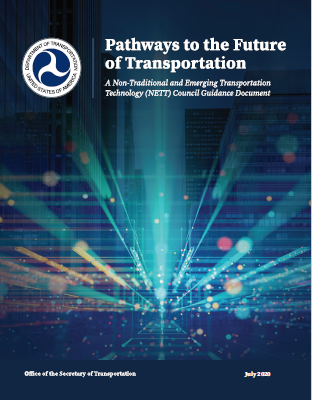 On July 23rd, the U.S. Department of Transportation (DoT) released
  The Technology Liberation Front is the tech policy blog dedicated to keeping politicians' hands off the 'net and everything else related to technology.