Early in 2007, I started penning—but somehow failed to continue—a series of essays about how I was troubled that so many Democrats and liberal intellectuals appeared to be abandoning their First Amendment heritage. As I pointed out at the time:
The idea that the Democrats are the party of free speech and the great protectors of our nation’s First Amendment heritage has always been a bit of a myth. In reality, when you study battles over freedom of speech and expression throughout American history you quickly come to realize that there are plenty of people in both parties would like to serve as the den mothers of the American citizenry. That being said, it is generally true that there have been a few more voices in the Democratic party willing to stand in opposition to governmental attempts to regulate speech in the past.
But I’m starting to wonder where even that handful of First Amendment champions has gone. Sadly, examples of Democrats selling out the First Amendment are becoming so common that I’ve decided to start a new series to highlight recent examples of Dems actually leading the charge for increased government regulation of speech and expression. I want to stress that I’m not trying to pick on Democrats here, rather, I’m just trying to point out that–unless there is a sea change in their approach to these issues by Democrats in coming months and years–both parties now appear to be singing out of the same pro-regulatory hymnal. This constitutes an ominous threat to the future of free expression.
This seems like a good time for me to pick this theme back up because later this fall, the Supreme Court is set to consider
FCC v. Fox Television Stations, which could become the most important First Amendment-related court case since FCC v. Pacifica Foundation, which just turned 30 years old last week.
Amicus briefs are starting to be filed in the matter, and you won’t be surprised to hear that several social conservative, pro-regulatory activist groups have already petitioned the Court to uphold the FCC’s authority to censor broadcast television and radio content. What is surprising, however, is the lack of liberal groups or Left-learning intellectuals engaging in the matter. One would hope that at least a few lefties would file in opposition to over-zealous FCC regulation of speech. Sadly, however, to the extent any liberals have filed so far, it has largely been in an effort to undercut the argument broadcasters are putting forward in defense of their First Amendment rights, or to encourage the Court not to touch other regulatory sacred cows of the political Left—namely the Supreme Court’s 1969 Red Lion decision and FCC’s ambiguous “public interest” authority to comprehensively regulate media markets.
Continue reading →
[Note: This is the fourth in a series of essays about the legacy of the Supreme Court’s FCC v. Pacifica Foundation decision, which celebrates its 30th anniversary on July 3rd. Part 1, presented a general overview of the issue. Part 2 sketched a short history of FCC indecency regulation. Part 3 discussed the misguided logic of the Court’s reasoning in Pacifica as it stood in 1978. This installment will examine why that logic is even more misguided in light of modern developments.]
Whatever legitimacy
Pacifica’s “pervasiveness rationale” might have once had, it has been largely eroded by modern media developments.
First, the pervasiveness rationale for media regulation fails today because new content tailoring technologies make it easier than ever before for parents to manage media in their homes and in their lives of their children. It is impossible to consider video programming an “intruder” in the home when tools exist that can help parents almost perfectly tailor viewing experiences to individual household preferences.
When Justice Stevens argued in
Pacifica that broadcast signals represented an “intruder” in the home, he supported that claim by noting that: “Because the broadcast audience is constantly tuning in and out, prior warnings cannot completely protect the listener or viewer from unexpected program content.” While that may have reflected the state of technology and TV viewing at the time, it is completely at odds with modern realities. In 1978, the viewing experience was a more passive affair and consumers had very few ways to control that experience unless they turned off the television altogether. Today, by contrast, viewers (including parents) have the tools to “tune in and out” at will, and they have abundant “prior warnings” about program content thanks to the existence of ratings, program information, and electronic program guides. These tools help parents restrict or tailor the viewing experience in advance according to their values and preferences.
Continue reading →
[Note: This is the third in a series of essays about the legacy of the Supreme Court’s FCC v. Pacifica Foundation decision, which celebrates its 30th anniversary on July 3rd. Part 1, presented a general overview of the issue. Part 2 sketched a short history of FCC indecency regulation. This installment will examine the misguided logic of the Court’s reasoning in Pacifica as it stood in 1978. Part 4 will then examine why that logic is even more misguided in light of modern developments.]
For the past three decades, regulation of television programming has been premised on the “pervasiveness rationale” as articulated in the landmark Supreme Court case
FCC v. Pacifica Foundation. In Pacifica, in a 5-4 plurality decision, the Court held:
Of all forms of communication, broadcasting has the most limited First Amendment protection. Among the reasons for specially treating indecent broadcasting is the uniquely pervasive presence that medium of expression occupies in the lives of our people. Broadcasts extend into the privacy of the home and it is impossible completely to avoid those that are patently offensive. Broadcasting, moreover, is uniquely accessible to children.
In one portion of the decision, Justice John Paul Stevens, who authored the majority opinion, even referred to broadcast signals as an “intruder” into the home.
There were always serious problems with the “media-as-invader” logic of Pacifica.
Continue reading →
Next Thursday, July 3rd will mark the 30th anniversary of the Supreme Court’s landmark First Amendment decision, FCC v. Pacifica Foundation. Sadly, but somewhat ironically, the anniversary of this decision comes just a few days after we lost America’s greatest modern social satirist George Carlin, whose infamous “seven dirty words” monologue prompted the Supreme Court’s Pacifica decision. After a Pacifica Foundation radio station aired Carlin’s monologue and the FCC took action against that station, a court battle ensued regarding whether the agency had the authority to censor “indecent” content on broadcast radio and television stations.
Unfortunately, when the Supreme Court handed down its
Pacifica decision 30 years ago, the First Amendment lost. By a narrow 5-4 vote, the court held that the FCC could impose fines on broadcasters who aired indecent content during daytime and early evening hours. The Court used some rather tortured reasoning to defend the proposition that broadcast platforms deserved lesser First Amendment treatment than all other media platforms. The lynchpin of the decision was the so-called “pervasiveness theory,” which held that broadcast speech was “uniquely pervasive” and an “intruder” in the home, and therefore demanded special, artificial content restrictions.
Over the course of the next week, I plan on posting some thoughts about that twisted logic and the legacy of the
Pacifica decision in general. In part 2, I’ll sketch out the broad outlines of FCC indecency enforcement over the past 70 years. In part 3, I’ll be highlighting some of the original deficiencies of the “pervasiveness doctrine.” Part 4 will highlight the irrelevancy of Pacifica and the pervasiveness doctrine in light of recent technological developments. These (and potentially other) installments will highlight why Pacifica was always bad law and is even more misguided and unjust in light of recent marketplace developments.
Berin Szoka and I just released a short article on the FCC’s proposed follow-up to the failed 700 mhz D Block auction: a
free,
nationwide wireless service that would serve public safety users as well as consumers. It’s attached down below or the PDF can be found here.
What’s Worse Than Rigged Auctions & Internet Censorship?
How About Both in One Package!
a PFF
Progress Snapshot
Release 4.12 June 2008
by Adam Thierer and Berin Szoka
The big spectrum policy debate in town these days continues to be the fight about how to redo the botched D block auction. As we all know, FCC Chairman Kevin Martin’s previous effort to micro-manage that auction failed miserably. Sadly, the follow-up plan isn’t much better, as the Wall Street Journal notes in an editorial today:
You’d think Chairman Martin would have learned from this experience. It’s not the role of regulators to pick winners and losers to achieve their preferred social outcomes. Private competition and the price mechanism can most fairly and efficiently find the best use for scarce spectrum. The FCC’s clumsy attempt at social engineering resulted in a failed auction that has prevented otherwise desirable spectrum from being put to commercial use.
Alas, Mr. Martin has now proposed another wireless auction for a separate piece of spectrum. And this time he wants to require the winner to offer free Internet access that filters out pornography–conditions that obviously would decrease the value of the license and turn off potential bidders. It just so happens that Mr. Martin’s proposed auction seems tailor-made for the business plan put forward by M2Z, another politically connected Silicon Valley start-up looking to enter the wireless broadband telecom market.
Continue reading →
PFF has just releasing an updated edition of my booklet on “Parental Controls and Online Child Protection: A Survey of Tools & Methods.” The new version, Version 3.0, includes two new appendixes and updates to each section to reflect new parental control tools and programs developed in the last nine months.
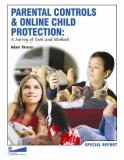
The updated report is timely as it comes on the heels of the recently-announced Internet Safety Technical Task Force, which is being chaired by the Berkman Center for Internet & Society at Harvard Law School. I am privileged to serve as a member of the Task Force, which is evaluating various online safety technologies and strategies and then reporting back to state attorneys general with our findings.
Those issues and much more are covered in the latest edition of my report. The report explores the market for parental control tools, rating schemes, education efforts, and initiatives aimed at promoting online child safety. I believe that the parental controls and content management tools cataloged in the report represent a better, less restrictive alternative to government regulation. As I conclude after evaluating that state of the market: “There has never been a time in our nation’s history when parents have had more tools and methods at their disposal to help them decide what constitutes acceptable media content in their homes and in the lives of their children.”
Version 3.0 of the special report, now over 200 pages, contains over fifty exhibits and numerous updates in all five sections of the book. Major updates have been made to the Internet, social networking, and mobile media sections, reflecting the growing importance of those sectors and issues. A greatly expanded section on video empowerment technologies has also been included. Finally, two appendices have also been added: a comprehensive legislative index cataloging over thirty bills introduced in Congress on these issues (complied with John Morris of Center for Democracy & Technology), and a glossary of 35 relevant terms and cases.
The report is available free-of-charge on the PFF website, as are the previous editions. And I am happy to provide hard copies to those who are interested.
http://documents.scribd.com/ScribdViewer.swf?document_id=2887320&access_key=key-um5xjvf98bfnuu8811v&page=&version=1&auto_size=true
PFF has just released my latest paper entitled “Parental Control Perfection? The Impact of the DVR and VOD Boom on the Debate over TV Content Regulation.” In the report, I focus on the extent to which new video technologies, such as digital video recorders (DVRs) and video on demand (VOD) services, are changing the way households consume media and are helping parents better tailor viewing experiences to their tastes and values. I provide evidence showing the rapid spread of these technologies and discuss how parents are using these tools in their homes. Finally, I argue that these developments will have profound implications for debates over the regulation of video programming. As parents are given the ability to more effectively manage their family’s viewing habits and experiences, it will lessen—if not completely undercut—the need for government intervention on their behalf.
This 16-page report can be found at: http://www.pff.org/issues-pubs/pops/pop14.20DVRboomcontentreg.pdf

 The Technology Liberation Front is the tech policy blog dedicated to keeping politicians' hands off the 'net and everything else related to technology.