 Not surprisingly, FCC Commissioners voted 3 to 2 today to open a Notice of Inquiry on changing the classification of broadband Internet access from an “information service” under Title I of the Communications Act to “telecommunications” under Title II. (Title II was written for telephone service, and most of its provisions pre-date the breakup of the former AT&T monopoly.) The story has been widely reported, including posts from The Washington Post, CNET, Computerworld, and The Hill.
As CNET’s Marguerite Reardon counts it, at least 282 members of Congress have already asked the FCC not to proceed with this strategy, including 74 Democrats.
I have written extensively about why a Title II regime is a very bad idea, even before the FCC began hinting it would make this attempt. I’ve argued that the move is on extremely shaky legal grounds, usurps the authority of Congress in ways that challenge fundamental Constitutional principles of agency law, would cause serious harm to the Internet’s vibrant ecosystem, and would undermine the Commission’s worthy goals in implementing the National Broadband Plan. No need to repeat any of these arguments here. Reclassification is wrong on the facts, and wrong on the law. Continue reading →
Great piece by ZDNet’s Edd Bott on How a decade of antitrust oversight has changed your PC. Here are his four categories of costs:
- Thanks for all the crapware, Judge
- Competition among browsers? It took a long, long time
- You’re less safe online.
- You want software with that OS? Go download it.
He explains his points brilliantly, so it’s well worth reading the article. On point #3. Bott notes:
Microsoft Security Essentials is available to any Windows PC as a free download, but it’s still not available as part of Windows itself. The Windows 7 Action Center will warn you if you don’t have antivirus software installed, but clicking the Find a Program Online button takes you to this page, where Microsoft’s free offering is one of 23 options, most of which are paid products….
I think the mere threat of an antitrust complaint from a big opponent like Symantec or McAfee has been enough to make Microsoft shy away from doing what is clearly in its customers’ best interests. Although Microsoft Security Essentials is free, it’s not included with Windows. And ironically, even though Microsoft’s offering is free and gets excellent reviews, you’re unlikely to find it on a new PC. Why? Because those competitors who sell antivirus software actually
pay PC makers to preload their products, banking, literally, on the fact that a significant percentage of them will pay for an annual subscription.
It’s worth pointing out that there are three possible costs to consumers here: Continue reading →
I participated last week in a Techdirt webinar titled, “What IT needs to know about Law.” (You can read Dennis Yang’s summary here, or follow his link to watch the full one-hour discussion. Free registration required.)
The key message of
The Laws of Disruption is that IT and other executives need to know a great deal about law—and more all the time. And Techdirt does an admirable job of reporting the latest breakdowns between innovation and regulation on a daily basis. So I was happy to participate.
Legally-Defensible Security
Not surprisingly, there were far too many topics to cover in a single seminar, so we decided to focus narrowly on just one: potential legal liability when data security is breached, whether through negligence (lost laptop) or the criminal act of a third party (hacking attacks). We were fortunate to have as the main presenter David Navetta, founding partner with The Information Law Group, who had recently written an excellent article on what he calls “legally-defensible security” practices.
Continue reading →
Companies often promote consistent and reliable customer experiences. KLM touts itself as “the reliable airline” while Michelin touts its dependability “because so much is riding on your tires.” And now we have Yahoo, who announced that it will be increasing the social networking functionality in Yahoo Mail. Yahoo has the ability to promote consistency in determining user defaults for sharing information.
But social networking is a product much different than most – it is participatory. Passengers can’t fly airplanes and drivers don’t design tire tread, but social networking users control what and with whom they share information.
So what happens when a social networking service changes functionality or adds new features? How does a company be consistent in carrying-over a user’s preference from the prior version to the new one? What assumptions should it make on user privacy preferences for new features?
These considerations matter whenever an online service tries to increase its social networking functionality. Last week, Facebook unveiled new privacy controls, and we blogged that it was a welcome response to clear-up confusion. In the coming weeks Yahoo will change how status updates work in Yahoo Mail. Michael Arrington’s TechCrunch article describes it well:
[C]urrently to see status updates for others in Yahoo Mail, you have to have a mutual follow, meaning both people have agreed to be “friends.” You can then see that user’s Yahoo status updates as well as updates on third party services that they have added to their Yahoo profile as well. In the new version there will no longer be a requirement for a mutual follow. So, like on Twitter, users can follow whomever they choose. This isn’t actually a dramatic change for Yahoo, since users can follow others in this way already on Yahoo Messenger.
Like Google and Facebook before it, Yahoo is adding features to make its service more “social.” And because of the scrutiny over the changes by Google and Facebook, Yahoo seems to be going out of its way to assure users that they can rely and depend on Yahoo. According to the Yahoo Corporate Blog: Continue reading →
Since Jonathan Zittrain’s ideas about the “generativity” have permeated the intellectual climate of technology policy almost as thoroughly as those of Larry Lessig, scarcely a month passes without a new Chicken Little shouting about how the digital sky is falling in a major publication. The NYT has had not one, but two such articles in the course of a week: first, Brad Stone’s piece about Google, Sure, It’s Big. But Is That Bad? (his answer? an unequivocal yes! as I noted), followed by Virginia Heffernan’s piece “The Death of the Open Web,” which bemoans the growing popularity of smart phone apps—which she analogizes to “white flight” (a stretched analogy that, I suppose, would make Steve Jobs the digital Bull Connor).
What really ticks me off about these arguments (besides the fact that Apple critics like Zittrain use iPhones themselves without a hint of bourgeois irony) is Heffernan’s suggestion that, “By choosing machines that come to life only when tricked out with apps from the App Store, users of Apple’s radical mobile devices increasingly commit themselves to a more remote and inevitably antagonistic relationship with the Web.” To hear people like Heffernan (and others who have complained about Apple’s policies for its app store) talk, you might think that modern smart phones don’t come with a web browser at all, or that browser software is next to useless, so the fact that browsers can access any content on the web (subject to certain specific technical limitations, such as sites that use Flash) is irrelevant, and users are simply at the mercy of the “gatekeepers” that control access to app stores.
In fact, the iPhone and Android mobile browsers are amazingly agile, generally rendering pages originally designed for desktop reading in a way that makes them very easy to read on the phone—such as by wrapping text into a single column maximized to fit either the landscape or portrait view of the phone, depending on which way it’s pointed. In fact, I do most of my news reading on my Droid, and using its browser rather than through any app—although there are a few good news apps to choose from. In fact, I probably spend about 10 times as much time using my phone’s browser as I spend using all other 3rd party apps (i.e., not counting the phone, e-mail, calendar, camera and map “native” apps). So I can get any content I want using the phone’s browser, I certainly don’t lose any sleep at night over what I can or can’t do in apps I get through the app store. I’d love to see actual statistics on the percent of time that smartphone users spend using their mobile browser, as compared to third-party apps. Do they exist?
But however high that percentage might be, the important thing is that the smartphone browser offers an uncontrolled tool for accessing content, even if apps on that mobile OS do not. Continue reading →
Today’s NYT piece by Brad Stone about Google (Sure, It’s Big. But Is That Bad?) offers a superb example of how to use the rhetorical question in an article headlined to suggest that you might actually be about to write a thoughtful, balanced piece—while actually writing a piece that, while thoughtful and interesting, offers little more than token resistance to your own preconceived judgments. But perhaps I’m being unfair: Perhaps Stone’s editors removed “YES! YES! A THOUSAND TIMES, YES!” from the headline for brevity’s sake?
Anyway, despite its one-sidedness, the piece
is fascinating, offering a well-researched summary of the growing cacophony of cries for regulatory intervention against Google, and also a suggestion of where they might lead in crafting a broader regulatory regime for online services beyond just Google. In short, the crusade against Google and the crusade for net neutrality (in which Google has, IMHO unwisely been a major player) are together leading us down in intellectual slippery slope that, as Adam and I have suggested, will result in “High-Tech Mutually Assured Destruction” and the death of Real Internet Freedom.
Ironically, this push for increased government meddling—a veritable “New Deal 2.0″—is all justified by the need to “protect freedom.” But it would hardly be the first time that this had happened. As the great defender of liberty
Garet Garrett said of the New Deal 1.0 in his 1938 essay The Revolution Was:
There are those who still think they are holding the pass against a revolution that may be coming up the road. But they are gazing in the wrong direction. The revolution is behind them. It went by in the Night of Depression, singing songs to freedom.
That theme lives on in the works of those like antitrust warrior Gary Reback, an anti-Google stalwart whose book Free the Market: Why Only Government Can Keep the Marketplace Competitive
Adam savaged in his review last year. Reback argues:
Google is the “arbiter of every single thing on the Web, and it favors its properties over everyone else’s,” said Mr. Reback, sitting in a Washington cafe with the couple. “What it wants to do is control Internet traffic. Anything that undermines its ability to do that is threatening.”
Move over, ISPs! Search engines are the
real threat! Somehow, I feel fairly confident in predicting that this will be among the chief implications of Tim Wu’s new book, The Master Switch: The Rise and Fall of Information Empires, to be released in November, which his publisher summarizes as follows: Continue reading →
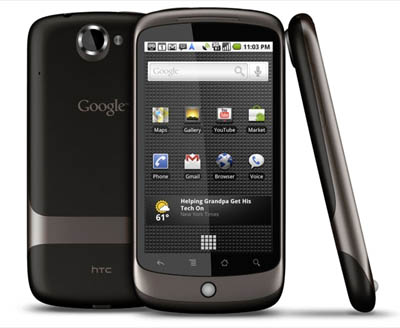
 Google has just announced that it is ending web-only sales of its unsubsidized Nexus One smartphone. The company had hoped to created a very different kind of business model for mobile phone retailing, but it just didn’t work and so they are ending the experiment.
There are a couple of reasons that it probably didn’t work, but the one thing that just about everyone is pointing back to is the difficulty of acclimating Americans to the actual cost of an unsubsidized handset. Over at
Ars Technica, Peter Bright points out:
A one-off payment of $529 is hard to stomach. In many countries, we’re not accustomed to paying so much for mobile phones, as normally their true cost is hidden—we pay less up front and commit to paying a monthly fee for 12-24 months. Only those brave souls who were willing to stump up for the early termination fee would get any idea of the true cost of their handset. In a world of subsidized handsets, then, the Nexus one felt very expensive. It’s true that SIM-only contracts are cheaper than with-handset ones, but the difference rarely feels significant enough to justify buying a full-price phone—much better to pay a little bit more each month and avoid the up-front cost. Even if you do the math and work out that the Google way is cheaper, there’s still the unpleasant prospect of spending so much at once.
And Kevin C. Tofel of
GigaOm
concludes:
Continue reading →
The Federal Trade Commission is reportedly on the verge of suing to block Google’s proposed acquisition of mobile advertising firm AdMob. The deal’s antitrust implications were discussed in a panel earlier this month on Capitol Hill featuring Berin Szoka. (For other interesting perspectives on the topic, see Geoff Manne and Tom Lenard).
In an opinion essay on Forbes.com this week, I argue that the FTC should approve Google’s acquisition of AdMob without conditions:
by Ryan Radia
Google competes in many markets, but its most pressing threat comes not from a rival but from antitrust authorities. The Federal Trade Commission is reportedly on the verge of filing a lawsuit against Google to block its proposed $750 million acquisition of mobile advertising company AdMob. Yet antitrust fears about Google are misplaced. Government intervention would harm the very consumer interests the FTC is supposed to protect.
As the government prepares for a potential court battle against Google, the budding mobile advertising market is evolving before our very eyes. Just two weeks ago Apple launched iAd, a mobile advertising platform aimed at the world’s 50 million iPhone users. And Microsoft is in talks to acquire Millenial Media, another major player in mobile advertising, according to
Business Insider.
Meanwhile, smart phone use is increasing rapidly–and opportunities for entry in the mobile advertising market are increasing with it. Can Google, armed with AdMob’s advertising platform, succeed in gaining the top spot in mobile advertising? Perhaps — but only if Google-AdMob manages to outcompete and out-innovate rivals that have deep pockets and brilliant engineers of their own.
What tomorrow’s mobile ad market will look like if Google and AdMob join forces is anybody’s guess. Trying to predict how a proposed merger or acquisition will impact consumers is difficult, if not impossible.
Continue reading →
Google has just launched a new tool that lets users view the total number of requests received “from government agencies around the world to remove content from our services, or provide information about users of our services and products.” As the FAQ explains, the tool overlays the requests received over the last six months, except for countries like China that prohibit the release of such numbers, on a map with totals for both data requests if over 30 (criminal-related but not civil) and removal requests if over 10 (not including requests from private parties, like DMCA copyright take-down notices). Google makes a few important observations about the data—especially that Brazil and India’s numbers are skewed way off because of the popularity of Orkut, Google’s answer to Facebook, there.
This tool represents the beginning of a new era in transparency into how governments censor the Internet and violate users’ privacy. I very much look forward to seeing Google improve this tool to provide greater granularity of disclosure, and to seeing other companies improve upon what Google has started. Over time, this transparency could do wonders to advance Internet freedom for users by promoting positive competition among countries.
To illustrate the kinds of things one could do with this data with a more robust interface, I put together the following spreadsheet (by scraping Google’s request numbers and mashing them up with total Internet users numbers I found here (which are mostly from late 2009):
http://spreadsheets.google.com/pub?key=0AtwIXain9oyPdFJBQUxMcUpselNYcElGUHhhMnBuUUE&hl=en&output=html&widget=true
Continue reading →

 The Technology Liberation Front is the tech policy blog dedicated to keeping politicians' hands off the 'net and everything else related to technology.