From our bulletin board at home:

Keeping politicians' hands off the Net & everything else related to technology
Lots of good things in The Washington Post today following up on U.S. Secretary of State Hillary Clinton’s historic address last week about the importance of global Internet freedom. First, The Post has published a powerful supporting statement from Sweden’s Minister of Foreign Affairs, Carl Bildt, entitled, “Tear Down These Virtual Walls.” Bildt notes that:
Two decades ago a wall made of concrete, built to divide the free and unfree, was torn down. Today it is the freedom of cyberspace that is under threat from regimes as keen as dictatorships past to control and limit the possibilities of their citizens. They are trying to build firewalls against freedom. At the end of the day, I am convinced they are fighting a losing battle — that cyber walls are as certain to fall as the walls of concrete once did.
He then goes on to argue that, following Secretary Clinton’s address last week, “We should now forge a new transatlantic partnership for protecting and promoting the freedoms of cyberspace. Together, we should call for all these walls to be torn down.” He continues:
Much like the way the rule of the law is critical to protecting the freedoms we enjoy as citizens in our societies, and international law protects the peace between our nations, we must seek to shape the rules that will protect the rights and the freedom of cyberspace.
Importantly, The Washington Post itself also editorialized today about “The Internet War.” Continue reading →
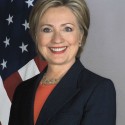 This morning at the Newseum in Washington, DC, U.S. Secretary of State Hillary Rodham Clinton delivered remarks on Internet freedom and the future of global free speech and expression. [Transcript is here + video.] It will go down as a historic speech in the field of Internet policy since she drew a bold line in the cyber-sand regarding exactly where the United States stands on global online freedom. Clinton’s answer was unequivocal: “Both the American people and nations that censor the Internet should understand that our government is committed to helping promote Internet freedom.” “The Internet can serve as a great equalizer,” she argued. “By providing people with access to knowledge and potential markets, networks can create opportunities where none exist.”
Unfortunately, however, “the same networks that help organize movements for freedom… can also be hijacked by governments to crush dissent and deny human rights.” Echoing Winston Churchill’s famous “iron curtain” speech, Sec. Clinton argued that “With the spread of these restrictive practices, a new information curtain is descending across much of the world.” She noted that virtual walls are replacing traditional walls in many nations as repressive regimes seek to squash the liberties of their citizenry. That’s why the Administration’s bold stand in favor of online freedom is so essential.
Importantly, Sec. Clinton made it clear that the Obama Administration is ready to commit significant resources to this effort. She said that, over the next year, the State Department plans to work with others to establish a standing effort to promote technology and will invite technologists to help advance the cause through a new “innovation competition” that will promote circumvention technologies and other technologies of freedom. Sec. Clinton also challenged private companies to stand up to censorship globally and challenge foreign governments when they demand controls on the free flow of information or digital technology.
That is particularly important because Secretary Clinton’s speech comes on the heels of the recent news that Google and at least 30 other Internet companies were the victims of cyberattacks in China, which raises profound questions about the future of online freedom and cybersecurity. Sec. Clinton’s remarks will make it clear to online operators that the U.S. government stands prepared to back them up when they challenge the censorial policies of repressive foreign regimes.
Well, I don’t often get a chance to sing the praises of Hillary Clinton, so let me take the opportunity to loudly applaud her stand on religious defamation policies, which are becoming a growing international concern. According to The Washington Post, while unveiling the State Department’s 2009 Report on International Religious Freedom:
Secretary of State Hillary Rodham Clinton criticized on Monday an attempt by Islamic countries to prohibit defamation of religions, saying such policies would restrict free speech. … While unnamed in Clinton’s speech, the Organization of the Islamic Conference, a group of 56 Islamic nations, has been pushing hard for the U.N. Human Rights Council to adopt resolutions that broadly bar the defamation of religion. The effort has raised concerns that such resolutions could be used to justify crackdowns on free speech in Muslim countries.
Here’s specifically what Secretary Clinton had to say:
some claim that the best way to protect the freedom of religion is to implement so-called anti-defamation policies that would restrict freedom of expression and the freedom of religion. I strongly disagree. The United States will always seek to counter negative stereotypes of individuals based on their religion and will stand against discrimination and persecution. But an individual’s ability to practice his or her religion has no bearing on others’ freedom of speech. The protection of speech about religion is particularly important since persons of different faiths will inevitably hold divergent views on religious questions. These differences should be met with tolerance, not with the suppression of discourse.
Quite right. Thank you, Secretary Clinton, for this bold stand. Freedom of religious worship and expression — including the criticism of religion — is essential. Now, can we talk about your old positions on video game regulation?!
http://c.brightcove.com/services/viewer/federated_f8/1705667530
by Berin Szoka & Adam Thierer, Progress Snapshot 5.11 (PDF)
Ten years ago, Nobel Prize-winning economist Milton Friedman lamented the “Business Community’s Suicidal Impulse:” the persistent propensity to persecute one’s competitors through regulation or the threat thereof. Friedman asked: “Is it really in the self-interest of Silicon Valley to set the government on Microsoft?” After yesterday’s FCC vote’s to open a formal “Net Neutrality” rule-making, we must ask whether the high-tech industry—or consumers—will benefit from inviting government regulation of the Internet under the mantra of “neutrality.”
The hatred directed at Microsoft in the 1990s has more recently been focused on the industry that has brought broadband to Americans’ homes (Internet Service Providers) and the company that has done more than any other to make the web useful (Google). Both have been attacked for exercising supposed “gatekeeper” control over the Internet in one fashion or another. They are now turning their guns on each other—the first strikes in what threatens to become an all-out, thermonuclear war in the tech industry over increasingly broad neutrality mandates. Unless we find a way to achieve “Digital Détente,” the consequences of this increasing regulatory brinkmanship will be “mutually assured destruction” (MAD) for industry and consumers.
The FCC’s proposed rules would apply to all broadband providers, including wireless, but not to Google or many other players operating in other layers of the Net who favor such broadband-specific rules. With this rulemaking looming, AT&T came after Google with letters to the FCC in late September and then another last week accusing the company of violating neutrality principles in their business practices and arguing that any neutrality rules that apply to ISPs should apply equally to Google’s panoply of popular services. In particular, AT&T accused Google of “search engine bias,” suggesting that only government-enforced neutrality mandates could protect consumers from Google’s supposed “monopolist” control.
The promise made yesterday by the FCC—to only apply neutrality principles to the infrastructure layer of the Net—is hollow and will ultimately prove unenforceable. Continue reading →
In a past life — that is, from roughly 1994-2004 — I spent an enormous amount of time countering the proponents of “open access” regulation for communications and high-tech networks. My work in that field culminated in the publication of a 2003 book with my old Cato colleague Wayne Crews entitled, What’s Yours is Mine: Open Access & the Rise of Infrastructure Socialism. We aimed to counter the efforts of bureaucrats and central planners to command technology companies and industry sectors to share networks, facilities, or specific technologies with rivals in the name of “competition.” Simply stated, sharing is not competing, and competition in the creation of networks is just as important as competition in the goods, services, and information that move across those networks. Moreover, there are property right considerations that come into play when governments seek to commandeer networks or take over network management decisions.
But let’s just stick to the economic issue here regarding the incentives created by the network-sharing mentality of the “forced access” movement and the fiction associated with the belief that network sharing can create competition. My old PFF colleague Randy May, who currently serves as President of the Free State Foundation, continues to cover developments in this field far closer than I do, and has always done much better work on the subject than me. Recently, Randy addressed some new fictions put forth by the radical Leftist activity group, the (Un-)Free Press who are, once again, spinning a revisionist history of telecom and media policy. Specifically, Free Press has recently suggested that in the late 1990s we lived in a veritable communications nirvana, with thousands of Internet Service Providers and/or “competitive exchange carriers” hotly “competing” for our business. Here’s how Randy May addresses this:
I really appreciate the venture capitalists (VCs) in Silicon Valley subsidizing my soapbox at Twitter. Seriously, it is an absolutely awesome platform for getting a message out to the masses. But at some point I worry that the gravy train will come to an end and that users will have to start picking up part of the tab. After all, will those VCs continue to subsidize Twitter if it never turns a profit? According to the Wikipedia entry about Twitter:
In total, Twitter has raised over US$57 million from venture capitalists. The exact amounts of funding have not been publicly released. Twitter’s first round of funding was for an undisclosed amount that is rumored to have been between $1 million and $5 million. Its B round of funding in 2008 was for $22 million and its C round of funding in 2009 was for $35 million from Institutional Venture Partners and Benchmark Capital along with an undisclosed amount from other investors including Union Square Ventures and Spark Capital. Twitter is backed by Union Square Ventures, Digital Garage, Spark Capital, and Bezos Expeditions.
Again, thank you VCs! But, like them, I do wonder when and how Twitter will bring in some cash. Is there a “freemium” model that could work? Perhaps. “Pro” or corporate accounts have been rumored to be in the works. Getting someone else to pick up the tab that way might bring in enough cash for Twitter to allow the free ride to continue for the rest of us. But what about advertising? It’s been the “mother’s milk” of most online media and platforms for some time now, and Twitter seems perfectly suited to insert a few banner ads or contextual ads here and there. It could be happening sooner than you think. Austin Modine of The Register notes in a new piece, “Twitter ‘Leaves Door Open’ for Targeted Ads,” that: Continue reading →
Today I was invited to the Federal Communications Commission (FCC) to testify at one of the agency’s Broadband Working Group workshops. This particular workshop was on “Broadband Consumer Context,” which focused on “a range of challenges and opportunities as the internet becomes a focal point for commercial transactions, social networking, and a host of activities pertaining to information gathering and exchange.”
I was asked to address the issue of whether there is a relationship between online safety concerns and broadband uptake. In my testimony, I noted that, in my 15 years of research in this area, I have never unearthed any substantive empirical evidence suggesting a correlation between parental concerns about online activity and overall household broadband uptake. I have seen occasional anecdotal news stories discussing the concerns some parents have had about their kids online that led them to reject online connectivity, but these stories have been exceedingly rare (and I haven’t seen any in recent memory).
I also argued that I did not think it at all surprising that such anecdotes are harder to find, or that empirical evidence on this front seems non-existent. I argued that there were four logical explanations for why parental concerns about online safety haven’t “moved the broadband needle” much in the negative direction:
For all the details on each of those, read my entire testimony or check out the presentation embedded below that I made to the FCC today. Continue reading →
 Five years ago today the Technology Liberation Front (the “TLF”) got underway with this post. The idea for the TLF came about after I asked some tech policy wonks whether it was worth put together a blog dedicated to covering Internet-related issues from a cyber-libertarian perspective. The model I had in mind was a “Volokh Conspiracy
for Tech Issues,” if you will. I wanted to bring together a collection of sharp, liberty-loving wonks (most of whom worked in the think tank world) to talk about their research on this front and to give them a place to post their views on breaking tech policy developments. It was to be a sort of central clearinghouse for libertarian-oriented tech policy analysis and advocacy.
Five years ago today the Technology Liberation Front (the “TLF”) got underway with this post. The idea for the TLF came about after I asked some tech policy wonks whether it was worth put together a blog dedicated to covering Internet-related issues from a cyber-libertarian perspective. The model I had in mind was a “Volokh Conspiracy
for Tech Issues,” if you will. I wanted to bring together a collection of sharp, liberty-loving wonks (most of whom worked in the think tank world) to talk about their research on this front and to give them a place to post their views on breaking tech policy developments. It was to be a sort of central clearinghouse for libertarian-oriented tech policy analysis and advocacy.
At first, Tim Lee and I debated whether it even made sense to have that sort of narrow focus, but I think the passage of time and the rise of plenty of competition on this front shows that it was worthwhile. And I’ve been very pleased with the tag-team effort of all our TLF contributors and the way—without anyone planning it, in true libertarian fashion—we’ve sort of developed a nice division of labor on various tech policy issues.
Perhaps a few stats are in order on this occasion to mark our progress 5 years in. The best indication of our success is the fact that our Pagerank (Google’s logarithmic scale of website importance based on links to that site) has reached 7/10—the same score shared by the Volokh Conspiracy (our model), as well as Techmeme (the leading tech news aggregator), the Cato Institute, CDT, etc. (For comparison: ArsTechnica and EFF are 8s.) Unfortunately, we’ve only been using Google Analytics for three of the past five years, so it’s impossible to get a authoritative accounting of traffic growth since Day 1. But here are few markers:
So, what’s our #1 post of all-time? Continue reading →
 by Adam Thierer & Berin Szoka — (Ver. 1.0 — Summer 2009)
We are attempting to articulate the core principles of cyber-libertarianism to provide the public and policymakers with a better understanding of this alternative vision for ordering the affairs of cyberspace. We invite comments and suggestions regarding how we should refine and build-out this outline. We hope this outline serves as the foundation of a book we eventually want to pen defending what we regard as “Real Internet Freedom.” [Note: Here’s a printer-friendly version, which we also have embedded down below as a Scribd document.]
Cyber-libertarianism refers to the belief that individuals—acting in whatever capacity they choose (as citizens, consumers, companies, or collectives)—should be at liberty to pursue their own tastes and interests online.
Generally speaking, the cyber-libertarian’s motto is “Live & Let Live” and “Hands Off the Internet!” The cyber-libertarian aims to minimize the scope of state coercion in solving social and economic problems and looks instead to voluntary solutions and mutual consent-based arrangements.
Cyber-libertarians believe true “Internet freedom” is freedom from state action; not freedom for the State to reorder our affairs to supposedly make certain people or groups better off or to improve some amorphous “public interest”—an all-to convenient facade behind which unaccountable elites can impose their will on the rest of us.
 The Technology Liberation Front is the tech policy blog dedicated to keeping politicians' hands off the 'net and everything else related to technology.
