“Schools in Beijing are quietly removing the Green Dam filter, which was required for all school computers in July, due to complaints over problems with the software,” notes this Reuters report. Even though China backed down on their earlier requirement to have the Green Dam filter installed on all computers, according to Reuters “schools were still ordered by the Ministry of Industry and Information Technology to install the web filter, which Chinese officials said would block pornography and other unhealthy content.” The Reuters article mentions a notice carried on the home page of one Beijing high school that reads: “We will remove all Green Dam software from computers in the school as it has strong conflicts with teaching software we need for normal work.” The article also cites a school technology director, who confirmed that the software had been taken off most computers, as saying “It has seriously influenced our normal work.”
Ironically, many educators and librarians in the United States can sympathize since they currently live under similar requirements. Under the Children’s Internet Protection Act (CIPA) of 2000, publicly funded schools and libraries must implement a mandatory filtering scheme or run the risk of losing their funding. As the Federal Communications Commission summarizes:
[CIPA] imposes certain types of requirements on any school or library that receives funding for Internet access or internal connections from the E-rate program… Schools and libraries subject to CIPA may not receive the discounts offered by the E-rate program unless they certify that they have an Internet safety policy and technology protection measures in place. An Internet safety policy must include technology protection measures to block or filter Internet access to pictures that are: (a) are obscene, (b) child pornography, or (c) harmful to minors (for computers that are accessed by minors).
Of course, nobody wants kids viewing porn in schools, but CIPA has been know the block far more than that and has become a real pain for many educators, librarians, and school administrators who have to occasionally get around these filters to teach their students about legitimate subjects. Anyway, I just find it ironic that some American lawmakers have been making a beef about mandatory Internet filtering by the Chinese when we have our own mandatory filtering regime right here in the states. For example, Continue reading →
I cannot in strong enough terms recommend that everyone read Gordon Crovitz’s latest Wall Street Journal column, “Free Speech, Now that Speech is Free.” It perfectly encapsulates everything we stand for here and makes the case that I have made again and again: Speech regulation — of all flavors — makes less and less sense in a world of information abundance and user empowerment, and it is a complete affront to our First Amendment rights. As Crovitz argues:
The Constitution was drafted at a time when there were few media outlets, and few people could be heard. Since then, technology has made it possible for everyone to express their views. The cost of expressing opinions continues to fall. Now that speech is no longer expensive, it’s time to return to the Founders’ intention that speech be free and that Congress not abridge anyone’s right to speak.
Amen brother! In his essay today, Crovitz specifically takes on America’s increasingly insane campaign finance laws, which make a mockery of the First Amendment. In the wake of last week’s Supreme Court arguments in the Citizens United case, Crovitz points out the insulting stupidity and sheer futility of these analog era, scarcity-oriented laws:
Continue reading →
On July 27th, The Progress & Freedom Foundation hosted a Capitol Hill panel discussion entitled “Online Child Safety, Privacy, and Free Speech: An Overview of Challenges in Congress & the States.” The event featured remarks from:
- Parry Aftab, Executive Director, WiredSafety.org
- Todd Haiken, Senior Manager of Policy, Common Sense Media
- Jim Halpert, Partner, DLA Piper
- Berin Szoka, Senior Fellow, The Progress & Freedom Foundation
We’ve just released the transcript of the event, which I have also pasted down below the fold in a Scribd document reader. Also, the audio for this event can be heard by clicking below:
Download mp3
Here is the full event description: Continue reading →
 by Adam Thierer & Berin Szoka — (Ver. 1.0 — Summer 2009)
We are attempting to articulate the core principles of cyber-libertarianism to provide the public and policymakers with a better understanding of this alternative vision for ordering the affairs of cyberspace. We invite comments and suggestions regarding how we should refine and build-out this outline. We hope this outline serves as the foundation of a book we eventually want to pen defending what we regard as “Real Internet Freedom.” [Note: Here’s a printer-friendly version, which we also have embedded down below as a Scribd document.]
I. What is Cyber-Libertarianism?
Cyber-libertarianism refers to the belief that individuals—acting in whatever capacity they choose (as citizens, consumers, companies, or collectives)—should be at liberty to pursue their own tastes and interests online.
Generally speaking, the cyber-libertarian’s motto is “Live & Let Live” and “Hands Off the Internet!” The cyber-libertarian aims to minimize the scope of state coercion in solving social and economic problems and looks instead to voluntary solutions and mutual consent-based arrangements.
Cyber-libertarians believe true “Internet freedom” is freedom
from state action; not freedom for the State to reorder our affairs to supposedly make certain people or groups better off or to improve some amorphous “public interest”—an all-to convenient facade behind which unaccountable elites can impose their will on the rest of us.
Continue reading →
Dan Rather actually made the following two contradictory statements in the same speech:
I personally encourage the president to establish a White House commission on public media.
and then:
A truly free and independent press is the red beating heart of democracy and freedom.
He’s right that the free press is a “watchdog on power.” But that’s not compatible with the idea that, as reported, “the government makes an effort to ensure the survival of the free press.” A press funded, promoted, propped up, subsidized by government is not a free press. Nor is it in any position to be a watchdog; it’s more likely to become a megaphone for the states preferred ideas and expansion of government in other spheres, like health care, energy, finance, telecommunications, scientific research and policy and so on.
Democracy as a concept and political system is not at stake, as Rather thinks, when a particular business model engaged in public communications and broadcasting suffers at a particular point in history. It’s been beaten to death, but everyone knows the transformative importance of the Internet and its role in making voices heard that never had a chance when Rather and his two rival channels dominated the news and airwaves for 30 minutes each evening.
Continue reading →
Maine has just enacted a law severely restricting marketing to kids: the Act To Prevent Predatory Marketing Practices against Minors, summarized by Covington & Burling. Adam and I released a major paper in June about such laws: COPPA 2.0: The New Battle over Privacy, Age Verification, Online Safety & Free Speech. Maine is following the lead of several other states that have tried to expand the Children’s Online Privacy Protection Act (COPPA) of 1998 to cover nost just kids under 13 but adolescents as well and potentially all social networking sites. We discussed at length the problems such laws create, particularly the possibility that large numbers of adults would, for the first time, be subject to age verification mandates before accessing (or participating in) the growing range of sites with social networking capabilities. This, in turn, would significantly “chill” free speech online by undermining anonymity.
Like COPPA 2.0 proposals in New Jersey (simply extending COPPA to cover adolescents) and Illinois (applying COPPA to most social networking sites), the Maine law tries to build on COPPA’s “verifiable parental consent” requirement for the 13-17 audience as well as those under 13.
On the one hand, the Maine law goes much further than these other COPPA 2.0 proposals. While the original bill was limited to the Internet and wireless communications, the final bill’s scope applies to all communications. The bill also covers “health-related” information (HRI) as well as “personal information” (PI). On the other hand, the Maine law is thus somewhat narrower than other COPPA 2.0 proposals and COPPA itself in that it applies only to “marketing or advertising products, goods or services.” While COPPA is commonly misunderstood to cover only marketing, it actually covers essentially any “collection” (broadly defined) of personal information from kids for any purpose—including merely giving kids access to communications functionality that might let them share personal information with other users (even if the site itself is not “collecting” that information in the commonly understood sense).
Continue reading →
Just a heads up for those of you in the DC-area… On Monday, July 27th, PFF will be hosting a Hill event on “Online Child Safety, Privacy, and Free Speech: An Overview of Challenges in Congress & the States.” I will be moderating the discussion and we will be joined by Parry Aftab, Executive Director of WiredSafety.org, Jim Halpert a Partner with the law firm of DLA Piper, Todd Haiken, Senior Manager of Policy for Common Sense Media, and my colleague Berin Szoka also of PFF.
The event will focus on the intersection of online child safety, privacy, and free speech issues at both the federal and state level. Bills introduced in Congress to address cyberbullying concerns propose either educational initiatives or a criminalization approach. Access to objectionable content also remains a concern and a new, government-mandated task force is looking into those issues. Meanwhile, state officials, including many state attorneys general, continue to explore age verification mandates for social networking sites and some have considered building on the federal Children’s Online Privacy Protection Act (COPPA) to expand “parental notification” mandates. The Federal Trade Commission (FTC) has recently announced an expedited review of COPPA to see if it is keeping up with new developments. The FTC is also exploring child safety in virtual worlds. New concerns about “sexting,” or the sending of sexual explicit images over mobile devices, has also raised new concerns led some lawmakers to ponder penalties.
How serious are these concerns? Is legislation or regulation needed to address them? What free speech issues are at stake? Should Congress take the lead or leave it to the States to experiment with different models? These and other issues will be discussed by the panelists at our July 27th event.
The logistical details are below and you
RSVP here.
“Online Child Safety, Privacy, and Free Speech: An Overview of Challenges in Congress & the States”
July 27, 2009
12:00 p.m. to 1:30 p.m.
Room SVC-208
Capitol Visitor Center
1st Street and East Capitol Street, NE (entrance across from Supreme Court)
In an earlier post, I mentioned an important new online child safety task force report that has just been released from the “Point Smart. Click Safe.” Blue Ribbon Working Group. It’s a great report and I encourage you to read the whole thing. It was my great pleasure to serve on this task force, and as we started finalizing our conclusions and recommendations, I started thinking about how much of what we were finding and recommending was consistent with what past online safety task forces had also concluded.
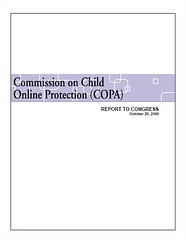
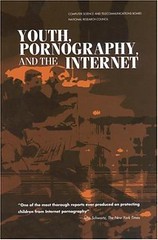
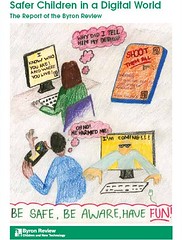
By way of background, over the past decade, five major online safety task forces or blue ribbon commissions have been convened to study online safety issues. Two of these task forces were convened in the United States and issued reports in 2000 (“COPA Commission”) and 2002 (“Thornburgh Commission“). Another was commissioned by the British government in 2007 and issued in a major report in March 2008 (“Byron Review“). Finally, two additional online safety task forces were formed in the U.S. in 2008 and concluded their work, respectively, in January (“Internet Safety Technical Task Force“) and July (“Point Smart. Click Safe.“) of 2009. [And yet another task force — the Online Safety Technology Working Group — was recently formed and has now gotten underway.]
In a new PFF white paper, ”
Five Online Safety Task Forces Agree: Education, Empowerment & Self-Regulation Are the Answer,” I walk through a chronological summary of each of these past task forces [click on covers of each report below to read them in their entirety] and highlight some of the similar themes and recommendations from them.

 Continue reading →
The painful issue of cyberbullying has recently taken center stage in the ongoing debate about online child safety. Last week I wrote about Lori Drew’s acquittal on charges related to Megan Meier’s tragic suicide, suggesting that the judge in the case was right to overturn her conviction on a very expansive reading of the federal anti-hacking statute. While I think that decision was necessary on legal grounds, it’s sure to add “fuel to the fire” of calls for “action” in Congress. Thus, I emphasized that observers of the case need to separate their understandable outrage from the from the questions of (1) whether that statute was properly applied and (2) how the law should treat such cases in the future.
On the second question, Adam and I recently released a major entitled, “Cyberbullying Legislation: Why Education is Preferable to Regulation.” We distinguish among:
- Cyberbullying: kid-on-kid abuse online
- Cyberharassment generally: people of all ages using the Internet to harass each other
- Adult-on-kid cyberharassment: For example, Lori Drew’s alleged (but still unclear) role in the Megan Meier case
In a nutshell, we argue that education is the better approach to cyberbullying (Problem #1)—an approach taken by a bill introduced in the Senate by Sen. Robert Menendez (D-NJ) and in the House by Rep. Debbie Wasserman Schultz (D-FL) . We go on to argue that, while it would be difficult to create criminal sanctions for cyberharassment generally (Problem #2) without infringing free speech and due process rights, it might be possible to craft laws narrowly tailored to cyberharassment of kids by adults (Problem #3). Continue reading →
The Wired article (“Great Wall of Facebook: The Social Network’s Plan to Dominate the Internet — and Keep Google Out“) I discussed yesterday touched on another issue near & dear to my heart (besides the importance of smarter advertising): the future of online anonymity. The article lays out Facebook’s “4-Step Plan for Online Domination,” which involves “colonizing” the web though Facebook’s Connect (launched Dec. 2008) and Open Stream API (launched April 2009) initiatives, which:
don’t just allow users to access their Facebook networks from anywhere online. They also help realize Facebook’s longtime vision of giving users a unique, Web-wide online profile. By linking Web activity to Facebook accounts, they begin to replace the largely anonymous “no one knows you’re a dog” version of online identity with one in which every action is tied to who users really are.
To hear Facebook executives tell it, this will make online interactions more meaningful and more personal.
Imagine, for example, if online comments were written by people using their real names rather than by anonymous trolls. “Up until now all the advancements in technology have said information and data are the most important thing,” says Dave Morin, Facebook’s senior platform manager. “The most important thing to us is that there is a person sitting behind that keyboard. We think the Internet is about people.”
The bolded prediction of what I would call “Online Identity Integration” is already happening. To take one tiny example, readers can now post comments on the TLF by logging into Disqus (our Comment Management System) through their Facebook (or Twitter) account, which will also allow them to automatically share those comments on Facebook (or Twitter). This is purely opt-in: Users are free to continue to post anonymous comments. But as more websites and platforms implement such Identity Integration functionality, a growing percentage of online speech will be tied to profiles offered by major social networks.
Some free speech advocates are sure to bemoan Identity Integration as directly undermining online anonymity. Continue reading →

 The Technology Liberation Front is the tech policy blog dedicated to keeping politicians' hands off the 'net and everything else related to technology.