Here’s an interesting SmartPlanet interview with Paul Ohm, associate professor of law at the University of Colorado Law School, in which he discusses his concerns about “reidentification” as it relates to privacy issues. “Reidentification” and “de-anonymization” fears have been set forth by Ohm and other computer scientists and privacy theorists, who suggest that because the slim possibility exists of some individuals in certain data sets being re-identified even after their data is anonymized, that fear should trump all other considerations and public policy should be adjusted accordingly (specifically, in the direction of stricter privacy regulation / tighter information controls).
I won’t spend any time here on that particular issue since I am still waiting for Ohm and other “reidentification” theorists to address the cogent critique offered up by Jane Yakowitz in an important new study that I discussed here last week. Once they do, I might have more to say on that point. Instead, I just wanted to make some brief comments on one particular passage from the Ohm interview in which he outlines a bold new standard for privacy regulation:
We have 100 years of regulating privacy by focusing on the information a particular person has. But real privacy harm will come not from the information they have but the inferences they can draw from the data they have. No law I have ever seen regulates inferences. So maybe in the future we may regulate inferences in a really different way; it seems strange to say you can have all this data but you can’t take this next step. But I think that’s what the law has to do.
This is a rather astonishing new legal standard and there are two simple reasons why, as Ohm suggests, “no law… regulates inferences” and why, in my opinion, no law should. Continue reading →
What I hoped would be a short blog post to accompany the video from Geoff Manne and my appearances this week on PBS’s “Ideas in Action with Jim Glassman” turned out to be a very long article which I’ve published over at Forbes.com.
I apologize to Geoff for taking an innocent comment he made on the broadcast completely out of context, and to everyone else who chooses to read 2,000 words I’ve written in response.
So all I’ll say here is that Geoff Manne and I taped the program in January, as part of the launch of TechFreedom and of “The Next Digital Decade.” Enjoy!
My essay last week for Slate.com (the title I proposed is above, but it must have been too “punny” for the editors) generated a lot of feedback, for which I’m always grateful, even when it’s hostile and ad hominem. Which much of it was.
The piece argues generally that when it comes to the Internet, a disruptive technology if ever there was one, the best course of action for traditional, terrestrial governments intent on “saving” or otherwise regulating digital life is to try as much as possible to restrain themselves. Or as they say to new interns in the operating room, “Don’t just do something. Stand there.”
This is not an argument in favor of anarchy, or even more generally for social Darwinism. I have something much more practical in mind. Disruptive technologies, by definition, do not operate within the “normal science” of those areas of life they impact. Its problems can’t be solved by reference to existing systems and institutions. In the case of the Internet, that’s pretty much all aspects of life, including regulation. Continue reading →
Back in 2007 I penned a law review article, “Why Regulate Broadcasting: Toward a Consistent First Amendment Standard for the Information Age” in which I argued that “If America is to have a consistent First Amendment in the Information Age, efforts to extend the broadcast regulatory regime must be halted and that regime must be relegated to the ash heap of history.” I made that argument based not only upon the fundamental bankruptcy of the rationales supporting the old broadcast regulatory regime, or its unfairness to broadcasters relative to other media competitors, but also because such asymmetrical regulations no longer make sense — and are increasingly impractical to enforce — in an age of technological convergence and media abundance.
The good news is that, slowly but surely, the courts are coming around to this logic, at least as it pertains to speech controls. We saw that again today with a ruling by the Second Circuit Court of Appeals that held as unconstitutional $1.2 million in fines that the Federal Communications Commission (FCC) levied on ABC broadcast affiliates seven years ago for airing a brief glimpse of Charlotte Ross’ bare buttocks on the cop drama “NYPD Blue.” As the Wall Street Journal’s
Amy Schatz notes, “Broadcasters have now won a series of court victories against government efforts to police airwaves and fine stations for airing risqué content. The Supreme Court could soon get a chance to review the issue. In the meantime, the FCC’s campaign to enforce indecency rules has ground to a halt.”
It remains to be seen whether the Supreme Court will throw the whole regime out, but I can’t help but think that’s where we are headed. Continue reading →
On November 18, the Senate Judiciary Committee unanimously approved the “Combating Online Infringements and Counterfeits Act” (COICA). The bill would enable the U.S. Attorney General to obtain a court order disabling access to web domains that are “dedicated to infringing activities.”
These “rogue websites” are a real problem, as the website Fight Online Theft explains, so it’s a good thing that Congress is working to address them. However, some of COICA’s provisions raise profound constitutional concerns, and the bill lacks adequate safeguards to protect against the unwarranted suspension of Internet domain names, as the website Don’t Censor the Net argues. The bill also doesn’t provide a mechanism for website operators targeted by the Attorney General to defend their site in an adversary judicial proceeding. This week, a group of over 40 law professors submitted a letter to the U.S. Senate arguing that COICA, in its current form, suffers from “egregious Constitutional infirmities.”
To address these concerns, CEI is urging Congress to amend COICA to provide for more robust safeguards, including: Continue reading →
 Inspired by thoughtful pieces by Mike Masnick on Techdirt and L. Gordon Crovitz’s column yesterday in The Wall Street Journal, I wrote a perspective piece this morning for CNET regarding the European Commission’s recently proposed “right to be forgotten.”
A Nov. 4th report promises new legislation next year “clarifying” this right under EU law, suggesting not only that the Commission thinks it’s a good idea but, even more surprising, that it already exists under the landmark 1995 Privacy Directive.
What is the “right to be forgotten”? The report is cryptic and awkward on this important point, describing “the so-called ‘right to be forgotten’, i.e. the right of individuals to have their data no longer processed and deleted when they [that is, the data] are no longer needed for legitimate purposes.”
Continue reading →
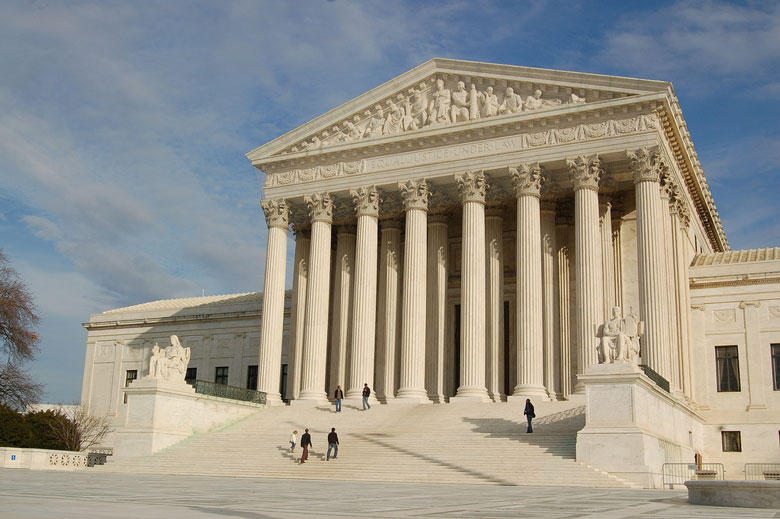 I’m still digesting the transcript from Tuesday’s Supreme Court oral arguments in the important First Amendment video game case, Schwarzenegger v. EMA. [Full transcript is here.] I thought I would post just a couple of quick thoughts here. [Reminder: here is the amicus brief that Berin Szoka and I filed in the case, and here is some analysis of the case by Larry Downes.]
On Defining “Deviant Violence”
Much of the discussion during oral arguments was preoccupied with defining the contours of the term “deviant violence.” I was pleased to see the Justices asking some sharp questions about the interpretation of that term for regulatory purposes. In particular, I enjoyed Justice Scalia’s remarks and questions to California Deputy Attorney General Zackery Morazzini, who argued the case on behalf of the state. Scalia said:
I am not just concerned with the vagueness. I am concerned with the vagueness, but I am concerned with the First Amendment, which says Congress shall make no law abridging the freedom of speech. And it was always understood that the freedom of speech did not include obscenity. It has never been understood that the freedom of speech did not include portrayals of violence. You are asking us to create… a whole new prohibition which the American people never — never ratified when they ratified the First Amendment. They knew they were — you know, obscenity was — was bad, but — what’s next after violence? Drinking? Smoking? Movies that show smoking can’t be shown to children? Does — will that affect them? Of course, I suppose it will. But is — is that — are — are we to sit day by day to decide what else will be made an exception from the First Amendment? Why — why is this particular exception okay, but the other ones that I just suggested are not okay? (p. 15-16)
Indeed, that’s what is at stake in this case: The beginning of a new class of exceptions to the First Amendment based upon concerns about children’s exposure to depictions of “excessive” or “deviant” violence.” Once you open up this can of worms, the sky is likely the limit in terms of how far governments might go to regulate speech in the name of “protecting children.” Continue reading →
This morning on WNYC in New York City, I debated Josh Silver of the pro-Internet-regulation group Free Press. It was a healthy exchange of views, except for a few barbs and innuendos thrown by Silver, who is obviously frustrated by his group’s lack of progress in seeking a “government takeover of the Internet.” (He wanted to debate in simple, ideological terms like that, so I indulge here.)
What was most interesting to me was how unsophisticated Silver is with respect to government and regulation. Take a look at his plea:
What we’re asking for—what we need are regulatory agencies that are not captured by industry and that actually act on behalf of the American public. And that’s what they were created to do. The FCC—1934, with the advent of radio—was created to make sure that the public interest was protected. And what we’ve seen is industry capture of regulatory agencies has made those agencies fail again and again and again.
And the only thing that’s gonna work is if the Obama administration and the FCC stand up and say, “No more business as usual. We are going to protect net neutrality. We’re going to protect competition, and make sure there’s choices for consumers. And we’re going to end the status quo in Washington that has really broken our entire political system.”
The Obama administration and the FCC did stand up and say “no more business as usual,” but that’s what politicians do to seduce voters. Then, once in power, they go about business as usual. Lucy always yanks away the football, Charlie Brown.
Silver is not alone in having these sweet, sad “good government” sentiments. Many of my interlocutors, with whom I often share outcome goals, believe strongly in achieving those goals by remaking governmental and political systems so that they finally “work.” They believe so strongly in this approach that they seem to think it’s just around the corner—if only we prohibit some speech here, some petitioning of the government there. Y’know, “take the money out of politics.”
Hopefully this fantasy will never come true, because it requires reversing fundamental rights such as free speech in all its instantiations—a handover of power from people to the government and elites that run it.
In the absence of that perfected, all-powerful government—thank heavens—we must organize the society’s resources using the best machine we’ve got for discovering consumers’ interests and delivering on them: an unhampered marketplace, now energized and enhanced by the Internet.

Chalk up another victim to unwarranted political intimidation by state attorneys general. On Friday evening, Craigslist, which has long been under intense pressure to crack down on sex crimes, replaced its adult services section in the U.S. with a black censor bar. This move comes on the heels of a scathing letter sent to Craigslist by seventeen state AGs insinuating that Craigslist is culpable for the “victimization of children.” While the state attorneys general are likely celebrating victory this holiday weekend, all they’ve really done is to stifle free speech online and complicate efforts by law enforcement authorities to go after the real bad guys — you know, the ones who are forcing kids into sex slavery.
This isn’t the first time states have publicly attacked Craigslist for its involvement in sex crimes. Various AGs been trying to intimidate the site into eliminating avenues of adult content for years, as Alex Harris and Jim Harper have chronicled on these pages. In response to state AGs’ relentless saber-rattling, Craigslist made several major changes last year aimed at curbing illegal postings. The site shut down its notorious “erotic services” section and began charging $10 for every posting made to the adult services section. Craigslist even began manually screening all posts submitted to the adult services section. Since May 2009, over 700,000 postings have been rejected.
Apparently none of these concessions were enough for state AGs, always eager to score political points. Despite the safeguards Craigslist implemented last year, users continued to use the site in the commission of sex crimes. This is hardly surprising; given the sheer volume of user submissions and the increasingly complex measures taken by criminals to obfuscate their unlawful solicitations, some illegal postings are bound to circumvent any filtering regime. Now that Craigslist has censored its adult services section, former users of the section will invariably flock to other sites, as has happened every single time a major Bittorrent site has been taken offline or crippled by litigation. Craigslist is just one of many, many websites on the Internet that’s frequented by criminals, after all. From popular sites like Google and Yahoo! to small blogs that accept user comments, nearly any site that allows user submissions can be used to break the law.
Such websites generally aren’t legally liable for crimes committed by their users, as courts across the country have held time and time again (1,2,3,4). That’s because when Congress overhauled America’s telecom laws in 1996, it enacted the Communications Decency Act, which grants “providers” of “interactive computer service” immunity from state criminal prosecution for illegal content posted by users. Thus, while prosecutors can and do pursue criminal charges against individuals who post illegal content to Craigslist, they can’t go after Craigslist itself, as long as the site complies with enforceable governmental requests and promptly removes content it knows to be illegal.
Continue reading →
If I ever had any hope of “keeping up” with developments in the regulation of information technology—or even the nine specific areas I explored in The Laws of Disruption—that hope was lost long ago. The last few months I haven’t even been able to keep up just sorting the piles of printouts of stories I’ve “clipped” from just a few key sources, including The New York Times, The Wall Street Journal, CNET News.com and The Washington Post.
I’ve just gone through a big pile of clippings that cover April-July. A few highlights: In May, YouTube surpassed 2 billion daily hits. Today, Facebook announced it has more than 500,000,000 members. Researchers last week demonstrated technology that draws device power from radio waves.
Continue reading →

 The Technology Liberation Front is the tech policy blog dedicated to keeping politicians' hands off the 'net and everything else related to technology.