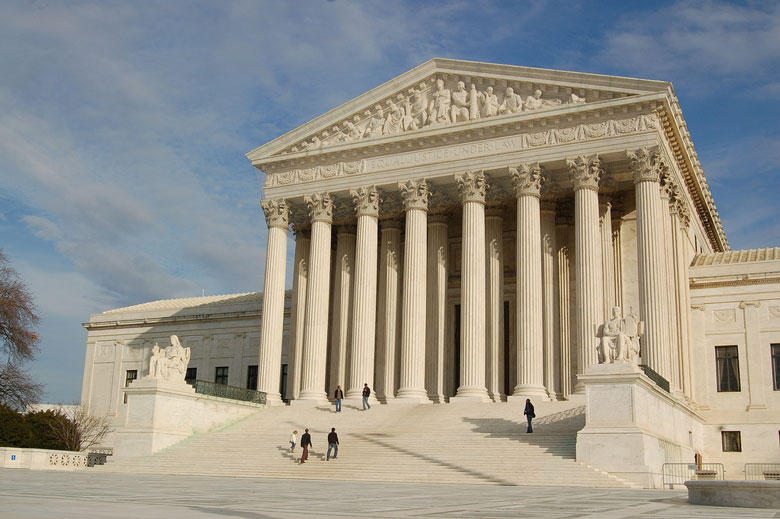
Today is the 33rd anniversary of the Supreme Court’s landmark First Amendment decision, FCC v. Pacifica Foundation. By a narrow 5-4 vote in this 1978 decision, the Court held that the FCC could impose fines on radio and TV broadcasters who aired indecent content during daytime and early evening hours. The Court used some rather tortured reasoning to defend the proposition that broadcast platforms deserved lesser First Amendment treatment than all other media platforms. The lynchpin of the decision was the so-called “pervasiveness theory,” which held that broadcast speech was “uniquely pervasive” and an “intruder” in the home, and therefore demanded special, artificial content restrictions.
Back in 2008, when
Pacifica turned 30, I penned a 6-part series critiquing the decision and discussing its impact on First Amendment jurisprudence:
In addition to those essays, I brought all my thinking together on this issue in a 2007 law review article, “Why Regulate Broadcasting: Toward a Consistent First Amendment Standard for the Information Age.” Importantly, this could be the last year we “celebrate” a Pacifica anniversary. Earlier this week, on the same day it handed down a historical video game free speech win, the Supreme Court announced that next term it will examine the constitutionality of FCC efforts to regulate “indecent” speech on broadcast TV and radio. Here’s hoping the Supreme Court takes the sensible step of undoing the unjust regulatory mess they created with Pacifica 33 years ago. Speech is speech is speech. Lawmakers should not be regulating it differently just because it’s on TV or radio instead of cable TV, satellite radio or TV, physical media, or the Internet. Continue reading →
John Perry Barlow famously said that in cyberspace, the First Amendment is just a local ordinance. That’s still true, of course, and worth remembering. But at least today there is good news in the shire. The local ordinance still applies with full force, if only locally.
As I write in CNET this evening (see “Video Games Given Full First Amendment Protection“), the U.S. Supreme Court issued a strong and clear opinion today nullifying California’s 2005 law prohibiting the sale or rental to minors of what the state deemed “violent video games.” Continue reading →
The Supreme Court wasn’t playing games with the First Amendment today. With its 7-2 decision in Brown v. EMA, the Court has protected video game creators and players from unconstitutional restrictions on what we can produce and play.
Today’s decision ensures that video games have First Amendment protection on par with books, film, music and other forms of entertainment and will help block other regulatory efforts that are justified by blindly alluding to the rationale that “it’s for the children.” The decision fits nicely alongside an impressive and growing string of recent First Amendment cases from the Court that significantly raise the bar against legislative efforts to regulate freedom of speech and expression.
Quick background: In May 2010, the Supreme Court announced that it would review a California law regulating the sale of violently-themed video games to minors. The case was Schwarzenegger v. Entertainment Merchants Association, but the name of the case changed to after Jerry Brown became governor of California. The Ninth Circuit Court of Appeals had struck down a California law which prohibited the sale or rental of “violent video games” to minors, but California appealed and the SCOTUS took up the issue. [Note: When we were still with the Progress & Freedom Foundation, Berin Szoka and I filed a big amicus brief with the Court in the case along with some folks at the Electronic Frontier Foundation.] By a 7-2 vote, the Supreme Court backed the Ninth Circuit and overturned the California law. Justice Scalia wrote for the majority. Justices Thomas and Breyer dissented.
It might be tempting to laugh at France’s ban on words like “Facebook” and Twitter” in the media. France’s Conseil Supérieur de l’Audiovisuel recently ruled that specific references to these sites (in stories not about them) would violate a 1992 law banning “secret” advertising. The council was created in 1989 to ensure fairness in French audiovisual communications, such as in allocation of television time to political candidates, and to protect children from some types of programming.
In the United States, banning words seems too blatant an affront to our First Amendment, but the United States has a fairly lively “English only” movement. Somehow, regulating an entire communications protocol doesn’t have the same censorious stink.
So it is that our Federal Communications Commission asserts a right to regulate the delivery of Internet service. The protocols on which the Internet runs are communications protocols, remember. Withdraw private control of them and you’ve got a more thoroughgoing and insidious form of speech control: it may look like speech rights remain with the people, but government controls the medium over which the speech travels.
The government has sought to control protocols in the past and will continue to do so in the future. The “crypto wars,” in which government tried to control secure communications protocols, merely presage struggles of the future. Perhaps the next battle will be over BitCoin, an online currency that is resistant to surveillance and confiscation. In BitCoin, communications and value transfer are melded together. To protect us from the scourge of illegal drugs and the recently manufactured crime of “money laundering,” governments will almost certainly seek to bar us from trading with one another and transferring our wealth securely and privately.
So laugh at France. But don’t laugh too hard. Leave the smugness to them.
My good friend and mentor Robert Corn-Revere, a First Amendment attorney with the law firm Davis Wright Tremaine, gave a terrific talk on “The High Value of Low Speech” at a recent Reason Foundation event. Bob is one of the greatest living defenders of freedom of speech and expression and his talks are always inspiring, informative, and entertaining. I recommend you check it out. The video is embedded below or can be found on the ReasonTV website here.
“All First Amendment cases are about the power,” Corn-Revere argues. “Who should have the power to tell individuals what to read, think, believe or feel?” He continues on to explain the recent history of controversial First Amendment jurisprudence — much of which he has been personally responsible for litigating — and explains why even “low speech” is worth defending if we cherish our speech rights.
As Sonia Arrison mentioned here on Friday, the State of California is currently considering legislation that could, in the name of enhancing online privacy, impose burdensome new regulatory mandates on the Internet. Sonia has a nice column at TechNewsWorld discussing this. I also wrote about the same issue in my Forbes column this week, which is entitled, “The State of California Versus the Internet.” Specifically, I discuss SB 242, “The Social Networking Privacy Act,” and SB761, the so-called Do Not Track bill, and argue that: “What unifies these two measures is a general lack of understanding about the way the Internet and digital technology work. Both measures fail to appreciate the global nature of the Internet and would raise a host of unintended consequences.”
While the best of intentions drive these measures, they will be complicated to enforce in practice and could have a devastating impact on the California economy in the process. “If California wants to reestablish itself as the home of high-tech innovation,” I argue, “it needs to realize heavy-handed Net controls are not the ticket to either economic progress or job-creation.” Moreover, “These laws could be challenged in court since state-based regulation of the Internet raise constitutional issues. The Commerce Clause of the Constitution was designed to block the sort of parochial burdens on interstate commerce that these measures would establish.”
Jump over to Forbes to read the rest. Let’s hope California policymakers realize what a mistake they are making before it’s too late. If they don’t, Congress will need to preempt this regulation of interstate commerce if it’s not immediately challenged in Court and overturned.
Last November, I penned an essay on these pages about the COICA legislation that had recently been approved unanimously by the U.S. Senate Judiciary Committee. While I praised Congress’s efforts to tackle the problem of “rogue websites” — sites dedicated to trafficking in counterfeit goods and/or distributing copyright infringing content — I warned that the bill lacked crucial safeguards to protect free speech and due process, as several dozen law professors had also cautioned. Thus, I suggested several changes to the legislation that would have limited its scope to truly bad actors while reducing the probability of burdening protected expression through “false positives.” Thanks in part to the efforts of Sen. Ron Wyden (D-Ore.), COICA never made it a floor vote last session.
Today, three U.S. Senators introduced a similar bill, entitled the PROTECT IP Act (bill text), which, like COICA, establishes new mechanisms for combating Internet sites that are “dedicated to infringing activities.” I’m glad to see that lawmakers adopted several of my suggestions, making the PROTECT IP Act a major improvement over its predecessor. While the new bill still contains some potentially serious problems, on net, it represents a more balanced approach to fighting online copyright and trademark infringement while recognizing fundamental civil liberties.
Reps. Edward Markey (D-Mass.) and Joe Barton (R-Texas) have released a discussion draft of their forthcoming “Do Not Track Kids Act of 2011.” I’ve only had a chance to give it a quick read, but the bill, which is intended to help safeguard kids’ privacy online, has two major regulatory provisions of interest:
(1) New regulations aimed at limiting data collection about children and teens, including (a)
expansion of the Children’s Online Privacy Protection Act (COPPA) of 1998, which would build upon COPPA’s “verifiable parental consent” model; and (b) a new “Digital Marketing Bill of Rights for Teens;” and (c) limits on collection of geolocation information about both children and teens.
(2)
An Internet “Eraser Button” for Kids to help kids wipe out embarrassing facts they have place online but later come to regret. Specifically, the bill would require online operators “to the extent technologically feasible, to implement mechanisms that permit users of the website, service, or application of the operator to erase or otherwise eliminate content that is publicly available through the website, service, or application and contains or displays personal information of children or minors.” This is loosely modeled on a similar idea currently beingconsideredin the European Union, a so-called “right to be forgotten” online.
Both of these proposals were originally floated by the child safety group Common Sense Media (CSM) in a report released last December. It’s understandable why some policymakers and child safety advocates like CSM would favor such steps. They fear that there is simply too much information about kids online today or that kids are voluntarily placing far too much personal information online that could come back to haunt them in the future. These are valid concerns, but there are both practical and principled reasons to be worried about the regulatory approach embodied in the Markey-Barton “Do Not Track Kids Act”: Continue reading →
In my latest “Technologies of Freedom” column for Forbes, I take a closer look at the idea of an “Internet eraser button” as one method of protecting privacy or safeguarding reputation online. The child safety group Common Sense Media has suggested it is needed to help kids and others wipe out embarrassing facts we’ve place online but later come to regret. The Eraser Button idea is similar to “the right to be forgotten” proposal currently being hotly debated in Europe.
In my column, I argue that “it is unlikely that such a mechanism could be implemented, and even if it could, it would have troubling ramifications for freedom of speech, digital commerce, and Internet governance more generally.” I dwell a bit on the free speech issues and note that “What we are talking about here is the destruction of history, otherwise known as censorship. Few would have suggested that burning books was a smart way to protect privacy in the past. Is burning binary bits of information any wiser?” But the point seems moot in light of the significant enforcement challenges the notion faces, including the question: Who actually owns the data collected by online sites and services?
Anyway, read the rest of the essay over at Forbes. And here are a few other pieces we’ve run here at the TLF on the issue: 1, 2, 3.
Since its formal launch in 2008, following two years of negotiations among tech companies, human rights groups and academics, not a single company has agreed to join beyond the original members–Google, Yahoo and Microsoft.
This despite considerable pressure from supporters of GNI, including Senator Richard Durbin (D-IL), Chair of the Senate Judiciary’s Subcommittee on Human Rights. Indeed, in the wake of uprisings in Tunisia, Egypt, Libya and elsewhere and the seminal role played by social media and other IT, a full-court press has been launched against Facebook and Twitter in particular for failing to sign up. Continue reading →
The Technology Liberation Front is the tech policy blog dedicated to keeping politicians' hands off the 'net and everything else related to technology. Learn more about TLF →



 The Technology Liberation Front is the tech policy blog dedicated to keeping politicians' hands off the 'net and everything else related to technology.