A new study (which is actually based on an old study) by Dr. Craig Anderson of Iowa State University and two other researchers is making news today because it suggests a link between violent video games and real-world aggression. I have written extensively about such studies here in the past, and have included a list of relevant links down below. But let me just use the opportunity to restate the fundamental problem with the way the press reports these things.
- First, the press typically accepts the assertion made by authors of studies like these that the social “science” is unanimous in support of such a link between exposure to violent video games and real-world aggression. there is another side the story, but the press usually doesn’t report on it.
- Second, reporters almost always fail to ask about how the researchers define “violent” games and the resulting “aggression” found in these studies.
- Third, reporters almost never ask about how strong the correlation is or, more importantly, what other variables might have had an influence on the the subjects who were studied. (For example, did they factor in real violence in the home or at school?)
- Finally, the reporters almost never query the researchers about the biases they bring to the task of studying this issue (namely, do these researchers have strong feelings about the content in the games they review such that they think they should be regulated in some fashion?).
Luckily, other social researchers are willing to point out these deficiencies. (See, for example, my reviews of the recent books by Drs. Kutner & Olson as well as Dr. Kourosh Dini.) With reference to the new study reported in the press today, Texas A&M researcher Dr. Christopher Ferguson has challenged the study on many of the grounds I listed above. Specifically, in a letter to the journal (Pediatrics) in which the Anderson study appeared, Dr. Ferguson argues:
Continue reading →
 Tomorrow morning, the U.S. Supreme Court will hear oral arguments in the potentially historic free speech case of Federal Communications Commission v. Fox Television Stations, Inc. I plan on attending and will try to post some thoughts about how the arguments played out here later tomorrow afternoon or evening. [I won’t be able to live blog of Twitter it because no electronic devices are allowed in the courtroom, which I’ve always thought is outrageous.] In the meantime, here again is the background of the case.
The
FCC v. Fox case is the indecency case involving the FCC’s new policy for “fleeting expletives.” I wrote about the Second Circuit Court of Appeals decision here and the full 2nd Circuit decision is here. [By contrast, the so-called “Janet Jackson case” — CBS v. FCC — took place in the Third Circuit Court of Appeals and that court recently handed down a decision that also went against the FCC. I wrote about the Third Circuit’s decision here.]
In a 2-1 decision, the Second Circuit ruled that “the FCC’s new policy sanctioning “fleeting expletives” is arbitrary and capricious under the Administrative Procedure Act for failing to articulate a reasoned basis for its change in policy.” The decision demonstrates how, over just the past few years, the FCC has arbitrarily thrown out 30+ years worth of precedent and greatly expand the scope of its regulatory authority over speech on broadcast TV and radio. As a result, the FCC’s order was vacated and remanded to the agency. The agency appealed the decision, however, and the Supreme Court accepted it for review.
Continue reading →
GamePolitics.com reports that there are strong signs the protracted legal battle over video game regulation in California might soon be headed to the Supreme Court. The ongoing battle deals with a California law passed in October 2005 (A.B.1179), which would have blocked the sale of “violent” video games to those under 18 and required labels on all games. Offending retailers could have been fined for failure to comply with the law.
The law was immediately challenged by the Video Software Dealers Association and the Entertainment Software Association. In August of last year, a district court decision in the case of
Video Software Dealers Association v. Schwarzenegger [decision here] enforced a permanent injunction against the law. And today in Sacramento, a 3-judge panel of the 9th U.S. Circuit Court of Appeals held a hearing in to hear additional arguments about the law. The San Jose Mercury News reports that judges seemed skeptical about the State’s effort to overturn the lower court ruling and get the law enforced:
While the 9th Circuit judges did lend some support to the state, they were generally skeptical the law can survive. “What you are asking us to do is go where no one has gone before,” Judge Consuelo Callahan said to the state’s lawyer. “Admittedly, they are disgusting. But aren’t you just trying to be the thought police?”
The judges also realize that every other state or circuit court that has considered the constitutionality of similar video games laws has found them unconstitutional. As I noted in my piece last year on the California law, the current legal score is “Gamers 11, Censors 0.” If the Ninth Circuit does keep the injunction in place and California appeals the law up to the Supreme Court as some predict, we could be in for a historic First Amendemt case, and the first to deal with video game speech. Stay tuned!
Should U.S. businesses involved in Internet commerce do business in nations governed by oppressive regimes? This is a question that many libertarians—including some of us on TLF—have grappled with for some time.
Now Yahoo, Google, and Microsoft have signed on to a set of principles for conducting business in countries that disregard human rights. Today’s Wall Street Journal reports:
Under the new principles, which were crafted over two years, the technology titans promise to protect the personal information of their users wherever they do business and to “narrowly interpret and implement government demands that compromise privacy,” according to the code.
It’s welcome news for defenders of liberty that U.S. Web giants plan to play hardball with foreign governments who would use information gleaned from Internet firms to violate their citizens’ human rights.
Several troubling reports have surfac
 ed in the past few years about American companies abetting egregious actions by oppressive governments. In January, Indian police beat a man whose arrest stemmed from Google’s cooperation with the Indian government. And in 2005, Yahoo gave information to the Chinese government that led to the arrest of a journalist accused of giving out state secrets (the case was later overturned).
Continue reading →
Like many others, I have long been troubled by the fact that the Supreme Court does not allow TV cameras or live audio coverage of the cases it hears. I know all the arguments against live video or audio coverage and I find them all quite unconvincing when weighed against the public’s right to hear the oral arguments and decisions that will have such a direct bearing on their lives and liberty. We should be allowed to see, or at least hear, these arguments and decisions as they happen.
Anyway, as I was reading through an article today in
Broadcasting & Cable about how “C-SPAN Seeks Oral Argument Tapes in Fox Swearing Case,” I couldn’t help but think about how particularly ironic it was that our nation’s highest court would be considering one of the most important free speech cases in decades — FCC v. Fox — and it yet wouldn’t be allowing any of us to listen in live when it takes place on November 4th! If we are lucky, the Court might grant C-SPAN expedited access to the tapes of the arguments, but it may be that we have to wait many weeks to hear what was said.
Seems silly to me. Worse yet, it means I will have to camp out in front of the Supreme Court the night before and freeze my butt off in the hope of getting a seat in the courtroom to hear the live argument! Which brings up the final bit of irony I always like to point out about restricting cameras and microphones from courtrooms: Why are they letting
anyone in the courtroom at all if they so fear instantaneous public access to the arguments?
 The Progress & Freedom Foundation has just launched the new Center for Internet Freedom. CIF offers an alternative to the proliferation of advocacy groups calling for government intervention online by offering timely analyses and critiques of proposals that diminish the vital role of free markets, free speech and property rights. We aim to drive the Internet policy debate in new directions by emphasizing a layered approach of technological innovation, user education, user self-help, industry self-regulation, and the enforcement of existing laws consistent with the First Amendment. Such an approach is a less restrictive—and generally more effective—alternative to increased regulation.
Here are some of the issues I’ll be working on as CIF’s Director in conjunction with my esteemed colleagues Adam Thierer, Adam Marcus, and adjunct fellows:
- Defending online advertising as the lifeblood of online content & services, especially in the “Long Tail”;
- Emphasizing market solutions to problems of privacy protection, especially regarding the use of cookies and packet inspection data;
- Protecting online speech and expression both in the U.S. and abroad;
- Defending Section 230 immunity for Internet intermediaries;
- Opposing online taxation and legal barriers to e-commerce and digital payments, especially at the state and local levels; and
- Ensuring that Internet governance remains transparent and accountable without hampering the evolution of the Internet.
National Freedom of Speech Week is here again. As I point out each time it comes around, it’s good opportunity for those of us in America to remember how lucky we are to live in a country that respects freedom of the press, speech, and assembly. In my essay commemorating the first Freedom of Speech Week, I explained why I felt this way:
what speech critics consistently fail to appreciate is that in a free society different people will have different values and tolerance levels when it comes to speech and media content. It would be a grave mistake, therefore, for government to impose the will of some on all. To protect the First Amendment and our heritage of freedom of speech and expression from government encroachment, editorial discretion over content should always remain housed in private, not public, hands.
However, there will always be those who respond by arguing that speech regulation is important because “it’s for the children.” […] Personally, I think the most important thing I can do for my children is to preserve our nation’s free speech heritage and fight for their rights to enjoy the full benefits of the First Amendment when they become adults. Until then, I will focus on raising my children as best I can. And if because of the existence of the First Amendment they see or hear things I find troubling, offensive or rude, I will sit down with them and talk to them in the most open, understanding and loving fashion I can about the realities of the world around them.
I would hope that the critics of the First Amendment would do the same instead of seeking to undercut our nation’s rich history of freedom of speech and expression. It is one of our Founders’ enduring gifts to future generations and a precious freedom worth fighting for.
Happy Freedom of Speech Week everyone.
 Earlier this year, I mentioned an outstanding book that John Palfrey of the Berkman Center for Internet & Society at Harvard Law School co-edited entitled Access Denied: The Practice and Policy of Global Internet Filtering. It’s an excellent resource for anyone studying the methods governments are (unfortunately) using to stifle online expression across the globe. It’s one of the most important technology policy books of the year.
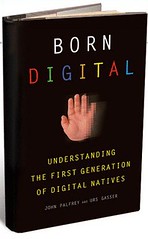
Well, it looks like John Palfrey will have a second title on this year’s “Best Tech Books” list. I’ve just finished his new book with his Berkman Center colleague Urs Gasser, Born Digital: Understanding the First Generation of Digital Natives, and it is definitely worthy of your attention. In my book review posted today on the City Journal’s website, I argue that “Palfrey and Gasser’s fine early history of this generation serves as a starting point for any conversation about how to mentor the children of the Web.” It’s a comprehensive and very even-handed discussion about a variety of concerns or Internet pathologies, including: online safety, personal privacy, copyright piracy, offensive content, classroom learning, and much more.
My
City Journal review is down below, but in coming weeks I will be posting some additional thoughts about some specific things in the book worthy of more attention (including a few things I disagreed with). Overall, I’d say Born Digital is a close runner-up in the race for “Tech Book of the Year,” closely trailing Jonathan Zittrain’s Future of the Internet and How to Stop It (which I have reviewed multiple times) and Nick Carr’s The Big Switch. But I found far more to agree with in Born Digital than I did in those two books. Highly recommended.
Continue reading →
Over at CDT’s “Policy Beta” blog, my friends John Morris and Sophia Cope have penned two important essays about online free speech issues that are worthy of your attention. In the first, Sophia argues that the “Next President Must Preserve Free Speech on the Internet.” She argues:
It will be critical for the next President to do his part to uphold the Internet’s robust culture of free speech and innovation as we march further into the 21st Century. In stark contrast to the mass media of the last century, the Internet has provided, at very low cost, virtually unlimited forums for both creators and consumers of new content and technologies. This in turn has created a huge boost for participatory democracy and our economy. The next Administration must reject Congressional or agency efforts to censor content or stifle the fire of innovation on the Internet and other communications media.
Amen! Importantly, Sophia points to the essential role of Section 230 of the Telecommunications Act of 1996, which protects online service providers from crushing legal liability in a variety of circumstances. Sec. 230 is probably the most important — and most often forgotten — law dealing with online freedom. Unfortunately, however, it’s increasingly under attack and we need to be vigilant in defending it. (I’m working on a big paper about that right now with my PFF colleagues Berin Szoka and Adam Marcus).
Continue reading →

When I open the
Washington Post in the morning and find a headline like, “Banned Books, Chapter 2,” I assume that I will be reading about yet another attempt by certain conservative or religious groups to ban books from local libraries that they find objectionable, unethical, or sacrilegious. How ironic then that the debate over banning books that is currently unfolding in my home county of Fairfax County, Virginia, is being led by liberals. My ongoing series about “Liberals Abandoning the First Amendment” has been focusing on Lefties getting weak-kneed about free speech principles that they have traditionally supported, but this one takes the cake.
Here’s what is going on here in Fairfax according to Michael Alison Chandler of the
Post:
During a week that librarians nationwide are highlighting banned books, conservative Christian students and parents showcased their own collection outside a Fairfax County high school yesterday — a collection they say was banned by the librarians themselves.
More than 40 students, many wearing black T-shirts stamped with the words “Closing Books Shuts Out Ideas,” said they tried to donate more than 100 books about homosexuality to more than a dozen high school libraries in the past year. The initiative, organized by Colorado Springs-based Focus on the Family, was intended to add a conservative Christian perspective to shelves that the students said are stocked with “pro-gay” books.
Most of the books were turned down after school librarians said they did not meet school system standards. Titles include “Marriage on Trial: The Case Against Same-Sex Marriage and Parenting” and “Someone I Love Is Gay,” which argues that homosexuality is not “a hopeless condition.” “We put ourselves out there . . . and got rejected,” said Elizabeth Bognanno, 17, a senior at West Springfield High School, standing before a semicircle of television cameras outside her school. “Censoring books is not a good thing. . . . We believe our personal rights have been violated.”
Continue reading →

 The Technology Liberation Front is the tech policy blog dedicated to keeping politicians' hands off the 'net and everything else related to technology.