 I was quoted this morning in Sara Jerome’s story for The Hill
on the weekend seizures of domain names the government believes are selling black market, counterfeit, or copyright infringing goods.
I was quoted this morning in Sara Jerome’s story for The Hill
on the weekend seizures of domain names the government believes are selling black market, counterfeit, or copyright infringing goods.
The seizures take place in the context of an on-going investigation where prosecutors make purchases from the sites and then determine that the goods violate trademarks or copyrights or both.
Several reports, including from CNET, The Washington Post and Techdirt, wonder how it is the government can seize a domain name without a trial and, indeed, without even giving notice to the registered owners.
The short answer is the federal civil forfeiture law, which has been the subject of increasing criticism unrelated to Internet issues. (See http://law.jrank.org/pages/1231/Forfeiture-Constitutional-challenges.html for a good synopsis of recent challenges, most of which fail.) Continue reading →
 Inspired by thoughtful pieces by Mike Masnick on Techdirt and L. Gordon Crovitz’s column yesterday in The Wall Street Journal, I wrote a perspective piece this morning for CNET regarding the European Commission’s recently proposed “right to be forgotten.”
A Nov. 4th report promises new legislation next year “clarifying” this right under EU law, suggesting not only that the Commission thinks it’s a good idea but, even more surprising, that it already exists under the landmark 1995 Privacy Directive.
What is the “right to be forgotten”? The report is cryptic and awkward on this important point, describing “the so-called ‘right to be forgotten’, i.e. the right of individuals to have their data no longer processed and deleted when they [that is, the data] are no longer needed for legitimate purposes.”
Continue reading →
A report in the U.K. Telegraph notes that the European Union is seeking to create a so-called “right to be forgotten” online, and has “drafted potential legislation that would include new, unprecedented privacy rights for citizens sharing personal data.” Details are sparse at this point, but according to this new 20-page European Commission document, “A Comprehensive Approach on Personal Data Protection in the European Union,” the EU will be:
clarifying the so-called ‘right to be forgotten’, i.e. the right of individuals to have their data no longer processed and deleted when they are no longer needed for legitimate purposes. This is the case, for example, when processing is based on the person’s consent and when he or she withdraws consent or when the storage period has expired. (p.8)
Two brief comments on this. First, it should be apparent that any “right to be forgotten” conflicts mightily with free speech rights and press freedom. As I discussed at greater length in this review of Solove’s Understanding Privacy as well as my essay on “Two Paradoxes of Privacy Regulation,” the problem with enshrining expansive privacy “rights” into law is that it means there will need to be stricter limits placed on speech and press freedoms. As Eugene Volokh noted in his 2000 law review article entitled, “Freedom of Speech, Information Privacy, and the Troubling Implications of a Right to Stop People from Speaking About You“: Continue reading →
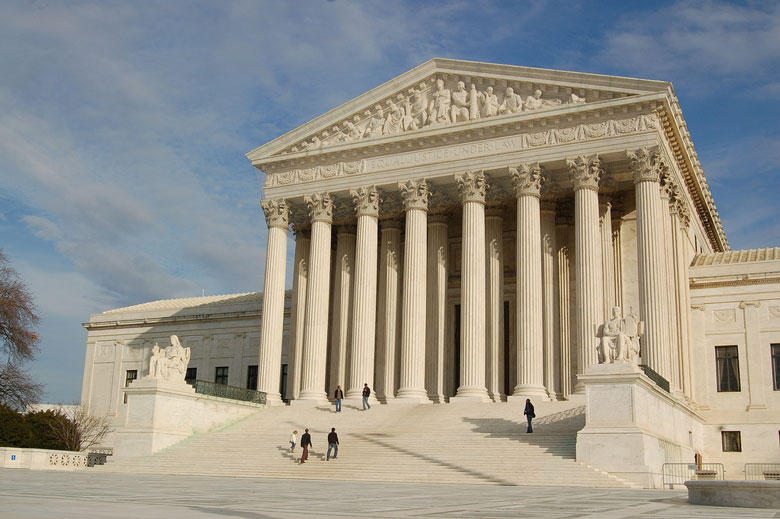 I’m still digesting the transcript from Tuesday’s Supreme Court oral arguments in the important First Amendment video game case, Schwarzenegger v. EMA. [Full transcript is here.] I thought I would post just a couple of quick thoughts here. [Reminder: here is the amicus brief that Berin Szoka and I filed in the case, and here is some analysis of the case by Larry Downes.]
On Defining “Deviant Violence”
Much of the discussion during oral arguments was preoccupied with defining the contours of the term “deviant violence.” I was pleased to see the Justices asking some sharp questions about the interpretation of that term for regulatory purposes. In particular, I enjoyed Justice Scalia’s remarks and questions to California Deputy Attorney General Zackery Morazzini, who argued the case on behalf of the state. Scalia said:
I am not just concerned with the vagueness. I am concerned with the vagueness, but I am concerned with the First Amendment, which says Congress shall make no law abridging the freedom of speech. And it was always understood that the freedom of speech did not include obscenity. It has never been understood that the freedom of speech did not include portrayals of violence. You are asking us to create… a whole new prohibition which the American people never — never ratified when they ratified the First Amendment. They knew they were — you know, obscenity was — was bad, but — what’s next after violence? Drinking? Smoking? Movies that show smoking can’t be shown to children? Does — will that affect them? Of course, I suppose it will. But is — is that — are — are we to sit day by day to decide what else will be made an exception from the First Amendment? Why — why is this particular exception okay, but the other ones that I just suggested are not okay? (p. 15-16)
Indeed, that’s what is at stake in this case: The beginning of a new class of exceptions to the First Amendment based upon concerns about children’s exposure to depictions of “excessive” or “deviant” violence.” Once you open up this can of worms, the sky is likely the limit in terms of how far governments might go to regulate speech in the name of “protecting children.” Continue reading →
 Today, the U.S. Supreme Court will hear arguments in Schwarzenegger v. EMA, a case that challenges California’s 2005 law banning the sale of “violent” video games to minors. The law has yet to take effect, as rulings by lower federal courts have found the law to be an unconstitutional violation of the First Amendment.
There’s little doubt that banning the sale of nearly any content to adults violates the protections of Free Speech, including, as decided last year, video depictions of cruelty to animals.
But over the years the Court has ruled that minors do not stand equal to adults when it comes to the First Amendment. The Court has upheld restrictions on the speech of students in and out of the classroom, for example, in the interest of preserving order in public schools.
Continue reading →
 When the only tool you have is a hammer, as the old cliché goes, everything looks like a nail.
Net neutrality, as I first wrote in 2006, is a complicated issue at the accident-prone intersection of technology and policy. But some of its most determined—one might say desperate—proponents are increasingly anxious to simplify the problem into political slogans with no melody and sound bites with no nutritional value. Even as—perhaps precisely because—a “win-win-win” compromise seems imminent, the rhetorical excess is being amplified. The feedback is deafening.
In one of the most bizarre efforts yet to make everything be about net neutrality, Public Knowledge issued several statements this week “condemning” Fox’s decision to prohibit access to its online programming from Cablevision internet users. In doing so, the organization claims, Fox has committed “the grossest violations of the open Internet committed by a U.S. company.”
This despite the fact that the open Internet rules (pick whatever version you like) apply only to Internet access providers. Indeed, the rules are understood principally as a protection for content providers. You know, like Fox. Continue reading →
As a cyber-libertarian, I’ve been lucky enough to work with people of all ideological stripes in pursuit of various public policy objectives. I’ve made selective alliances with people on the Right on economic policy issues (like opposing Net Neutrality regulation, Internet taxes, etc) and also worked closely with folks on the Left on speech and culture issues (content controls, anonymity, online safety concerns, etc).
While engaging with with people on both sides of the political fence, I’m often struck by some of their internal inconsistencies. Conservatives, for example, talk about a big game about personal responsibility on some issues, but quickly abandon that notion when they claim media content or online speech should be regulated by the State (typically “for the children.”) In this essay, I’d like to discuss interesting inconsistencies on the political Left, especially among advocates of strong privacy regulation (most of whom tend to be Left-leaning in their worldview). In particular, here are the two things I find most interesting about modern privacy advocates:
(1)
Most privacy advocates are vociferous First Amendment supporters, yet they abandon their free speech values and corresponding constitutional tests when it comes to privacy regulation. When it comes to proposals to regulate media content or online speech, most folks on the Left have a very principled, clear-cut position: people (or parents) should take responsibility for unwanted information flows in their lives (or the lives of their children). In particular, they rightly argue that the many user empowerment tools on the market (filters, monitoring software, other parental control technologies) constitute a so-called “less-restrictive means” of controlling content when compared to government regulation.
Advocacy groups that I have a great deal of respect for and work with quite closely on these issues–such as EFF, CDT and ACLU—all take this position. Generally speaking, they argue that, when it comes to speech regulation, “household standards” (user-level controls) should trump “community standards” (government regulation). And in Court—where I frequently file joint amicus briefs with them—they repeatedly employ the “less-restrictive means” test to counter government efforts to regulate information flows.
But when it comes to privacy, they throw all this out the window! Continue reading →
There are few things I find more annoying in the Net neutrality wars than the silly assertion by groups like Free Press and other regulatory radicals that “Net neutrality is the Internet’s First Amendment.” It’s utter rubbish as I have documented here many times before. But now Sen. Al Franken is running around sputtering such nonsense, as he did in this recent CNN.com editorial, claiming that “Net neutrality is foremost free speech issue of our time.” The folks at CNN invited me to response and below you will find the piece PFF press director Mike Wendy and I submitted.
“Big Government the Real Threat to Internet“
by Adam Thierer & Mike Wendy
In his recent CNN.com opinion piece, “Net neutrality is foremost free speech issue of our time,” Sen. Al Franken claims that “our free speech rights are under assault — not from the government but from corporations seeking to control the flow of information in America.”
He alludes to potential corporate blocking of online products and speech and says, “If that scares you as much as it scares me, then you need to care about net neutrality.”
Chicken Little, call your office!
Such sky-is-falling scare tactics are all too common in the heated debate over net neutrality regulation, but actual evidence of such nefarious corporate scheming is nowhere to be found. Perhaps that’s why Franken resorts to such tall tales.
Moreover, his reading of the First Amendment is at odds with the one most of us learned about in civics class (“Congress shall make no law…”). His would empower regulators by converting the First Amendment from a shield against government action into a sword that bureaucrats could wield against private industry. Continue reading →
The always-excellent Wall Street Journal “Information Age” columnist L. Gordon Crovitz has another editorial worth reading today, which builds on the Second Circuit’s recent decision to reverse FCC content regulation for broadcasting. In “The Technology of Decency,” Crovitz explains “parents don’t need the FCC to protect their children.” “Technology makes it easier to block seven or any number of dirty words,” he notes. “Taking the FCC out of regulating indecency might just lead to more decency by refocusing responsibility where it belongs: on broadcasters and parents.”
That’s a point I’ve hammered on her in the past and in all my work on parental empowerment solutions, including my book, “Parental Controls and Online Child Protection: A Survey of Tools and Methods.” Indeed, there has never been a time in our nation’s history when parents have had more tools and methods at their disposal to help them decide what is acceptable in their homes and in the lives of their children. And, luckily, poll after poll shows that parents are stepping up to the plate and taking on that responsibility (contrary to what some policymakers in Washington imply).
Moreover, legally speaking, Crovitz shows why the old rationales for regulating broadcasting differently no longer work. “No medium is likely ever to be as pervasive as broadcasting once was,” he notes. He goes on to note that: Continue reading →
If I ever had any hope of “keeping up” with developments in the regulation of information technology—or even the nine specific areas I explored in The Laws of Disruption—that hope was lost long ago. The last few months I haven’t even been able to keep up just sorting the piles of printouts of stories I’ve “clipped” from just a few key sources, including The New York Times, The Wall Street Journal, CNET News.com and The Washington Post.
I’ve just gone through a big pile of clippings that cover April-July. A few highlights: In May, YouTube surpassed 2 billion daily hits. Today, Facebook announced it has more than 500,000,000 members. Researchers last week demonstrated technology that draws device power from radio waves.
Continue reading →


 The Technology Liberation Front is the tech policy blog dedicated to keeping politicians' hands off the 'net and everything else related to technology.