 The latest edition (Version 4.0) of my PFF special report on “Parental Controls and Online Child Protection: A Survey of Tools & Methods” is now up. For those not familiar with the report, it explores the market for parental control tools, rating schemes, education and media literacy efforts, and various other tools, methods, and initiatives aimed at promoting online child safety. After evaluating that state of this market, I conclude: “There has never been a time in our nation’s history when parents have had more tools and methods at their disposal to help them decide what constitutes acceptable media content in their homes and in the lives of their children.” Moreover, I believe that the parental controls and content management tools cataloged in the report represent a better, less restrictive alternative to government regulation.
Version 4.0 of the report is now over 250 pages long (up from 200 pages in Version 3.0) and it contains almost 70 exhibits (up from 50), 725 references (up from roughly 500), and numerous updates in all five sections of the book. Major updates have been made to the Internet, social networking, and mobile media sections, reflecting the growing importance of those sectors and issues. Other new sections or appendices have also been added to the report, including:
- a new section examining how many households really need parental control tools;
- a new appendix on the downsides of mandatory parental controls and restrictive default settings;
- a new section on the dangers of “deputizing the online middleman” solution as an approach to solving child safety concerns;
- a new appendix reviewing the findings of 5 past online safety task forces;
- … and much more.
I issue major updates once a year and 1 or 2 minor tweaks during the course of the year to reflect the evolution of the parental control and online child safety marketplace and debate. The report is available free-of-charge on the PFF website, and the previous editions of the report are housed there too in case you want to see how it has evolved over the past couple of years. For those interested in taking a quick look at the report, I have embedded it down below the fold as a Scribd file. Finally, as is always the case, I encourage readers to send me updates and suggestions for how to improve the report and I will incorporate them into future versions.
Continue reading →
 The Senate Commerce Committee held a hearing yesterday where a number of Senators as well as Julius Genachowski, the new Chairman of the Federal Communications Commission, did a lot of fretting about the state of the modern children’s television programming marketplace. According to the Wall Street Journal, Senate Commerce Committee Chairman Jay Rockefeller (D-WV):
suggested that a “little red button” be required on TVs so that a child could push the button to find out how a show is rated. Democratic Sen. Mark Pryor of Arkansas agreed that a red button might help since parents often have difficulties figuring out which shows are appropriate for their children to watch.
Well, I have some good news for the Senators: There are already quite a few little buttons on every remote control made today, and at least one of those buttons can pull up an on-screen guide to get more program info! (Another of them can turn the TV off!) Moreover, the ratings for just about every program already appear at the beginning of each show, and sometimes in between. And you can find out plenty more online about every TV show under the sun if you care to look. So, I’m not sure what that fuss is all about, and we certainly don’t need to mandate “little red buttons” on every TV set when program information can be found in so many other ways.
What is more troubling about all the hand-wringing taking place at the hearing, as well as the talk of reopening the Children’s Television Act of 1990 to potentially impose more content mandates on video programmers and distributors, is that: (1) there doesn’t seem to be much appreciation for just how much wonderful children’s programming is out there today compared to the past, and (2) there doesn’t seem to be much recognition of the serious First Amendment issues at stake when government gets involved in the messy business of regulating video programming.
Continue reading →
I’ve just had a new article published by the American Legislative Exchange Council (ALEC) in which I make the case against “techno-panics,” which refers to public and political crusades against the use of new media or technologies by the young. The article is entitled “Parents, Kids & Policymakers in the Digital Age: Safeguarding Against ‘Techno-Panics‘” and it appears in the July 2009 Inside ALEC newsletter. This is something I have spent a lot of time writing about here in recent years (See 1, 2, 3, 4, 5) and I finally got around to putting it altogether in a concise essay here. I have pasted the full text below. [And I just want to send a shout-out to my friend Anne Collier of Net Family News.org, whose work on this topic has been very influential on my thinking.]
“Parents, Kids & Policymakers in the Digital Age: Safeguarding Against ‘Techno-Panics‘”
by Adam Thierer
A cursory review of the history of media and communications technologies reveals a reoccurring cycle of “techno-panics” — public and political crusades against the use of new media or technologies by the young. From the waltz to rock-and-roll to rap music, from movies to comic books to video games, from radio and television to the Internet and social networking websites, every new media format or technology has spawned a fresh debate about the potential negative effects they might have on kids.
Inevitably, fueled by media sensationalism and various activist groups, these social and cultural debates quickly become political debates. Indeed, each of the media technologies or outlets mentioned above was either regulated or threatened with regulation at some point in its history. And the cycle continues today. During recent sessions of Congress, countless hearings were held and bills introduced on a wide variety of media and content-related issues. These proposals dealt with broadcast television and radio programming, cable and satellite television content, video games, the Internet, social networking sites, and much more. State policymakers, especially state Attorneys General (AGs), have also joined in such crusades on occasion. The recent push by AGs for mandatory age verification for all social networking sites is merely the latest example.
What is perhaps most ironic about these techno-panics is how quickly yesterday’s boogeyman becomes tomorrow’s accepted medium, even as the new villains replace old ones. For example, the children of the 1950s and 60s were told that Elvis’s hip shakes and the rock-and-roll revolution would make them all the tools of the devil. They grew up fine and became parents themselves, but then promptly began demonizing rap music and video games in the ‘80s and ‘90s. And now those aging Pac Man-era parents are worried sick about their kids being abducted by predators lurking on MySpace and Facebook. We shouldn’t be surprised if, a decade or two from now, today’s Internet generation will be decrying the dangers of virtual reality.
Continue reading →
In an earlier post, I mentioned an important new online child safety task force report that has just been released from the “Point Smart. Click Safe.” Blue Ribbon Working Group. It’s a great report and I encourage you to read the whole thing. It was my great pleasure to serve on this task force, and as we started finalizing our conclusions and recommendations, I started thinking about how much of what we were finding and recommending was consistent with what past online safety task forces had also concluded.
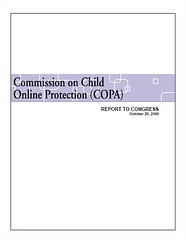
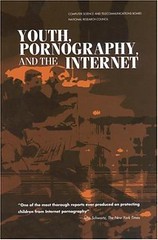
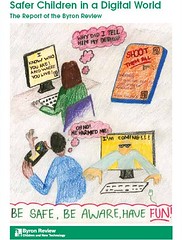
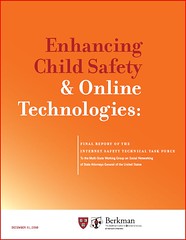
By way of background, over the past decade, five major online safety task forces or blue ribbon commissions have been convened to study online safety issues. Two of these task forces were convened in the United States and issued reports in 2000 (“COPA Commission”) and 2002 (“Thornburgh Commission“). Another was commissioned by the British government in 2007 and issued in a major report in March 2008 (“Byron Review“). Finally, two additional online safety task forces were formed in the U.S. in 2008 and concluded their work, respectively, in January (“Internet Safety Technical Task Force“) and July (“Point Smart. Click Safe.“) of 2009. [And yet another task force — the Online Safety Technology Working Group — was recently formed and has now gotten underway.]
In a new PFF white paper, ”
Five Online Safety Task Forces Agree: Education, Empowerment & Self-Regulation Are the Answer,” I walk through a chronological summary of each of these past task forces [click on covers of each report below to read them in their entirety] and highlight some of the similar themes and recommendations from them.
 Continue reading →
The painful issue of cyberbullying has recently taken center stage in the ongoing debate about online child safety. Last week I wrote about Lori Drew’s acquittal on charges related to Megan Meier’s tragic suicide, suggesting that the judge in the case was right to overturn her conviction on a very expansive reading of the federal anti-hacking statute. While I think that decision was necessary on legal grounds, it’s sure to add “fuel to the fire” of calls for “action” in Congress. Thus, I emphasized that observers of the case need to separate their understandable outrage from the from the questions of (1) whether that statute was properly applied and (2) how the law should treat such cases in the future.
On the second question, Adam and I recently released a major entitled, “Cyberbullying Legislation: Why Education is Preferable to Regulation.” We distinguish among:
- Cyberbullying: kid-on-kid abuse online
- Cyberharassment generally: people of all ages using the Internet to harass each other
- Adult-on-kid cyberharassment: For example, Lori Drew’s alleged (but still unclear) role in the Megan Meier case
In a nutshell, we argue that education is the better approach to cyberbullying (Problem #1)—an approach taken by a bill introduced in the Senate by Sen. Robert Menendez (D-NJ) and in the House by Rep. Debbie Wasserman Schultz (D-FL) . We go on to argue that, while it would be difficult to create criminal sanctions for cyberharassment generally (Problem #2) without infringing free speech and due process rights, it might be possible to craft laws narrowly tailored to cyberharassment of kids by adults (Problem #3). Continue reading →

He Wants to Terminate Your First Amendment Rights
Robert Corn-Revere, a partner with the law firm of Davis Wright Tremaine and one of America’s greatest living defenders of the First Amendment, has a new essay up on the Media Institute website entitled “The Terminator Cometh.” Corn-Revere takes on the former Terminator himself, California Gov. Arnold Schwarzenegger, who along with other Calif. lawmakers, has asked the Supreme Court to review a Ninth Circuit Court of Appeals decision holding that a California video game statute was unconstitutional. (More background in my previous post here). California’s decision to appeal the law up to the Supreme Court [petition is here] sets up a potential historic First Amendment decision (if they Court agrees to take the case, that is). Corn-Revere points out why this case is so important:
In seeking review, California is asking the Supreme Court to reverse 60 years of First Amendment jurisprudence and to hold that “excessively violent” material — whatever that may be –“deserves no constitutional protection.” It is also asking the Court to relieve government from actually having to demonstrate the purported harmfulness of speech it seeks to regulate, but instead to defer to “reasonable inferences” and “legislative judgments.”

The John Connor of Your First Amendment Freedoms
In other words, Corn-Revere notes, “the state is asking the Court simply to lower the bar so that protected speech may be regulated based on legislative whim.” He continues:
Thus, like the Terminator, no matter how many times you kill it, the government drive that motivates these laws keeps on going and going until it achieves its programmed goal. If California is successful, it will open the door to regulate not just video games, but a wide range of speech that is currently protected under the First Amendment.
Corn-Revere is right. The ramifications of this case could be profound. As I pointed out in my previous essay on this case:
Continue reading →
Rebecca MacKinnon has an important piece in the Wall Street Journal today about China’s “Green Dam Youth Escort” filtering mandate and the danger of this model catching on with other governments. “More and more governments — including democracies like Britain, Australia and Germany — are trying to control public behavior online, especially by exerting pressure on Internet service providers,” she notes. “Green Dam has only exposed the next frontier in these efforts: the personal computer.”
She’s right, and that’s cause for serious concern. Moreover, there’s the question of how corporations doing business in China should respond to demands and threats related to installing such filters. She notes:
In a world that includes child pornographers and violent hate groups, it is probably not reasonable to oppose all censorship in all situations. But if technical censorship systems are to be put in place, they must be sufficiently transparent and accountable so that they do not become opaque extensions of incumbent power — or get hijacked by politically influential interest groups without the public knowing exactly what is going on.
Which brings us back to companies: the ones that build and run Internet and telecoms networks, host and publish speech, and that now make devices via which citizens can go online and create more speech. Companies have a duty as global citizens to do all they can to protect users’ universally recognized right to free expression, and to avoid becoming opaque extensions of incumbent power — be it in China or Britain.
I generally agree with all that but this is a difficult issue and one that I have struggled with personally. (See this “Friendly Conversation about Corporate High-Tech Engagement with China” that Jim Harper and I had three years ago). But I do hope that more companies take a hard line with the Chinese as well as there own governemnts when it comes to filtering mandates or even restricitve parental control defaults and settings [an issue I wrote more about in this paper: “The Perils of Mandatory Parental Controls and Restrictive Defaults.”] On that note, kudos to the business groups that already signed on to a joint letter oppossing China’s new filtering mandate.
Cory Doctorow has called for a Wikipedia-style effort to build an open source, non-profit search engine. From his column in The Guardian:
What’s more, the way that search engines determine the ranking and relevance of any given website has become more critical than the editorial berth at the New York Times combined with the chief spots at the major TV networks. Good search engine placement is make-or-break advertising. It’s ideological mindshare. It’s relevance…
It’s a terrible idea to vest this much power with one company, even one as fun, user-centered and technologically excellent as Google. It’s too much power for a handful of companies to wield.
The question of what we can and can’t see when we go hunting for answers demands a transparent, participatory solution. There’s no dictator benevolent enough to entrust with the power to determine our political, commercial, social and ideological agenda. This is one for The People.
Put that way, it’s obvious: if search engines set the public agenda, they should be public.
He goes on to claim that “Google’s algorithms are editorial decisions.” For Doctorow, this is an outrage: “so much editorial power is better vested in big, transparent, public entities than a few giant private concerns.”
I wish Doctorow well in his effort to crowdsource a Google-killer, but I’m more than a little skeptical that anyone would actually want to use his search engine of The People. My guess is that, like most things produced in the name of “The People” (Soviet toilet paper comes to mind), it will probably won’t be much fun to use, and will likely chafe noticeably. (For the record, I love and regularly use Wikipedia; I just don’t think that model is unlikely to produce a particularly useful search engine. As Doctorow himself has noted of Google, “they make incredibly awesome search tools.”)
But I’m glad to see that Doctorow has conceded an important point of constitutional law:
The First Amendment protects the editorial discretion of search engines, like all private companies, to decide what to content to communicate. For a newspaper, that means deciding which articles or editorials to run. For a library or bookstore, it means which books to carry. For search engines, it means how to write their search algorithims. Continue reading →
As Berin mentioned last week, we have a new paper out on proposals to expand the Children’s Online Privacy Protection Act (COPPA) of 1998. We generically refer to those COPPA-expansion efforts as “COPPA 2.0.” Hence, the title of our paper: “COPPA 2.0: The New Battle over Privacy, Age Verification, Online Safety & Free Speech.” To recap what Berin already noted, in the name of improving online child safety, some legislators and state attorneys general (AGs) are advocating the expansion of COPPA’s “verifiable parental consent” model of age verification before certain sites or services may collect, or enable the sharing of, personal information for children.
Unlike “COPPA 1.0,” however, which only applied to children under the age of 13, “COPPA 2.0” would apply to all minors up to age 17. Moreover, the range of sites covered by the new law would generally be expanded to include just about any site or service with social networking functionality.
Since Berin has already summarized our general concerns with efforts to expand COPPA’s “verifiable parental consent” online age verification system to cover more online users and sites, I thought I would focus here on what I believe will be the most controversial (and important) part of our paper — our discussion about how COPPA 2.0 affects the speech rights of both adults
and adolescents.
Continue reading →
Adam Thierer & I have just released a detailed examination (PDF) of brewing efforts to expand the Children’s Online Privacy Protection Act of 1998 to cover adolescents and potentially all social networking sites—an approach we call “COPPA 2.0.”
As Adam explained on Larry Magid’s CNET podcast, COPPA mandates certain online privacy protections for children under 13, most importantly that websites obtain the “verifiable consent” of a child’s parent before collecting personal information about that child or giving that child access to interactive functionality that might allow the child to share their personal information with others. The law was intended primarily to “enhance parental involvement in a child’s online activities” as a means of protecting the online privacy and safety of children.
Yet advocates of expanding COPPA—or “COPPA 2.0″—see COPPA’s verifiable parental consent framework as a means for imposing broad regulatory mandates in the name of online child safety and concerns about social networking, cyber-harassment,
etc. Two COPPA 2.0 bills are currently pending in New Jersey and Illinois. The accelerated review of COPPA to be conducted by the FTC next year (five years ahead of schedule) is likely to bring to Washington serious talk of expanding COPPA—even though Congress clearly rejected covering adolescents age 13-16 when COPPA was first proposed back in 1998.
We’ll discuss some of the key points of our paper in a series of blog posts, but here are the top nine reasons for rejecting COPPA 2.0, in that such an approach would:
- Burden the free speech rights of adults by imposing age verification mandates on many sites used by adults, thus restricting anonymous speech and essentially converging—in terms of practical consequences—with the unconstitutional Children’s Online Protection Act (COPA), another 1998 law sometimes confused with COPPA;
- Burden the free speech rights of adolescents to speak freely on—or gather information from—legal and socially beneficial websites;
- Hamper routine and socially beneficial communication between adolescents and adults;
- Reduce, rather than enhance, the privacy of adolescents, parents and other adults because of the massive volume of personal information that would have to be collected about users for authentication purposes (likely including credit card data);
Continue reading →

 The Technology Liberation Front is the tech policy blog dedicated to keeping politicians' hands off the 'net and everything else related to technology.