Google’s new “Interest Based Advertising” (IBA) program represents the company’s first foray into what is generally called “Online Behavioral Advertising” (OBA): In order to deliver more relevant advertising, Google will begin tailoring ads delivered through AdSense on the Google Content Network (GCN) and YouTube.com (but not Google.com). This tailoring will be based on a profile of each user’s interests created by tracking their browsing activity across sites that use AdSense-but not search queries or other user information. Until now, (i) AdSense has delivered essentially “contextual” advertising by choosing which ad to display on a page based on an algorithmic analysis of keywords on that page; and (ii) Google has tracked users’ browsing only for analytics purposes-to limit the number of times a user sees a particular ad (to prevent overexposure) and to allow sequencing of ads in campaigns where one ad must follow another.
Google is sure to be attacked for crossing a “line in the sand” drawn by some privacy advocates between contextual and behavioral advertising-even though Google’s closest competitor, Yahoo!, already offers a similar program, and the concept in general is hardly new. Google’s position as the leading search engine and third party ad-delivery network will no doubt cause paroxysms of privacy hysteria among those who consider targeted advertising inherently invasive, unfair or manipulative.
But those whose first priority is advancing consumer privacy, not advancing a political or regulatory agenda, should applaud Google for excluding sensitive categories and for putting the new Ad Preference Manager at the core of the company’s new IBA program. The Ad Preference Manager sets a new “gold standard” for implementing the principles of Notice and Choice, which have formed the core of both OBA industry self-regulation and the various regulatory proposals made in recent years. Indeed, Google has done precisely what Adam Thierer and I have called for: giving consumers more granular control over their own privacy preferences by developing better tools.
Continue reading →
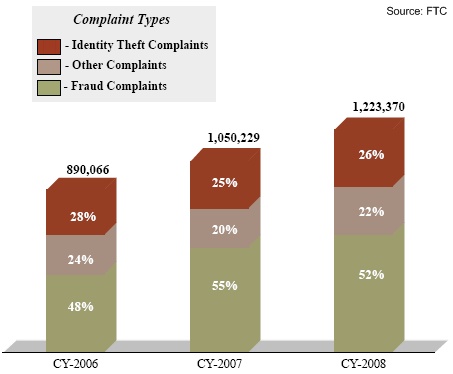
Whenever I pen anything about the dangers of age verification mandates for the Internet and social networking sites, I always point to Federal Trade Commission (FTC) reports about rising identity theft complaints. For the ninth year in a row, identity theft was the number one consumer complaint to the agency.
Now, imagine how much worse this problem could get if government mandated that everyone had to be “verified” before they were allowed to visit a social networking site, however that ends up being defined. Such a mandate would exponentially increase the amount of personal information — especially credit card information — that was available to identity thieves. Age verification advocates often ignore this problem when making the case for regulation.
Worse yet, much of the information that would be made available via such mandates would be personal information about children, which makes for a very attractive target for identity thieves since those records are rarely checked until the kids get much older and start applying for things. At least most adults typically learn they have been the victim of ID theft shortly after it occurs, allowing them to take steps to deal with the situation. With kids, their records could be milked for years by bad guys without them or their parents ever knowing it.

Statue at FTC Headquarters: “Man Controlling Trade” (We’re rooting for the horse!)
Adam Thierer and I have just released a new PFF paper entitled “Targeted Online Advertising: What’s the Harm & Where Are We Heading?” (PDF) about the FTC’s new “Self-Regulatory Principles for Online Behavioral Advertising.” Adam lampooned some of the attitudes at play in this debate in a great rant yesterday.
But we give the FTC credit for resisting calls to abandon self-regulation, and for its thoughtful consideration of the danger in stifling advertising-the economic engine that has supported a flowering of creative expression and innovation online content and services. That said, we continue to have our doubts about the FTC’s approach, however-well intentioned:
- Where is this approach heading? Will a good faith effort to suggest best practices eventually morph into outright government regulation of the online advertising marketplace?
- What, concretely, is the harm we’re trying to address? We have asked this question several times before and have yet to see a compelling answer.
- What will creeping “co-regulation” mean for the future of “free” Internet services? Is the mother’s milk of the Internet-advertising-about to be choked off by onerous privacy mandates?
We stand at an important crossroads in the debate over the online marketplace and the future of a “free and open” Internet. Many of those who celebrate that goal focus on concepts like “net neutrality” at the distribution layer, but what really keeps the Internet so “free and open” is the economic engine of online advertising at the applications and content layers. If misguided government regulation chokes off the Internet’s growth or evolution, we would be killing the goose that laid the golden eggs.
The dangers of regulation to the health of the Internet are real, but the ease with which government could disrupt the economic motor of the Internet (advertising) is not widely understood-and therein lies the true danger in this debate. The advocates of regulation pay lip service to the importance of advertising in funding online content and services but don’t seem to understand that this quid pro quo is a fragile one: Tipping the balance, even slightly, could have major consequences for continued online creativity and innovation.
Continue reading →
The Federal Trade Commission has announced that it will hold “a series of public hearings beginning on December 5, 2008, in Washington, D.C., to explore the evolving market for intellectual property (IP).”
It’s timely, then, that we will be having a forum Monday on a provocative book whose thesis is the title: Against Intellectual Monopoly. Co-author Michele Boldrin will present the book, and Rob Atkinson of the Information Technology and Innovation Foundation will critique it.
Highlighting one of the issues at Monday’s forum, the Arts+Labs blog points to Atkinson’s testimony about the value of American intellectual property on the export market. Over 50 percent of U.S. exports depend on some form of IP protection, according to Rob Atkinson.
It’ll be a good, interesting discussion. Register here now.
 The Progress & Freedom Foundation has just launched the new Center for Internet Freedom. CIF offers an alternative to the proliferation of advocacy groups calling for government intervention online by offering timely analyses and critiques of proposals that diminish the vital role of free markets, free speech and property rights. We aim to drive the Internet policy debate in new directions by emphasizing a layered approach of technological innovation, user education, user self-help, industry self-regulation, and the enforcement of existing laws consistent with the First Amendment. Such an approach is a less restrictive—and generally more effective—alternative to increased regulation.
Here are some of the issues I’ll be working on as CIF’s Director in conjunction with my esteemed colleagues Adam Thierer, Adam Marcus, and adjunct fellows:
- Defending online advertising as the lifeblood of online content & services, especially in the “Long Tail”;
- Emphasizing market solutions to problems of privacy protection, especially regarding the use of cookies and packet inspection data;
- Protecting online speech and expression both in the U.S. and abroad;
- Defending Section 230 immunity for Internet intermediaries;
- Opposing online taxation and legal barriers to e-commerce and digital payments, especially at the state and local levels; and
- Ensuring that Internet governance remains transparent and accountable without hampering the evolution of the Internet.
This week, I have been up at Harvard University participating in another meeting of the Internet Safety Technical Task Force (ISTTF), of which I am a member. The ISTTF was organized earlier this year pursuant to an agreement between 49 state attorneys general (AGs) and social networking giant MySpace.com. A group of experts from academia, non-profit organizations, and industry were appointed to the Task Force, which is charged with evaluating the market for online child safety tools and methods and issuing a report on the matter to the AGs at the end of this year. ISTTF members have been meeting privately and publicly in both Cambridge, MA and Washington, D.C. The Task Force has been very ably chaired by John Palfrey, co-director of Harvard’s Berkman Center for Internet & Society.
Although the ISTTF is looking at a wide variety of tools and methods associated with online child protection (ex: filters, monitoring tools, educational campaigns, etc.), many of the AGs who crafted the agreement with MySpace that led to the Task Force’s formation have made it clear that they are
most interested in having the ISTTF evaluate age verification / online verification technologies. In fact, at the start of this week’s session at Harvard Law School, AGs Martha Coakely of Massachusetts and Richard Blumenthal of Connecticut both spoke and made it abundantly clear they expect the Task Force to develop age and identify-verification tools for social networking sites (SNS). AG Blumenthal said we need to deal with “the dangers of anonymity” and repeated his standard line about online age verification: “If we can put a man on the moon, we can make the Internet safe.” [Of course, putting a man on the moon took hundreds of billions of dollars and a decade to accomplish, but never mind that fact! Moreover, one could also argue that if we can put a man on the moon we can cure hunger, AIDS, and the common cold, but some things are obviously easier said than done. Finally, putting a man on the moon didn’t require all Americans or their kids to give up their anonymity or privacy rights in order to accomplish the feat!]
On many occasions here before, I have outlined various questions and reservations about proposals to mandate online age verification. Last year, I also published a lengthy white paper on the issue and hosted a lively debate on Capitol Hill [transcript here] about this. I also have discussed age verification in my book on parental controls and online child safety. [Braden Cox also talked about his experiences up at Harvard this week here, and CNet’s Chris Soghoian had a brutal assessment of this week’s proposals on his “Surveillance State” blog.]
In this essay, I will discuss the new fault lines in the debate over online age verification and outline where I think we are heading next on this front. I will argue:
- There is now widespread understanding that it is extraordinarily difficult to verify the ages and identities of minors online using the methods we typically use to verify adults. Because of this, age verification proponents are increasingly proposing two alternative models of verifying kids before they go online or visit SNS…
- First, for those who continue to believe that we must do whatever we can to verify kids themselves, schools and school records are increasingly being viewed as the primary mechanism to facilitate that. This raises two serious questions: Do we want schools to serve as DMVs for our children? And, do we want more school records or information about our kids being accessed or put online?
- Second, for those who are uncomfortable with the idea of verifying kids or using schools, or school records, to accomplish that task, parental permission-based forms of authentication are becoming the preferred regulatory approach. Under this scheme, which might build upon the regulatory model found in the Children’s Online Privacy Protection Act of 1998 (COPPA), parents or guardians would be verified somehow and then would vouch for their children before they were allowed on a SNS, however defined. But how do we establish a clear link between parents and kids? And will parents be willing to surrender a great deal more information (about themselves and their kids) before their kids can go online? And, is it sensible to use a law that was meant to protect the privacy and personal information of children to potentially gather a great deal more information about them, and their parents?
- It remains very unclear how either of those two verification methods would make children safer online. Indeed, that could actually make kids less safe by compromising their personal information and creating a false sense of security online for them and their parents.
- It is highly unlikely the Internet Safety Technical Task Force will be able to reach consensus on this complicated, controversial issue. A small camp will likely flock to the sort of proposals mentioned above. Another, larger camp (including me) will flock to education-based approaches to child safety as well increased reliance on other parental empowerment tools and strategies, industry self-regulatory efforts, social norms, and better intervention strategies for troubled youth. But the age verification debate will go on and, as was the case over the past two years, the legal battleground will be state capitals across America, with AGs likely pushing for age verification mandates regardless of what the Task Force concludes.
Continue reading if you are interested in the details.
Continue reading →
By Berin Szoka & Adam Thierer
Progress Snapshot 4.19 (PDF)
Since the fall of 2008, a debate has raged in Washington over “targeted online advertising,” an ominous-sounding shorthand for the customization of Internet ads to match the interests of users. Not only are these ads more relevant and therefore less annoying to Internet users than untargeted ads, they are more cost-effective to advertisers and more profitable to websites that sell ad space. While such “smarter” online advertising scares some—prompting comparisons to a corporate “Big Brother” spying on Internet users—it is also expected to fuel the rapid growth of Internet advertising revenues from $21.7 billion in 2007 to $50.3 billion in 2011-an annual growth rate of more than 24%. Since this growing revenue stream ultimately funds the free content and services that Internet users increasingly take for granted, policymakers should think very carefully about what’s really best for consumers before rushing to regulate an industry that has thrived for over a decade under a layered approach that combines technological “self-help” by privacy-wary consumers, consumer education, industry self-regulation, existing state privacy tort laws, and Federal Trade Commission (FTC) enforcement of corporate privacy policies.
In an upcoming PFF
Special Report, we will address the many technical, economic, and legal aspects of this complicated policy issue-especially the possibility that regulation may unintentionally thwart market responses to the growing phenomenon of users blocking online ads.
We will also issue a three-part challenge to those who call for regulation of online advertising practices:
- Identify the harm or market failure that requires government intervention.
- Prove that there is no less restrictive alternative to regulation.
- Explain how the benefits of regulation outweigh its costs.
Continue reading →
Just FYI, the latest update of my booklet on “Parental Controls and Online Child Protection: A Survey of Tools & Methods” is now live. The new version, Version 3.1, provides minor updates to all sections of the book and a new appendix of relevant research in the field. I issue major updates early each year and 1 or 2 tweaks during the course of the year to reflect the evolution of the parental control and online child safety market and debate. 
For those not familiar with the report, it explores the market for parental control tools, rating schemes, education efforts, and initiatives aimed at promoting online child safety. I believe that the parental controls and content management tools cataloged in the report represent a better, less restrictive alternative to government regulation. As I conclude after evaluating that state of the market: “There has never been a time in our nation’s history when parents have had more tools and methods at their disposal to help them decide what constitutes acceptable media content in their homes and in the lives of their children.”
The report is available free-of-charge on the PFF website, and the previous editions of the report are housed there too in case you want to see how it has evolved over the past two years. For those interested in taking a quick look at the report, I have embedded it down below the fold as a Scribd file. Finally, as is always the case, I encourage readers to send me updates and suggestions for how to improve the report and I will incorporate them into future versions.
Continue reading →
By Adam Thierer & Berin Szoka
Whatever ordinary Americans actually think about online privacy, it remains a hot topic inside the Beltway.
While much of that amorphous concern focuses on government surveillance and government access to information about web users, many in Washington have focused on targeted online advertising by private companies as a dire threat to Americans’ privacy — and called for prophylactic government regulation of an industry that is expected to more than double in size to $50.3 billion in 2011 from $21.7 billion last year.
In 1998, when targeted advertising was in its infancy, the FTC proposed four principles as the basis for self-regulation of online data collection: notice, choice, access & security. In 2000, the Commission declared that too few online advertisers adhered to these principles and therefore recommended that Congress mandate their application in legislation that would allow the FTC to issue binding regulations. Subsequent legislative proposals (indexed by CDT by Congress here along with other privacy bills) have languished in Congress ever since. During this time self-regulation of data collection (e.g., the National Advertising Initiative) has matured, the industry has flourished without any clear harm to users and the FTC has returned to its original support for self-regulation over legislation or regulatory mandates.
But over the last year, the advocates of regulation have succeeded in painting a nightmarish picture of all-invasive snooping by online advertisers using more sophisticated techniques of collecting data for targeted advertising. The Federal Trade Commission (FTC) has responded cautiously by proposing voluntary self-regulatory guidelines intended to address these concerns, because the agency recognizes that this growing revenue stream is funding the explosion of “free” (to the user) online content and services that so many Americans now take for granted, and that more sophisticated targeting produces ads that are more relevant to consumers (and therefore also more profitable to advertisers).
Continue reading →
To: Hon. David Patterson, Governor, State of New York
From: Adam Thierer, life-long gamer and Senior Fellow at the Progress & Freedom Foundation
Date: July 17, 2008
Re: That video game bill (A. 11717/ S. 6401) you have been asked to sign
Dear Gov. Patterson:
I write today to ask a few questions about a measure that is currently sitting on your desk awaiting your signature. The measure (A. 11717/ S. 6401), which recently passed through the New York legislature, proposes a new regulatory regime for video games. It would include greater state-based oversight of video game labels and console controls as well as an advisory board to monitor the industry.
As a life-long gamer—and now the parent of two young gamers—this is a subject I care deeply about. I also come at this topic from an academic perspective as someone who analyzes the intersection of child safety concerns and free speech issues surrounding various types of media and communications technologies. I am the author of a frequently-updated book,
Parental Controls & Online Child Safety: A Survey of Tools & Methods, which provides a comprehensive look at the many tools and methods on the market today that can help parents deal with concerns about objectionable media content.
But mostly I write you today from the perspective of someone who just enjoys games. Actually, let me clarify that: I am utterly infatuated with video games. Gaming has been a life-long passion of mine and something I have enjoyed with friends and family since I owned my very first PONG and Atari 2600 systems in the 1970s. Since then, I have owned virtually every major video game console sold in the United States. Even today, as I approach 40 years of age, I find myself sitting down many nights to enjoy games with my son and daughter on the Xbox 360 and Sony PS3 consoles that we have in our home.
Like millions of other Americans, gaming is now fully integrated into the fabric of my life and the lives of my children. It has become one of the most enjoyable media experiences for my generation and the generation of kids that we are raising. And, although I am certain that the New York legislature had the best of intentions in mind when passing this bill, I believe I speak for a great number of those other American gamers when I say that the measure on your desk is somewhat of an insult to our intelligence. Let me explain by raising a few questions about this bill, which I will argue is unnecessary, unworkable, and unconstitutional:
Continue reading →

 The Technology Liberation Front is the tech policy blog dedicated to keeping politicians' hands off the 'net and everything else related to technology.