Posts tagged as:

I was over at the Federal Communications Commission (FCC) the other day chatting with someone about various regulatory issues and Rush Limbaugh’s WSJ editorial came up.  The person I was speaking with made a comment about how conservatives have really been energized and unified in opposition to the re-imposition to the Doctrine.  I reminded them, however, that it wasn’t always the case that conservatives stood together in the fight over the Fairness Doctrine.  In fact, when I first came to town almost 20 years ago, there were still plenty of conservatives who actually favored it.  I was reminded of that fact when reading a new piece in Engage about “Broadcast ‘Fairness’ in the Twenty-First Century” by my friend Robert Corn-Revere.  Bob is one America’s great First Amendment defenders and his new essay offers an excellent history of efforts to micro-manage speech on the broadcast airwaves over the years.  In it, he reminds us that:

Given the recent vocal opposition to the Fairness Doctrine in the interest of preserving conservative talk radio, it is easy to forget that many prominent conservatives championed the doctrine before its demise. Phyllis Schlafly was a vocal proponent of the Fairness Doctrine because of what she described as “the outrageous and blatant anti-Reagan bias of the TV network newscasts,” and she testified at the FCC in the 1980s in support of the policy “to serve as a small restraint on the monopoly power wielded by Big TV Media.” Senator Jesse Helms was another long-time advocate of the Fairness Doctrine, and conservative groups Accuracy in Media and the American Legal Foundation actively pursued fairness complaints at the FCC against network newscasts.

Likewise, in our book, A Manifesto for Media Freedom, Brian Anderson and I note that some other prominent right-leaning politicians, such as Sen. Trent Lott, favored the Fairness Doctrine.  Moreover, even though most of those conservative individuals and groups have now turned against the Fairness Doctrine, some Republicans still defend (or even seek to expand) the same underlying regulatory concepts that served as the foundation of the Fairness Doctrine.  As Corn-Revere notes: Continue reading →

My new article on “FCC v. Fox and the Future of the First Amendment” has just been published in the February 2009 edition of Engage, the journal of the Federalist Society. Here’s how it begins:

On November 4th, 2008, the Supreme Court heard oral arguments in the potentially historic free speech case of Federal Communications Commission v. Fox Television Stations, Inc. This case, which originated in the Second Circuit Court of Appeals, deals with the FCC’s new policy for “fleeting expletives” on broadcast television. The FCC lost and appealed to the Supreme Court. By contrast, the so-called “Janet Jackson case” — CBS v. FCC — was heard in the Third Circuit Court of Appeals. The FCC also lost that case and has also petitioned the Supreme Court to review the lower court’s ruling. These two cases reflect an old and odd tension in American media policy and First Amendment jurisprudence. Words and images presented over one medium-in this case broadcast television-are regulated differently than when transmitted through any other media platform (such as newspapers, cable TV, DVDs, or the Internet). Various rationales have been put forward in support of this asymmetrical regulatory standard. Those rationales have always been weak, however. Worse yet, they have opened the door to an array of other regulatory shenanigans, such as the so-called Fairness Doctrine, and many other media marketplace restrictions. Whatever sense this arrangement made in the past, technological and marketplace developments are now calling into question the wisdom and efficacy of the traditional broadcast industry regulatory paradigm. This article will explore both the old and new rationales for differential First Amendment treatment of broadcast television and radio operators and conclude that those rationales: (1) have never been justified, and (2) cannot, and should not, survive in our new era of media abundance and technological convergence.

I go on in the piece to make the case against the those rationales and the call for the Supreme Court to use the Fox and CBS cases to end this historical First Amendment anomaly of differential treatment of broadcast platforms relative to all other media providers.

This article can be downloaded as a PDF here, or viewed down below the fold in the Scribd reader.

Continue reading →

Transparency at the FCC

by on January 27, 2009 · 9 comments

Speaking of transparency…  My colleague Barbara Esbin has a great piece on the PFF blog about changes being implemented by Acting Chairman Copps to make the agency less dysfunctional and more open to the public:

the new Acting Chairman has confirmed what FCC insiders, outside practitioners, and the House staff investigating former Chairman Kevin Martin’s management practices have long known: Commission staffers were not permitted to freely communicate either with one another, or with the other Commissioners. The liberation of the staff, together with changes concerning how the Bureaus and Offices work with each other and how the Commission communications with the public, certainly falls under the category of “change we can believe in…” Acting Chairman Copps has outlined other important changes in how the FCC does business, including establishing a calendar for regular open meetings in advance, and updating the FCC’s website to be more user-friendly, particularly its Digital TV Transition pages. These and other changes and commitments together constitute an extremely promising start for Acting Chairman Copps, and his commitment to transparency and order bode very well for the FCC, its staff, the companies the agency regulates, and the American public.

Great news.  Let’s hope the FCC also gets to work soon on updating its painfully antique website, with its proliferation of databases.

When the history books are finally written, I think it’s clear that outgoing FCC Chairman Kevin Martin will likely go down as one of — if not the — most aggressively pro-regulatory Republican chairman in the agency’s history.  Despite his occasional claims of believing in free markets and his support for a couple of legitimately deregulatory decisions, his tenure at the FCC has generally been characterized by a growth of government power, spending, and bureaucracy. But don’t take my word for it; read the report he issued last week called “Moving Forward,” which to some of us looks more like moving backwards (or at least stuck in the same ol’ mud).

Martin, however, touts his regulatory actions and expansion of FCC power as uniformly pro-consumer. Martin is just another in the long line of statists who claims that consumer welfare can only be enhanced by adding layers of government mandates and regulatory red tape.  History teaches us a different lesson: That regulation and bureaucracy typically stifle innovation and competition and hurt consumer welfare in the process. Moreover, there are some constitutional considerations and limitations that should trump — or at least limit — the powers of unelected bureaucrats to run roughshod over our rights. But hey, who cares about those meddlesome little things like the First, Fifth, Tenth, or Fourteenth Amendments?!  Certainly not Kevin Martin.

What’s equally troubling about Martin’s tenure at the agency is the track record of mismanagement and the bad blood that seemingly surrounds everything and everyone he comes in contact with. The picture painted in the House Energy & Commerce Committee’s 110-page report, “Deception and  Distrust: The FCC Under Chairman Kevin J.Martin,” is not a pretty one — although the report failed to mention that waste, mismanagement, and other regulatory shenanigans have been going on at this agency under the days of Democratic rule, too.

Martin’s response to the House report was all too predictable: The evil corporate interests are out to get me!  “[M]ost of the criticisms contained in the Majority Staff Report,” Martin says in a letter released a few days ago, “reflect the vehement opposition of the cable and wireless industries to my policies to serve and protect consumers.”

Whatever.

I’m just glad this nightmare is over. Hopefully Martin’s tenure will serve as a cautionary tale for a future Republican administration: If you actually believe in free minds and free markets, try vetting the guy you install at the FCC to make sure he’s a true believer as well.

Adam Thierer noted in mid-December that the FCC was considering allowing the experimental use of cellphone jammers in prison.  The FCC just issued (PDF) a Special Temporary Authorization to allow the DC Department of Corrections to test a cell phone jamming technology.

This technology sounds like an excellent solution to a serious problem:  The illicit use of cell phones inside correctional facilities by prisoners across the country.  In particular, the technology appears to be “directional,” meaning that unlike traditional jammers, which simply block signals within a certain radius around the jammer, this technology appears to be capable of blocking signals inside the confines of a particular room or building.  In fact, I’m sure millions of Americans would love to see such technologies implemented in cinemas, theatres, and other performing arts venues across the country.  I, for one, am tired of having the exquisite acoustic delicacies of Bach interrupted by annoying ring tones, such as  the (painfully) immortal “Who Let the Dogs Out?”

So Much for The Rule of Law

But there’s one important problem: The FCC isn’t waiving a rule here against cell phone jammer. unless I’m missing some subtle statutory quirk, they’re essentially “waiving” a statute—specifically 47 U.S.C. 333:

No person shall willfully or maliciously interfere with or cause interference to any radio communications of any station licensed or authorized by or under this chapter or operated by the United States Government.

You don’t need to be an administrative lawyer to know that agencies can’t just ignore acts of Congress—no matter how good the policy reason for the waiver is. That’s a big part of what the “rule of law” means.  Period.  Do not pass ‘Go’.  Do not collect $3,101.09 (today’s equivalent of $200 in 1935, when Monopoly debuted).

Fortunately, as noted in the WSJ article Adam cited, at least one legislator realizes this and thinks it’s worth fixing:  U.S. Rep. Kevin Brady (R., Texas) told the Journal that his office is “drafting the necessary legislation to remove this outdated FCC roadblock.”  The FCC, of course, sped right past that particular roadblock.  But then, what should we expect from an agency that has, under its outgoing (and none-too-soon!) chairman Kevin Martin, simply disregarded statutory limits on its authority when it found Comcast in violation of the agency’s non-binding net neutrality principles this summer?  (My PFF colleague Barbara Esbin has eloquently condemned this violation of the rule of law in, “The Law is Whatever the Nobles Do: Undue Process at the FCC” (PDF).)

Now, when Congress considers this question, let us hope that they draw the right lesson from this episode:   Whatever the wisdom of outright bans on particular technologies, writing such bans into statutes is a really bad idea.  At least if such decisions were left up to regulatory agencies, they would have the flexibility to decide when to depart from a general ban.  Thus, the best approach would be to repeal the ban altogether.   Continue reading →

censored-pornChairman Mao–er… Martin–has canceled (WSJ) the FCC’s December 18 meeting, when the Commission was set to vote on Martin’s proposal to rig an auction to give away a valuable piece of spectrum (“AWS-3”) to M2Z networks.  In exchange for a sweetheart deal on the spectrum, the company would have been required to use a quarter of it to provide a free (but very slow) wireless broadband service.  Martin had initially proposed to require that the service be made porn-free, but eventually suggested that users over 18 would be able to opt-out of network-level filtering.

Two weeks ago, when it became clear that Martin would attempt to ram this proposal through while he still could, I asked how the ascendant Left would respond:

Will the defenders of free expression triumph over those who see ensuring free broadband as a social justice issue?  Or will those on the Left who usually joining us in opposing censorship simply remain silent as the government extends the architecture of censoring the “public airways” onto the Net (where the underlying rationale of traditional broadcast regulation–that parents are powerless–does not apply)?

I’m glad to see that the deathblow to this unconstitutional proposal did indeed come from the political Left–specifically, from Sen. John Rockefeller, (D-W.Va.) and Rep. Henry Waxman, (D-Calif.), who will be responsible for overseeing the FCC in the new Congress.  (The Bush administration had already opposed the proposal, as with so many of Martin’s abuses, had failed to stop it.)

With President-elect Obama having declared that, “Here in the country that invented the Internet, every child should have the chance to get online,” it seems almost certain that the Administration will press ahead with some kind of universal broadband proposal of its own.  But what would such a proposal look like?  If it’s another public broadband utility, would it include network-level filtration like Martin’s proposal?  If so, will the Democratic opponents of government censorship stick by their principles and fight that, too?

I suspect we may find that what’s constitutional is politically impossible (unfiltered free Internet) and what’s politically possible (filtered free Internet) is unconstitutional. Continue reading →

Ken Ferree and I just filed an amicus brief with the D.C. Circuit in what could be among the most important First Amendment cases involving economic regulation in years:  Comcast’s challenge to the FCC’s cap on the maximum size of a cable operator’s nationwide subscriber-audience.  While few may feel righteous indignation at limitations targeted at large corporations such as Comcast or Time Warner, the larger principle at stake here is deeply important: Will the First Amendment provide a meaningful check on what USC law professor Chris Yoo has called “architectural censorship” (i.e., so-called “structural” regulations that “have the unintended consequence of reducing the quantity, quality, and diversity of media content”).

In a nutshell, we argue that that:

  1. The provisions of the 1992 Cable Act authorizing the FCC to impose a “cable cap” are outdated in world of media abundance and vibrant platform competition.
  2. Because cable is no longer the unique “bottleneck” or “gatekeeper” that it was in 1992, these statutory provisions (not just the FCC’s 30% rule) must be subject to strict scrutiny under the First Amendment as a limitation on free speech.
  3. Because there are “less restrictive means” of ensuring cable operators do not impede the flow of video programming to consumers, the court should strike down these provisions.
  4. Even if the court upholds the statute, it should nonetheless strike down the cap issued by the FCC in December 2007 (30% of all Multichannel Video Programming (MVPD)  subscribers as based on an outdated model of the video marketplace.

I encourage you to read our brief (below).  I’ve provided a summary below, along with some additional commentary we just couldn’t cover under our 3500 word limit.

Strict Scrutiny.  Yoo’s article Architectural Censorship and the FCC is essential reading for anyone who believes that government regulations on the size and shape of the “soapbox” can have huge effects on speech itself.   Yoo argues that the First Amendment should check this kind of regulation–however “content-neutral” it might seem–under “strict scrutiny”, which requires that the government show that a regulation is the “least restrictive means” available for advancing a “compelling government interest.”  But Yoo ultimately concludes (pp. 713-718, PDF pp. 45-50) that, under existing precedent, most “architectural censorship will be effectively insulated from meaningful judicial review.”  Continue reading →

Tim Lee’s long anticipated Cato Institute Policy Analysis has been released today.
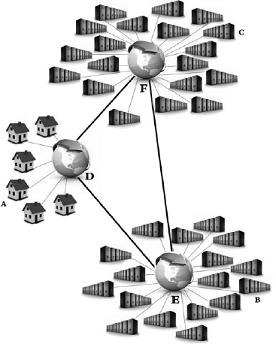
The Durable Internet: Preserving Network Neutrality without Regulation is a must-read for people on both sides of the debate over network neutrality regulation.

What I like best about this paper is how Tim avoids joining one “team” or another. He evenly gives each side its due – each side is right about some things, after all – and calls out the specific instances where he thinks each is wrong.

Tim makes the case for treating the “end-to-end principle” as an important part of the Internet’s fundamental design. Tim disagrees with the people who argue for a network with “smarter” innards and believes that neutrality advocates seek the best engineering for the network. But they are wrong to believe that the network is fragile or susceptible to control. The Internet’s end-to-end architecture is durable, despite examples where it is not an absolute.

Tim has history lessons for those who believe that regulatory control of network management will have salutary effects. Time and time again, regulatory agencies have fallen into service of the industries they regulate.

“In 1970,” Tim tells us, “a report released by a Ralph Nader group described the [Interstate Commerce Commission] as ‘primarily a forum at which transportation interests divide up the national transportation market.'” Such is the likely fate of the Internet were management of it given to regulators at the FCC and their lobbyist friends at Verizon, AT&T, Comcast, and so on.

This paper has something for everyone, and will be a reference work as the network neutrality discussion continues. Highly recommended: The Durable Internet: Preserving Network Neutrality without Regulation.

Today was a big day — and not just because there was an election going on! As I mentioned yesterday, the other big news was that the U.S. Supreme Court was hearing oral arguments in the potentially historic free speech case of Federal Communications Commission v. Fox Television Stations, Inc. Again, all the background you need can be found in my post yesterday, so here I will just be summarizing my general thoughts about how the oral arguments played out this morning.

Unfortunately, because no electronic devices or even notepads are allowed in the courtroom, much of what I am relaying here is from memory or from the notes that I surreptitiously scribbled on a tiny piece of scrap paper when the guards weren’t looking. (And yes, I have been reprimanded before for taking notes in the Court!)  The transcript has just been released, however, so you can read it through and judge for yourself.  Anyway, here are some general thoughts:

Continue reading →

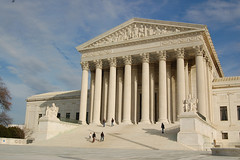
Supreme CourtTomorrow morning, the U.S. Supreme Court will hear oral arguments in the potentially historic free speech case of Federal Communications Commission v. Fox Television Stations, Inc. I plan on attending and will try to post some thoughts about how the arguments played out here later tomorrow afternoon or evening. [I won’t be able to live blog of Twitter it because no electronic devices are allowed in the courtroom, which I’ve always thought is outrageous.] In the meantime, here again is the background of the case.

The FCC v. Fox case is the indecency case involving the FCC’s new policy for “fleeting expletives.” I wrote about the Second Circuit Court of Appeals decision here and the full 2nd Circuit decision is here. [By contrast, the so-called “Janet Jackson case” — CBS v. FCC — took place in the Third Circuit Court of Appeals and that court recently handed down a decision that also went against the FCC. I wrote about the Third Circuit’s decision here.]

In a 2-1 decision, the Second Circuit ruled that “the FCC’s new policy sanctioning “fleeting expletives” is arbitrary and capricious under the Administrative Procedure Act for failing to articulate a reasoned basis for its change in policy.” The decision demonstrates how, over just the past few years, the FCC has arbitrarily thrown out 30+ years worth of precedent and greatly expand the scope of its regulatory authority over speech on broadcast TV and radio. As a result, the FCC’s order was vacated and remanded to the agency. The agency appealed the decision, however, and the Supreme Court accepted it for review.

Continue reading →