Washington Post columnist Robert J. Samuelson published an astonishing essay today entitled, “Beware the Internet and the Danger of Cyberattacks.” In the print edition of today’s Post, the essay actually carries a different title: “Is the Internet Worth It?” Samuelson’s answer is clear: It isn’t. He begins his breathless attack on the Internet by proclaiming:
If I could, I would repeal the Internet. It is the technological marvel of the age, but it is not — as most people imagine — a symbol of progress. Just the opposite. We would be better off without it. I grant its astonishing capabilities: the instant access to vast amounts of information, the pleasures of YouTube and iTunes, the convenience of GPS and much more. But the Internet’s benefits are relatively modest compared with previous transformative technologies, and it brings with it a terrifying danger: cyberwar.
And then, after walking through a couple of worst-case hypothetical scenarios, he concludes the piece by saying:
the Internet’s social impact is shallow. Imagine life without it. Would the loss of e-mail, Facebook or Wikipedia inflict fundamental change? Now imagine life without some earlier breakthroughs: electricity, cars, antibiotics. Life would be radically different. The Internet’s virtues are overstated, its vices understated. It’s a mixed blessing — and the mix may be moving against us.
What I found most troubling about this is that Samuelson has serious intellectual chops and usually sweats the details in his analysis of other issues. He understands economic and social trade-offs and usually does a nice job weighing the facts on the ground instead of engaging in the sort of shallow navel-gazing and anecdotal reasoning that many other weekly newspaper columnist engage in on a regular basis.
But that’s not what he does here. His essay comes across as a poorly researched, angry-old-man-shouting-at-the-sky sort of rant. There’s no serious cost-benefit analysis at work here; just the banal assertion that a new technology has created new vulnerabilities. Really, that’s the extent of the logic at work here. Samuelson could have just as well substituted the automobile, airplanes, or any other modern technology for the Internet and drawn the same conclusion: It opens the door to new vulnerabilities (especially national security vulnerabilities) and, therefore, we would be better off without it in our lives. Continue reading →
In mid-April, the Federal Trade Commission (FTC) requested comments regarding “the consumer privacy and security issues posed by the growing connectivity of consumer devices, such as cars, appliances, and medical devices” or the so-called “Internet of Things.” This is in anticipation of a November 21 public workshop that the FTC will be hosting on the same issue.
These issues are finally starting to catch the attention of the public and policymakers alike with the rise of wearable computing, remote home automation and monitoring technologies, smart grids, autonomous vehicles and intelligent traffic systems, and so on. The Internet of Things represents the next great wave of Internet innovation, but it also represents the next great battleground in the field of Internet policy.
I filed comments with the FTC today in this proceeding and made a few simple points about why they should proceed cautiously here. A summary of my filing follows. Continue reading →
[Note: I later adapted this essay into a short book, which you can download for free here.]
Let’s talk about “permissionless innovation.” We all believe in it, right? Or do we? What does it really mean? How far are we willing to take it? What are its consequences? What is its opposite? How should we balance them?
What got me thinking about these questions was a recent essay over at
The Umlaut by my Mercatus Center colleague Eli Dourado entitled, “‘Permissionless Innovation’ Offline as Well as On.” He opened by describing the notion of permissionless innovation as follows:
In Internet policy circles, one is frequently lectured about the wonders of “permissionless innovation,” that the Internet is a global platform on which college dropouts can try new, unorthodox methods without the need to secure authorization from anyone, and that this freedom to experiment has resulted in the flourishing of innovative online services that we have observed over the last decade.
Eli goes on to ask, “why it is that permissionless innovation should be restricted to the Internet. Can’t we have this kind of dynamism in the real world as well?”
That’s a great question, but let’s ponder an even more fundamental one: Does anyone really believe in the ideal of “permissionless innovation”? Is there anyone out there who makes a consistent case for permissionless innovation
across the technological landscape, or is it the case that a fair degree of selective morality is at work here? That is, people love the idea of “permissionless innovation” until they find reasons to hate it — namely, when it somehow conflicts with certain values they hold dear. Continue reading →
Psychologists Daniel Simons and Christopher Chabris had an interesting editorial in The Wall Street Journal this weekend asking, “Do Our Gadgets Really Threaten Planes?” They conducted an online survey of 492 American adults who have flown in the past year and found that “40% said they did not turn their phones off completely during takeoff and landing on their most recent flight; more than 7% left their phones on, with the Wi-Fi and cellular communications functions active. And 2% pulled a full Baldwin, actively using their phones when they weren’t supposed to.”
Despite the widespread prevalence of such law-breaking activity, planes aren’t falling from the sky and yet the Federal Aviation Administration continues to enforce the rule prohibiting the use of digital gadgets during certain times during flight. “Why has the regulation remained in force for so long despite the lack of solid evidence to support it?” Simons and Chabris ask. They note:
Human minds are notoriously overzealous “cause detectors.” When two events occur close in time, and one plausibly might have caused the other, we tend to assume it did. There is no reason to doubt the anecdotes told by airline personnel about glitches that have occurred on flights when they also have discovered someone illicitly using a device. But when thinking about these anecdotes, we don’t consider that glitches also occur in the absence of illicit gadget use. More important, we don’t consider how often gadgets have been in use when flights have been completed without a hitch. Our survey strongly suggests that there are multiple gadget violators on almost every flight.
That’s all certain true, but what actually motivated this ban — and has ensured its continuation despite a lack of evidence it is needed to diminish technological risk — is the precautionary principle. As the authors correct note: Continue reading →
Yesterday on TechCrunch, Josh Constine posted an interesting essay about how some in the press were “Selling Digital Fear” on the privacy front. His specific target was The Wall Street Journal, which has been running an ongoing investigation of online privacy issues with a particular focus on online apps. Much of the reporting in their “What They Know” series has been valuable in that it has helped shine light on some data collection practices and privacy concerns that deserve more scrutiny. But as Constine notes, sometimes the articles in the WSJ series lack sufficient context, fail to discuss trade-offs, or do not identify any concrete harm or risk to users. In other words, some of it is just simple fear-mongering. Constine argues:
Reality has yet to stop media outlets from yelling about privacy, and because the WSJ writers were on assignment, they wrote the “Selling You On Facebook” hit piece despite thin findings. These kind of articles can make mainstream users so worried about the worst-case scenario of what could happen to their data, they don’t see the value they get in exchange for it. “Selling You On Facebook” does bring up the important topic of how apps can utilize personal data granted to them by their users, but it overstates the risks. Yes, the business models of Facebook and the apps on its platform depend on your personal information, but so do the services they provide. That means each user needs to decide what information to grant to who, and Facebook has spent years making the terms of this value exchange as clear as possible.
“While sensationalizing the dangers of online privacy sure drives page views and ad revenue,” Constine also noted, “it also impedes innovation and harms the business of honest software developers.” These trade-offs are important because, to the extent policymakers get more interested in pursing privacy regulations based on these fears, they could force higher prices or less innovation upon us with very little benefit in exchange.
Of course, the press generating hypothetical fears or greatly inflating dangers is nothing new. We have seen it happen many times in the past and it can be seen at work in many other fields today (online child safety is a good example). In my recent 80-page paper on “Technopanics, Threat Inflation, and the Danger of an Information Technology Precautionary Principle,” I discussed how and why the press and other players inflate threats and sell fear. Here’s a passage from my paper: Continue reading →
I want to highly recommend everyone watch this interesting new talk by danah boyd on “Culture of Fear + Attention Economy = ?!?!” In her talk, danah discusses “how fear gets people into a frenzy” or panic about new technologies and new forms of culture. “The culture of fear is the idea that fear can be employed by marketers, politicians, the media, and the public to really regulate the public… such that they can be controlled,” she argues. “Fear isn’t simply the product of natural forces. It can systematically be generated to entice, motivate, or suppress. It can be leveraged as a political tool and those in power have long used fear for precisely these goals.” I discuss many of these issues in my new 80-page white paper, “Technopanics, Threat Inflation, and the Danger of an Information Technology Precautionary Principle.“
Webstock ’12: danah boyd – Culture of Fear + Attention Economy = ?!?! from Webstock on Vimeo.
danah points out that new media is often leveraged to generate fear and so we should not be surprised when the Internet and digital technologies are used in much the same way. She also correctly notes that our cluttered, cacophonous information age might also be causing an escalation of fear-based tactics. “The more there are stimuli competing for your attention, the more likely it is that fear is going to be the thing that will drive your attention” to the things that some want you to notice or worry about.
I spent some time in my technopanics paper discussing this point in Section III.C (“Bad News Sells: The Role of the Media, Advocates, and the Listener.”) Here’s the relevant passage: Continue reading →
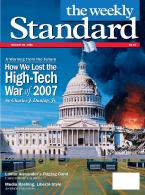 In their paper, “Loving the Cyber Bomb? The Dangers of Threat Inflation in Cybersecurity Policy,” my Mercatus Center colleagues Jerry Brito and Tate Watkins warned of the dangers of “threat inflation” in cybersecurity policy debates. In early 2011, Mercatus also published a paper by Sean Lawson, an assistant professor in the Department of Communication at the University of Utah, entitled “Beyond Cyber Doom” that documented how fear-based tactics and cyber-doom scenarios and rhetoric increasingly were on display in cybersecurity policy debates. Finally, in my recent Mercatus Center working paper, “Technopanics, Threat Inflation, and the Danger of an Information Technology Precautionary Principle,” I extended their threat inflation analysis and developed a comprehensive framework offering additional examples of, and explanations for, threat inflation in technology policy debates.
These papers make it clear that a sort of hysteria has developed around cyberwar and cybersecurity issues. Frequent allusions are made in cybersecurity debates to the potential for a “Digital Pearl Harbor,” a “cyber cold war,” a “cyber Katrina,” or even a “cyber 9/11.” These analogies are made even though these historical incidents resulted in death and destruction of a sort not comparable to attacks on digital networks. Others refer to “cyber bombs” even though no one can be “bombed” with binary code. And new examples of such inflationary rhetoric seem to emerge each day. Continue reading →
Mark Thompson has a new essay up over at Time on “Cyber War Worrywarts” in which he argues that in debates about cybersecurity, “the ratio of scaremongers to calm logic [is] currently about a 2-to-1 edge in favor of the Jules Verne crowd.” He’s right. In fact, I used my latest Forbes essay to document some of the panicky rhetoric and examples of “threat inflation” we currently see at work in debates over cybersecurity policy. “Threat inflation” refers to the artificial escalation of dangers or harms to society or the economy and doom-and-gloom rhetoric is certainly on the rise in this arena.
I begin my essay by noting how “It has become virtually impossible to read an article about cybersecurity policy, or sit through any congressional hearing on the issue, without hearing prophecies of doom about an impending “Digital Pearl Harbor,” a “cyber Katrina,” or even a “cyber 9/11.”” Meanwhile, Gen. Michael Hayden, who led the National Security Administration and Central Intelligence Agency under president George W. Bush, recently argued that a “digital Blackwater” may be needed to combat the threat of cyberterrorism.
These rhetorical claims are troubling to me for several reasons. I build on the concerns raised originally in an important Mercatus Center paper by my colleagues Jerry Brito and Tate Watkins, which warns of the dangers of threat inflation in policy debates and the corresponding rise of the “cybersecurity industrial complex.” In my Forbes essay, I note that: Continue reading →

 The Technology Liberation Front is the tech policy blog dedicated to keeping politicians' hands off the 'net and everything else related to technology.