The Gawker offers a fascinating discussion of the legal right to anonymity:
“There is clearly a moral case that some people should be able to join the public debate and retain their anonymity,” Tench told Gawker. “And I think this will have a chilling effect. Blogs like this can only exist anonymously, and I imagine that anyone who wanted to set one up is thinking about this case.”
As well they should. But the notion that anonymous publishers have a right, in perpetuity, to keep their identities a secret—or that people who learn their identities are honor-bound not to reveal them—is nonsense.
Amen! One can resist, fiercely, government efforts to reduce online anonymity through age verification or identity authentication mandates, as Adam Thierer have argued most recently in our work about efforts to expand COPPA to cover adolescents (“COPPA 2.0,” which would indirectly mandate age verification for large numbers of adults for the first time). One might even argue that there are moral reasons to resist the urge to out pseudonymous/anonymous bloggers (just as one might avoid outing closeted gays out of respect for their privacy). But one need not accept the pernicious idea that the government should punish the outing of peusodonymous/anonymous writers, which is simply a restraint on legitimate free speech.
This exchange, cited by the Gawker article, is particularly interesting, and demonstrates how one can distinguish the question of whether outing is “right” or “appropriate” from the question of whether it should be punished by law:
When the National Review‘s Ed Whelan revealed Publius, who writes for Obsidian Wings, to be a professor of law at the South Texas College of Law named John F. Blevins earlier this month, the palpable online outrage forced Whelan to apologize.
 When it comes to theories about how to best raise kids, I’m a big believer in what might be referred to “a resiliency approach” to child-rearing. That is, instead of endlessly coddling our children and hovering over them like “helicopter parents,” as so many parents do today, I believe it makes more sense to instill some core values and common sense principles and then give them some breathing room to live life and learn lessons from it. Yes, that includes making mistakes. And, oh yes, your little darlings might actually gets some bump and bruises along the way — or at least have their egos bruised in the process. But this is how kids learn lessons and become responsible adults and citizens. Wrapping them in bubble wrap and filling their heads without nothing but fear about the outside would will ultimately lead to the opposite: sheltered, immature, irresponsible, and unprepared young adults — many of whom expect someone else (the government, their college, their employer, or still their parents!) to be there to take care of them well into their 20’s or even 30’s. Again, you gotta let kids live a little and learn from their experiences.
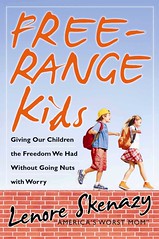
This explains why I find Lenore Skenazy’s new book,
Free-Range Kids: Giving Our Children the Freedom We Had Without Going Nuts with Worry
, to be such a breath of fresh air. [Here’s her blog of the same name.] She argues that “if we try to prevent every possible danger of difficult in our child’s everyday life, that child never gets a chance to grow up.” (p. 5) As she told
Salon recently:
You want kids to feel like the world isn’t so dangerous. You want to teach them how to cross the street safely. You want to teach them that you never go off with a stranger. You teach them what to do in an emergency, and then you assume that generally emergencies don’t happen, but they’re prepared if they do. Then, you let them go out.
The fun of childhood is not holding your mom’s hand. The fun of childhood is when you don’t have to hold your mom’s hand, when you’ve done something that you can feel proud of. To take all those possibilities away from our kids seems like saying: “I’m giving you the greatest gift of all, I’m giving you safety. Oh, and by the way I’m taking away your childhood and any sense of self-confidence or pride. I hope you don’t mind.”
Exactly right, in my opinion. Again, let kids live and learn from it. Teach lessons but then encourage ‘learning by doing’ and let them understand these things for themselves. That is resiliency theory in a nutshell.
Continue reading →
The first meeting of the Online Safety Technology Working Group (OSTWG) took place today and I just wanted to provide interested parties with relevant info and links in case they want to keep track of the task force’s work. As I mentioned back in late April, this new task force was established by the “Protecting Children in the 21st Century Act,” (part of the ‘‘Broadband Data Improvement Act’,’ Pub. L. No. 110-385) and it will report to the Assistant Secretary of Commerce for Communications and Information at the U.S. Department of Commerce’s National Telecommunications and Information Administration (NTIA).
I’m happy to be serving on this new working group and I am particularly honored to be serving as the chairman of 1 of the 4 subcommittees. The four subcommittees will address: data retention, child pornography, educational efforts, and parental controls technologies. I am chairing that last subcommittee on parental controls. The task force has about 35 members and we have a year to conduct our research and report back to Congress. Here are some relevant links from the NTIA website that provide additional details about this task force:
Of course, this is certainly not the first task force to explore online safety issues. There was the COPA Commission (2000), the “Thornburgh Commission” report (2002), the U.K. “Byron Commission” report (2008), the Harvard Berkman Center’s Internet Safety Technical Task Force (2008), and the NCTA-iKeepSafe-CommonSenseMedia “Point Smart, Click Safe” working group, which is due to issue its final report shortly. [Full disclosure: I was a member of that last two task forces as well.] I’m currently working on a short paper that attempts to summarize the remarkably similar findings of these important child safety working groups. Generally speaking, they all concluded that education and empowerment, not regulation, were the real keys to moving forward and making our kids safer online.
Adam Thierer & I have just released a detailed examination (PDF) of brewing efforts to expand the Children’s Online Privacy Protection Act of 1998 to cover adolescents and potentially all social networking sites—an approach we call “COPPA 2.0.”
As Adam explained on Larry Magid’s CNET podcast, COPPA mandates certain online privacy protections for children under 13, most importantly that websites obtain the “verifiable consent” of a child’s parent before collecting personal information about that child or giving that child access to interactive functionality that might allow the child to share their personal information with others. The law was intended primarily to “enhance parental involvement in a child’s online activities” as a means of protecting the online privacy and safety of children.
Yet advocates of expanding COPPA—or “COPPA 2.0″—see COPPA’s verifiable parental consent framework as a means for imposing broad regulatory mandates in the name of online child safety and concerns about social networking, cyber-harassment,
etc. Two COPPA 2.0 bills are currently pending in New Jersey and Illinois. The accelerated review of COPPA to be conducted by the FTC next year (five years ahead of schedule) is likely to bring to Washington serious talk of expanding COPPA—even though Congress clearly rejected covering adolescents age 13-16 when COPPA was first proposed back in 1998.
We’ll discuss some of the key points of our paper in a series of blog posts, but here are the top nine reasons for rejecting COPPA 2.0, in that such an approach would:
- Burden the free speech rights of adults by imposing age verification mandates on many sites used by adults, thus restricting anonymous speech and essentially converging—in terms of practical consequences—with the unconstitutional Children’s Online Protection Act (COPA), another 1998 law sometimes confused with COPPA;
- Burden the free speech rights of adolescents to speak freely on—or gather information from—legal and socially beneficial websites;
- Hamper routine and socially beneficial communication between adolescents and adults;
- Reduce, rather than enhance, the privacy of adolescents, parents and other adults because of the massive volume of personal information that would have to be collected about users for authentication purposes (likely including credit card data);
Continue reading →
As anyone who has spent time searching for comments on the FCC’s website can tell you, the agency doesn’t exactly have the most user-friendly website. In the interest of making it easier for others to read the comments that came in last week in the agency’s “Child Safe Viewing Act” Notice of Inquiry, I have compiled all the major comments (those over 3 or 4 pages) and provided links to them below the fold.
Again, this proceeding was required under the “Child Safe Viewing Act of 2007,” which Congress passed last year and President Bush signed last December. The goal of the bill and the FCC’s proceeding (MB 09-26) is to study “advanced blocking technologies” that “may be appropriate across a wide variety of distribution platforms, including wired, wireless, and Internet platforms.” I filed 150+ pages worth of comments in this matter last week, and here’s my analysis of why this bill and the FCC’s proceeding are worth monitoring closely.
Continue reading →
Today I filed comments with the Federal Communications Commission (FCC) in its proceeding examining the marketplace for “advanced blocking technologies.” This proceeding was required under the “Child Safe Viewing Act of 2007,” which Congress passed last year and President Bush signed last December. The goal of the bill and the FCC’s proceeding (MB 09-26) is to study “advanced blocking technologies” that “may be appropriate across a wide variety of distribution platforms, including wired, wireless, and Internet platforms.” My colleagues will no doubt laugh about the fact that I have dropped an absurd 150 pages worth of comments on the FCC in this matter, but I had a lot to say on this topic! Parental controls, child safety, and free speech issues have been the focus of much of my research agenda over the past 10 years.
In my filing, I argue that the FCC should tread carefully in this matter since the agency has no authority over most of the media platforms and technologies described in the Commission’s recent Notice of Inquiry. Moreover, any related mandates or regulatory actions in in this area could diminish future innovation in this field and would violate the First Amendment rights of media creators and consumers alike. The other major conclusions of my filing are as follows:
- There exists an unprecedented abundance of parental control tools to help parents decide what constitutes acceptable media content in their homes and in the lives of their children.
- There is a trade-off between complexity and convenience for both tools and ratings, and no parental control tool is completely foolproof.
- Most homes have no need for parental control technologies because parents rely on other methods or there are no children in the home.
- The role of household media rules and methods is underappreciated and those rules have an important bearing on this debate.
- Parental control technologies work best in combination with educational efforts and parental involvement.
- The search for technological silver-bullets and “universal” solutions represent a quixotic, Holy Grail-like quest and it will destroy innovation in this marketplace.
- Enforcement of “household standards” made possible through use of parental controls and other methods negates the need for “community standards”-based content regulation.
My entire filing can be found here and down below in a Scribd reader. All comments in the matter are due tomorrow and then reply comments are due on May 18th.
Continue reading →
Today, it was my great privilege to guest lecture at Princeton University’s Center for Information Technology Policy. Under the leadership of Ed Felten, who also runs the excellent “Freedom to Tinker” blog, the CITP has quickly become one of America’s premier institutions in the field of IT policy matters. David Robinson, who some of you will remember from his days as an editor at The American, serves as associate director of the CITP program and was kind enough to invite me to speak. And our own Tim Lee is currently studying there as well. I wish I was smart enough to get into that program!
The topic of my talk was “The Future of the First Amendment in an Age of Technological Convergence” and I used the opportunity to create a narrated video of this presentation, which I have made to several other groups through the years. In this presentation, I talk about “America’s First Amendment Twilight Zone,” which refers to the fact that identical words and images are being regulated in completely different ways today depending on the mode of transmission. This illogical and unfair situation could eventually threaten the Internet, video games, and all new media with many of the misguided regulations that have long been imposed on broadcast television and radio operators. In my presentation, which you can watch below, I make the case for changing our First Amendment regime to ensure “bit equality”; all speech and media platforms should be accorded the gold standard of First Amendment protection.
http://www.youtube.com/v/xJo3tVMScyI&hl=en&fs=1
Continue reading →
The Federal Communications Commission (FCC) has just released a Notice of Inquiry (NOI) in the matter of “Implementation of the Child Safe Viewing Act; Examination of Parental Control Technologies for Video or Audio Programming.” (MB Docket No. 09-26) This NOI was required by S. 602, the “Child Safe Viewing Act of 2007,” which Congress passed last October and President Bush signed into law on December 2nd. The measure requires the FCC to examine:
(1) the existence and availability of advanced blocking technologies that are compatible with various communications devices or platforms;
(2) methods of encouraging the development, deployment, and use of such technology by parents that do not affect the packaging or pricing of a content provider’s offering; and
(3) the existence, availability, and use of parental empowerment tools and initiatives already in the market.
The Act defines the term “advanced blocking technologies” as “technologies that can improve or enhance the ability of a parent to protect his or her child from any indecent or objectionable video or audio programming, as determined by such parent.” Importantly, the Act also directs the agency to look into blocking technologies that “may be appropriate across a wide variety of distribution platforms, including
wired, wireless, and Internet platforms” and which “operate independently of ratings pre-assigned by the creator of such video or audio programming.” The Act requires that the FCC issue a report to Congress about these technologies no later than August 29, 2009.
When writing about the Child Safe Viewing Act shortly after its introduction in the summer of 2007, I noted that the measure potentially represented the beginning of “convergence-era content regulation” at the FCC. Those two clauses highlighted above are of particular importance in that regard. Congress has essentially invited the FCC to engage in unprecedented oversight of media platforms and ratings systems that the agency previously had very little ability to influence. Continue reading →
Just FYI, the latest update of my booklet on “Parental Controls and Online Child Protection: A Survey of Tools & Methods” is now live. The new version, Version 3.1, provides minor updates to all sections of the book and a new appendix of relevant research in the field. I issue major updates early each year and 1 or 2 tweaks during the course of the year to reflect the evolution of the parental control and online child safety market and debate. 
For those not familiar with the report, it explores the market for parental control tools, rating schemes, education efforts, and initiatives aimed at promoting online child safety. I believe that the parental controls and content management tools cataloged in the report represent a better, less restrictive alternative to government regulation. As I conclude after evaluating that state of the market: “There has never been a time in our nation’s history when parents have had more tools and methods at their disposal to help them decide what constitutes acceptable media content in their homes and in the lives of their children.”
The report is available free-of-charge on the PFF website, and the previous editions of the report are housed there too in case you want to see how it has evolved over the past two years. For those interested in taking a quick look at the report, I have embedded it down below the fold as a Scribd file. Finally, as is always the case, I encourage readers to send me updates and suggestions for how to improve the report and I will incorporate them into future versions.
Continue reading →
Over at Ars, Ben Kuchera has a review of Ask.com’s redesign of its web portal for kids, AskKids.com. It’s a great new addition to the growing list of safe seach tools and web portals geared toward younger surfers.

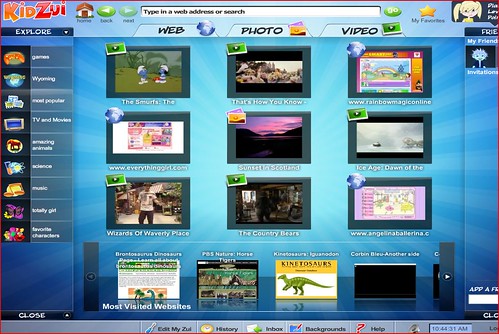
I’m also a big fan of KidZui, the new browser for kids that provides access to over 800,000 kid-friendly websites, videos, and pictures that have been pre-screened by over 200 trained teachers and parents. The company employs a rigorous 5-step “content selection process” to determine if it is acceptable for kids between 3-12 years of age. My kids, both under the age of 7, just love it, but I can’t see many kids older than 10 enjoying it because it is mostly geared toward the youngest web surfers.
Last year, as part of my 10-part series coinciding with “Internet Safety Month,” I wrote about the market for safe search tools and web portals for kids. I generally divide these sites and services into two groups:
(1)
“Safe Search” Tools and Portals for Kids
(2)
Child- and Teen-Oriented Websites
Below I will describe each group and list the many sites and services currently available. I encourage readers to offer additional suggestions for sites that belong on the list. (I keep a running list of these sites and services in my book, “Parental Controls and Online Child Protection: A Survey of Tools & Methods.”)
Continue reading →

 The Technology Liberation Front is the tech policy blog dedicated to keeping politicians' hands off the 'net and everything else related to technology.