PFF has just releasing an updated edition of my booklet on “Parental Controls and Online Child Protection: A Survey of Tools & Methods.” The new version, Version 3.0, includes two new appendixes and updates to each section to reflect new parental control tools and programs developed in the last nine months.
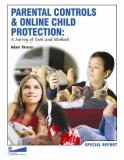
The updated report is timely as it comes on the heels of the recently-announced Internet Safety Technical Task Force, which is being chaired by the Berkman Center for Internet & Society at Harvard Law School. I am privileged to serve as a member of the Task Force, which is evaluating various online safety technologies and strategies and then reporting back to state attorneys general with our findings.
Those issues and much more are covered in the latest edition of my report. The report explores the market for parental control tools, rating schemes, education efforts, and initiatives aimed at promoting online child safety. I believe that the parental controls and content management tools cataloged in the report represent a better, less restrictive alternative to government regulation. As I conclude after evaluating that state of the market: “There has never been a time in our nation’s history when parents have had more tools and methods at their disposal to help them decide what constitutes acceptable media content in their homes and in the lives of their children.”
Version 3.0 of the special report, now over 200 pages, contains over fifty exhibits and numerous updates in all five sections of the book. Major updates have been made to the Internet, social networking, and mobile media sections, reflecting the growing importance of those sectors and issues. A greatly expanded section on video empowerment technologies has also been included. Finally, two appendices have also been added: a comprehensive legislative index cataloging over thirty bills introduced in Congress on these issues (complied with John Morris of Center for Democracy & Technology), and a glossary of 35 relevant terms and cases.
The report is available free-of-charge on the PFF website, as are the previous editions. And I am happy to provide hard copies to those who are interested.
http://documents.scribd.com/ScribdViewer.swf?document_id=2887320&access_key=key-um5xjvf98bfnuu8811v&page=&version=1&auto_size=true
Back in 2005, I threw away a book I was writing. Well, I didn’t exactly toss it in a garbage can or take a match to the manuscript; I just abandoned the project to work on other things, including a different book and a big law review article. I’m still mad at myself for never finishing it up because I think it put forward a provocative thesis: Censorship is dead. Specifically, as I argued in the first lines of the book, “A confluence of social, legal and, most importantly, technological developments is slowly undermining the ability of legislators and regulators, at all levels of government, to control the nature or quality of speech or media programming.” Accordingly, the running title for the book was: “The End of Censorship?: The Future of Content Controls in a World of Media Convergence.”
Anyway, I recently unearthed an old draft of this discarded manuscript and thought I might as well at least throw the introduction online. In it, I outline my thesis and the “5 Reasons Content Controls Will Break Down.” I also highlight how governments will fight back and discuss what alternatives are out there to address concerns about objectionable content. Someone out there might be interested in all this even though much of what I say here is now widely accepted or been said better by others. I’ve stripped out all the footnotes and cut out significant sections to make what follows more readable. So, here it goes…
“The End of Censorship? The Future of Content Controls in a World of Media Convergence.”
Content regulation–at least as it has been traditionally defined and enforced in the United States–is doomed. A confluence of social, legal and, most importantly, technological developments is slowly undermining the ability of legislators and regulators, at all levels of government, to control the nature or quality of speech or media programming. Specifically, it is the
distribution channel-based system of content regulation employed in the U.S. and many other nations that is breaking down. That is, the ability of governments to regulate speech and expression by regulating its distribution channel or provider (such as broadcasting), represents in increasingly ineffective and illogical method of policing content flows.
The demise of traditional content controls may take many years–potentially even decades–to play out, but signs of the impending death of the old regulatory regime are already evident.
Continue reading →
PFF has just released my latest paper entitled “Parental Control Perfection? The Impact of the DVR and VOD Boom on the Debate over TV Content Regulation.” In the report, I focus on the extent to which new video technologies, such as digital video recorders (DVRs) and video on demand (VOD) services, are changing the way households consume media and are helping parents better tailor viewing experiences to their tastes and values. I provide evidence showing the rapid spread of these technologies and discuss how parents are using these tools in their homes. Finally, I argue that these developments will have profound implications for debates over the regulation of video programming. As parents are given the ability to more effectively manage their family’s viewing habits and experiences, it will lessen—if not completely undercut—the need for government intervention on their behalf.
This 16-page report can be found at: http://www.pff.org/issues-pubs/pops/pop14.20DVRboomcontentreg.pdf
A few weeks ago, I outlined the amazing keynote address that Harvard University law professor Laurence H. Tribe delivered at PFF’s annual Aspen Summit. Now you can read it for yourself. PFF has just published the transcript of his speech, which was entitled, “Freedom of Speech and Press in the 21st Century: New Technology Meets Old Constitutionalism.”
Professor Tribe provides a 14-part indictment of new government proposals to regulate “excessively violent” content. But he also speaks more broadly about the importance of defending the First Amendment from attacks on many different platforms, and for many different types of content. Here’s one of my favorite passages from the concluding section of his remarks:
The broad lesson of this discussion of television violence is the centrality of the First Amendment’s opposition to having government as big brother regulate who may provide what information content to whom, whether or not for a price. The large problem that this exposes is that especially in a post-9/11 world, where grownups understandably fear for themselves and for their children and worry about the brave new world of online cyber reality that their kids can navigate more fluently than they can, it is enormously tempting to forget or to subordinate the vital principles of constitutional liberty. Even if, after years of litigation and expenditure, the First Amendment prevails, it can be worn down dramatically by having to wage that fight over and over and over.
Amen to that. And that, in a nutshell, describes what much of my research agenda at PFF has been focused on. It is a pleasure to add Prof. Tribe’s address to our growing body of research on the sanctity of freedom of speech and centrality of the First Amendment to our democratic republic as we continue “to wage that fight over and over and over.”
The Parents Television Council has a new report out this week about the supposed decline of the TV “Family Hour.” The City Journal has just posted my response to that PTC report here. It begins as follows…
Who Killed TV’s “Family Hour”?
It’s not who you think.
by Adam D. Thierer
7 September 2007
The nonprofit Parents Television Council (PTC) released a report this week lamenting the supposed death of broadcast television’s “family hour.” Though neither the Federal Communications Commission nor Congress ever mandated it, 8 to 9 PM Monday through Saturday (Eastern time), and 7 to 9 PM on Sunday, have traditionally been devoted to family-friendly programming. But the PTC’s new report claims that these blocks of time are now “no place for children,” because “corporate interests have hijacked the family hour” and “have pushed more and more adult-oriented programming to the early hours of the evening.”
One might respond to this claim by questioning the PTC’s methodology, particularly its definitions of foul language. Simon Vozick-Levinson of Entertainment Weekly’s “PopWatch Blog” takes this approach, accusing the PTC of “cooking the numbers” to suit its cultural agenda. But I don’t want to engage in methodological nit-picking, since it quickly devolves into a subjective squabble about acceptable language and appropriate programming. Instead, I want to point out the fundamental flaw in the report’s premise. The family hour may well be dead—but parents, not broadcasters, were the ones who killed it.
… read the rest at the City Journal’s website.
Many lawmakers and regulators are currently proposing the expansion of broadcast industry regulation. For example, fines have been greatly increased for “indecent” programming on broadcast television and radio, and efforts are underway to extend indecency regulations to cover cable and satellite television. Meanwhile, some policymakers are advocating government regulation of “excessively violent” programming on both broadcast and pay TV. In my latest law review article, “Why Regulate Broadcasting: Toward a Consistent First Amendment Standard for the Information Age,” I hope to show why these efforts are seriously misguided, likely unworkable, and almost certainly completely unconstitutional.
This 52-page article appears in the latest volume of the Catholic University Law School’s
CommLaw Conspectus. The article can be found online here.
In this essay, I make the case that the radically unfair system of modern broadcast industry regulation must be completely abolished. “If America is to have a consistent First Amendment in the Information Age,” I argue, “efforts to extend the broadcast regulatory regime must be halted and that regime must be relegated to the ash heap of history.” I go on to make the case against all the traditional broadcast industry regulatory rationales and conclude that: “the traditional rationales for asymmetrical regulation of broadcasting — scarcity, pervasiveness, and the public interest — either no longer make sense or are increasingly impractical to enforce in an age of technological convergence and media abundance. Instead of resisting the inexorable movement toward media parity and a consistent First Amendment standard for the Information Age, policymakers should embrace these changes and focus on responding to the problem of objectionable content through education and empowerment-based strategies that enable families to craft their own household media standards.”
http://documents.scribd.com/ScribdViewer.swf?document_id=2887127&access_key=key-17dpa2kpdbyetd67b4f5&page=&version=1&auto_size=true
Well, I know I’m starting to sound like a broken record on this point, but it never ceases to amaze me how some policymakers get away with speaking so poorly of parents during policy debates about media content. First, you will recall that, in late April, the Federal Communications Commission released a report calling for the regulation of violent video content on the grounds that parental control tools and efforts were ineffective. (For details, see my essay: “FCC Violence Report Concludes that Parenting Doesn’t Work.”) Then, just last week, at a House Commerce hearing on “The Images Kids See on the Screen,” Rep. Ed Markey and several other members of the committee argued that parents just couldn’t cope with modern media and that government needed to step in on their behalf. But nothing could top the performance of Sen. John Rockefeller at today’s Senate Commerce Committee hearing on “The Impact of Media Violence on Children.”
Sen. Rockefeller opened the hearing with a verbal tirade “repeatedly bashing TV and its executives as though they were Dan Aykroyd’s Irwin Mainway SNL character out to sell bags-o-glass to unsuspecting kids,” as John Eggerton of Broadcasting & Cable noted. Sen. Rockefeller, who is planning to soon introduce legislation to regulate “excessively violent” television programming, said that the industry is being “cowardly” and “debasing our culture” in a “never-ending race to the bottom.”
Rockefeller went on to say that the industry was “blaming parents” for not dealing with the problem of objectionable content with private controls and methods instead of censoring content themselves before it ever got on air. “Parents do not want more tools,” he argued, “they want the content off the air.” Of course, that point is debatable as I’ll discuss more below.
Continue reading →
I am testifying today at 10:00 in the House Energy & Commerce Committee (Telecom & Internet subcommittee) at a hearing on “The Images Kids See on the Screen.” The purpose of the hearing is to examine the negative things that children may be exposed to on various screens (TV violence, product placement, fatty foods, smoking, etc.) and what should be done about it. My prepared remarks are attached below.
Testimony of Adam D. Thierer
Senior Fellow and Director of the Center for Digital Media Freedom
The Progress & Freedom Foundation
June 22, 2007
Mr. Chairman and members of the Committee, thank you for inviting me here today and giving me the opportunity to testify. My name is Adam Thierer and I am a senior fellow with the Progress & Freedom Foundation (PFF) where I serve as director of PFF’s Center for Digital Media Freedom.
This hearing is particularly timely for me because this week PFF released a new special report that I spent the last two years compiling entitled, “Parental Controls and Online Child Protection: A Survey of Tools and Methods.” The booklet provides a broad survey of everything on the market today that can help parents better manage media content, whether it be broadcast television, cable or satellite TV, music devices, mobile phones, video game consoles, the Internet, or social networking websites. (Incidentally, this booklet can be downloaded free-of-charge at www.pff.org/parentalcontrols, and I plan on making frequent updates to the report and re-posting the document online as new information comes to my attention).
As I note in my book, we live in an “always-on,” interactive, multimedia world. Parents need to be prepared to deal with media on multiple platforms, screens, and devices. While this can be a formidable challenge, luckily, there has never been a time when parents have had more tools and methods at their disposal to help them determine and enforce what is acceptable in their homes and in the lives of their children. And that conclusion is equally applicable to all major media platforms, or all the screens our children might view.
Continue reading →
The FCC has just issued its long-awaited report on Violent Television Programming and Its Impact on Children. Unsurprisingly, it recommends that the government should assume a great role in regulating the video content that comes into our homes. The agency concludes that: “We believe that further action to enable viewer-initiated blocking of violent television content would serve the government’s interests in protecting the well-being of children and facilitating parental supervision and would be reasonably likely to be upheld as constitutional.” (p. 15)
Ambiguity Defined
Ironically, however, the FCC’s report goes on to undercut its own argument for regulation again and again because of the stunning level of ambiguity surrounding everything they propose. For example, in the second paragraph of the report, the FCC notes that “A broad range of television programming aired today contains [violent] content, including, for example, cartoons, dramatic series, professional sports such as boxing, news coverage, and nature programs.” Is the agency saying such things could be regulated? They never tell us.
Or consider the endless number of questions raised by this paragraph on pages 20-21:
We believe that developing an appropriate definition of excessively violent programming would be possible, but such language needs to be narrowly tailored and in conformance with judicial precedent. Any definition would need to be clear enough to provide fair warning of the conduct required. A definition sufficient to give notice of upcoming violent programming content to parents and potential viewers could make use of, or be a refinement of, existing voluntary rating system definitions or could make use of definitions used in the research community when studying the consequences of violent programming. For more restrictive time channeling rules, a definition based on the scientific literature discussed above, which recognizes the factors most important to determining the likely impact of violence on the child audience, could be developed. For example, such a definition might cover depictions of physical force against an animate being that, in context, are patently offensive. In determining whether such depictions are patently offensive, the Government could consider among other factors the presence of weapons, whether the violence is extensive or graphic, and whether the violence is realistic. (p. 20-21)
Let’s try to unpack some of this because defining “excessive violence” is really the core of this debate.
Continue reading →

 The Technology Liberation Front is the tech policy blog dedicated to keeping politicians' hands off the 'net and everything else related to technology.