Harvard Berkman Center professor Jonathan Zittrain has published another pessimistic, Steve-Jobs-is-Taking-Us-Straight-To-Cyber-Hell editorial building on the gloomy thesis he set forth in his 2008 book, The Future of the Internet and How to Stop It. His latest piece appears in the Financial Times and it’s entitled, “A Fight over Freedom at Apple’s Core. Concerning the recent Apple iPad announcement, Zittrain warns: “Mr Jobs ushered in the personal computer era and now he is trying to usher it out.”
I’m not going to go into yet another lengthy dissertation about what it so misguided about his thesis that cyberspace is becoming more “regulable” and that digital “generativity” is dying because of the rise of devices like the iPhone & iPad, or sites like Facebook. Instead, I will just point you to the many things I’ve written before explaining just how far off the mark Prof. Zittrain is on this point. [See the complete list down below + video of our debate.]
But let me just say this… Ignoring that fact that he is an iPhone user himself — which makes no sense considering that he thinks of Apple as the font of all cyber-evil — he can’t muster any substantive empirical evidence proving that the Net and digital devices are being more “closed, sterile, and tethered,” as he repeatedly claims in his book and editorials. And that’s not surprising because the reality is that the digital world is more open and generative than ever, and even if there are some “closed” devices and systems out there, they are actually quite innovative and not perfectly closed as Zittrain suggests. The spectrum of “open vs. closed” systems and devices is incredible diverse and nothing is
perfectly “open” or “closed.” We can have the best of both worlds: many open systems with some partial “walled gardens” here and there (or hybrid systems combining both). Regardless, we are witnessing greater digital “generativity” and innovation with each passing year. Until Zittrain can prove the opposite, his thesis must be considered a failure.
Finally, I want to associate myself with this excellent critique of the Zittrain thesis by Prof. Ed Felten, who points out that Zittrain’s argument doesn’t even work for the iPad, which I would agree is a fairly “closed appliance” in the Zittrainian scheme of the things:
Continue reading →
There’s been a lot of hand-wringing lately about Google’s recent acquisitions of Teracent (ad-personalization) and AdMob (mobile ads), as well as Apple’s response, buying AdMob’s rival Quattro Wireless. Jeff Chester, true To form, quickly fired off an angry letter to FTC Chairman Jon Leibowitz, ranting about how the Google/AdMob deal would harm consumer privacy with the same vague fulminations as ever:
Google amasses a goldmine of data by tracking consumers’ behavior as they use its search engine and other online services. Combining this information with information collected by AdMob would give Google a massive amount of consumer data to exploit for its benefit.
Yup, that’s right, it’s all part of Google’s grand conspiracy to exploit (and eventually enslave) us all—and Apple is just a latecomer to this dastardly game. It’s not as if that data about users’ likely interests might, oh, I don’t know… actually help make advertising more relevant—and thus increase advertising revenues for the mobile applications/websites that depend on advertising revenues to make their business models work. No, of course not! Greedy capitalist scum like Google and Apple don’t care about anyone but themselves, and just want to extract every last drop of “surplus value” (as Marx taught us) from The Worker. (Never mind that in 4Q2009 Google generated $1.47 billion for website owners who use Google AdSense to sell ads on their sites—up 17% over 4Q2008—or that Apple has a strong incentive to maximize revenues for its iPhone app developers.) Internet users of the world, unite! You have nothing to lose but all those “free” content and services thrown at your feet! Continue reading →
By Adam Thierer & Berin Szoka
The Wall Street Journal reports (see Financial Times, too) that “CBS Corp. and Walt Disney Co. are considering participating in Apple Inc.’s plan to offer television subscriptions over the Internet, according to people familiar with the matter, as Apple prepares a potential new competitor to cable and satellite TV.”
If Apple signs up enough networks to launch a viable service—still a very big if—it could ultimately alter the economics of the television business. The service could undermine the big bundles of channels that cable, satellite and telecommunications companies, including Comcast Corp. and DirecTV Inc., have traditionally sold in packages to subscribers.
And Brian Stelter of The New York Times says of the plan:
Broadband Internet subscriptions to TV networks could potentially destabilize the bedrock of the television business, which relies on subscribers paying for dozens of bundled channels.
As we have noted have noted here in our ongoing “Cutting the Video Cord” series, it’s just another sign that the video marketplace is vibrantly competitive and experiencing unprecedented innovation. So, why is Washington regulating this marketplace like we still live in the disco era?
The
New York Times itself seems to be of two minds on this: Brian seems to recognize that the rise of Internet television means that cable providers no longer have any sort of special “gatekeeper” or “bottleneck” control over the programming available to consumers, just as his colleague Nick Bilton at the Times‘ BITS blog recently declared that “Cable Freedom Is a Click Away.” And yet, as Berin recently noted, when the DC Circuit struck down the FCC’s outdated 30% cap on the number of homes a single cable provider could serve (based on “gatekeeper” concerns) back in September, the Times editorial page bemoaned the decision and demanded further regulation of the cable industry—even as Internet TV is fundamentally changing the marketplace for video programming and rendering moot “gatekeeper” concerns far more effectively than any law could ever do.
“Right hand, meet Left hand. Howyadoinnicetameetcha!”
I’ve always generally agreed with the conventional wisdom about micropayments as a method of funding online content or services: Namely, they won’t work. Clay Shirky, Tim Lee, and many others have made the case that micropayments face numerous obstacles to widespread adoption. The primary issue seems to be the “mental transaction cost” problem: People don’t want to be diverted–even for just a few seconds–from what they are doing to pay a fee, no matter how small. [That is why advertising continues to be the primary monetization engine of the Internet and digital services.]
 That being said, I keep finding examples of how micropayments do work in some contexts and it has kept me wondering if there’s still a chance for micropayments to work in other contexts (like funding media content). For example, I mentioned here before how shocked I was when I went back and looked at my eBay transactions for the past couple of years and realized how many “small-dollar” purchases I had made via PayPal (mostly dumb stickers and other little trinkets). And the micropayment model also seems to be doing reasonably well in the online music world. In January 2009, Apple reported that the iTunes Music Store had sold over 6 billion tracks.
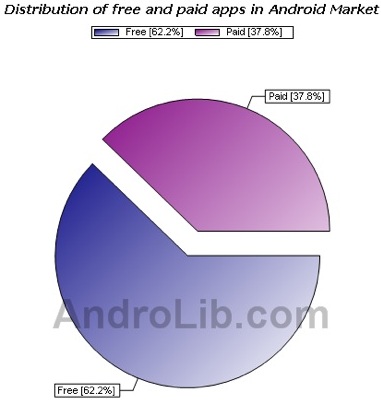
And then there are mobile application stores. Just recently I picked up a Droid and I’ve been taking advantage of the rapidly growing Android marketplace, which recently hit the 20,000 apps mark. Like Apple’s 100,000-strong App Store, there’s a nice mix of paid and free apps, and even though I’m downloading mostly freebies, I’ve started buying more paid apps. Many of them are “upsells” from free apps I downloaded. In most cases, they are just 99 cents. A few examples of paid apps I’ve downloaded or considered buying: Stocks Pro, Mortgage Calc Pro, Currency Guide, Photo Vault, Weather Bug Elite, and Find My Phone. And there are all sorts of games, clocks, calendars, ringtones, heath apps, sports stuff, utilities, and more that are 99 cents or $1.99. Some are more expensive, of course.
Continue reading →
Arik Hesseldahl has an interesting piece in
Business Week about Apple’s control of the iPhone App approval process in which he asks: “Is a smartphone gatekeeper needed?” Plenty of people don’t think so and have raised a stink about Apple trying to play that role for the iPhone. It certainly could be true, as some critics suggest, that Apple is being too heavy-handed on occasion when rejecting apps, but it’s always easy for those of us on the outside of the process to think that. Hesseldahl notes that:
it’s tempting to consider the implications of a less hands-on approach, as is the case with Macs, Microsoft (MSFT) Windows PCs, or other smartphones, including those running the Google (GOOG)-backed Android operating system. The software market for personal computing has existed in this way for nearly three decades, and while there have certainly been some problems along the way, I’d argue that overall we’re better off without Microsoft or Apple or some other organization approving software applications before they’re released to the market. PC users have learned to be careful about what they put on their computers through unhappy trial and error.
But he also notes that there is another side to the story: Continue reading →
 Seems like everywhere I turn someone is gushing about their new Droid phone, including my TLF colleagues Berin Szoka, Braden Cox, and Ryan Radia, who all had great fun rubbing their new toys in my nose over the past couple of days. And why not, it’s a very cool little device. It makes my HTC Touch seems positively archaic in some ways, and it’s only a year old. Apparently, 100,000 people already picked up a Droid in just its first weekend on the market.
But here’s the first thing that pops in my mind every time I see someone showing off their new Droid: How can a device like this even exist when America’s leading cyberlaw experts have been telling us that the whole digital world is increasingly going to hell because of “closed” devices, proprietary code, and managed networks? I’m speaking, of course, about the lamentations of Harvard professors Lawrence Lessig, Jonathan Zittrain, and their many disciples. As faithful readers will recall, I have relentlessly hammered this crew for their unwarranted cyber-Chicken Little-ism and hyper techno-pessimism. (See my many battles with Zittrain [1, 2, 3, 4, 5, 6 + video] and my 2-part debate with Lessig earlier this year).
“Left to itself,” Lessig warned in Code, “cyberspace will become a perfect tool of control.” He went on to forecast a dystopian future in which nefarious corporate schemers would quash our digital liberties unless benevolent public philosopher kings stepped in to save our poor souls. Code was the Old Testament of cyber-collectivism. The New Testament arrived last year with Zittrain’s
The Future of the Internet and How to Stop It. In it, we hear the grim prediction that “sterile and tethered” digital technologies and networks will triumph over the more “open and generative” devices and systems of the past. The iPhone and TiVo are cast as villains in Zittrain’s drama since they apparently represent the latest manifestations of Lessig’s “perfect control” paranoia.
Apple’s “Angel of Death”
How completely out-of-control has this thinking gotten? Well, here’s David Weinberger — another Harvard Berkman Center worrywart — talking about that supposed satanic font of all evil, the Apple AppStore: Continue reading →
by Berin Szoka & Adam Thierer, Progress Snapshot 5.11 (PDF)
Ten years ago, Nobel Prize-winning economist Milton Friedman lamented the “Business Community’s Suicidal Impulse:” the persistent propensity to persecute one’s competitors through regulation or the threat thereof. Friedman asked: “Is it really in the self-interest of Silicon Valley to set the government on Microsoft?” After yesterday’s FCC vote’s to open a formal “Net Neutrality” rule-making, we must ask whether the high-tech industry—or consumers—will benefit from inviting government regulation of the Internet under the mantra of “neutrality.”
The hatred directed at Microsoft in the 1990s has more recently been focused on the industry that has brought broadband to Americans’ homes (Internet Service Providers) and the company that has done more than any other to make the web useful (Google). Both have been attacked for exercising supposed “gatekeeper” control over the Internet in one fashion or another. They are now turning their guns on each other—the first strikes in what threatens to become an all-out, thermonuclear war in the tech industry over increasingly broad neutrality mandates. Unless we find a way to achieve “Digital Détente,” the consequences of this increasing regulatory brinkmanship will be “mutually assured destruction” (MAD) for industry and consumers.
New Fronts in the Neutrality Wars
The FCC’s proposed rules would apply to all broadband providers, including wireless, but not to Google or many other players operating in other layers of the Net who favor such broadband-specific rules. With this rulemaking looming, AT&T came after Google with letters to the FCC in late September and then another last week accusing the company of violating neutrality principles in their business practices and arguing that any neutrality rules that apply to ISPs should apply equally to Google’s panoply of popular services. In particular, AT&T accused Google of “search engine bias,” suggesting that only government-enforced neutrality mandates could protect consumers from Google’s supposed “monopolist” control.
The promise made yesterday by the FCC—to only apply neutrality principles to the infrastructure layer of the Net—is hollow and will ultimately prove unenforceable. Continue reading →
The smell of high-tech regulation is increasingly in the air these days and many lawmakers and some activist groups now have the mobile marketplace in their regulatory cross-hairs. Critics make a variety of claims about the wireless market supposedly lacking competition, choice, innovation, or reasonable pricing. Consequently, they want to wrap America’s wireless sector in a sea of red tape. Two important new studies thoroughly debunk these assertions and set the record straight regarding the state of wireless competition and innovation in the U.S. today. These reports are must-reading for Washington policymakers and FCC officials who are currently contemplating regulatory action.
First, Gerald Faulhaber and Dave Farber have a new report out entitled “Innovation in the Wireless Ecosystem: A Customer-Centric Framework.” Here’s what Faulhaber and Farber find:
the three segments of the wireless marketplace (applications, devices, and core network) have exhibited very substantial innovation and investment since its inception. Perhaps more interesting, innovation in each segment is highly dependent upon innovation in the other segments. For example, new applications depend upon both advances in device hardware capabilities and advances in spectral efficiency of the core network to provide the network capacity to serve those applications. Further, we find that the three segments of the industry are also highly competitive. There are many players in each segment, each of which aggressively seeks out customers through new technology and new business methods. The results of this competition are manifest: (i) firms are driven to innovate and invest in order to win in the competitive marketplace; (ii) new business models have emerged that give customers more choice; and (iii) firms have opened new areas such as wireless broadband and laptop wireless in order to expand their strategic options.
They continue on to address the policy issues in play here and discuss the “consumer-centric” approach they recommend that the FCC adopt: Continue reading →
Over at his new blog, our old TLF colleague Tim Lee has an interesting post up about “The Problem with Top-Down ‘App Stores’” in which he argues that “when app store approval becomes mandatory, it becomes a major impediment to the success of high-tech platforms.” But I have to wonder if the facts support that assertion. Here’s how I commented on his site:
Tim… What I don’t hear you articulating here is your vision of what a “bottom-up” app store would look like and why it would really produce vastly superior results. Nor do I hear you saying anything about the legitimate concerns that the handset makers might have about the security or stability factors associated with certain applications. I’m not saying those problems are extensive, but at the margins they could be real depending on the nature of the program and how it interacts with the handset and/or network.
Second, there needs to be some sense of proportionality here, at least about the iPhone (I can’t speak for the Palm experience). In just a little over a year, there’s been 2 billion downloads of over 85,000 apps from over 125,000 developers. So, when you talk about Apple’s approval process being “plagued by.. problems” and “rejections for trivial or non-sensical reasons” and “long delays in the review process have become a staple of the tech blogosphere” I think you are giving the impression that this is somehow the norm when it is very much the exception to the rule. Perhaps you would be willing to itemize the examples for us. Once you do, I’d appreciate you doing the math on what that looks like as a percentage of the total 85,000 apps that are already out there on the market today. I am willing to bet the result is something like 0.000001%.
Again, a sense of proportionality is really key here. While I am not an Apple fan and agree they have a bit too much of a control streak for my tastes, it’s hard to argue with results. In this case, a closed, top-down system has produced some fairly spectacular results.
I’m sure Tim will have more to say so head over to his blog for more discussion.
In a week in which neutrality regulation is making a lot of news, I hope that Robert Hahn and Hal Singer’s terrific new study, “Why the iPhone Won’t Last Forever and What the Government Should Do to Promote its Successor” gets some attention. It provides a wonderful overview of how dynamically competitive the mobile marketplace has been over the past two decades and why critics are wrong to get worked up about the short-term “dominance” of Apple’s iPhone. Here’s the abstract of their paper:
Because of the overwhelming, positive response to the iPhone as compared to other smart phones, exclusive agreements between handset makers and wireless carriers have come under increasing scrutiny by regulators and lawmakers. In this paper, we document the myriad revolutions that have occurred in the mobile handset market over the past twenty years. Although casual observers have often claimed that a particular innovation was here to stay, they commonly are proven wrong by unforeseen developments in this fast-changing marketplace. We argue that exclusive agreements can play an important role in helping to ensure that another must-have device will soon come along that will supplant the iPhone, and generate large benefits for consumers. These agreements, which encourage risk taking, increase choice, and frequently lower prices, should be applauded by the government. In contrast, government regulation that would require forced sharing of a successful break-through technology is likely to stifle innovation and hurt consumer welfare.
“New technologies often seemingly emerge from nowhere, but also frequently lose their luster quickly,” Hahn and Singer go on to argue. As evidence they cite the recent examples of Second Life and MySpace, which were hyped as potentially become dominant providers in their respective areas just a few years ago, but now are subjected to intense competition. “[T]he the mobile handset market is subject to these same disruptive forces,” they argue: Continue reading →

 The Technology Liberation Front is the tech policy blog dedicated to keeping politicians' hands off the 'net and everything else related to technology.