Posts tagged as:

If I ever had any hope of “keeping up” with developments in the regulation of information technology—or even the nine specific areas I explored in The Laws of Disruption—that hope was lost long ago.  The last few months I haven’t even been able to keep up just sorting the piles of printouts of stories I’ve “clipped” from just a few key sources, including The New York Times, The Wall Street Journal, CNET News.com and The Washington Post.


I’ve just gone through a big pile of clippings that cover April-July.  A few highlights:  In May, YouTube surpassed 2 billion daily hits.  Today, Facebook announced it has more than 500,000,000 members.   Researchers last week demonstrated technology that draws device power from radio waves.

Continue reading →

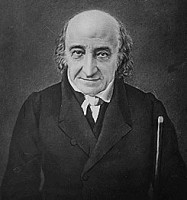
Over the weekend, I published an op-ed in The Des Moines Register encouraging the FCC to heed the lessons of the first national broadband plan, the one Secretary of the Treasury Albert Gallatin sent to Congress in 1808.

Gallatin was a remarkable figure in the early history of the federal government, and his accomplishments include being the longest-serving Treasury secretary (1801-1812) to date. His report on the Subject of Public Roads and Canals, completed at the request of Congress, remains one of the seminal documents in the history of American infrastructure. It is a masterpiece of dispassionate policy-making and clear-headed writing.

Alas, the document is available nowhere online, and the only in-print copy I can find is published by the aptly-named Dodo Press. This is indeed unfortunate given the renewed interest in network infrastructure as a form of national technology. The NBP published in March by the FCC, despite its nearly 400 pages and thousands of footnotes, makes no reference to Gallatin or his plan. Continue reading →

The Federal Trade Commission is reportedly on the verge of suing to block Google’s proposed acquisition of mobile advertising firm AdMob. The deal’s antitrust implications were discussed in a panel earlier this month on Capitol Hill featuring Berin Szoka. (For other interesting perspectives on the topic, see Geoff Manne and Tom Lenard).

In an opinion essay on Forbes.com this week, I argue that the FTC should approve Google’s acquisition of AdMob without conditions:

FTC Should Green-light Google AdMob Deal

by Ryan Radia

Google competes in many markets, but its most pressing threat comes not from a rival but from antitrust authorities. The Federal Trade Commission is reportedly on the verge of filing a lawsuit against Google to block its proposed $750 million acquisition of mobile advertising company AdMob. Yet antitrust fears about Google are misplaced. Government intervention would harm the very consumer interests the FTC is supposed to protect.

As the government prepares for a potential court battle against Google, the budding mobile advertising market is evolving before our very eyes. Just two weeks ago Apple launched iAd, a mobile advertising platform aimed at the world’s 50 million iPhone users. And Microsoft is in talks to acquire Millenial Media, another major player in mobile advertising, according to Business Insider.

Meanwhile, smart phone use is increasing rapidly–and opportunities for entry in the mobile advertising market are increasing with it. Can Google, armed with AdMob’s advertising platform, succeed in gaining the top spot in mobile advertising? Perhaps — but only if Google-AdMob manages to outcompete and out-innovate rivals that have deep pockets and brilliant engineers of their own.

What tomorrow’s mobile ad market will look like if Google and AdMob join forces is anybody’s guess. Trying to predict how a proposed merger or acquisition will impact consumers is difficult, if not impossible.

Continue reading →

Wine (and beer) lovers who want to order hard-to-get vintages online have benefited greatly from federal court decisions that say state alcohol laws cannot discriminate against out-of-state sellers. Federal legislation introduced last week could threaten electronic commerce as it further entrenches middlemen who normally profit from every bottle of alcohol that passes from producers to consumers.

To understand what’s going on, you have to know something about Commerce Clause litigation. I’m not a lawyer, though I once played the teetotaling William Jennings Bryan character in a high school production of Inherit the Wind.  This proves my motives are pure. And since a lot of lawyers practice economics without a license, I figure I’ll return the favor.

The Commerce Clause of the US Constitution says that Congress, not the states, can regulate interstate commerce. A longstanding judicial interpretation, the “dormant” Commerce Clause, holds that if Congress has not chosen to regulate some aspect of interstate commerce, that means Congress doesn’t want the states to regulate it either.  So, normally a state can regulate interstate commerce only if Congress has given explicit permission.

If state law discriminates against out-of-state sellers who compete with in-state sellers, the state is regulating interstate commerce.  A state is not allowed to do this unless it can prove the discrimination is necessary to accomplish some clear state purpose that cannot be accomplished in some other way. States have to present evidence that proves these points, not just make arguments. 

The 21st Amendment, which repealed Prohibition, gave states the right to regulate alcohol.  Recent court cases involving direct wine shipment clarified that when states regulate alcohol, they must still obey the Commerce Clause. This makes good sense. Imagine if the 21st Amendment freed states from the rest of the Constitution when they regulate alcohol. The police could break into your house without warning if they imagined you might give your 20-year-old a beer, but they’d still need a search warrant if they thought you were cooking meth. 

In Granholm v. Heald (2005), the Surpeme Court said that states could either allow in-state and out-of-state sellers to ship wine directly to consumers, or prohibit it for both, but states couldn’t ban direct shipment for out-of-state sellers and allow it for in-state sellers. In response, most states have liberalized their direct shipment laws rather than making them more restrictive. In Family Wine Makers of California v. Jenkins (2008), federal courts said that an ostensibly neutral law that had a discriminatory effect on out-of-state sellers was also unconstitutional. Massachusetts had enacted a law that allowed only wineries producing 30,000 gallons or less to ship directly to consumers; the production cap was large enough to allow all in-state wineries to direct ship but small enough to exclude 637 larger out-of-state wineries that produce 98 percent of all wine in the United States.  The judge’s opinion essentially said, “By their fruits you shall know them,” and it reserved special grapes of wrath for the blatantly protectionist motives voiced by advocates of the law. Massachusetts appealed this decision to the First Circuit Court of Appeals, lost, and on April 12 decided not to appeal to the Supreme Court.

On April 15, Massachusetts Rep. Bill Delahunt introduced federal legislation that would turn alcoholic Commerce Clause litigation sideways. The legislation makes four big changes in the rules of the game:

  1. It says that states may not “facially discriminate without justification.” This standard might reverse Granholm, because the state laws were clearly discriminatory but the states offered justifications. It would likely reverse Family Wine Makers, because the law was “facially” neutral but had discriminatory effects. (Of course, if this thing passes, I’d be delighted to see a consumer or winery plaintiff prove me wrong.)
  2. It repeals the “dormant” Commerce Clause for alcohol by stating that congressional silence on interstate commerce in alcohol should not be interpreted as a prohibition on state regulation of interstate commerce in alcohol.
  3. It shifts the burden of proof by requiring that anyone challenging a state alcohol law must prove “by clear and convincing evidence” that the law is invalid. Normally, states have the obligation to present evidence that a discriminatory law accomplishes a state purpose and is no more discriminatory than necessary.  
  4. Any state law that burdens interstate commerce or contradicts any other federal law (!) would be upheld unless the person challenging it proves that the state law has no effect on temperance, orderly markets, tax collection, the structure of the distribution system, or underage drinking.  Since there’s plenty of economic evidence that state alcohol laws increase prices, a state could argue its laws reduce consumption and promote temperance, and the law would be upheld.  In other words, any state alcohol law that harms consumers by increasing prices would automatically be OK, even if it blatantly conflicted with other federal laws (such as antitrust laws, which are intended to protect consumers from the high prices associated with monopoly) or the Commerce Clause.

Word on the street is that the biggest pushers of this legislation are the beer wholesalers. Since most of this litigation has involved wine, what’s going on here?

The real goal of this legislation is not harrassing wineries that want to ship a few bottles to out-of-state customers. The real goal is to preserve anti-competitive state laws that force brewers, wine makers, and distillers to market most of their product through beer, wine, and spirits wholesalers, instead of marketing directly to retailers and restaurants. The proposed legislation would effectively insulate these state laws from challenge under the Commerce Clause, federal antitrust laws, or any other federal laws that might give alcohol producers and consumers some leverage to break the wholesalers’ lock on the market.

Call it states’ rights kool-aid with a chaser of economic protectionism.  A strange brew indeed.

I published an opinion piece today for CNET arguing against recent calls to reclassify broadband Internet as a “telecommunications service” under Title II of the Communications Act.

The push to do so comes as supporters of the FCC’s proposed Net Neutrality rules fear that the agency’s authority to adopt them under its so-called “ancillary jurisdiction” won’t fly in the courts.  In January, the U.S. Court of Appeals for the D.C. Circuit heard arguments in Comcast’s appeal of sanctions levied against the cable company for violations of the neutrality principles (not yet adopted under a formal rulemaking).  The three-judge panel expressed considerable doubt about the FCC’s jurisdiction in issuing the sanctions during oral arguments.  Only the published opinion (forthcoming) will matter, of course, but anxiety is growing.

Solving the Net Neutrality jurisdiction problem with a return to Title II regulation is a staggeringly bad idea, and a counter-productive one at that.  My article describes the parallel developments in “telecommunications services” and the largely unregulated “information services” (aka Title I) since the 1996 Communications Act, making the point that life for consumers has been far more exciting—and has generated far more wealth–under the latter than the former.

Under Title I, in short, we’ve had the Internet revolution.  Under Title II, we’ve had the decline and fall of basic wireline phone service, boom and bust in the arbitraging competitive local exchange market, massive fraud in the bloated e-Rate program, and the continued corruption of local licensing authorities holding applications hostage for legal and illegal bribes.

Continue reading →

I’m quoted briefly in a story today in E-Commerce Times (see “Apple’s Patent Attack:  This Too May be Overhyped” by Erika Morphy) about the patent lawsuit filed this week by Apple against rival mobile device maker HTC.

Apple, of course, produces the iPhone, while HTC makes Google’s Nexus One and other devices that run on Google’s Android operating system.

So right from the start this case looks less like a simple patent dispute and more like a warning shot over Google’s bow.  The two companies are increasingly becoming rivals.  In August of last year, Google CEO Eric Schmidt resigned from Apple’s board.  Apple CEO Steve Jobs wrote at the time, “Unfortunately, as Google enters more of Apple’s core businesses, with Android and now Chrome OS, Eric’s effectiveness as an Apple Board member will be significantly diminished….” Continue reading →

Today’s The Wall Street Journal Europe published an editorial that Alberto Mingardi of Istituto Bruno Leoni and I penned about the competition complaints brought against Google in Europe.

The EU Searches for a Monopolist, Finds Google

If policy makers set the terms in a primitive year like 2010, nobody will have to respond to Google.

By WAYNE CREWS AND ALBERTO MINGARDI

Google isn’t a monopoly now, but the more it tries to become one, the better it will be for us all. Competition works in this way: Capitalist enterprises strive to gain in profits and market share. In turn, competitors are forced to respond by trying to improve their offerings. Innovation is the healthy output of this competitive game. The European Commission, while pondering complaints against the Internet search giant, might consider this point.

Google has been challenged by a German, a British, and a French Web site, for its dominant position in the market for Web search and online advertisement. The U.S. search engine is said to be imposing difficult terms and conditions on competitors and partners, who are now calling regulators into action. Google’s search algorithm is accused of being “biased” by business partners and competing publishers alike.

Before resorting to the old commandments of antitrust, we should consider that the Internet world is still largely impervious and unknown to anybody—including regulators. We are in terra incognita, and nobody knows the likely evolution of the market. But one thing is for sure: Online search can’t evolve properly if it’s improperly regulated—no matter the stage of evolution.

Continue reading →

Last July, Adam Thierer and I argued in a Forbes.com piece that the Microsoft/Yahoo! search partnership should be cause for “celebration among as a good thing for consumers. By providing a strong competitor with a combined 28% market share, the deal should also be a source of relief at Google, which has come under increasing attack for its supposed market dominance.” Today, 205 days later, the companies have finally announced that EU and US antitrust regulators have approved their deal.

So… how does a delay of nearly seven months help consumers? Wouldn’t we be better off if the two companies had been able to start working together immediately to develop a stronger search engine competitor without this “Mother, May I?” routine?

Last year, I described how Microsoft’s delayed entry into search advertising put them at a serious disadvantage in competing with Google. (The company dithered over buying search ad startup Overture and ultimately decided to build its own system—which proved a serious miscalculation.) I’ll just reiterate what we said about the Yahoo!/Microsoft deal when it was first announced.

Yahoo!/Microsoft pact is just the latest pairing of Web 1.0 titans struggling to reinvent themselves and compete with Google, a titan that still thinks of itself as a start-up. All three companies will struggle to meet new challenges as search evolves toward the social(reflecting what your friends like), the semantic (reflecting the precise, rather than presumed, meanings of Web content), the personalized (reflecting your own preferences) and the interactive (including user-generated comments or reviews)…. Continue reading →

The Ticketmaster-Live Nation antitrust saga has come to a bittersweet end. Earlier this week the Justice Department finally approved the merger between the two firms, just shy of one year after it was announced.

While a number antitrust experts had speculated that the Justice Department might seek an injunction to block the deal outright, the DoJ ultimately opted to approve the deal while subjecting Ticketmaster-Live Nation to several conditions that are supposed to promote competition in the events marketplace. Under the terms of the consent decree, the combined firm will be required to license its ticketing software to competitor Anschutz Entertainment Group and divest Paciolan, a ticketing subsidiary of Ticketmaster. Ticketmaster-Live Nation also faces ten years of monitoring by antitrust officials to “prevent anticompetitive bundling of services.”

Ticketmaster has long been a controversial firm among concertgoers, frequently drawing consumers’ ire for charging hefty “convenience” fees and offering customer service that’s not exactly stellar. But it’s important to remember that today’s entertainment market is more fragmented than ever, and consumers have a huge array of choices for listening to music and viewing live events. Even YouTube is getting into the business of airing live events. The video site has broadcast several live events already, including U2’s Rose Bowl performance in October 2009, and is eyeing the pay-per-view live streaming market as well.

So it’s not hard to see why consolidation is taking place in the event ticketing and promotion markets. Economists have demonstrated that vertical integration, done properly, often results in sizable efficiencies, translating into overall welfare gains for consumers. Together, Ticketmaster and Live Nation are in a stronger position than before to offer value to event venues and promote concerts and shows. And as much we all hate service fees, in industries characterized by high fixed costs and declining marginal unit costs – like ticketing – big per-unit “markups” are often necessary to induce businesses to compete and innovate. While Ticketmaster may not be the most innovative company in the world, the firm faces an uncertain future as its contracts with venues come up for renewal. If Ticketmaster really is harming concertgoers – and by the way, there’s no clear evidence that it is – it will be disciplined not only by concert lovers, but by venues and artists as well. Derailing a potentially efficient business arrangement simply because it might not work out, whether in the event ticketing market or the cable television market, results in harm to consumers.

Continue reading →

As always, this year’s “State of the Net” conference features a variety of breakout sessions from which to choose and, sadly, until I figure out a way to clone myself, I can’t cover them all. So, I decided to sit in on the panel about “Antitrust in the Internet Era,” since it’s a subject I find of great interest. It featured the following lineup:

  • David Balto, Center for American Progress (moderator)
  • Brian Bieron, Senior Director of Federal Affairs, eBay
  • Joseph Farrell, Director of the Bureau of Economics, Federal Trade Commission
  • Roberta Katz, U.S. Department of Justice
  • Catherine Sandoval, Santa Clara University School of Law

Here’s a summary of some of the highlights:

Continue reading →