 One of the themes you come across again and again in public policy debates about privacy, advertising, marketing, or even free speech battles, is the notion that the public at large is made up of mindless sheep being duped at every turn. And, as Berin Szoka and I noted in our paper “What Unites Advocates of Speech Controls & Privacy Regulation?” if you buy into the argument that consumers are basically that stupid then it logically follows that people cannot be trusted or left to their own devices. Thus, government must intervene and establish a baseline “community standard” on behalf of the entire citizenry to tell them what’s best for them.
But there are good reasons to question the premise that consumers are blind to efforts to persuade or influence them — regardless of what type of media content or communications efforts we are talking about. I was recently reading Communication Power by Manuel Castells and liked what he had to say about how so many media critics make this false assumption. Castells rightly notes:
Interestingly enough, critical theorists of communication often espouse [a] one-sided view of the communications process. By assuming the notion of a helpless audience manipulated by corporate media, they place the source of social alienation in the realm of consumerist mass communication. And yet, a well-established stream of research, particularly in the psychology of communications, shows the capacity of people to modify the signified of the messages they receive by interpreting them according to their own cultural frames, and by mixing the messages from one particular source with their variegated range of communicative practices. (p. 127)
That’s exactly right, and it is even more true in an age of ubiquitous, interactive communications technologies. “The people formerly known as the audience” have the unprecedented ability to talk back, to compare notes, to collectively criticize and hold accountable those who previously held all the cards in the mass media age of the past. Most consumers are perfectly capable of judging the merits of advertising, commercial messages, or other content on their own; they cast a skeptical eye toward most claims but process those claims alongside other counter-claims, independent judgments, informational inputs, and “cultural frames,” as Castells rightly argues. We need to give the public some credit.
I’ve always generally agreed with the conventional wisdom about micropayments as a method of funding online content or services: Namely, they won’t work. Clay Shirky, Tim Lee, and many others have made the case that micropayments face numerous obstacles to widespread adoption. The primary issue seems to be the “mental transaction cost” problem: People don’t want to be diverted–even for just a few seconds–from what they are doing to pay a fee, no matter how small. [That is why advertising continues to be the primary monetization engine of the Internet and digital services.]
 That being said, I keep finding examples of how micropayments do work in some contexts and it has kept me wondering if there’s still a chance for micropayments to work in other contexts (like funding media content). For example, I mentioned here before how shocked I was when I went back and looked at my eBay transactions for the past couple of years and realized how many “small-dollar” purchases I had made via PayPal (mostly dumb stickers and other little trinkets). And the micropayment model also seems to be doing reasonably well in the online music world. In January 2009, Apple reported that the iTunes Music Store had sold over 6 billion tracks.
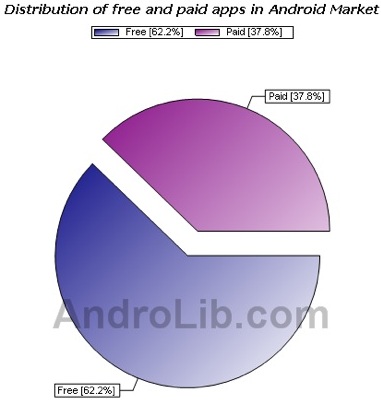
And then there are mobile application stores. Just recently I picked up a Droid and I’ve been taking advantage of the rapidly growing Android marketplace, which recently hit the 20,000 apps mark. Like Apple’s 100,000-strong App Store, there’s a nice mix of paid and free apps, and even though I’m downloading mostly freebies, I’ve started buying more paid apps. Many of them are “upsells” from free apps I downloaded. In most cases, they are just 99 cents. A few examples of paid apps I’ve downloaded or considered buying: Stocks Pro, Mortgage Calc Pro, Currency Guide, Photo Vault, Weather Bug Elite, and Find My Phone. And there are all sorts of games, clocks, calendars, ringtones, heath apps, sports stuff, utilities, and more that are 99 cents or $1.99. Some are more expensive, of course.
Continue reading →
Today, Berin Szoka and I both testified at the first of three Federal Trade Commission workshops on “Exploring Privacy.” Today’s all-day event featured five panel discussions, and remarks by FTC Chairman Jon Leibowitz, Commissioner Pamela Jones Harbour, and David C. Vladeck, Director of the FTC’s Bureau of Consumer Protection. Our TLF co-blogging colleague Jim Harper also testified on the first panel of the day on “Benefits and Risks of Collecting, Using, and Retaining Consumer Data.” I was on the second panel of the day on “Consumer Expectations and Disclosures.” And Berin was on the third panel on “Online Behavioral Advertising.” The fourth panel was on “Information Brokers” and the fifth panel was on “Exploring Existing Regulatory Frameworks.” On my panel, we discussed the usefulness of privacy polls and surveys. I attempted to make a few simple points when asked for my opinions:
- While privacy polls and surveys may offer us some interesting insights into how some in the public think about advertising and privacy in the abstract, ultimately, they are no substitute for real-world experiments in which people make real choices, in real time, often with real money, and face many real trade-offs. [See this paper.]
- Moreover, such polls and surveys fail to account for the fact that consumers are empowered with real privacy controls so they can make the privacy choices that are right for them, rather than a one-size-fits-all choice imposed by someone else. [See this ongoing series and this paper.]
- (1) & (2) are especially the case since privacy is a highly subjective condition. [See this paper by Jim Harper.]
- It remains unclear what the harms are that we are trying to protect consumers against. [See this paper and this blog post.]
- Because of (1), (2), (3), and (4) we need to understand that rational ignorance may often be at work here. Many consumers likely won’t feel the need to read privacy policies or take steps to “protect their privacy” online.
Continue reading →
The Internet is massive. That’s the ‘no-duh’ statement of the year, right? But seriously, the sheer volume of transactions (both economic and non-economic) is simply staggering. Consider a few factoids to give you a flavor of just how much is going on out there:
- In 2006, Internet users in the United States viewed an average of 120.5 Web pages each day.
- There are over 1.4 million new blog posts every day.
- Social networking giant Facebook reports that each month, its over 300 million users upload more than 2 billion photos, 14 million videos, and create over 3 million events. More than 2 billion pieces of content (web links, news stories, blog posts, notes, photos, etc.) are shared each week. There are also roughly 45 million active user groups on the site.
- YouTube reports that 20 hours of video are uploaded to the site every minute.
- Amazon reported that on December 15, 2008, 6.3 million items were ordered worldwide, a rate of 72.9 items per second.
- Every six weeks, there are 10 million edits made to Wikipedia.
Now, let’s think about how some of our lawmakers and media personalities talk about the Internet. If we were to judge the Internet based upon the daily headlines in various media outlets or from the titles of various Congressional or regulatory agency hearings, then we’d be led to believe that the Internet is a scary, dangerous place. That ‘s especially the case when it comes to concerns about online privacy and child safety. Everywhere you turn there’s a bogeyman story about the supposed dangers of cyberspace.
But let’s go back to the numbers. While I certainly understand the concerns many folks have about their personal privacy or their child’s safety online, the fact is
the vast majority of online transactions that take place online each and every second of the day are of an entirely harmless, even socially beneficial nature. I refer to this disconnect as the “problem of proportionality” in debates about online safety and privacy. People are not just making mountains out of molehills, in many cases they are just making the molehills up or blowing them massively out of proportion. Continue reading →
Adam Thierer and I will be participating in two separate panels at the FTC’s December 7 “Exploring Privacy” workshop discussing, respectively, surveys & expectations and online behavioral advertising. Below is the cover letter I filed as part of my comments (PDF & Scribd), along with four past PFF publications and a working paper on the benefits of online advertising.
Privacy Trade-Offs: How Further Regulation Could Diminish Consumer Choice, Raise Prices, Quash Digital Innovation & Curtail Free Speech
In general, we at PFF have argued that any discussion about regulating the collection, sharing, and use of consumer information online must begin by recognizing the following:
- Privacy is “the subjective condition that people experience when they have power to control information about themselves and when they exercise that power consistent with their interests and values.”
[1]
- As such, privacy is not a monolith but varies from user to user, from application to application and situation to situation.
- There is no free lunch: We cannot escape the trade-off between locking down information and the many benefits for consumers of the free flow of information.
- In particular, tailored advertising offers significant benefits to users, including potentially enormous increases in funding for the publishers of ad-supported content and services, improved information about products in general, and lower prices and increased innovation throughout the economy.
- Tailored advertising increases the effectiveness of speech of all kinds, whether the advertiser is “selling” products, services, ideas, political candidates or communities.
With these considerations in mind, policymakers must ask four critical questions:
- What exactly is the “harm” or market failure that requires government intervention?
- Are there “less restrictive” alternatives to regulation?
- Will regulation’s costs outweigh its supposed benefits?
- What is the appropriate legal standard for deciding whether further government intervention is required? Continue reading →
On Friday, the Federal Communications Commission (FCC) released a new Notice of Inquiry entitled, “Empowering Parents and Protecting Children in an Evolving Media Landscape” (MB Docket No. 09-194). The purpose of this investigation is to:
seek information on the extent to which children are using electronic media today, the benefits and risks these technologies bring for children, and the ways in which parents, teachers, and children can help reap the benefits while minimizing the risks. (p. 2)… Our goal with this NOI is to gather data and recommend-ations from experts, industry, and parents that will enable us to identify actions that all stakeholders can take to enable parents and children to navigate this promising electronic media landscape safely and successfully. (p. 3)
This
Notice builds on the FCC’s August 31st Report to Congress (“Implementation of the Child Safe Viewing Act; Examination of Parental Control Technologies for Video or Audio Programming”) that was required pursuant to the “Child Safe Viewing Act of 2007,” which Congress passed last year and President Bush signed last December. The goal of that bill and the FCC’s proceeding (MB Docket No. 09-26) was to study “advanced blocking technologies” that “may be appropriate across a wide variety of distribution platforms, including wired, wireless, and Internet platforms.” [I filed 150+ pages worth of comments in that proceeding, and here’s my analysis of why the bill and the FCC’s proceedings are worth monitoring. In previous posts here, I also listed all the major filings and reply comments that were submitted to the FCC in the matter.]
While the FCC’s new
Notice outlines several positive impacts that media use may have for children, it then goes on to itemize a variety of concerns about media exposure: Continue reading →
Just read this AP article that reported on a Tuesday hearing of the Ohio Supreme Court about an Ohio “harmful to minors” law. According to the article, the statute makes it illegal to distribute harmful material to minors through “direct communications by people who know or have reason to believe the recipient is a minor.”
The case is in the 6th Circuit Court of Appeals, which has asked the Ohio Supreme Court to interpret “mass distribution” and “personally directed devices.” Per the law:
2) A person remotely transmitting information by means of a method of mass distribution does not directly sell, [etc.] … if either of the following applies:
(a) The person has inadequate information to know or have reason to believe that a particular recipient of the information or offer is a juvenile.
(b) The method of mass distribution does not provide the person the ability to prevent a particular recipient from receiving the information.
In the hearing (see the video) Justice Robert Cupp coins this beauty of a statement: “It’s not really the statute that’s confusing here, it’s the technologies.” Judge say what?
Isn’t the whole point of a statute to be applied to factual situations? Anything can make sense in the abstract (even law!). But applied to everyday life, the simplistic becomes complex — and can have unintended consequences. Continue reading →
Should the federal government regulate what blogger’s blog? Yes, said the Federal Trade Commission yesterday — at least when it comes to product endorsements.
At issue were the FTC’s guidelines concerning the use of endorsements in advertising. These guidelines, among other things, require paid endorsers of products to disclose their relationships with advertisers. The goal is a good one, to prevent deception and fraud. In practice, the lines are hard to draw — what exactly is an endorsement? What constitutes payment? It gets even harder in today’s world of user-generated media, in which much advertising is by consumers themselves on blogs and elsewhere, sharing recommendations and opinions on just about everything. Continue reading →
Middlemen have been criticized as unnecessary for centuries, but as Mike Munger (Chairman of the Duke Political Science department and my undergrad mentor) explains, they are actually “market makers,” rather than parasites (or listen to his appearance on Russ Robert’s excellent EconTalk podcast). Warren Lee explains why ad networks—the middlemen who sell publishers’ (website operators) empty ad inventory to advertisers—serve such a critical role in making “Free!” possible for consumers by sustaining especially the Long Tail of online publishers: Continue reading →

 The Technology Liberation Front is the tech policy blog dedicated to keeping politicians' hands off the 'net and everything else related to technology.