 Ronald J. Deibert is the director of The Citizen Lab at the University of Toronto’s Munk School of Global Affairs and the author of an important new book, Black Code: Inside the Battle for Cyberspace, an in-depth look at the growing insecurity of the Internet. Specifically, Deibert’s book is a meticulous examination of the “malicious threats that are growing from the inside out” and which “threaten to destroy the fragile ecosystem we have come to take for granted.” (p. 14) It is also a remarkably timely book in light of the recent revelations about NSA surveillance and how it is being facilitated with the assistance of various tech and telecom giants.
The clear and colloquial tone that Deibert employs in the text helps make arcane Internet security issues interesting and accessible. Indeed, some chapters of the book almost feel like they were pulled from the pages of techno-thriller, complete with villainous characters, unexpected plot twists, and shocking conclusions. “Cyber crime has become one of the world’s largest growth businesses,” Deibert notes (p. 144) and his chapters focus on many prominent recent examples, including cyber-crime syndicates like Koobface, government cyber-spying schemes like GhostNet, state-sanctioned sabotage like Stuxnet, and the vexing issue of zero-day exploit sales.
Deibert is uniquely qualified to narrate this tale not just because he is a gifted story-teller but also because he has had a front row seat in the unfolding play that we might refer to as “How Cyberspace Grew Less Secure.” Continue reading →
[UPDATE
4/30/13: This article was subsequently published in Volume 65, Issues 2 of the Federal Communications Law Journal in April 2013. The links below now point to the final FCLJ version.]
The Mercatus Center at George Mason University has just released a new paper by Brent Skorup and me entitled, “Uncreative Destruction: The War on Vertical Integration in the Information Economy.” Brent, who is the research director for the Information Economy Project at the George Mason University School of Law, and I have been working on this paper since the Spring and we are looking forward to getting it published in a law review shortly. The paper focuses on Tim Wu’s “separations principle” for the digital economy, something I’ve spent some time critiquing here in the past. Here’s the introduction from the 44-page paper that Brent and I just released:
Are information sectors sufficiently different from other sectors of the economy such that more stringent antitrust standards should be applied to them preemptively? Columbia Law School professor Tim Wu responds in the affirmative in his book The Master Switch: The Rise and Fall of Information Empires. Having successfully pushed net-neutrality regulation into the policy spotlight, Wu has turned his attention to what he regards as excessive market concentration and threats to free speech throughout the entire information economy.To support his call for increased antitrust intervention, Wu explains his view of competition in the information economy—a view that deviates substantially from current mainstream antitrust theory.
Continue reading →
The Mercatus Center at George Mason University has just released my new white paper, “The Perils of Classifying Social Media Platforms as Public Utilities.” [PDF] I first presented a draft of this paper last November at a Michigan State University conference on “The Governance of Social Media.” [Video of my panel here.]
In this paper, I note that to the extent public utility-style regulation has been debated within the Internet policy arena over the past decade, the focus has been almost entirely on the physical layer of the Internet. The question has been whether Internet service providers should be considered “essential facilities” or “natural monopolies” and regulated as public utilities. The debate over “net neutrality” regulation has been animated by such concerns.
While that debate still rages, the rhetoric of public utilities and essential facilities is increasingly creeping into policy discussions about other layers of the Internet, such as the search layer. More recently, there have been rumblings within academic and public policy circles regarding whether social media platforms, especially social networking sites, might also possess public utility characteristics. Presumably, such a classification would entail greater regulation of those sites’ structures and business practices.
Proponents of treating social media platforms as public utilities offer a variety of justifications for regulation. Amorphous “fairness” concerns animate many of these calls, but privacy and reputational concerns are also frequently mentioned as rationales for regulation. Proponents of regulation also sometimes invoke “social utility” or “social commons” arguments in defense of increased government oversight, even though these notions lack clear definition.
Social media platforms do not resemble traditional public utilities, however, and there are good reasons why policymakers should avoid a rush to regulate them as such. Continue reading →
 In my work critiquing the Lessig-Zittrain-Wu school of thinking–which fears the decline and fall of online “openness” and digital “generativity”–I have argued that, while there is no such thing as perfect “openness,” things are actually getting more open and generative all the time. All that really counts from my perspective is that we are witnessing healthy innovation across the generativity continuum.
Will some devices and platforms continue to be “closed”? Sure. Think Apple and cable set-top boxes. But (a) there’s a ton of innovation taking place on top of those supposedly “closed” platforms and (b) there are other options consumers can exercise if they don’t like those content /information delivery methods. [See this chapter from the Next Digital Decade book for my fuller critique.]
And, even if one adopts a rigid Zittrainian view of openness and generativity, each day seems to bring more good news. From that perspective it’s hard to find a better headline than this one: ”
Smartphone Makers Bow to Demands for More Openness.” That’s from ArsTechnica today and it refers to the fact that smartphone giant HTC just announced it would no longer attempt to lock the bootloader on its smartphones, meaning geeks like me can root and hack their devices to their heart’s content. As the Ars story notes:
Continue reading →
 Hanno F. Kaiser, a U.S. and EU antitrust lawyer and partner with Latham & Watkins LLP, has just released an important essay on a topic I have devoted much time to here over the years: the debate over the relative advantages of “open” vs. “closed” technological systems and the Lessig-Zittrain-Wu school of thinking about these issues.
Kaiser’s essay is entitled, ”
Are Closed Systems an Antitrust Problem?” and it appears in the latest edition of Competition Policy International. This essay is not to be missed. Kaiser’s terrific paper helps us better understand and debunk many of the myths and misperceptions that continue to riddle this debate. Here’s Kaiser’s key insight:
At bottom, the bad reputation of closed systems or walled gardens in the “open versus closed” debate is quite undeserved. Walled gardens generally benefit their environments—both in the real world and the digital realm. The primary purpose of a garden wall, after all, is to shelter plants from wind and frost, not to keep intruders out. In the protected space of the garden, flowers can grow that would not otherwise survive in the wild. Walled gardens thus deliberately create a microcosm that is different from the surrounding ecosystem. Therefore, as long as the garden does not take over the entire ecosystem, walled gardens increase, not reduce, overall diversity. From a competition policy perspective, enjoying the fruits of a walled garden is generally not a guilty pleasure.
Therefore, “as a policy matter, ‘open’ is not necessarily better than ‘closed’,” Kaiser argues, and elaborates as follows: Continue reading →
I’ve spent a great deal of time here defending “techno-optimism” or “Internet optimism” against various attacks through the years, so I was interested to see Cory Doctorow, a novelist and Net activist, take on the issue in a new essay at Locus Online. I summarized my own views on this issue in two recent book chapters. Both chapters appear in The Next Digital Decade and are labeled “The Case for Internet Optimism.” Part 1 is sub-titled “Saving the Net From Its Detractors” and Part 2 is called “Saving the Net From Its Supporters.” More on my own thoughts in a moment. But let’s begin with Doctorow’s conception of the term.
Doctorow defines “techno-optimism” as follows:
In order to be an activist, you have to be… pessimistic enough to believe that things will get worse if left unchecked, optimistic enough to believe that if you take action, the worst can be prevented. […]
Techno-optimism is an ideology that embodies the pessimism and the optimism above: the concern that technology could be used to make the world worse, the hope that it can be steered to make the world better.
What this definition suggests is that Doctorow has a very clear vision of what constitutes “good” vs. “bad” technology or technological developments. He turns to that dichotomy next as he seeks to essentially marry “techno-optimism” to a devotion to the free/open software movement and a rejection of “proprietary technology”: Continue reading →
 On numerous occasions here and elsewhere I have cited the enormous influence that Virginia Postrel’s 1998 book, The Future and Its Enemies, has had on me. Her “dynamist” versus “stasis” paradigm helps us frame and better understand almost all debates about technological progress. I cannot recommend that book highly enough.
In her latest Wall Street Journal column, Postrel considers what makes the iPad such a “magical” device and in doing so, she takes on the logical set forth in Jonathan Zittrain 2009 book, The Future of the Internet and How to Stop It, although she doesn’t cite the book by name in her column. You will recall that in that book and his subsequent essays, Prof. Zittrain made Steve Jobs and his iPhone out to be the great enemy of digital innovation — at least as Zittrain defined it. How did Zittrain reach this astonishing conclusion and manage to turn Jobs into a pariah and his devices into the supposed enemy of innovation? It came down to “generativity,” Zittrain said, by which he meant technologies or networks that invite or allow tinkering and all sorts of creative uses. Zittrain worships general-purpose personal computers and the traditional “best efforts” Internet. By contrast, he decried “sterile, tethered” digital “appliances” like the iPhone, which he claimed limited generativity and innovation, mostly because of their generally closed architecture.
In her column, Postrel agrees that the iPad is every bit as closed as Zittrain feared iPhone successor devices would be. She notes: “customers haven’t the foggiest idea how the machine works. The iPad is completely opaque. It is a sealed box. You can’t see the circuitry or read the software code. You can’t even change the battery.” But Postrel continues on to explain why the hand-wringing about perfect openness is generally overblown and, indeed, more than a bit elitist: Continue reading →
 Twitter could be in for a world of potential pain. Regulatory pain, that is. The company’s announcement on Friday that it would soon be cracking down on the uses of its API by third parties is raising eyebrows in cyberspace and, if recent regulatory history is any indicator, this high-tech innovator could soon face some heat from regulatory advocates and public policy makers. If this thing goes down as I describe it below, it will be one hell of a fight that once again features warring conceptions of “Internet freedom” butting heads over the question of whether Twitter should be forced to share its API with rivals via some sort of “open access” regulatory regime or “API neutrality,” in particular. I’ll explore that possibility in this essay. First, a bit of background.
Understanding Forced Access Regulation
In the field of communications law, the dominant public policy fight of the past 15 years has been the battle over “open access” and “neutrality” regulation. Generally speaking, open access regulations demand that a company share its property (networks, systems, devices, or code) with rivals on terms established by law. Neutrality regulation is a variant of open access regulation, which also requires that systems be used in ways specified by law, but usually without the physical sharing requirements. Both forms of regulation derive from traditional common carriage principles / regulatory regimes. Critics of such regulation, which would most definitely include me, decry the inefficiencies associated with such “forced access” regimes, as we prefer to label them. Forced access regulation also raises certain constitutional issues related to First and Fifth Amendment rights of speech and property. Continue reading →
Writing over at Forbes, Bret Swanson notes that the progression of information technology history isn’t going so well for those Net pessimists who, not so long ago, predicted that the sky was set to fall on consumers and that digital innovation was dying. Specifically, Swanson addresses the theories set forth by cyberlaw professors Lessig, Zittrain, and Wu (among others), whose theories about “perfect control,” the death of “generativity,” and the rise of the “master switch,” I have addressed here many time before. [See this compendium of TLF essays discussing “Problems with the Lessig-Zittrain-Wu Thesis.”] Swanson summarizes what went wrong with their gloomy Chicken Little theories and their predictions of the coming cyber end-times:
As the cloud wars roar, the cyber lawyers simmer. This wasn’t how it was supposed to be. The technology law triad of Harvard’s Lawrence Lessig and Jonathan Zittrain and Columbia’s Tim Wu had a vision. They saw an arts and crafts commune of cyber-togetherness. Homemade Web pages with flashing sirens and tacky text were more authentic. “Generativity” was Zittrain’s watchword, a vague aesthetic whose only definition came from its opposition to the ominous “perfect control” imposed by corporations dictating “code” and throwing the “master switch.”
In their straw world of “open” heros and “closed” monsters, AOL’s “walled garden” of the 1990s was the first sign of trouble. Microsoft was an obvious villain. The broadband service providers were
of course dangerous gatekeepers, the iPhone was too sleek and integrated, and now even Facebook threatens their ideal of uncurated chaos. These were just a few of the many companies that were supposed to kill the Internet. The triad’s perfect world would be mostly broke organic farmers and struggling artists. Instead, we got Apple’s beautifully beveled apps and Google’s intergalactic ubiquity. Worst of all, the Web started making money.
Swanson goes on to argue that, despite all the hang-wringing we’re heard from this triumvirate and their many, many disciples in the academic and regulatory activist world, things just keep getting more innovative, more generative, and yes, even more “open.” Continue reading →
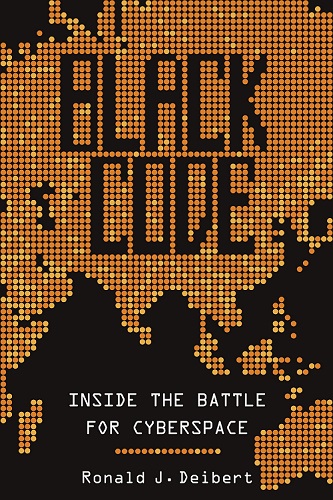 Ronald J. Deibert is the director of The Citizen Lab at the University of Toronto’s Munk School of Global Affairs and the author of an important new book, Black Code: Inside the Battle for Cyberspace, an in-depth look at the growing insecurity of the Internet. Specifically, Deibert’s book is a meticulous examination of the “malicious threats that are growing from the inside out” and which “threaten to destroy the fragile ecosystem we have come to take for granted.” (p. 14) It is also a remarkably timely book in light of the recent revelations about NSA surveillance and how it is being facilitated with the assistance of various tech and telecom giants.




 The Technology Liberation Front is the tech policy blog dedicated to keeping politicians' hands off the 'net and everything else related to technology.