Posts tagged as:

[This essay originally appeared on the AIER blog on May 28, 2019. The USA TODAY also ran a shorter version of this essay as a letter to the editor on June 2, 2019.]

In a hotly-worded USA Today op-ed last week, Senator Josh Hawley (R-Missouri) railed against social media sites Facebook, Instagram, and Twitter. He argued that, “social media wastes our time and resources,” and is “a field of little productive value” that have only “given us an addiction economy.” Sen. Hawley refers to these sites as “parasites” and blames them for a litany of social problems (including an unproven link to increased suicide), leading him to declare that, “we’d be better off if Facebook disappeared.”

As far as moral panics go, Sen. Hawley’s will go down as one for the ages. Politicians have always castigated new technologies, media platforms, and content for supposedly corrupting the youth of their generation. But Sen. Hawley’s inflammatory rhetoric and proposals are something we haven’t seen in quite some time.

He sounds like those fire-breathing politicians and pundits of the past century who vociferously protested everything from comic books to cable television, the waltz to the Walkman, and rock-and-roll to rap music. In order to save the youth of America, many past critics said, we must destroy the media or media platforms they are supposedly addicted to. That is exactly what Sen. Hawley would have us do to today’s leading media platforms because, in his opinion, they “do our country more harm than good.”

We have to hope that Sen. Hawley is no more successful than past critics and politicians who wanted to take these choices away from the public. Paternalistic politicians should not be dictating content choices for the rest of us or destroying technologies and platforms that millions of people benefit from. Continue reading →

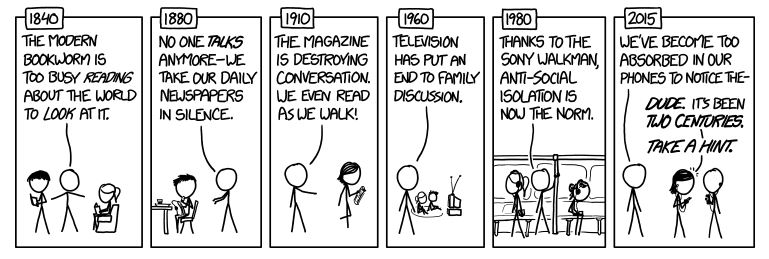
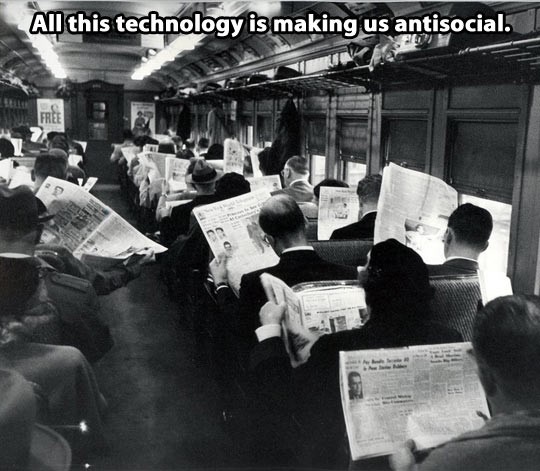
Last week, science writer Michael Shermer tweeted out this old xkcd comic strip that I had somehow missed before. Shermer noted that it represented, “another reply to pessimists bemoaning modern technologies as soul-crushing and isolating.” Similarly, there’s this meme that has been making the rounds on Twitter and which jokes about how newspapers made us as antisocial in the past much as newer technologies supposedly do today.

‏The sentiments expressed by the comic and that image make it clear how people often tend to romanticize past technologies or fail to remember that many people expressed the same fears about them as critics do today about newer ones. I’ve written dozens of articles about “moral panics” and “techno-panics,” most of which are cataloged here. The common theme of those essays is that, when it comes to fears about innovations, there really is nothing new under the sun. Continue reading →

I spend a lot of time here trying to debunk media “moral panics,” “techno-panics,” or unfounded hysteria over the impact of commercialism in general on kids. To believe what some politicians and regulatory agitators have to say, today’s youth always seem at the precipice of the moral abyss.  Our misguided youth are seemingly all going straight to hell and they dragging our culture and society down with them.

Except they’re not. It’s all the same old tripe we’ve heard one generation after another.  As the late University of North Carolina journalism professor Margaret A. Blanchard once noted: “[P]arents and grandparents who lead the efforts to cleanse today’s society seem to forget that they survived alleged attacks on their morals by different media when they were children. Each generation’s adults either lose faith in the ability of their young people to do the same or they become convinced that the dangers facing the new generation are much more substantial than the ones they faced as children.” And Thomas Hine, author of The Rise and Fall of the American Teenager, argues that: “We seem to have moved, without skipping a beat, from blaming our parents for the ills of society to blaming our children. We want them to embody virtues we only rarely practice. We want them to eschew habits we’ve never managed to break.”

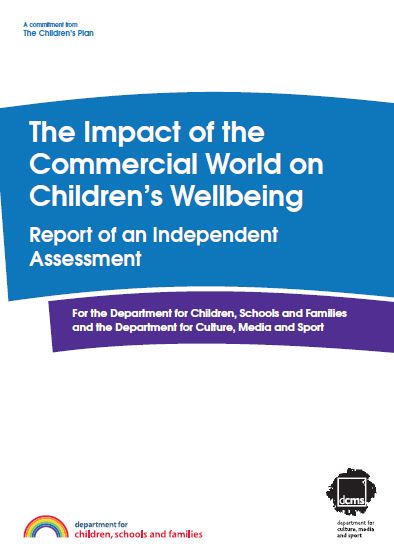
Anyway, I was reminded of this again today as I was finally reading through a report published last year by the U.K.’s Department for Children, Schools and Families and the Department for Culture, Media and Sport. It’s entitled “The Impact of the Commercial World on Children’s Wellbeing” and it is very much worth your attention. Several people had recommended I check it out in recent months, but I’m ashamed to say I am only now getting around to it as I prepare an amicus brief for the Supreme Court’s review of a California video game law.  But this U.K. report is not to be missed. Here are a few of the choice bits from the study: Continue reading →

Rep. Bart Stupak, (D-MI) recently introduced the ‘‘Online Age Verification and Child Safety Act’’ (H.R. 4059), which would require mandatory online age verification for “any pornographic website accessible by any computer located within the United States to display any pornographic material, including free content that may be available prior to the purchase of a subscription or product.”  The measure does not specify how such verification is to be administered, saying only that “any website or online service” must “establish and maintain a system of internal policies, procedures and controls to ensure that no such material is displayed to any user attempting to access their site without first verifying that the user is 18 years or older.”

In essence, the Stupak bill is the “Son of COPA,” or the Child Online Protection Act of 1998, a law that has been constitutionally tested and come up short during an epic, decade-long legal battle in which it was made clear that mandatory age verification is unwise, unworkable, and unconstitutional under the First Amendment.

COPA sought to make it a crime for someone to “knowingly” place materials online that were “harmful to minors.” The law provided an affirmative defense from prosecution, however, to those parties who made a “good faith” effort to “restrict[ ] access by minors to material that is harmful to minors” using credit cards or age verification schemes. COPA was immediately challenge, however, and a 10-year court battle ensued.  The law was blocked by lower courts because it was too sweeping in effect and because courts held that there were other “less restrictive means” that parents could use to deal with objectionable content — such as Internet filters.

COPA’s decade-long legal battle finally concluded in January 2009 when the U.S. Supreme Court refused to revisit the law.  COPA had already been reviewed by the Supreme Court twice before — in 2002 and 2004.  Thus, a third visit to the Supreme Court by COPA would have been something of a historical development in the world of First Amendment jurisprudence. But with the Supreme Court’s rejection of the government’s appeal in January, lower court rulings stood and COPA remained unconstitutional and unenforceable. The key recent legal battle occurred in the Third Circuit Court of Appeals, which upheld a lower court ruling striking down COPA. The Third Circuit’s full decision is here. And I penned a 3-part series on the lower court ruling by Judge Lowell Reed Jr., senior judge of the U.S. District Court for the Eastern District of Pennsylvania, here, here, and here. Also make sure to check out this summary of COPA’s legal journey that Alex Harris penned last November.

Many, many times here before I have documented my serious ongoing reservations about mandatory age verification.  [In particular, see this lengthy white paper and this event transcript for all the details.]  Moreover, as I pointed out in a recent PFF white paper (“Five Online Safety Task Forces Agree: Education, Empowerment & Self-Regulation Are the Answer“), every major online safety task force that has studied the possibility of mandatory age verification for the Internet has come to the same conclusion: It won’t work, it’s unconstitutional, and it raises serious privacy concerns. Down below the fold I have pulled some of the relevant language from the five online safety task forces that have met since 2000 and considered this issue.  Continue reading →

On July 27th, The Progress & Freedom Foundation hosted a Capitol Hill panel discussion entitled “Online Child Safety, Privacy, and Free Speech: An Overview of Challenges in Congress & the States.” The event featured remarks from:

  • Parry Aftab, Executive Director, WiredSafety.org
  • Todd Haiken, Senior Manager of Policy, Common Sense Media
  • Jim Halpert, Partner, DLA Piper
  • Berin Szoka, Senior Fellow, The Progress & Freedom Foundation

We’ve just released the transcript of the event, which I have also pasted down below the fold in a Scribd document reader. Also, the audio for this event can be heard by clicking below:

Download mp3

Here is the full event description: Continue reading →

Adam Thierer & I have just released a detailed examination (PDF) of brewing efforts to expand the Children’s Online Privacy Protection Act of 1998 to cover adolescents and potentially all social networking sites—an approach we call “COPPA 2.0.”

As Adam explained on Larry Magid’s CNET podcast, COPPA mandates certain online privacy protections for children under 13, most importantly that websites obtain the “verifiable consent” of a child’s parent before collecting personal information about that child or giving that child access to interactive functionality that might allow the child to share their personal information with others. The law was intended primarily to “enhance parental involvement in a child’s online activities” as a means of protecting the online privacy and safety of children.

Yet advocates of expanding COPPA—or “COPPA 2.0″—see COPPA’s verifiable parental consent framework as a means for imposing broad regulatory mandates in the name of online child safety and concerns about social networking, cyber-harassment, etc. Two COPPA 2.0 bills are currently pending in New Jersey and Illinois. The accelerated review of COPPA to be conducted by the FTC next year (five years ahead of schedule) is likely to bring to Washington serious talk of expanding COPPA—even though Congress clearly rejected covering adolescents age 13-16 when COPPA was first proposed back in 1998.

We’ll discuss some of the key points of our paper in a series of blog posts, but here are the top nine reasons for rejecting COPPA 2.0, in that such an approach would:

  • Burden the free speech rights of adults by imposing age verification mandates on many sites used by adults, thus restricting anonymous speech and essentially converging—in terms of practical consequences—with the unconstitutional Children’s Online Protection Act (COPA), another 1998 law sometimes confused with COPPA;
  • Burden the free speech rights of adolescents to speak freely on—or gather information from—legal and socially beneficial websites;
  • Hamper routine and socially beneficial communication between adolescents and adults;
  • Reduce, rather than enhance, the privacy of adolescents, parents and other adults because of the massive volume of personal information that would have to be collected about users for authentication purposes (likely including credit card data);

Continue reading →

Today’s USA Today features a debate between the editors and me on the question of the impact media has on children and what should be done about it. Their editorial argues that “Today’s mass media penetrate deeply and quietly, inflicting real damage on young children, an increasing body of research shows.” Specifically, they are referring to a new study commissioned by Common Sense Media (CSM), which claims that a review of 173 studies shows “that a strong correlation exists between greater exposure and adverse health outcomes.”

In my response entitled “Don’t Scapegoat Media,” which appears in its entirety down below the fold, I argue that “Media have long been a convenient scapegoat for the woes of the world,” and that we must be careful not to assume correlation equals causation when surveying the impact of media on kids. After all, I argue, “how do [those studies] account for the other variables that influence youth development, including broken homes, bad parents, socioeconomic status, troubled peer relations, poor schools and so on? And how is media exposure weighted relative to these other influences? Is a beer ad really as much of a negative influence as an alcoholic parent?” Again, read my entire response below. [Of course, even if one assumes some media has an impact on some kids, there are plenty of ways for parents and guardians to take control over the media in their lives, as I have shown in my big book on the subject.]

I was also quoted in this Washington Post article about the new CSM study on Tuesday. Continue reading →