Posts tagged as:

In a recent Senate Commerce Committee hearing on the Internet of Things, Senators Ed Markey (D-Mass.) and Richard Blumenthal (D-Conn.) “announced legislation that would direct the National highway Traffic Safety Administration (NHTSA) and the Federal Trade Commission (FTC) to establish federal standards to secure our cars and protect drivers’ privacy.” Spurred by a recent report from his office (Tracking and Hacking: Security and Privacy Gaps Put American Drivers at Risk) Markey argued that Americans “need the equivalent of seat belts and airbags to keep drivers and their information safe in the 21st century.”

Among the many conclusions reached in the report, it says, “nearly 100% of cars on the market include wireless technologies that could pose vulnerabilities to hacking or privacy intrusions.” This comes across as a tad tautological given that everything from smartphones and computers to large-scale power grids are prone to being hacked, yet the Markey-Blumenthal proposal would enforce a separate set of government-approved, and regulated, standards for privacy and security, displayed on every vehicle in the form of a “Cyber Dashboard” decal.

Leaving aside the irony of legislators attempting to dictate privacy standards, especially in the post-Snowden world, it would behoove legislators like Markey and Blumenthal to take a closer look at just what it is they are proposing and ask whether such a law is indeed necessary to protect consumers. Continue reading →

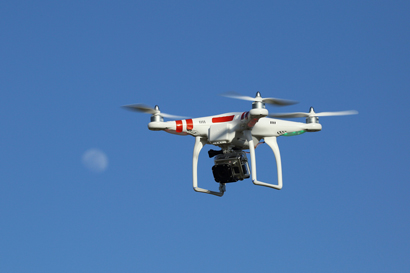
DroneThe use of unmanned aircraft systems, or “drones,” for private and commercial uses remains the subject of much debate. The issue has been heating up lately after Congress ordered the Federal Aviation Administration (FAA) to integrate UASs into the nation’s airspace system by 2015 as part of the FAA Modernization and Reform Act of 2012.

The debate has thus far centered mostly around the safety and privacy-related concerns associated with private use of drones. The FAA continues to move slowly on this front based on a fear that private drones could jeopardize air safety or the safety of others on the ground. Meanwhile, some privacy advocates are worried that private drones might be used in ways that invade private spaces or even public areas where citizens have a reasonable expectation of privacy. For these and other reasons, the FAA’s current ban on private operation of drones in the nation’s airspace remains in place.

But what about the speech-related implications of this debate? After all, private and commercial UASs can have many peaceful, speech-related uses. Indeed, to borrow Ithiel de Sola Pool’s term, private drones can be thought of as “technologies or freedom” that expand and enhance the ability of humans to gather and share information, thus in turn expanding the range of human knowledge and freedom.

A new Mercatus Center at George Mason University working paper, “News from Above: First Amendment Implications of the Federal Aviation Administration Ban on Commercial Drones,” deals with these questions.  This 59-page working paper was authored by Cynthia Love, Sean T. Lawson, and Avery Holton. (Love is currently a Law Clerk for Judge Carolyn B. McHugh in 10th Circuit U.S. Court of Appeals. Lawson and Holton are affliated with the Department of Communication at the University of Utah.)

“To date, little attention has been paid to the First Amendment implications of the [FAA] ban,” note Love, Lawson, and Holton. Their article argues that “aerial photography with UASs, whether commercial or not, is protected First Amendment activity, particularly for news-gathering purposes. The FAA must take First Amendment-protected uses of this technology into account as it proceeds with meeting its congressional mandate to promulgate rules for domestic UASs.” They conclude by noting that “The dangers of [the FAA’s] regulatory approach are no mere matter of esoteric administrative law. Rather, as we have demonstrated, use of threats to enforce illegally promulgated rules, in particular a ban on journalistic use of UASs, infringes upon perhaps our most cherished constitutional right, that of free speech and a free press.” Continue reading →

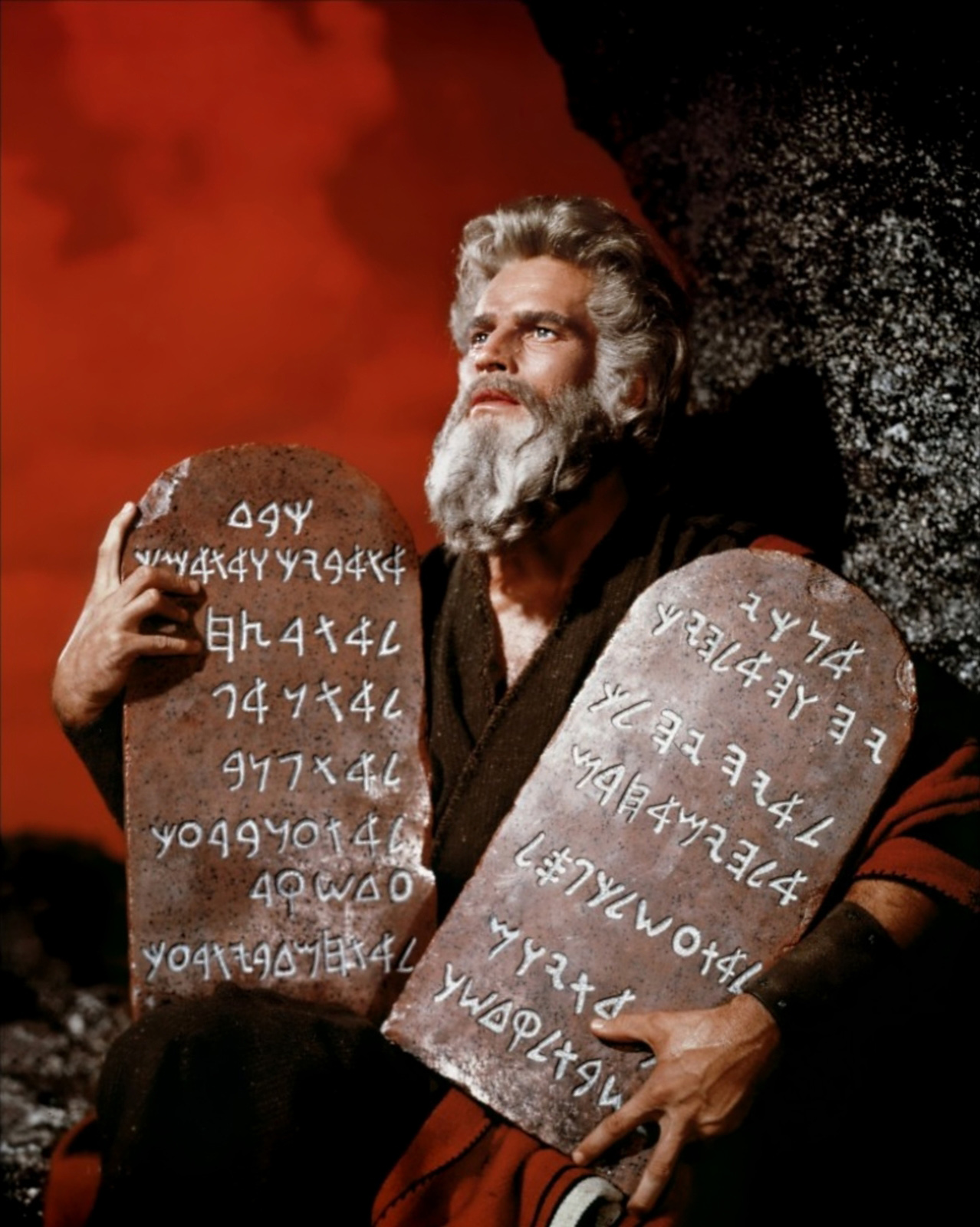
10 commandmentsWhat works well as an ethical directive might not work equally well as a policy prescription. Stated differently, what one ought to do it certain situations should not always be synonymous with what they must do by force of law.

I’m going to relate this lesson to tech policy debates in a moment, but let’s first think of an example of how this lesson applies more generally. Consider the Ten Commandments. Some of them make excellent ethical guidelines (especially the stuff about not coveting neighbor’s house, wife, or possessions). But most of us would agree that, in a free and tolerant society, only two of the Ten Commandments make good law: Thou shalt not kill and Thou shalt not steal.

In other words, not every sin should be a crime. Perhaps some should be; but most should not. Taking this out of the realm of religion and into the world of moral philosophy, we can apply the lesson more generally as: Not every wise ethical principle makes for wise public policy. Continue reading →

Here’s the first of two essays I’ve recently penned making “The Case for Internet Optimism.” This essay was included in the book, The Next Digital Decade: Essays on the Future of the Internet (2011), which was edited by Berin Szoka and Adam Marcus of TechFreedom.  In these essays, I identify two schools of Internet pessimism: (1) “Net Skeptics,” who are pessimistic about the Internet improving the lot of mankind; and (2) “Net Lovers,” who appreciate the benefits the Net brings society but who fear those benefits are disappearing, or that the Net or openness are dying.  (Regular readers of this blog will be familiar with these themes since I sketched them out in previous essays here such as, “Are You an Internet Optimist or Pessimist?” and “Two Schools of Internet Pessimism.”) The second essay is here.

This essay focuses on the first variant of Internet pessimism, which is rooted in general skepticism about the supposed benefits of cyberspace, digital technologies, and information abundance. The proponents of this pessimistic view often wax nostalgic about some supposed “good ‘ol days” when life was much better (although they can’t seem to agree when those were). At a minimum, they want us to slow down and think twice about life in the Information Age and how it’s personally affecting each of us.  Occasionally, however, this pessimism borders on neo-Ludditism, with some proponents recommending steps to curtail what they feel is the destructive impact of the Net or digital technologies on culture or the economy.  I identify the leading exponents of this view of Internet pessimism and their major works. I trace their technological pessimism back to Plato but argue that their pessimism is largely unwarranted. Humans are more resilient than pessimists care to admit and we learn how to adapt to technological change and assimilate new tools into our lives over time. Moreover, were we really better off in the scarcity era when we were collectively suffering from information poverty?  Generally speaking, despite the challenges it presents society, information abundance is a better dilemma to be facing than information poverty.  Nonetheless, I argue, we should not underestimate or belittle the disruptive impacts associated with the Information Revolution.  But we need to find ways to better cope with turbulent change in a dynamist fashion instead of attempting to roll back the clock on progress or recapture “the good ‘ol days,” which actually weren’t all that good.

Down below, I have embedded the entire chapter in a Scribd reader, but the essay can also be found on the TechFreedom website for the book as well as on SSRN.  I have also includes two updated tables that appeared in my old “optimists vs. pessimists” essay.  The first lists some of the leading Internet optimists and pessimists and their books. The second table outlines some of the major lines of disagreement between these two camps and I divided those disagreements into (1) Cultural / Social beliefs vs. (2) Economic / Business beliefs.

Continue reading →

Check out national security reporter Shaun Waterman’s report on lapses in security using techniques that only recently became known as “social engineering.”

Ms. Sage’s connections invited her to speak at a private-sector security conference in Miami, and to review an important technical paper by a NASA researcher. Several invited her to dinner. And there were many invitations to apply for jobs. “If I can ever be of assistance with job opportunities here at Lockheed Martin, don’t hesitate to contact me, as I’m at your service,” one executive at the company told her.

Then there’s former DHS policy official Stewart Baker’s unusually harsh attack on the “privacy lobby” and Wired reporter Ryan Singel at Volokh.com. The comments are good-quality and interesting.

Knowing how canny Baker is, I would guess that his unusually shrill tone is a ploy to start a fight that helps him sells more copies of his book. But maybe he’s just losing his cool.

[I’ve been working on an outline for a book I hope to write surveying technological skepticism throughout history. I first started thinking about this topic two years when I noticed that a great number of recent books about Internet policy could generally be grouped into one of two camps: Internet optimists vs. Internet pessimists. I subsequently penned an essay on the subject that generated a fair bit of attention. So, I figured I must be on to something, and the more Net policy books I read, the more I realized that the divisions between these two camps were growing wider and increasingly heated. Thus, I thought I would share this very rough draft (much of it still in outline form) of the opening chapter of that book I want to write about this great intellectual war over the impact of technology on society. I invite reader input. Update Jan. 2011: I finally published a full-length essay on this topic. You can find it here. ]

__________

The impact of technological change on culture, learning, and morality has long been the subject of intense debate, and every technological revolution brings out a fresh crop of both pessimists and pollyannas. Indeed, a familiar cycle has repeat itself throughout history whenever new modes of production (from mechanized agriculture to assembly-line production), means of transportation (water, rail, road, or air), energy production processes (steam, electric, nuclear), medical breakthroughs (vaccination, surgery, cloning), or communications techniques (telegraph, telephone, radio, television) have appeared on the scene.

The cycle goes something like this. A new technology appears. Those who fear the sweeping changes brought about by this technology see a sky that is about to fall. These “techno-pessimists” predict the death of the old order (which, ironically, is often a previous generation’s hotly-debated technology that others wanted slowed or stopped).  Embracing this new technology, they fear, will result in the overthrow of traditions, beliefs, values, institutions, business models, and much else they hold sacred.

The pollyannas, by contrast, look out at the unfolding landscape and see mostly rainbows in the air. Theirs is a rose-colored world in which the technological revolution du jour is seen as improving the general lot of mankind and bringing about a better order.  If something has to give, then the old ways be damned! For such “techno-optimists,” progress means some norms and institutions must adapt—perhaps even disappear—for society to continue its march forward.

Our current Information Revolution is no different. It too has its share of techno-pessimists and techno-optimists. Indeed, before most of us had even heard of the Internet, people were already fighting about it—or at least debating what the rise of the Information Age meant for our culture, society, and economy. Continue reading →

Interesting piece by Farhad Manjoo of Slate today entitled “So Gmail Was Down. Get Over It.” Manjoo notes that Google’s Gmail service went down briefly this week — for an hour and a half — and that led to a lot of people “freaking out” over the downtime. He asks” “Google’s e-mail service works 99.9 percent of time. Why do we freak out during the other 0.1 percent?”

That’s an good question, but I actually didn’t hear all that many people bitching about it this time around. In fact, I am rather surprised how little I heard about this incident. I think that’s because many of us are gradually growing accustomed to a world in which communications networks and digital devices deliver something less than the holy grail of “five 9s” uptime.  That was the standard for telephony and computing in the world I grew up in: 99.999% was the magic number that network engineers aspired to and that many of us in the public generally demanded.

Today, however, we settle for something less.  As Manjoo’s piece about Gmail suggests, we’ll settle “three 9s,” as in 99.9% reliability.  And sometimes we’ll settle for far less than that. Why is that?  I think Robert Capps has part of the answer in his recent Wired essay, “The Good Enough Revolution: When Cheap and Simple Is Just Fine.” Capps points out the modern Digital Age has seen the “triumph of what might be called Good Enough tech.  Cheap, fast, simple tools are suddenly everywhere.” He continues: Continue reading →

Great piece in Wired by Fred Vogelstein asking “Why Is Obama’s Top Antitrust Cop Gunning for Google?” It paints a pretty good picture of the coming antitrust ordeal that Google is likely to be subjected to by the Obama Administration. And, as usual, I couldn’t agree more with the skepticism that Eric Goldman of Santa Clara University Law School articulates when he notes: “The problem for antitrust in high tech is that the environment changes so rapidly. Someone who looks strong today won’t necessarily be strong tomorrow.”  More importantly, as Vogelstein’s article notes, we’ve been down this path before with less than stellar results when you look at the IBM investigation in the 70s and the Microsoft case from the 90s (a fiasco that is still going on today):

After the government initiated its case against IBM, the company spent two decades scrupulously avoiding even the appearance of impropriety. By the time the suit was dropped in the early 1980s, company lawyers were weighing in on practically every meeting and scrutinizing every innovation, guarding against anything that could be seen as anticompetitive behavior. A decade later, innovation at Big Blue had all but ceased, and it had no choice but to shrink its mainframe business. (It has since reinvented itself as a services company.) Microsoft took the opposite approach. Gates and company were defiant, to the point of stonewalling regulators and refusing to take the charges seriously. “Once we accept even self-imposed regulation, the culture of the company will change in bad ways,” one former Microsoft executive told Wired at the time. “It would crush our competitive spirit.” Gates put it even more directly: “The minute we start worrying too much about antitrust, we become IBM.” Microsoft’s hostility to the very idea of regulation resulted in several avoidable missteps—including remarkably antagonistic deposition testimony from Gates—that ultimately helped the DOJ rally support for its ongoing antitrust suit against the company. Although Microsoft ultimately settled, the public beating appears to have taken a toll on the company, which has been unable to maintain its reputation for innovation and industry leadership.

Read the whole article for all the gory details.  This is going to be the biggest antitrust case of all-time once it is finally launched and I feel confident predicting that it will make many lawyers and consultants very, very rich while doing absolutely nothing to help consumer welfare.  But perhaps those DOJ lawyers can at least get Google to lower the prices for all those services they offer. Oh, wait, they’re all free.  But don’t worry, I’m sure Beltway bureaucrats will do a great job of running something as complex as search algorithms and online advertising markets.  Right.

Fred Vogelstein’s essay in Wired, “Great Wall of Facebook: The Social Network’s Plan to Dominate the Internet — and Keep Google Out” describes the intensifying clash between Google and Facebook—a clash that focuses on the ability to target advertising:

Like typical trash-talking youngsters, Facebook sources argue that their competition is old and out of touch. “Google is not representative of the future of technology in any way,” one Facebook veteran says. “Facebook is an advanced communications network enabling myriad communication forms. It almost doesn’t make sense to compare them.”

Apart from noting that Facebook directs users to Microsoft’s Bing as its default search engine for the Internet at large, the most interesting part of the article is Facebook’s “4-Step Plan for Online Domination”:

1. Build critical mass. In the eight months ending in April, Facebook has doubled in size to 200 million members, who contribute 4 billion pieces of info, 850 million photos, and 8 million videos every month. The result: a second Internet, one that includes users’ most personal data and resides entirely on Facebook’s servers. 2. Redefine search. Facebook thinks its members will turn to their friends—rather than Google’s algorithms—to navigate the Web. It already drives an eyebrow-raising amount of traffic to outside sites, and that will only increase once Facebook Search allows users to easily explore one another’s feeds. 3. Colonize the Web. Thanks to a pair of new initiatives—dubbed Facebook Connect and Open Stream—users don’t have to log in to Facebook to communicate with their friends. Now they can access their network from any of 10,000 partner sites or apps, contributing even more valuable data to Facebook’s servers every time they do it. 4. Sell targeted ads, everywhere. Facebook hopes to one day sell advertising across all of its partner sites and apps, not just on its own site. The company will be able to draw on the immense volume of personal data it owns to create extremely targeted messages. The challenge: not freaking out its users in the process.

Facebook can’t keep losing money forever.  Indeed, investors are willing to keep sinking money into Facebook during Phases 1-3 because they think it will pay off in Phase 4—when Facebook really threatens to be a fGoogle-killer.  But rather the fact that investors are willing to subsidize the creation of a wonderful platform now used by 200 million people (one fifth of all Internet users worldwide), or that Facebook might finally provide a counter-weight to the fearsome Google, the People for the Ethical Treatment of Data (PETD) are appalled.  One commenter on the Wired story put it best: Continue reading →