Many readers will recall the telecom soap opera featuring the GPS industry and LightSquared and the subsequent bankruptcy of LightSquared. Economist Thomas W. Hazlett (who is now at Clemson, after a long tenure at the GMU School of Law) and I wrote an article published in the Duke Law & Technology Review titled Tragedy of the Regulatory Commons: Lightsquared and the Missing Spectrum Rights. The piece documents LightSquared’s ambitions and dramatic collapse. Contrary to popular reporting on this story, this was not a failure of technology. We make the case that, instead, the FCC’s method of rights assignment led to the demise of LightSquared and deprived American consumers of a new nationwide wireless network. Our analysis has important implications as the FCC and Congress seek to make wide swaths of spectrum available for unlicensed devices. Namely, our paper suggests that the top-down administrative planning model is increasingly harming consumers and delaying new technologies.
Read commentary from the GPS community about LightSquared and you’ll get the impression LightSquared is run by rapacious financiers (namely CEO Phil Falcone) who were willing to flaunt FCC rules and endanger thousands of American lives with their proposed LTE network. LightSquared filings, on the other hand, paint the GPS community as defense-backed dinosaurs who abused the political process to protect their deficient devices from an innovative entrant. As is often the case, it’s more complicated than these morality plays. We don’t find villains in this tale–simply destructive rent-seeking triggered by poor FCC spectrum policy.
We avoid assigning fault to either LightSquared or GPS, but we stipulate that there were serious interference problems between LightSquared’s network and GPS devices. Interference is not an intractable problem, however. Interference is resolved everyday in other circumstances. The problem here was intractable because GPS users are dispersed and unlicensed (including government users), and could not coordinate and bargain with LightSquared when problems arose. There is no feasible way for GPS companies to track down and compel users to use more efficient devices, for instance, if LightSquared compensated them for the hassle. Knowing that GPS mitigation was unfeasible, LightSquared’s only recourse after GPS users objected to the new LTE network was through the political and regulatory process, a fight LightSquared lost badly. The biggest losers, however, were consumers, who were deprived of another wireless broadband network because FCC spectrum assignment prevented win-win bargaining between licensees. Continue reading →
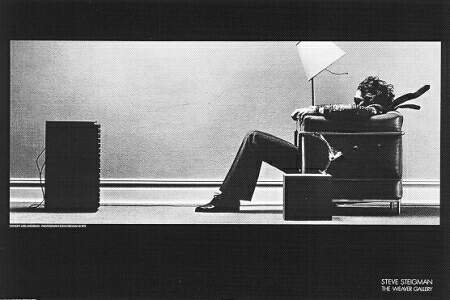 When the government tells someone to shut up, we call it censorship and the First Amendment requires the government to defend its regulation. But what if the government just says, “Shhhh… could you please turn that down?” Rep. Anna Eshoo’s Commercial Advertisement Loudness Mitigation Act (“CALM Act” – HR 1084) would do just that: require the FCC to issue rules that broadcast and cable TV ads:
(1) … shall not be excessively noisy or strident;
(2) … shall not be presented at modulation levels substantially higher than the program material that such advertisements accompany; and
(3) [their] average maximum loudness… shall not be substantially higher than the average maximum loudness of the program material that such advertisements accompany.
Now, I understand where Ms. Eshoo is coming from: I have a very low tolerance for noise in general and for television in particular—and it’s not just about commercials. (I find TV news at least as “noisy” and “strident” as commercials. That’s why I opted-out from the whole TV thing in about 2000. Yup, that’s right: I found better things to do with my time and the supposedly all-powerful “gatekeepers” of Hollywood couldn’t do a damn thing about it. You should try it if you don’t like what’s on TV! To paraphrase Voltaire, “I disapprove of what you say watch, but I will defend to the death your right to say watch it! You can get most of what’s worth watching on DVD or online anyway.) But do we really need bureaucrats in Washington micromanaging volume levels? Maybe Congressmen would have a little more time to read the bills they vote for if they they weren’t so busy fiddling with everyone else’s remote!
Eshoo’s bill has passed the House Energy & Commerce Committee’s Communications Subcommittee just as the TV industry is completing work on voluntary standards of their own. That’s one “less restrictive” alternative to regulation. What about technological empowerment? If Americans really hate loud commercials so much, why don’t they demand TVs with built-in volume normalization features? But this bill isn’t merely unnecessary, it would also set a disturbing precedent in at least six ways.
Continue reading →
Stacey Higginbotham at GigaOm conducted a great interview with Verizon CTO Dick Lynch, in which he endorsed broadband metering:
We believe that you have to be allowed to have a level of service that is not on a public Internet. What you’re suggesting is different kind of IP service that’s not delivered over the public Internet and that needs to be part of the option set in the argument.
http://blip.tv/play/AYGjswkC
Such metering,
if
allowed by Washington, might lessen the need for some of the network management practices that so incense net neutrality fanatics. So I’d really like to see Verizon and other ISPs explore using a “Ramsey two-part tariff,” as Adam has suggested again and again:
A two-part tariff (or price) would involve a flat fee for service up to a certain level and then a per-unit / metered fee over a certain level.
I don’t know where the demarcation should be in terms of where the flat rate ends and the metering begins; that’s for market experimentation to sort out. But the clear advantage of this solution is that it preserves flat-rate, all-you-can-eat pricing for casual to moderate bandwidth users and only resorts to less popular metering pricing strategies when the usage is “excessive,” however that is defined.
ISPs would have an incentive to set the demarcation to a point where, roughly, the vast majority of users would never have to worry about their usage, but the small percentage of bandwidth hogs would have a real disincentive to cut back on bandwidth use—thus avoiding the “Tragedy of the Commons,” which is really the “Tragedy of the Unmetered Commons,” as I noted a year ago.

 The Technology Liberation Front is the tech policy blog dedicated to keeping politicians' hands off the 'net and everything else related to technology.