 Seems like everywhere I turn someone is gushing about their new Droid phone, including my TLF colleagues Berin Szoka, Braden Cox, and Ryan Radia, who all had great fun rubbing their new toys in my nose over the past couple of days. And why not, it’s a very cool little device. It makes my HTC Touch seems positively archaic in some ways, and it’s only a year old. Apparently, 100,000 people already picked up a Droid in just its first weekend on the market.
But here’s the first thing that pops in my mind every time I see someone showing off their new Droid: How can a device like this even exist when America’s leading cyberlaw experts have been telling us that the whole digital world is increasingly going to hell because of “closed” devices, proprietary code, and managed networks? I’m speaking, of course, about the lamentations of Harvard professors Lawrence Lessig, Jonathan Zittrain, and their many disciples. As faithful readers will recall, I have relentlessly hammered this crew for their unwarranted cyber-Chicken Little-ism and hyper techno-pessimism. (See my many battles with Zittrain [1, 2, 3, 4, 5, 6 + video] and my 2-part debate with Lessig earlier this year).
“Left to itself,” Lessig warned in Code, “cyberspace will become a perfect tool of control.” He went on to forecast a dystopian future in which nefarious corporate schemers would quash our digital liberties unless benevolent public philosopher kings stepped in to save our poor souls. Code was the Old Testament of cyber-collectivism. The New Testament arrived last year with Zittrain’s
The Future of the Internet and How to Stop It. In it, we hear the grim prediction that “sterile and tethered” digital technologies and networks will triumph over the more “open and generative” devices and systems of the past. The iPhone and TiVo are cast as villains in Zittrain’s drama since they apparently represent the latest manifestations of Lessig’s “perfect control” paranoia.
Apple’s “Angel of Death”
How completely out-of-control has this thinking gotten? Well, here’s David Weinberger — another Harvard Berkman Center worrywart — talking about that supposed satanic font of all evil, the Apple AppStore: Continue reading →
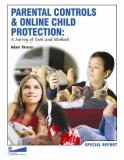 The latest edition (Version 4.0) of my PFF special report on “Parental Controls and Online Child Protection: A Survey of Tools & Methods” is now up. For those not familiar with the report, it explores the market for parental control tools, rating schemes, education and media literacy efforts, and various other tools, methods, and initiatives aimed at promoting online child safety. After evaluating that state of this market, I conclude: “There has never been a time in our nation’s history when parents have had more tools and methods at their disposal to help them decide what constitutes acceptable media content in their homes and in the lives of their children.” Moreover, I believe that the parental controls and content management tools cataloged in the report represent a better, less restrictive alternative to government regulation.
Version 4.0 of the report is now over 250 pages long (up from 200 pages in Version 3.0) and it contains almost 70 exhibits (up from 50), 725 references (up from roughly 500), and numerous updates in all five sections of the book. Major updates have been made to the Internet, social networking, and mobile media sections, reflecting the growing importance of those sectors and issues. Other new sections or appendices have also been added to the report, including:
- a new section examining how many households really need parental control tools;
- a new appendix on the downsides of mandatory parental controls and restrictive default settings;
- a new section on the dangers of “deputizing the online middleman” solution as an approach to solving child safety concerns;
- a new appendix reviewing the findings of 5 past online safety task forces;
- … and much more.
I issue major updates once a year and 1 or 2 minor tweaks during the course of the year to reflect the evolution of the parental control and online child safety marketplace and debate. The report is available free-of-charge on the PFF website, and the previous editions of the report are housed there too in case you want to see how it has evolved over the past couple of years. For those interested in taking a quick look at the report, I have embedded it down below the fold as a Scribd file. Finally, as is always the case, I encourage readers to send me updates and suggestions for how to improve the report and I will incorporate them into future versions.
Continue reading →
 Sorry if it seems like I am beating a dead horse here, but the folks at the City Journal asked me a pen a review of Jonathan Zittrain’s new book, The Future of the Internet and How to Stop It. Faithful readers here will no doubt remember that I have already penned a review of the book and several follow-up essays. (Part 1, 2, 3, 4). I swear I am not picking on Jonathan, but his book is probably the most important technology policy book of the year–Nick Carr’s Big Switch would be a close second–and deserves attention. Specifically, I think it deserves attention because I believe that Jonathan’s provocative thesis is wildly out of touch with reality. As I state in the City Journal review of his book:
[C]ontrary to what Zittrain would have us believe, reports of the Internet’s death have been greatly exaggerated. […] Not only is the Net not dying, but there are signs that digital generativity and online openness are thriving as never before. […]
Essentially, Zittrain creates a false choice regarding the digital future we face. He doesn’t seem to believe that a hybrid future is possible or desirable. In reality, however, we can have a world full of some tethered appliances or even semi-closed networks that also includes generative gadgets and open networks. After all, millions of us love our iPhones and TiVos, but we also take full advantage of the countless other open networks and devices at our disposal. […]
Continue reading →
Just FYI, the latest update of my booklet on “Parental Controls and Online Child Protection: A Survey of Tools & Methods” is now live. The new version, Version 3.1, provides minor updates to all sections of the book and a new appendix of relevant research in the field. I issue major updates early each year and 1 or 2 tweaks during the course of the year to reflect the evolution of the parental control and online child safety market and debate.
For those not familiar with the report, it explores the market for parental control tools, rating schemes, education efforts, and initiatives aimed at promoting online child safety. I believe that the parental controls and content management tools cataloged in the report represent a better, less restrictive alternative to government regulation. As I conclude after evaluating that state of the market: “There has never been a time in our nation’s history when parents have had more tools and methods at their disposal to help them decide what constitutes acceptable media content in their homes and in the lives of their children.”
The report is available free-of-charge on the PFF website, and the previous editions of the report are housed there too in case you want to see how it has evolved over the past two years. For those interested in taking a quick look at the report, I have embedded it down below the fold as a Scribd file. Finally, as is always the case, I encourage readers to send me updates and suggestions for how to improve the report and I will incorporate them into future versions.
Continue reading →
According to this new survey by NDS:
Americans rank the DVR [digital video recorders] as the third most indispensable household item (62%), after the washing machine (97%) and the microwave oven (86%) — Americans rank the DVR as the second most essential household technology item they can’t live without (81%), beaten only by the mobile phone (92%) — 3 out of 4 respondents with partners say that having a DVR makes for a happier home life
When you think about, it is incredible that DVRs only came on the scene in the late 1990s and yet now — less than a decade later — they are considered an “indispensable” technology by most people.
This has some important policy implications for debates over content regulation. In a paper I penned last October entitled, “Parental Control Perfection? The Impact of the DVR and VOD Boom on the Debate over TV Content Regulation,” I outlined how new video technologies, such as digital video recorders (DVRs) and video on demand (VOD) services, are changing the way households consume media and are helping parents better tailor viewing experiences to their tastes and values. I provided evidence showing the rapid spread of these technologies and discussed how parents are using these tools in their homes. Finally, I argued that these developments will have profound implications for debates over the regulation of video programming. As parents are given the ability to more effectively manage their family’s viewing habits and experiences, it will lessen—if not completely undercut—the need for government intervention on their behalf.
If you are interested, I have embedded the paper down below. Today’s survey results from NDS make it clear that the process I discuss in my paper is happening at an even fast pace than I originally predicted.
Continue reading →
PFF has just releasing an updated edition of my booklet on “Parental Controls and Online Child Protection: A Survey of Tools & Methods.” The new version, Version 3.0, includes two new appendixes and updates to each section to reflect new parental control tools and programs developed in the last nine months.
The updated report is timely as it comes on the heels of the recently-announced Internet Safety Technical Task Force, which is being chaired by the Berkman Center for Internet & Society at Harvard Law School. I am privileged to serve as a member of the Task Force, which is evaluating various online safety technologies and strategies and then reporting back to state attorneys general with our findings.
Those issues and much more are covered in the latest edition of my report. The report explores the market for parental control tools, rating schemes, education efforts, and initiatives aimed at promoting online child safety. I believe that the parental controls and content management tools cataloged in the report represent a better, less restrictive alternative to government regulation. As I conclude after evaluating that state of the market: “There has never been a time in our nation’s history when parents have had more tools and methods at their disposal to help them decide what constitutes acceptable media content in their homes and in the lives of their children.”
Version 3.0 of the special report, now over 200 pages, contains over fifty exhibits and numerous updates in all five sections of the book. Major updates have been made to the Internet, social networking, and mobile media sections, reflecting the growing importance of those sectors and issues. A greatly expanded section on video empowerment technologies has also been included. Finally, two appendices have also been added: a comprehensive legislative index cataloging over thirty bills introduced in Congress on these issues (complied with John Morris of Center for Democracy & Technology), and a glossary of 35 relevant terms and cases.
The report is available free-of-charge on the PFF website, as are the previous editions. And I am happy to provide hard copies to those who are interested.
http://documents.scribd.com/ScribdViewer.swf?document_id=2887320&access_key=key-um5xjvf98bfnuu8811v&page=&version=1&auto_size=true
Jonathan Zittrain, who is affiliated with Oxford University and Harvard’s Berkman Center, recently released a provocatively titled book: The Future of the Internet–And How to Stop It. It’s an interesting read and I recommend you pick it up despite what I’ll say about it in a moment. (Incidentally, if you ever have a chance to hear Jonathan speak, I highly recommend you do so. He is, bar none, the most entertaining tech policy geek in the world. Imagine Dennis Miller with a cyberlaw degree.)
Jonathan’s book contrasts two different paradigms that he argues could define the Net’s future: The “generative” Net versus what he refers to as a world of “tethered, sterile appliances.” By “generative” he means technologies or networks that invite or allow tinkering and all sorts of creative uses. Think general-purpose personal computers and the traditional “best efforts” Internet. “Tethered, sterile appliances” by contrast, are technologies or networks that discourage or disallow tinkering. Basically, “take it or leave it” proprietary devices like Apple’s iPhone or the TiVo, or online walled gardens like the old AOL and current cell phone networks.
Jonathan’s thesis is that, for a variety of reasons [viruses, Spam, identify theft, etc], we run the risk of seeing the glorious days of the generative, open Net give way to more tethered devices and closed networks. He states:
Continue reading →
PFF has just released my latest paper entitled “Parental Control Perfection? The Impact of the DVR and VOD Boom on the Debate over TV Content Regulation.” In the report, I focus on the extent to which new video technologies, such as digital video recorders (DVRs) and video on demand (VOD) services, are changing the way households consume media and are helping parents better tailor viewing experiences to their tastes and values. I provide evidence showing the rapid spread of these technologies and discuss how parents are using these tools in their homes. Finally, I argue that these developments will have profound implications for debates over the regulation of video programming. As parents are given the ability to more effectively manage their family’s viewing habits and experiences, it will lessen—if not completely undercut—the need for government intervention on their behalf.
This 16-page report can be found at: http://www.pff.org/issues-pubs/pops/pop14.20DVRboomcontentreg.pdf

 The Technology Liberation Front is the tech policy blog dedicated to keeping politicians' hands off the 'net and everything else related to technology.