Faithful readers know of my geeky love of tech policy books [here are my “best of” lists for 2008 & 2009], and the intriguing battle taking place today between Internet optimists and pessimists in particular. One of the things that I noticed when I was putting together my compendium, “The Digital Decade’s Definitive Reading List: Internet & Info-Tech Policy Books of the 2000s,” is that there are up years and down years. For example, there weren’t a lot of big tech policy titles in 2000 or 2005. By contrast, 2001, 2006 and 2008 were monster years. I suppose that’s the case with any genre, of course.
Anyway, I was beginning to think that 2010 was shaping up to be one of those slow years, with Jaron Lanier’s
You Are Not a Gadget being the only major release so far this year. [See my review of it here.] But there are some very important titles on the way that are worth picking up. I’ve already pre-ordered most of these and am looking forward to reviewing them all soon:
Please let me know others that I may be missing. [Note: Most of the books I’ve been reading this year have more to do with the future of media, the press, journalism, etc. It’s been a big year for books like that. For example, McChesney & Nichols’ The Death and Life of American Journalism; Lee Bollinger’s Uninhibited, Robust, and Wide-Open: A Free Press for a New Century; and Bob Garfield’s The Chaos Scenario. But it’s not clear any of these books belong in the “info-tech policy” genre, although they all have something to say about the impact of the Internet and digital technology on the media and journalism. So, who knows, maybe I will add them to my end of year list.]
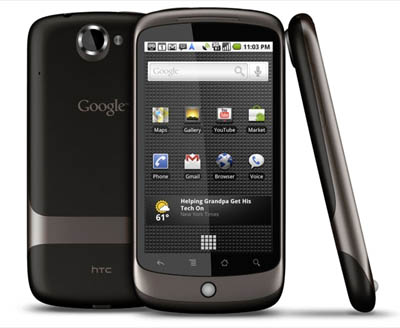
 Google has just announced that it is ending web-only sales of its unsubsidized Nexus One smartphone. The company had hoped to created a very different kind of business model for mobile phone retailing, but it just didn’t work and so they are ending the experiment.
There are a couple of reasons that it probably didn’t work, but the one thing that just about everyone is pointing back to is the difficulty of acclimating Americans to the actual cost of an unsubsidized handset. Over at
Ars Technica, Peter Bright points out:
A one-off payment of $529 is hard to stomach. In many countries, we’re not accustomed to paying so much for mobile phones, as normally their true cost is hidden—we pay less up front and commit to paying a monthly fee for 12-24 months. Only those brave souls who were willing to stump up for the early termination fee would get any idea of the true cost of their handset. In a world of subsidized handsets, then, the Nexus one felt very expensive. It’s true that SIM-only contracts are cheaper than with-handset ones, but the difference rarely feels significant enough to justify buying a full-price phone—much better to pay a little bit more each month and avoid the up-front cost. Even if you do the math and work out that the Google way is cheaper, there’s still the unpleasant prospect of spending so much at once.
And Kevin C. Tofel of
GigaOm
concludes:
Continue reading →

Tim Wu: Not Looking Happy about Being So Wrong
Three years ago this month, Columbia University Law School professor Tim Wu released a controversial white paper in conjunction with the New America Foundation entitled, “Wireless Net Neutrality: Cellular Carterfone and Consumer Choice in Mobile Broadband.” It contained a litany of accusations regarding supposed corporate shenanigans in the mobile marketplace, including: intentional crippling of features and functionality; refusal to allow 3rd party attachments or intentional curtailment of a market for 3rd party application developers; and various concerns about “discrimination” of one sort or another.
Here at the TLF, we responded quite forcefully. I think every one of us piled on this study in one way or another. (ex: Hance, Jerry, James, Tim Lee, me x 2, + a podcast). I called his proposal “a declaration of surrender” since Prof. Wu was essential calling the game early and raising the white flag on mobile competition. Further, I argued he was essentially asking for “the forced commoditization of cellular networks” which “would necessitate at return to the rate-of-return regulatory methods of the past.” Others were a bit more kind to him, but we were all pretty skeptical of his gloomy claims. However, each of us here also argued that the wireless market (especially the applications side of the market) was still developing and that we’d have to check back in a few years to see how well the hands-off approach worked out.
Well, thankfully, we now know for certain that Tim Wu’s was much too lugubrious in his outlook and far too quick to call for regulatory intervention to solve a non-crisis. On the occasion of the 3rd anniversary of the release of Prof. Wu’s paper, CTIA-The Wireless Association filed a short paper with the FCC taking stock of just how far the mobile marketplace has come in just three short years. The results are really quite remarkable, as CTIA’s letter notes: Continue reading →
By Berin Szoka & Adam Thierer
 We learned from The Wall Street Journal yesterday that “Federal Communications Commission Chairman Julius Genachowski gets a little peeved when people suggests that he wants to regulate the Internet.” He told a group of Journal reporters and editors today that: “I don’t see any circumstances where we’d take steps to regulate the Internet itself,” and “I’ve been clear repeatedly that we’re not going to regulate the Internet.”
We’re thankful to hear Chairman Julius Genachowski to make that promise. We’ll certainly hold him to it. But you will pardon us if we remain skeptical (and, in advance, if you hear a constant stream of “I told you so” from us in the months and years to come). If the Chairman is “peeved” at the suggestion that the FCC might be angling to extend its reach to include the Internet and new media platforms and content, perhaps he should start taking a closer look at what his own agency is doing—and think about the precedents he’s setting for future Chairmen who might not share his professed commitment not to regulate the ‘net. Allow us to cite just a few examples:
Net Neutrality Notice of Proposed Rulemaking
We’re certainly aware of the argument that the FCC’s proposed net neutrality regime is not tantamount to Internet regulation—but we just don’t buy it. Not for one minute.
First, Chairman Genachowski seems to believe that “the Internet” is entirely distinct from the physical infrastructure that brings “cyberspace” to our homes, offices and mobile devices. The WSJ notes, “when pressed, [Genachowski] admitted he was referring to regulating Internet content rather than regulating Internet lines.” OK, so let’s just make sure we have this straight: The FCC is going to enshrine in law the principle that “gatekeepers” that control the “bottleneck” of broadband service can only be checked by having the government enforce “neutrality” principles in the same basic model of “common carrier” regulation that once applied to canals, railroads, the telegraph and telephone. But when it comes to accusations of “gatekeeper” power at the content/services/applications “layers” of the Internet, the FCC is just going to step back and let markets sort things out? Sorry, we’re just not buying it. Continue reading →
In response to my essay last night about this new Free Press campaign to layer price controls on the Internet by banning metered prices via Rep. Massa’s new bill (the “Broadband Internet Fairness Act“), George Ou and Richard Bennett reminded me of some of the contradictory statements that the (Un)Free Press crew have made on this issue. Indeed, if you look back at what Free Press and their chairman have said about the matter over just the past 18 months, they seem to be whistling two very different tunes.
For example, George Ou reminded me of what Free Press had to say in its November 2007 filing in the FCC’s Comcast-Bit Torrent proceeding:
“More importantly, if Comcast is concerned that the collective set of users running P2P applications are affecting quality of service for other users on a cable loop… they could also charge by usage.” (p. 29)
[…]
“Indeed, in many nations, network providers do meter, and bill their customers on the basis of amount used. So the transaction costs of doing so must not be prohibitively high. Indeed, a network provider can apparently meter cheaply because, in most networks, users’ traffic to and from the Internet passes through a single gateway, the network access server.” (p. 31)
And Richard Bennett reminded me of what Tim Wu, chairman of the Free Press, had to say about metering to the Washington Post just one year ago:
“I don’t quite see [metering] as an outrage, and in fact is probably the fairest system going — though of course the psychology of knowing that you’re paying for bandwidth may change behavior.”
So, what gives? Will the real Free Press please stand up? Does the Free Press believe in pricing freedom or price controls for the Internet?
The Cato Unbound online debate about the 10th anniversary of Lawrence Lessig’s Code and Other Laws of Cyberspace continues today with my response to Declan McCullagh’s opening essay, “What Larry Didn’t Get,” as well as Jonathan Zittrain’s follow-up.
In my response, “Code, Pessimism, and the Illusion of ‘Perfect Control,'” I begin by arguing that:
The problem with peddling tales of a pending techno-apocalypse is that, at some point, you may have to account for your prophecies — or false prophecies as the case may be. Hence, the problem for Lawrence Lessig ten years after the publication of his seminal book, Code and Other Laws of Cyberspace.
I go on to argue that:
Lessig’s lugubrious predictions proved largely unwarranted. Code has not become the great regulator of markets or enslaver of man; it has been a liberator of both. Indeed, the story of the past digital decade has been the exact opposite of the one Lessig envisioned in Code.
After providing several examples of just how wrong Lessig’s predictions were, I then ask:
[W]hy have Lessig’s predictions proven so off the mark? Lessig failed to appreciate that markets are evolutionary and dynamic, and when those markets are built upon code, the pace and nature of change becomes unrelenting and utterly unpredictable. With the exception of some of the problems identified above, a largely unfettered cyberspace has left digital denizens better off in terms of the information they can access as well as the goods and services from which they can choose. Oh, and did I mention it’s all pretty much free-of-charge? Say what you want about our cyber-existence, but you can’t argue with the price!
Continue reading →
A new report from TeleGeography finds that bandwidth prices for backbone transit continue to decline rapidly across the globe. In San Francisco, for instance, the price per mbps of Gigabit Ethernet transit has dropped 38 % in the past 12 months. Developing countries are also enjoying substantial price cuts in 15 to 20% range.
But if the Internet’s core is controlled by an oligopolistic cartel—as Tim Wu argued in a recent New York Times essay—then why does bandwidth keep getting cheaper?
Perhaps it’s because the fourteen or so firms which offer backbone IP transit are competing fiercely to win over business from smaller carriers and enterprises. And as businesses of all sizes demand faster connectivity, more dark fiber is being lit, creating an expansion in network capacity. In DC, for instance, a price war has made high-speed commercial data services much more affordable, with one communications provider offering converged 10mbps full-duplex dedicated Ethernet over copper for less than the market price of four bonded T1 lines.
Why are some providers moving towards data transfer caps if bandwidth prices are dropping ? In part, it’s because backbone transit is not the only usage-variable expense that residential ISPs face. Last-mile bandwidth remains a highly contested resource in many neighborhoods, and the cost per megabit of bringing faster speeds to the doorstep far exceeds the cost of adding more wavelengths to a long-distance fiber optic line. As consumers demand greater speeds, providers are investing heavily in network upgrades—these costs are adding up, and there’s a strong case to be made that heavy users ought to shoulder a larger portion of the burden than light users.
Writing at Slate, Tim Wu tries to make Obama out to be the real Big Government candidate on media policy, who will deliver “if not a chicken in every pot, a fiber-optic cable in every home.” By contrast, Wu implies that McCain is just another pro-big business lackey who doesn’t understand “that the media and information industries are special—that like the transportation, energy, or financial industries, they are deeply entwined with the public interest.” Wu goes on to say:
Ultimately, most of the difference in Obama’s and McCain’s media policies boils down to questions about whether the media is special and a dispute over how much to trust the private sector. Camp McCain would tend to leave the private sector alone, with faith that it will deliver to most Americans what they want and deserve. The Obama camp would probably administer a more frequent kick in the pants, in the belief that good behavior just isn’t always natural.
First, as a factual matter, Wu is just wrong about McCain being some sort of a radical hands-off, pro-market liberalizer on media policy issues. Oh, if only that were true! But for those of us who have been in DC covering telecom and media policy for many years, it is widely understood there is no nailing down John McCain on any tech, telecom or media policy issue. He’s been all over the board. While he has sponsored or supported
some deregulatory initiatives on the telecom front in the past, he’s also been a supporter of other regulatory causes. His battles with broadcasters and cable, for example, are well-known. Most recently, McCain has been leading the effort to impose a la carte mandates on cable and satellite operators.
Continue reading →
So, if Tim Wu’s thesis is correct that the broadband marketplace is “a cartel,” should we be reading headlines in today’s Wall Street Journal and CNET News.com like this: “Price War Erupts For High-Speed Internet Service” and “Broadband Price War Brews“? From the WSJ story:
The battle between cable and phone companies to sign up new customers for high-speed Internet service is heating up, creating fresh opportunities for consumers to cut their bills. […] While the most generous offers are coming from the phone companies, some analysts expect cable companies will also become more aggressive in their own promotions as they compete to retain customers.
Geez, if that’s a cartel, give me more of them!

 The Technology Liberation Front is the tech policy blog dedicated to keeping politicians' hands off the 'net and everything else related to technology.