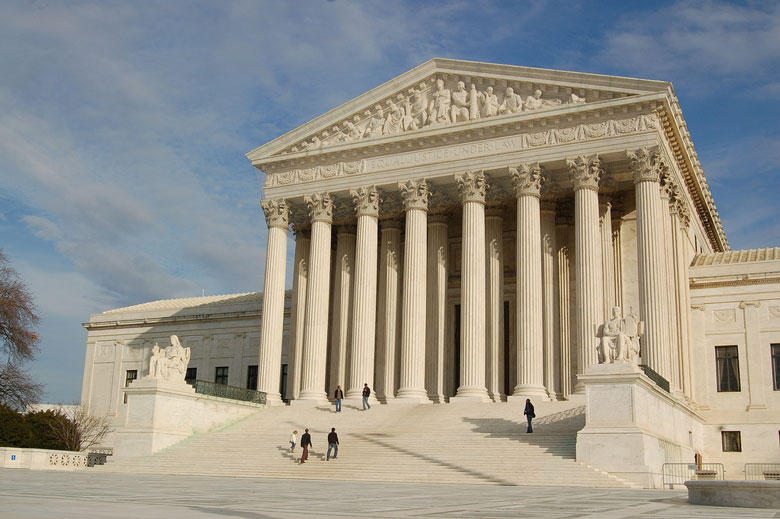
 I’m still digesting the transcript from Tuesday’s Supreme Court oral arguments in the important First Amendment video game case, Schwarzenegger v. EMA. [Full transcript is here.] I thought I would post just a couple of quick thoughts here. [Reminder: here is the amicus brief that Berin Szoka and I filed in the case, and here is some analysis of the case by Larry Downes.]
On Defining “Deviant Violence”
Much of the discussion during oral arguments was preoccupied with defining the contours of the term “deviant violence.” I was pleased to see the Justices asking some sharp questions about the interpretation of that term for regulatory purposes. In particular, I enjoyed Justice Scalia’s remarks and questions to California Deputy Attorney General Zackery Morazzini, who argued the case on behalf of the state. Scalia said:
I am not just concerned with the vagueness. I am concerned with the vagueness, but I am concerned with the First Amendment, which says Congress shall make no law abridging the freedom of speech. And it was always understood that the freedom of speech did not include obscenity. It has never been understood that the freedom of speech did not include portrayals of violence. You are asking us to create… a whole new prohibition which the American people never — never ratified when they ratified the First Amendment. They knew they were — you know, obscenity was — was bad, but — what’s next after violence? Drinking? Smoking? Movies that show smoking can’t be shown to children? Does — will that affect them? Of course, I suppose it will. But is — is that — are — are we to sit day by day to decide what else will be made an exception from the First Amendment? Why — why is this particular exception okay, but the other ones that I just suggested are not okay? (p. 15-16)
Indeed, that’s what is at stake in this case: The beginning of a new class of exceptions to the First Amendment based upon concerns about children’s exposure to depictions of “excessive” or “deviant” violence.” Once you open up this can of worms, the sky is likely the limit in terms of how far governments might go to regulate speech in the name of “protecting children.” Continue reading →
 By Berin Szoka & Adam Thierer
Yesterday, the Progress & Freedom Foundation (PFF) and Electronic Frontier Foundation (EFF) filed a joint amicus brief with the U.S. Supreme Court urging the Court to protect the free speech rights of videogame creators and users and asking the justices to uphold a ruling throwing out unconstitutional restrictions on violent videogames. At issue is a California law that bans the sale or rental of “violent” videogames to anyone under the age of 18, among other regulations. While the law was passed in 2005, it has never taken effect, as courts have repeatedly ruled it unconstitutional. California appealed its loss at the Ninth Circuit Court of Appeals to the Supreme Court. The case is Schwarzenegger vs. EMA.
This case has profound ramifications for the future of not just videogames, but all media, and the Internet as well. Although we’ve had 15 years of fairly solid Supreme Court case law on new media issues, a loss in the
Schwarzenegger case could reverse that tide. In the amicus brief, we explain how the current videogame content rating system empowers parents to make their own decisions without unconstitutionally restricting this new and evolving form of free speech. Our brief is focused on three major arguments:
- Parental Control Tools, Household Media Control Methods, Self-Regulation and Enforcement of Existing Laws Constitute Less Restrictive Means of Limiting Access to Objectionable Content than Government Regulation of Constitutionally Protected Speech
- Videogame Content is Constitutionally Protected Speech Deserving Strict Scrutiny
- The State Has Not Established a Compelling Government Interest in Restricting the Sale of Videogames to Minors
The filing can be found online here and it is embedded down below. As always, the Media Coalition has done an outstanding job summarizing the case and listing all the major briefs filed with the Court in this matter, so check out their Schwarzenegger v. EMA page for everything you need to know about this case. GamePolitics.com also offers excellent ongoing coverage of the case. Continue reading →
The Second Circuit just threw out the FCC’s broadcast indecency rules—which had led to heavy fines for “fleeting expletives”—as “unconstitutionally vague, creating a chilling effect that goes far beyond the fleeting expletives at issue here.” What’s ultimately most important about this decision is not what the court did, but what it said: The Constitutional framework that has allowed broadcast censorship has been rendered obsolete by the rise of the Internet and parental empowerment tools for new and old media.
In short, the court utterly rejected the Supreme Court’s 1978
Pacifica decision
—which gave the FCC great discretion in regulating indecency on broadcast radio and television in order to protect children who might be in the audience during daytime and early evening hours, citing the unique “pervasiveness” and “invasiveness” of broadcasting into the home. The court fully embraced what we’ve been saying for years—neither rationale holds true anymore:
we face a media landscape that would have been almost unrecognizable in 1978. Cable television was still in its infancy. The Internet was a project run out of the Department of Defense with several hundred users. Not only did Youtube, Facebook,and Twitter not exist, but their founders were either still in diapers or not yet conceived. In this environment, broadcast television undoubtedly possessed a “uniquely pervasive presence in thelives of all Americans.”
The same cannot be said today. The past thirty years has seen an explosion of media sources, and broadcast television has become only one voice in the chorus. Cable television is almost as pervasive as broadcast…. The internet, too, has become omnipresent, offering access to everything from viral videos to feature films and, yes, even broadcast television programs…. Moreover, technological changes have given parents the ability to decide which programs they will permit their children to watch. (15-16)
Thus, the Second Circuit all but begged the Supreme Court to throw out
Pacifica completely, but quickly noted that it is “bound by Supreme Court precedent, regardless of whether it reflects today’s realities” (17). Fortunately, the court was able to reach the same result on vagueness grounds. It’s worth reading this key passage to see what a consistent approach to the First Amendment would look like: Continue reading →
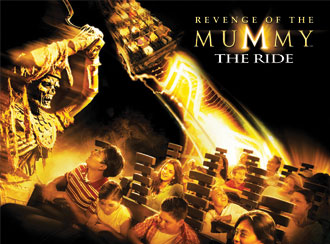 I’m hoping to get some input from readers as I look to finish up an amicus brief for the forthcoming Schwarzenegger v. EMA video game case. (Respondent briefs are due in mid-Sept and the State of California just filed its brief with the Court today). You will recall that the Supreme Court accepted the case for review in April, meaning it will be the first major case regarding video game speech rights heard by our nation’s highest court. It raises questions about the First Amendment status of games and what rights minors have to buy or play “violent” video games. One section I hope to include in the brief I’m working on deals with how other forms of media content are increasingly intertwined with video game content. In it, I explain how video games are less of a discreet category of visual entertainment than they once were. I’d welcome ideas for other examples to use relative to the ones you see below.
I begin by discussing games that were inspired by major motion pictures, such as both the recent
Star Wars and Lord of the Rings movie trilogies, for example. I also note that many games were inspired by notable books, such as the LotR games being inspired by Tolkien, and The Godfather video games that were inspired by Mario Puzo’s novel of the same name. I also make mention of The Terminator movies starring California Governor Arnold Schwarzenegger, which inspired a wide variety of video games, many of which featured his likeness.
More importantly, I highlight how many video games are now inspiring movies, music, books, and comics, including:
Prince of Persia, Max Payne, Resident Evil, Tomb Raider, Doom, Final Fantasy, Halo, and Gears of War. The characters and storylines in the books, comics, and movies based on these games often closely track the video games that inspired them. Increasingly, therefore, games are developed along parallel tracks with these other forms of content. Thus, to regulate games under the standard California proposes in this case raises the question of whether those other types of media should be regulated in a similar fashion. Should every iteration of the original game title be regulated under the standard California has suggested if those books, comics, or movies contain violent themes?
Continue reading →
 The Entertainment Software Association, which represents the video game industry, has just released its latest “Essential Facts about the Computer and Video Game Industry” publication. It’s a handy annual resource that I always look forward to reading. There are many interesting facts and figures found in the report, but here a few worth calling out from the data they have aggregated:
- 93% of the time parents are present at the time games are purchased or rented
- 64% of parents believe games are a positive part of their children’s lives
- 86% of the time children receive their parents’ permission before purchasing or renting a game
- 48% of parents play computer and video games with their children at least weekly
- 97% of parents report always or sometimes monitoring the games their children play
- 76% of parents believe that the parental controls available in all new video game consoles are useful
The survey also bolsters the findings of many other polls and reports which have found that parents employ a variety of what I have labeled “household media rules” to monitor or control their children’s media consumption: Continue reading →
The Supreme Court recently announced that it will review a California law regulating the sale of violently-themed video games to minors. The case under review is Schwarzenegger v. Entertainment Merchants Association. In it, the Ninth Circuit Court of Appeals struck down a California law which prohibited the sale or rental of “violent video games” to minors. I’m inclined to agree with Julie Hilden when she notes that “it seems very unlikely that the Supreme Court took this case in order to proclaim, as the Ninth Circuit panel did, that minors do indeed have First Amendment rights — rights that extend far enough to reach ‘violent’ video games.” I hope that we’re both wrong and that the Court took the case to instead affirm the free speech rights of game creators and users (and yes, even minors), but the justices could have just left the Ninth Circuit ruling be and that would have been settled.
Anyway, let’s think this through here. What if the Supremes took the
Schwarzenegger case to overturn the Ninth Circuit and to uphold the right of state governments to regulate the sale of “violent” video game content, however that’s defined. Let’s consider such a potential holding in light of two other free speech cases handed down over the past few years.
Continue reading →
The Supreme Court announced today that it will review a California law regulating the sale of violently-themed video games to minors. The case is Schwarzenegger v. Entertainment Merchants and I have written about it here before. This will be the first major First Amendment case regarding video game speech rights heard by our nation’s highest court. This afternoon, I issued the following press statement about the case and its importance:
“I hope the Supreme Court is taking this case to affirm the free speech rights of game creators and users, and not to overturn ten years of solid, sensible lower court decisions granting video games the same First Amendment protections as books, film, music and other forms of entertainment. Government regulation of game content is unnecessary because parents have been empowered with sophisticated video game parental controls and a highly descriptive ratings system that is widely recognized and easy to use. Lawmakers should focus their efforts on making sure parents are better aware of existing tools and ratings instead of trying to censor game content in such a plainly unconstitutional fashion. Let’s hope the Supreme Court affirms that educational approach and Ninth Circuit’s decision at the same time.”
Several reporters have already asked me if its a bad sign that the Court took the case at all and wondered if this meant that there are 5 votes for overturning the lower court decision. It’s impossible to read the tea leaves on things like this, but I would generally agree that it’s not a good sign. But I just don’t understand how the Supreme Court could uphold a law like this in light of all their recent Internet jurisprudence (CDA, COPA, etc) which held against the government when various “harm to minors” statutes were tested and found to be unconstitutional. If the Supreme Court goes the opposite direction here, it will mean that our “First Amendment jurisprudential Twilight Zone” will become even more confusing and contorted. Let’s hope that’s not the case.
By Adam Thierer & Berin Szoka
Progress & Freedom Foundation Progress Snapshot No. 6.5, Feb 2010 [.pdf]
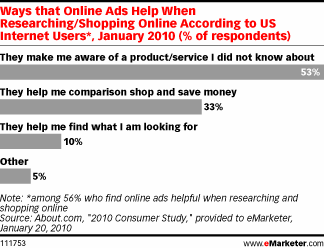 Advertising is increasingly under attack in Washington. In fact, we’re busy finishing up a paper with the working title: “The New Assault on Advertising: What it Means for the Future of Media & Culture.” Among other things, the paper inventories the many ways in which policymakers in Washington and elsewhere are stepping up regulation of commercial advertising and marketing efforts-and highlights the common themes that unite them. Unfortunately, the report is already over 50 pages long and we keep finding new threats to discuss!
This regulatory tsunami could not come at a worse time, of course, since an attack on advertising is tantamount to an attack on media itself, and media is at a critical point of technological change. As we have pointed out repeatedly, the vast majority of media and content in this country is supported by commercial advertising in one way or another-particularly in the era of “free” content and services.[1]
An Attack on Advertising Will Hurt Consumers
But there’s a more important reason to fear Washington’s new war on advertising:
It will hurt consumer welfare. That’s because advertising provides important information and signals to consumers about goods and services that are competing for their attention and business—and that scarcest of all things in the modern world, consumers’ attention. Continue reading →
Yesterday’s Supreme Court decision in Citizens United v. FEC essentially stands for the proposition that free speech is free speech regardless of the speaker. The 5-4 majority for the Court ruled that “We find no basis for the proposition that, in the context of political speech, the Government may impose restrictions on certain disfavored speakers. Both history and logic lead us to this conclusion.” (at 25) Echoing its early decision in Bellotti, the Court noted that “Political speech is ‘indispensable to decisionmaking in a democracy, and this is no less true because the speech comes from a corporation rather than an individual.’” (at 33) “All speakers, including individuals and the media, use money amassed from the economic marketplace to fund their speech. The First Amendment protects the resulting speech, even if it was enabled by economic transactions with persons or entities who disagree with the speaker’s ideas.” (at 35) “There is simply no support for the view that the First Amendment, as originally understood, would permit the suppression of political speech by media corporations.” (at 37)
Somehow this has proven controversial, even radical, to some. But, as George Will correctly notes, “This was radical only because after nearly four decades of such ‘reform’ the First Amendment has come to seem radical. Which, indeed, it is. The Supreme Court on Thursday restored First Amendment protection to the core speech that it was designed to protect — political speech.” Essentially, the decision gets Congress out of the game of picking who, or what platform, deserves full First Amendment protection when it comes to uttering political speech. And there’s nothing radical about that.
Indeed, as Justice Kennedy noted for the majority, there is nothing surprising about this reasoning once you realize that almost every other type legislative or regulatory speech restriction has been struck down as a violation of the First Amendment. “The law before us is an outright ban [on political speech], backed by criminal sanctions,” Kennedy noted (at 20). “If the First Amendment has any force, it prohibits Congress from fining or jailing citizens, or associations of citizens, for simply engaging in political speech.” (at 33) Think about this for a second: Criminal sanctions or jail time for political speech! How in the world did we get to the point in this nation where criminalizing political speech became acceptable to our legislators? Ignoring the obvious answer—it’s all about protecting incumbents—what is really “radical” here is not that the Supreme Court setting us back on the right path, but that our legislative branch has veered so far off of it.
Continue reading →
Can the Federal Communications Commission (FCC) just do anything it wants? If it wants to bring the entire Internet under its thumb, or regulate any speech uttered over electronic media, can it just do so on a whim? The agency’s recent actions on the Net neutrality and free speech fronts seems to suggest that the agency thinks so.
I don’t need to rehash here what the FCC has been up to on the Net neutrality front. Most everyone is familiar with how the agency has essentially been trying to invent its authority to regulate out of thin air. If you want the whole ugly history of how this charade has unfolded over past few years, I encourage you to read these amazing comments filed today in the FCC’s net neutrality NPRM proceeding by my PFF colleague Barbara Esbin. Barbara simply demolishes the FCC’s argument that it can do anything it wants under the guise of its “ancillary jurisdiction.” As Barbara argues in her comments, the FCC’s position “is akin to saying that the FCC can regulate if its actions are ancillary to its ancillary jurisdiction, and that is one ancillary too many.” She notes that:
The proposed rules regulating the services and network management practices of broadband Internet providers must rest, if at all, on the Commission‘s implied or ancillary jurisdiction and the NPRM fails to provide a basis upon which the exercise of such jurisdiction can be considered lawful.
She shows how farcical it is for the FCC to concoct its supposed authority to regulate from provisions of the Communications Act that have nothing whatsoever to do with Net neutrality or even expanding regulation in general. Specifically, the agency’s reliance on sections 230(b) and 706(a) of the Telecommunications Act of 1996 is completely outlandish. Anyone who knows a lick about telecom law and the nature of those two sections understands they were never intended to serve as the basis of an expansive new regulatory regime for the Internet. As Barbara puts it:
This exercise—searching for snippets and threads of regulatory authority over a communications medium as significant as the Internet in multiple, unrelated statutory provisions—should signal to the Commission that no credible source of authority to regulate Internet services exists.
All I have to say is, thank God for checks and balances. I believe the courts will put a stop to this nonsense, but it will take some time. Until then, I suppose the FCC will continue to act like a rogue agency, hell-bent and tossing the constitution to the wind and concocting asinine theories about why they should be allowed to do anything they want. But there
are signs that the courts are ready to start holding the FCC more accountable. Continue reading →

 The Technology Liberation Front is the tech policy blog dedicated to keeping politicians' hands off the 'net and everything else related to technology.