Over at Discourse magazine this week, my R Street colleague Jonathan Cannon and I have posted a new essay on how it has been “Quite a Fall for Digital Tech.” We mean that both in the sense that the last few months have witnessed serious market turmoil for some of America’s leading tech companies, but also that the political situation for digital tech more generally has become perilous. Plenty of people on the Left and the Right now want a pound of flesh from the info-tech sector, and the starting cut at the body involves Section 230, the 1996 law that shields digital platforms from liability for content posted by third parties.
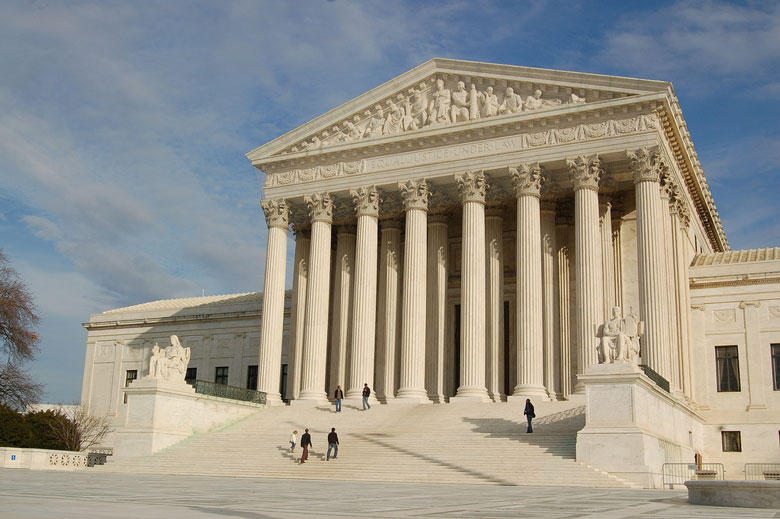
With the Supreme Court recently announcing it will hear Gonzalez v. Google, a case that could significantly narrow the scope of Section 230, the stakes have grown higher. It was already the case that federal and state lawmakers were looking to chip away at Sec. 230’s protections through an endless variety of regulatory measures. But if the Court guts Sec. 230 in Gonzalez, then it will really be open season on tech companies, as lawsuits will fly at every juncture whenever someone does not like a particular content moderation decision. Cannon and I note in our new essay that, Continue reading →
On Friday, the Supreme Court ruled on Carpenter v.
United
States, a case involving the cell-site location information. In the 5 to 4 decision, the Court declared that “The Government’s acquisition of Carpenter’s cell-site records was a Fourth Amendment search.” What follows below is a roundup of reactions and comments to the decision. Continue reading →
[originally published on Plaintext on June 21, 2017.]
This summer, we celebrate the 20th anniversary of two developments that gave us the modern Internet as we know it. One was a court case that guaranteed online speech would flow freely, without government prior restraints or censorship threats. The other was an official White House framework for digital markets that ensured the free movement of goods and services online.
The result of these two vital policy decisions was an unprecedented explosion of speech freedoms and commercial opportunities that we continue to enjoy the benefits of twenty years later.
While it is easy to take all this for granted today, it is worth remembering that, in the long arc of human history, no technology or medium has more rapidly expanded the range of human liberties — both speech and commercial liberties — than the Internet and digital technologies. But things could have turned out much differently if not for the crucially important policy choices the United States made for the Internet two decades ago. Continue reading →
Title II allows the FCC to determine what content and media Internet access providers must transmit on their own private networks, so the First Amendment has constantly dogged the FCC’s “net neutrality” proceedings. If the Supreme Court agrees to take up an appeal from the DC Circuit Court of Appeals, which rejected a First Amendment challenge this summer, it will likely be because of Title II’s First Amendment deficiencies.
Title II has always been about handicapping ISPs qua speakers and preventing ISPs from offering curated Internet content. As former FCC commissioner Copps said, absent the Title II rules, “a big cable company could block access to an investigative report about its less-than-stellar customer service.” Tim Wu told members of Congress that net neutrality was intended to prevent ISPs from favoring, say, particular news sources or sports teams.
But just as a cable company chooses to offer some channels and not others, and a search engine chooses to promote some pages and not others, choosing to offer a curated Internet to, say, children, religious families, or sports fans involves editorial decisions. As communications scholar Stuart Benjamin said about Title II’s problem, under current precedent,
ISPs “can say they
want
to engage in substantive editing, and that’s enough for First Amendment purposes.”
Title II – Bringing Broadcast Regulation to the Internet
Title II regulation of the Internet is frequently compared to the Fairness Doctrine, which activists used for decades to drive conservatives out of broadcast radio and TV. As a pro-net neutrality media professor explained in The Atlantic last year, the motivation for the Fairness Doctrine and Title II Internet regulation is the same: to “rescue a potentially democratic medium from commercial capture.” This is why there is almost perfect overlap between the organizations and advocates who support the Fairness Doctrine and those who lobbied for Title II regulation of the Internet. Continue reading →
The FCC’s transaction reviews have received substantial scholarly criticism lately. The FCC has increasingly used its license transaction reviews as an opportunity to engage in ad hoc merger reviews that substitute for formal rulemaking. FCC transaction conditions since 2000 have ranged from requiring AOL-Time Warner to make future instant messaging services interoperable, to price controls for broadband for low-income families, to mandating merging parties to donate $1 million to public safety initiatives.
In the last few months alone,
- Randy May and Seth Cooper of the Free State Foundation wrote a piece that the transaction reviews contravene rule of law norms.
- T. Randolph Beard et al. at the Phoenix Center published a research paper about how the FCC’s informal bargaining during mergers has become much more active and politically motivated in recent years.
- Derek Bambauer, law professor at the University of Arizona, published a law review article that criticized the use of informal agency actions to pressure companies to act in certain ways. These secretive pressures “cloak what is in reality state action in the guise of private choice.”
This week, in the Harvard Journal of Law and Public Policy, my colleague Christopher Koopman and I added to this recent scholarship on the FCC’s controversial transaction reviews. Continue reading →
Aereo’s antenna system is frequently characterized perjoratively as a Rube Goldberg contraption, including in the Supreme Court oral arguments. Funny enough, Preston Padden, a veteran television executive, has characterized the legal system producing over-the-air broadcast television–Aereo’s chief legal opponents–precisely the same way. It’s also ironic that Aereo is in a fight for its life over alleged copyright violations since communications law diminishes the import of copyright law and makes copyright almost incomprehensible. Larry Downes calls the legal arguments for and against Aereo a “tangled mess.” David Post at the Volokh Conspiracy likewise concluded the situation is “pretty bizarre, when you think about it” after briefly exploring how copyright law interacts with communications law.
I agree, but Post actually understates how distorted the copyright law becomes when TV programs pass through a broadcaster’s towers, as opposed to a cable company’s headend. In particular, a broadcaster, which is mostly a passive transmitter of TV programs, gains more control over the programs than the copyright owners. It’s nearly impossible to separate the communications law distortions from the copyright issues, but the Aereo issue could be solved relatively painlessly by the FCC. It’s unfortunate copyright and television law intertwine like this because a ruling adverse to Aereo could potentially–and unnecessarily–upend copyright law.
This week I’ve seen many commentators, even Supreme Court justices, mischaracterize the state of television law when discussing the Aereo case. This is a very complex area and below is my attempt to lay out some of the deeper legal issues driving trends in the television industry that gave rise to the Aereo dispute. Crucially, the law is even more complex than most people realize, which benefits industry insiders and prevents sensible reforms. Continue reading →
Yes, we pretty much have. That’s the inescapable conclusion following the U.S. Supreme Court’s historic First Amendment decision in Brown v. EMA back in June, which struck down a California law governing the sale of “violent video games” to minors. By a 7-2 margin, the court held that video games have First Amendment protections on par with books, film, music and other forms of entertainment.
The folks over at ALEC asked me to explore what happens next and what steps state and local lawmakers can take in a post-Brown world if they wish to address concerns about video game content. My essay appears in the Nov/Dec Inside ALEC newsletter. You can read the entire thing here or via the Scribd embed I have placed down below the fold.
I argue that, going forward, this ruling will force state and local governments to change their approach to regulating all modern media content. Education and awareness-building efforts will be the more fruitful alternative since censorship has now been largely foreclosed. Continue reading →
Yesterday’s 7-2 decision in Brown v. EMA [summaries here from me + Berin Szoka] was one of those historic First Amendment rulings that tends to bring out passions in people. You either loved it or hated it. But it’s sad to see some critics on the losing end of the case declaring that only greed could have possibly motivated the Court’s decision.
For example, California Senator Leland Yee, the author of the law that the Supreme Court struck down yesterday, obviously wasn’t happy about the outcome of the case. Neither was James Steyer, CEO of the advocacy group Common Sense Media, who has been a vociferous advocate of the California law and measures like it. What they had to say in response to the decision, however, was outlandish and juvenile. In essence, they both claimed that the Supreme Court only struck down the law to make video game developers and retailers happy.
“Unfortunately, the majority of the Supreme Court once again put the interests of corporate America before the interests of our children,” Leland Yee said in a post on his website yesterday. “As a result of their decision, Wal-Mart and the video game industry will continue to make billions of dollars at the expense of our kids’ mental health and the safety of our community. It is simply wrong that the video game industry can be allowed to put their profit margins over the rights of parents and the well-being of children.” Jim Steyer reached a similar conclusion: “Today’s decision is a disappointing one for parents, educators, and all who care about kids,” he said. “Today, the multi-billion dollar video game industry is celebrating the fact that their profits have been protected, but we will continue to fight for the best interests of kids and families.”
Mr. Yee and Mr. Steyer seem to be under the impression that the Court and supporters of its ruling in
Brown cannot possibly care about children and that something sinister motivates our passion about the victory. Apparently we’re all just apparently in it to make video game industry fat cats and retailing giants happy! That’s a truly insulting position for Mr. Yee and Mr. Steyer to adopt. Perhaps it is just because they are sore about the outcome in the case that are adopting such rhetorical tactics. Regardless, I think they do themselves, their constituencies, and the public a great injustice by suggesting that only greed could possibly be motivating the outcome in this case. Continue reading →
 The Supreme Court wasn’t playing games with the First Amendment today. With its 7-2 decision in Brown v. EMA, the Court has protected video game creators and players from unconstitutional restrictions on what we can produce and play.
Today’s decision ensures that video games have First Amendment protection on par with books, film, music and other forms of entertainment and will help block other regulatory efforts that are justified by blindly alluding to the rationale that “it’s for the children.” The decision fits nicely alongside an impressive and growing string of recent First Amendment cases from the Court that significantly raise the bar against legislative efforts to regulate freedom of speech and expression.
Quick background: In May 2010, the Supreme Court announced that it would review a California law regulating the sale of violently-themed video games to minors. The case was Schwarzenegger v. Entertainment Merchants Association, but the name of the case changed to after Jerry Brown became governor of California. The Ninth Circuit Court of Appeals had struck down a California law which prohibited the sale or rental of “violent video games” to minors, but California appealed and the SCOTUS took up the issue. [Note: When we were still with the Progress & Freedom Foundation, Berin Szoka and I filed a big amicus brief with the Court in the case along with some folks at the Electronic Frontier Foundation.] By a 7-2 vote, the Supreme Court backed the Ninth Circuit and overturned the California law. Justice Scalia wrote for the majority. Justices Thomas and Breyer dissented.
The crucial holdings in the decision are as follows: Continue reading →
Today the Mercatus Center has released a short new paper I have authored on “Unappreciated Benefits of Advertising and Commercial Speech.” I begin the piece by noting that:
Federal policy makers, state legislators, and state attorneys general have recently shown interest in regulating commercial advertising and marketing. Several new regulatory initiatives are being proposed, or are already underway, that could severely curtail or restrict advertising or marketing on a variety of platforms. The consequences of these stepped-up regulatory efforts will be profound and will hurt consumer welfare both directly and indirectly.
I go on to note that “advertising can be an easy target for politicians or regulatory activist groups who make a variety of (typically unsubstantiated) claims about its negative impact on society,” but then continue on to explain how “the role of commercial speech in a free-market economy is often misunderstood or taken for granted.” I outline how, despite regulators’ concerns, consumers actually derive three important types of benefits from advertising and marketing: (1) Informational / Educational Benefits; (2) Market Choice / Pro-Competitive Benefits; and (3) Media Promotion / Cross-Subsidization. After discussing each benefit, I conclude that:
For these reasons, a stepped-up regulatory crusade against advertising and marketing will hurt consumer welfare since it will raise prices, restrict choice, and diminish marketplace competition and innovation—both in ad-supported content and service markets, and throughout the economy at large. Simply stated, there is no free lunch.
Read the entire 1,800-word essay here. I have also embedded the document down below in a Scribd reader.
Continue reading →

 The Technology Liberation Front is the tech policy blog dedicated to keeping politicians' hands off the 'net and everything else related to technology.