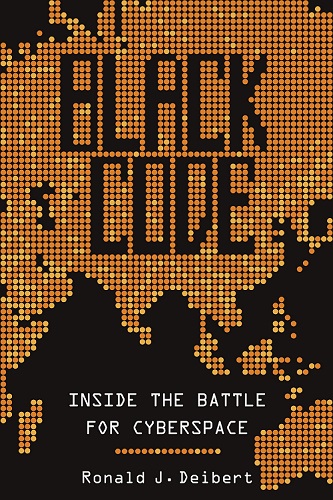
 Ronald J. Deibert is the director of The Citizen Lab at the University of Toronto’s Munk School of Global Affairs and the author of an important new book, Black Code: Inside the Battle for Cyberspace, an in-depth look at the growing insecurity of the Internet. Specifically, Deibert’s book is a meticulous examination of the “malicious threats that are growing from the inside out” and which “threaten to destroy the fragile ecosystem we have come to take for granted.” (p. 14) It is also a remarkably timely book in light of the recent revelations about NSA surveillance and how it is being facilitated with the assistance of various tech and telecom giants.
The clear and colloquial tone that Deibert employs in the text helps make arcane Internet security issues interesting and accessible. Indeed, some chapters of the book almost feel like they were pulled from the pages of techno-thriller, complete with villainous characters, unexpected plot twists, and shocking conclusions. “Cyber crime has become one of the world’s largest growth businesses,” Deibert notes (p. 144) and his chapters focus on many prominent recent examples, including cyber-crime syndicates like Koobface, government cyber-spying schemes like GhostNet, state-sanctioned sabotage like Stuxnet, and the vexing issue of zero-day exploit sales.
Deibert is uniquely qualified to narrate this tale not just because he is a gifted story-teller but also because he has had a front row seat in the unfolding play that we might refer to as “How Cyberspace Grew Less Secure.” Continue reading →

 The Technology Liberation Front is the tech policy blog dedicated to keeping politicians' hands off the 'net and everything else related to technology.