Posts tagged as:

Today marks the 10th anniversary of the launch of the Apple iPhone. With all the headlines being written today about how the device changed the world forever, it is easy to forget that before its launch, plenty of experts scoffed at the idea that Steve Jobs and Apple had any chance of successfully breaking into the seemingly mature mobile phone market.

After all, those were the days when BlackBerry, Palm, Motorola, and Microsoft were on everyone’s minds. Perhaps, then, it wasn’t so surprising to hear predictions like these leading up to and following the launch of the iPhone:

  • In December 2006, Palm CEO Ed Colligan summarily dismissed the idea that a traditional personal computing company could compete in the smartphone business. “We’ve learned and struggled for a few years here figuring out how to make a decent phone,” he said. “PC guys are not going to just figure this out. They’re not going to just walk in.”
  • In January 2007, Microsoft CEO Steve Ballmer laughed off the prospect of an expensive smartphone without a keyboard having a chance in the marketplace as follows: “Five hundred dollars? Fully subsidized? With a plan? I said that’s the most expensive phone in the world and it doesn’t appeal to business customers because it doesn’t have a keyboard, which makes it not a very good e-mail machine.”
  • In March 2007, computing industry pundit John C. Dvorak argued that “Apple should pull the plug on the iPhone” since “There is no likelihood that Apple can be successful in a business this competitive.” Dvorak believed the mobile handset business was already locked up by the era’s major players. “This is not an emerging business. In fact it’s gone so far that it’s in the process of consolidation with probably two players dominating everything, Nokia Corp. and Motorola Inc.”

Continue reading →

tumblr_m04g8byWGw1qdu5t4o1_500The cover story of this week’s The New Republic is a review by Evgeny Morozov of Walter Isaacson’s biography of Steve Jobs. In 10,000 words it is more illuminating about what made Steve Jobs tick than Isaacson’s 656 pages of warmed-over anecdotes and Wikipedia glosses. Morozov gets it right when he draws the connection between Bauhaus and Apple–functionalism and simplicity über alles. But he doesn’t seem to like where this takes Apple or Jobs.

He calls Jobs’s adherence to the Bauhaus ideal “a kind of industrial Platonism” in which products have a true form or essence that must be discovered and revealed by a designer. What consumers think they want is irrelevant; they will know what they want when it is presented to them. That’s true as far as it goes, but Morozov is the real Platonist here.

Morozov’s ultimate indictment of Apple is that it refuses to consider the externalities its technologies impose on “society.” One may love one’s Apple products and how they have improved one’s life, but, Morozov says,

We need to identify the other moral instructions that may be embedded in a technology, which it promotes directly or indirectly. And this fuller analysis requires going beyond studying the immediate impact on the user and engaging with the broader–let us call it the “ecological”–impact of a device. (“Ecological” here has no environmental connotations; it simply indicates that a technology may affect not only its producer and its user, but also the values and the habits of the community in which they live.)

What is this negative externality Apple’s technology is inflicting on the value and habits of our communities? It’s that apps will kill the open Internet, except not for the reasons we think. Morozov cites and dismisses Jonathan Zittrain’s “generativity” critique saying that Zittrain is concerned only with the threat to innovation. Morozov, on the other hand, is concerned with loftier “ethical and aesthetic considerations.” Namely, that Apple’s app paradigm “may be destroying the Internet in much the same way that the automobile destroyed the sidewalks and the playgrounds.”

The point is not that we should forever cling to the shape and the format of the Internet as it exists today. It is that we should (to borrow Apple’s favorite phrase) “think different” and pay attention to the aesthetic and civic externalities of the app economy. Our choice is between erecting a virtual Portland or sleepwalking into a virtual Dallas. But Apple under Steve Jobs consistently refused to recognize that there is something valuable to the Web that it may be destroying.

After reading a competing cover story about Portland in another newsweekly, I’m not sure the choice is as clear as Morozov thinks it is. But the message is clear: like Portland’s planners do about a “livable city,” Morozov has a vision of what is the Internet’s pure form, and it’s not one left to messy markets.

Morozov quotes a Newsweek interview with Jobs just a few years after the Web was invented. Jobs sees it as “the ultimate direct-to-customer distribution channel.” He essentially predicts that you’ll be able to buy books online and that the bookstore will know what you like.

That the Web did become a shopping mall fifteen years after Jobs made his remark does not mean that he got the Web right. It means only that a powerful technology company that wants to change the Web as it pleases can currently do so with little or no resistance from anyone. If one day Apple decides to remove a built-in browser from the iPad, as the Web becomes less necessary in an apped world, it will not be because things took on a life of their own, but because Apple refused to investigate what other possible directions—or forms of life—“things” might have taken. For Jobs, with his pre-political mind, there was no other way to think about the Internet than to rely on the tired binary poles of supply and demand.

The notion that Apple turned the web into what it is today singlehandedly is laughable. Apple was moribund until 2000, didn’t introduce the iTunes Store until 2003, and has never had a strong presence on the web. The web has become what it is today because the convenience of getting any book you want, whenever you want it, and cheaply beats little bookstores stocked by proprietor’s whims, however aesthetically pleasing they may be–which they’re often not. And for the record, I hope we can all agree the web is more than a shopping mall.

More to the point, though, Jobs was not as much a Pied Piper as we’d like to think he was. Depite all his marketing moxie, he was constrained by the market. If Jobs ever thought there was a true essence of a computer, it was the Power Mac G4 Cube. As Isaacson says, “it was the pure expression of Jobs’s aesthetic.” And it was a flop. “Jobs later admitted that he had overdesigned and overpriced the Cube, just as he had the NeXT computer.” Remember the NeXT cube? How about the iPod Hi-Fi? The buttonless iPod shuffle? Ping? Those tired poles of supply and demand told Jobs “no” time after time, but we might just as easily dismiss gravity or entropy as tired.

If Apple were to remove the browser from the iPad today, there would be, shall we say, less demand for the tablet. If at some future date there is no more demand for a web browser, and Apple removes it to little fanfare, then what is the harm?

I guess it is some Platonic Internet that we’d lose. A pure internet that we don’t know we want. One that only philosopher-kings can see. One they will discuss at “Berlin-based think tanks” and in the pages of “quarterly magazines,” as Morozov praises Google for sponsoring. And it’s an Internet the philosopher-kings would plan for us the same way Neil Goldschmidt and his friends planned Portland.

No thanks. I prefer a Steve Jobs, pursuing a functionalist ideal with little care for the consequences, yet checked by those tired poles and the “perennial gale of creative destruction” that will someday catch up with Apple.
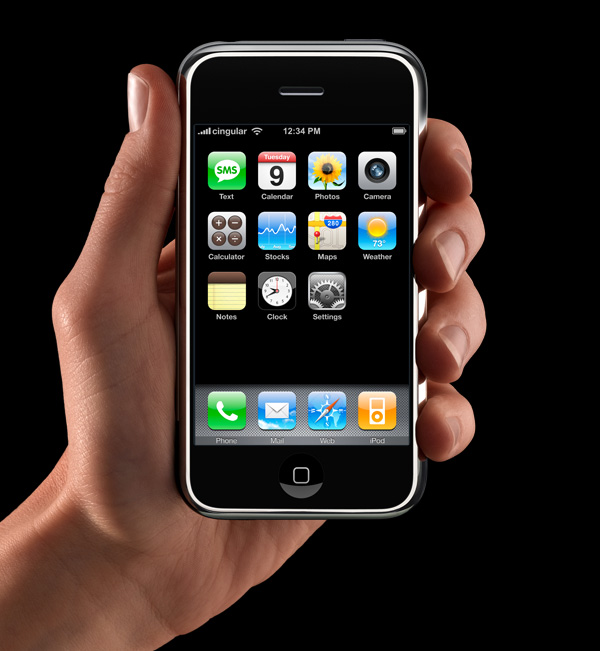
There’s a nice piece of reporting from Ian Shapira in today’s Washington Post entitled, “Once the Hobby of Tech Geeks, iPhone Jailbreaking Now a Lucrative Industry.” In the article, Shapira documents the rise of independent, unauthorized Apple apps (especially tethering apps) and points out that what was once a small black market has now turned into a booming, maturing business sector in its own right.  In fact, Sharpia notes, there are already “market leaders” in the field:

At the top of the jailbreaking hierarchy sits Jay Freeman, 29, the founder and operator of Cydia, the biggest unofficial iPhone app store, which offers about 700 paid designs and other modifications out of about 30,000 others that are free. Based out of an office near Santa Barbara, Calif., Freeman said Cydia, launched in 2008, now earns about $250,000 after taxes in profit annually. He just hired his first full-time employee from Delicious, the Yahoo-owned bookmarking site, to improve Cydia’s design. “The whole point is to fight against the corporate overlord,” Freeman said. “This is grass-roots movement, and that’s what makes Cydia so interesting. Apple is this ivory tower, a controlled experience, and the thing that really bought people into jailbreaking is that it makes the experience theirs.”

In another sign this black market is now going mainstream, advertisers are apparently flocking to it:

In what might be the ultimate sign that the jailbreak industry is losing its anti-establishment character, Toyota recently offered a free program on Cydia’s store, promoting the company’s Scion sedan. Once installed, the car is displayed on the background of the iPhone home screen, and the iPhone icons are re-fashioned to look like the emblem on the front grill.

Interestingly, however, some people now complain that Cydia is getting too big for its britches and has come to be “as domineering as Apple is in the non-jailbreak world.”  What delicious irony! Yet, I do not for one minute believe that Cydia has any sort of “lock” on the “unlocking” marketplace. This is an insanely dynamic sector that is subject to near-constant fits of disruptive technological change. Continue reading →

The New York Times reports that, “Facebook is hoping to do something better and faster than any other technology start-up-turned-Internet superpower. Befriend Washington. Facebook has layered its executive, legal, policy and communications ranks with high-powered politicos from both parties, beefing up its firepower for future battles in Washington and beyond.”  The article goes on to cite a variety of recent hires by Facebook, its new DC office, and its increased political giving.

This isn’t at all surprising and, in one sense, it’s almost impossible to argue with the logic of Facebook deciding to beef up its lobbying presence inside the Beltway. In fact, later in the Times story we hear the same two traditional arguments trotted out for why Facebook must do so: (1) Because everyone’s doing it! and (2) You don’t want be Microsoft, do you?   But I’m not so sure whether “normalizing relations” with Washington is such a good idea for Facebook or other major tech companies, and I’m certainly not persuaded by the logic of those two common refrains regarding why every tech company must rush to Washington.

Continue reading →

Tim Wu was kind enough to comment on my general overview and critique of his new book, The Master Switch: The Rise and Fall of Information Empires.  That essay will be the first of many I plan to pen about Wu’s important book.  I appreciate Prof. Wu being willing to engage me in a debate over some of these issues since I’m sure he has better things to do with his time. Some of the points he raised in his comment will be addressed in subsequent posts.

In this post, I want to respond briefly to his assertion that I was “missing the point of the book” which is “to describe the world we live in.” He says that his book, “suggests that we tend to go through open and closed cycles in the Information Industries, and that, roughly, both have their strengths and weaknesses, and both become popular at different times for various reasons.”  But he fears there are “greater risks in the closed periods.”

Contrary to what he suggests, I certainly understand that’s the point of his book, it’s just that I don’t fully agree with his analysis or conclusions. Let me be clear about a crucial point, however: I accept that almost every industry goes through “cycles” of some sort and that, typically, after a “Wild West” period of greater “openness” and more atomistic competition, some degree of “consolidation” or more “closed” (or proprietary) models often sets in.  (A somewhat different and far more descriptive interpretation of such cycles can be found in Deborah Spar’s 2001 book, Ruling the Waves: Cycles of Discovery, Chaos, and Wealth from Compass to the Internet. She outlines a more refined 4-part cycle of: Innovation, Commercialization, Creative Anarchy, and Rules.)

My primary beef with Prof. Wu is that, contrary to his assertion yesterday in commenting on my post, his book seems to regard the progression of “the Cycle” as mostly linear and one-directional: straight down toward a perfectly closed, corporate-controlled, anti-consumer Hell.  By my reading of his book – much like Lessig and Zittrain’s work – Wu is painting an overly pessimistic portrait of technologies being subjected to the “perfect control” of largely unfettered markets.

I believe history – especially recent history — teaches us something very different.  Continue reading →

So, do I need to remind everyone of my ongoing rants about Jonathan Zittrain’s misguided theory about the death of digital generativity because of the supposed rise of “sterile, tethered” devices? I hope not, because even I am getting sick of hearing myself talk about it. But here again anyway is the obligatory listing of all my tirades: 1, 2, 3, 4, 5, 6, 7, 8 + video and my 2-part debate with Lessig and him last year.

You will recall that the central villain in Zittrain’s drama The Future of the Internet and How to Stop It is big bad Steve Jobs and his wicked little iPhone. And then, more recently, Jonathan has fretted over those supposed fiends at Facebook. Zittrain’s worries that “we can get locked into these platforms” and that “markets [will] coalesce [around] these tamer gated communities,” making it easier for both corporations and governments to control us.  More generally, Zittrain just doesn’t seem to like that some people don’t always opt for the same wide open general purpose PC experience that he exalts as the ideal. As I noted in my original review of his book, Jonathan doesn’t seem to appreciate that it may be perfectly rational for some people to seek stability and security in digital devices and their networking experiences—even if they find those solutions in the form of “tethered appliances” or “sterile” networks, to use his parlance.

Every once and awhile I find a sharp piece by someone out there who is willing to admit that they see nothing wrong with such “closed” platforms or devices, or they even argue that those approaches can be superior to the more “open” devices and platforms out there. That’s the case with this Harry McCracken rant over at Technologizer today with the entertaining title, “The Verizon Droid is a Loaf of Day-Old Bread.” McCracken goes really hard on the Droid — which hurts because I own one! — and I’m not sure I entirely agree with his complaint about it, but what’s striking is how it represents the antithesis of Zittrainianism:  Continue reading →

Maybe Obama should invite Google CEO Eric Schmidt and Microsoft CEO Steve Ballmer over to the White House for a beer to settle the two companies’ differences!

http://www.youtube.com/v/Q0umKaGxkkE While he’s at it, Obama might want to invite Apple CEO Steve Jobs, too, since the common cause Apple and Google once made against Microsoft now seems to be giving way to increased rivalry between the two titans of Internet cool. Or how about Facebook CEO Mark Zuckerberg, given Facebook’s growing challenge to Google? Yahoo!’s Carol Bartz seems to get along much better with everyone than the boys in the group, so she’d probably help Obama keep things under control. The Internet industry’s war-of-all-against-all is reminiscent of Tom Lehrer‘s classic 1960s satire “National Brotherhood Week”:

http://www.youtube.com/v/aIlJ8ZCs4jY Continue reading →

“Hasn’t Steve Jobs learned anything in the last 30 years?” asks Farhad Manjoo of Slate in an interesting piece about “The Cell Phone Wars” currently raging between Apple’s iPhone and the Google’s new G1, Android-based phone. Manjoo wonders if whether Steve Jobs remembers what happen the last time he closed up a platform: “because Apple closed its platform, it was IBM, Dell, HP, and especially Microsoft that reaped the benefits of Apple’s innovations.” Thus, if Jobs didn’t learn his lesson, will he now with the iPhone? Manjoo continues:

Well, maybe he has—and maybe he’s betting that these days, “openness” is overrated. For one thing, an open platform is much more technically complex than a closed one. Your Windows computer crashes more often than your Mac computer because—among many other reasons—Windows has to accommodate a wider variety of hardware. Dell’s machines use different hard drives and graphics cards and memory chips than Gateway’s, and they’re both different from Lenovo’s. The Mac OS, meanwhile, has to work on just a small range of Apple’s rigorously tested internal components—which is part of the reason it can run so smoothly. And why is your PC glutted with viruses and spyware? The same openness that makes a platform attractive to legitimate developers makes it a target for illegitimate ones.

I discussed these issues in greater detail in my essay on”Apple, Openness, and the Zittrain Thesis” and in a follow-up essay about how the Apple iPhone 2.0 was cracked in mere hours. My point in these and other essays is that the whole “open vs. closed” dichotomy is greatly overplayed. Each has its benefits and drawbacks, but there is no reason we need to make a false choice between the two for the sake of “the future of the Net” or anything like that.

In fact, the hybrid world we live in — full of a wide variety of open and proprietary platforms, networks, and solutions — presents us with the best of all worlds. As I argued in my original review of Jonathan Zittrain’s book, “Hybrid solutions often make a great deal of sense. They offer creative opportunities within certain confines in an attempt to balance openness and stability.”  It’s a sign of great progress that we now have different open vs. closed models that appeal to different types of users.  It’s a false choice to imagine that we need to choose between these various models.

Continue reading →

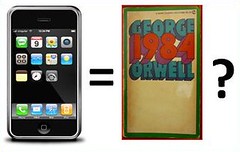
iPhone 1984 Channeling Jonathan Zittrain, Alex Curtis of Public Knowledge continues his incessant ranting against Apple and the iPhone for supposedly not being open enough and, therefore, somehow harming consumers and 3rd party developers. In his essay today about the supposed evils of the iPhone App Store, he accuses Apple of an “1984 kind of total control.”

Hmmm, let’s see… Apple creates a great new product that is so insanely sexy and innovative that even Apple-haters like me are forced to admit that it is the most brilliant tech gadget of the decade. Millions of people have flocked to Apple stores, stood in lines so long that you’d think they were giving away free pot and floor bongs inside, and then voluntarily handed over seemingly all their disposable monthly income to get their hands on one of these things.

OK, so how is this like 1984 again? Is evil Steve Jobs forcing the masses to buy this product? Of course not. So it strikes me that we can easily dispense with analogies to a book about coercive, totalitarian government control like 1984.

And if all this anti-iPhone ranting is just about the degree of control that Steve Jobs and Apple exercise over product add-ons then hey, I’ve got an easy answer for you: go get a different phone! Continue reading →

[Note: You might want to first read my review of Jonathan Zittrain’s book to give this essay some context.]

Jonathan Zittrain must have been smiling as he read Leander Kahney’s excellent Wired cover story this month, “How Apple Got Everything Right By Doing Everything Wrong.” In a sense, the article vindicates Zittrain’s thesis in The Future of the Internet–And How to Stop It. Apple Jobs soviet art style Again, in his provocative book, Zittrain argues that, for a variety of reasons, the glorious days of the generative, open Internet and general-purpose PCs are supposedly giving way to closed networks and a world of what he contemptuously calls “sterile, tethered devices.” And Apple products such as the iPhone, the iPod, and iTunes serve as prime examples of the troubling world that await us. And Kahney’s article confirms that Apple is every bit as closed and insular as Zittrain suggests. Kahney nicely contrasts Apple with Google, a company that “embraces openness,” trusts “the wisdom of crowds,” and has its famous “Don’t be evil” philosophy:

It’s ironic, then, that one of the Valley’s most successful companies ignored all of these tenets. Google and Apple may have a friendly relationship — Google CEO Eric Schmidt sits on Apple’s board, after all — but by Google’s definition, Apple is irredeemably evil, behaving more like an old-fashioned industrial titan than a different-thinking business of the future. Apple operates with a level of secrecy that makes Thomas Pynchon look like Paris Hilton. It locks consumers into a proprietary ecosystem. And as for treating employees like gods? Yeah, Apple doesn’t do that either.

Continue reading →