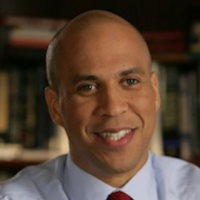
 Last Wednesday, it was my great pleasure to testify at a Senate Commerce Committee hearing entitled, “The Connected World: Examining the Internet of Things.” The hearing focused “on how devices… will be made smarter and more dynamic through Internet technologies. Government agencies like the Federal Trade Commission, however, are already considering possible changes to the law that could have the unintended consequence of slowing innovation.”
But the session went well beyond the Internet of Things and became a much more wide-ranging discussion about how America can maintain its global leadership for the next-generation of Internet-enabled, data-driven innovation. On both sides of the aisle at last week’s hearing, one Senator after another made impassioned remarks about the enormous innovation opportunities that were out there. While doing so, they highlighted not just the opportunities emanating out of the IoT and wearable device space, but also many other areas, such as connected cars, commercial drones, and next-generation spectrum.
I was impressed by the energy and nonpartisan vision that the Senators brought to these issues, but I wanted to single out the passionate statement that Sen. Cory Booker (D-NJ) delivered when it came his turn to speak because he very eloquently articulated what’s at stake in the battle for global innovation supremacy in the modern economy. (Sen. Booker’s remarks were not published, but you can watch them starting at the 1:34:00 mark of the hearing video.) Continue reading →
 On Sunday night, 60 Minutes aired a feature with the ominous title, “Nobody’s Safe on the Internet,” that focused on connected car hacking and Internet of Things (IoT) device security. It was followed yesterday morning by the release of a new report from the office of Senator Edward J. Markey (D-Mass) called Tracking & Hacking: Security & Privacy Gaps Put American Drivers at Risk,
which focused on connected car security and privacy issues. Employing more than a bit of techno-panic flare, these reports basically suggest that we’re all doomed.
On Sunday night, 60 Minutes aired a feature with the ominous title, “Nobody’s Safe on the Internet,” that focused on connected car hacking and Internet of Things (IoT) device security. It was followed yesterday morning by the release of a new report from the office of Senator Edward J. Markey (D-Mass) called Tracking & Hacking: Security & Privacy Gaps Put American Drivers at Risk,
which focused on connected car security and privacy issues. Employing more than a bit of techno-panic flare, these reports basically suggest that we’re all doomed.
On
60 Minutes, we meet former game developer turned Department of Defense “cyber warrior” Dan (“call me DARPA Dan”) Kaufman–and learn his fears of the future: “Today, all the devices that are on the Internet [and] the ‘Internet of Things’ are fundamentally insecure. There is no real security going on. Connected homes could be hacked and taken over.”
60 Minutes reporter Lesley Stahl, for her part, is aghast. “So if somebody got into my refrigerator,” she ventures, “through the internet, then they would be able to get into everything, right?” Replies DARPA Dan, “Yeah, that’s the fear.” Prankish hackers could make your milk go bad, or hack into your garage door opener, or even your car.
This segues to a humorous segment wherein Stahl takes a networked car for a spin. DARPA Dan and his multiple research teams have been hard at work remotely programming this vehicle for years. A “hacker” on DARPA Dan’s team proceeded to torment poor Lesley with automatic windshield wiping, rude and random beeps, and other hijinks. “Oh my word!” exclaims Stahl. Continue reading →
 C-SPAN is really quite incredible when you think about it. When I was growing up in the 70s, there was nothing like it. Like most other Americans, my informational inputs about national news and politics were limited to what a couple of old white dudes in bad suits delivered each night around 6:30 on the three VHF channels I had access to. And no national newspapers were delivered to my small town in rural Illinois, so I had to rely on crummy local papers to fill the void via whatever national reporting they offered, which wasn’t much.
And then came C-SPAN. C-SPAN alone covers more political and civic-minded activity in the course of a week than most of us probably came into contact with in our entire lives just 30 years ago. Consider these data points, which Peter Kiley, Vice President of C-SPAN Networks was kind enough to help me aggregate. In the 2009 calendar year, C-SPAN provided the following amount of first run programming across their three channels:
- 8,438 overall hours of programming;
- 2,709 hours of House & Senate floor activity; and,
- 1,222 hours of House & Senate committee hearings.
Moreover, C-SPAN recently created the C-SPAN Video Library, which archives 23 years worth (1987-on) of fully searchable (and free) video content, including: Continue reading →
 The Senate Commerce Committee held a hearing yesterday where a number of Senators as well as Julius Genachowski, the new Chairman of the Federal Communications Commission, did a lot of fretting about the state of the modern children’s television programming marketplace. According to the Wall Street Journal, Senate Commerce Committee Chairman Jay Rockefeller (D-WV):
suggested that a “little red button” be required on TVs so that a child could push the button to find out how a show is rated. Democratic Sen. Mark Pryor of Arkansas agreed that a red button might help since parents often have difficulties figuring out which shows are appropriate for their children to watch.
Well, I have some good news for the Senators: There are already quite a few little buttons on every remote control made today, and at least one of those buttons can pull up an on-screen guide to get more program info! (Another of them can turn the TV off!) Moreover, the ratings for just about every program already appear at the beginning of each show, and sometimes in between. And you can find out plenty more online about every TV show under the sun if you care to look. So, I’m not sure what that fuss is all about, and we certainly don’t need to mandate “little red buttons” on every TV set when program information can be found in so many other ways.
What is more troubling about all the hand-wringing taking place at the hearing, as well as the talk of reopening the Children’s Television Act of 1990 to potentially impose more content mandates on video programmers and distributors, is that: (1) there doesn’t seem to be much appreciation for just how much wonderful children’s programming is out there today compared to the past, and (2) there doesn’t seem to be much recognition of the serious First Amendment issues at stake when government gets involved in the messy business of regulating video programming.
Continue reading →
 When the history books are finally written documenting America’s failed experiment with broadcast industry content regulation, this past week may go down as a critical moment in the story. The obvious reason this week was so important was the Senate’s 87-11 vote on Thursday to prevent the Federal Communications Commission (FCC) from reinstating the Fairness Doctrine. But an equally important development this past week was the release of a new white paper by the radical Leftist activist group Free Press.
The Free Press, which was founded by the socialist media theorist Robert McChesney, doesn’t typically publish many things admitting to the failures of coercive government regulation. Nonetheless, in “The Fairness Doctrine Distraction,” a paper by Josh Silver and Marvin Ammori, the media reformistas at Free Press told their Big Government comrades in Congress and academia that it was finally OK to let go of at least this one old pet project of theirs. In their paper, Silver and Ammori note that, “The Fairness Doctrine put the federal government in the position of judging content and controlling speech” and “Reinstating the Doctrine will not result in greater viewpoint diversity in broadcasting.” They continue:
The Fairness Doctrine, while originally well-intentioned, is not wise public policy. [T]he Doctrine places the FCC in charge of determining what is fair in political speech — a difficult task in the best of circumstances. Placing the government in the role of monitoring and judging political speech will inevitably produce controversy that is impossible to resolve.
I applaud the Free Press for finally fessing up to the Fairness Doctrine’s many failings. This First Amendment-violating abomination should have never been allowed to be enforced by the FCC to begin with, but at least we can now all finally agree it should stay off the books for good.
Of course, the radicals at the (Un)Free Press weren’t about to let one of the Left’s old favorite regulations go so away without asking for something in return. One of the reasons that Silver and Ammori are suddenly willing to give their blessing to the Doctrine’s burial is because they want to get on with the more far-reaching agenda of micro-managing media markets using a variety of less visible regulations.
Continue reading →
And so begins another fight over data retention. As Declan summarizes:
Republican politicians on Thursday called for a sweeping new federal law that would require all Internet providers and operators of millions of Wi-Fi access points, even hotels, local coffee shops, and home users, to keep records about users for two years to aid police investigations. The legislation, which echoes a measure proposed by one of their Democratic colleagues three years ago, would impose unprecedented data retention requirements on a broad swath of Internet access providers and is certain to draw fire from businesses and privacy advocates. […] Two bills have been introduced so far — S.436 in the Senate and H.R.1076 in the House. Each of the companion bills is titled “Internet Stopping Adults Facilitating the Exploitation of Today’s Youth Act,” or Internet Safety Act.
Julian also has coverage over at Ars and quotes CDT’s Greg Nojeim who says the data retention language is “invasive, risky, unnecessary, and likely to be ineffective.” I think that’s generally correct. Moreover, I find it ironic that at a time when so many in Congress seemingly want online providers to collect and retain LESS data about users, this bill proposes that ISPs be required to collect and retain MORE data. One wonders how those two legislative priorities will be reconciled!!
Don’t get me wrong. It’s good that Congress is taking steps to address the scourge of child pornography — especially with stiffer sentences for offenders and greater resources for law enforcement officials. Extensive data retention mandates, however, would be unlikely to help much given the ease with which bad guys will likely circumvent those requirements using alternative access points or proxies. Finally, retention mandates pose a threat to the privacy of average law-abiding citizens and impose expensive burdens of online intermediaries.
We’ve had more to say about data retention here at the TLF over the years. Here’s a few things to read: Continue reading →
In a City Journal article earlier this year, I wondered “how long some local papers have left when they are barred from restructuring their businesses or partnering with other local media operators to stem the bleeding and reinvent their business models.” I was responding to the Senate’s smack-down of a half-hearted reform effort that FCC chairman Kevin Martin pushed through in November 2007, which proposed relaxing the FCC’s newspaper/broadcast cross-ownership rule. That rule, unrevised since going into effect in 1975, prohibits a newspaper operator from also owning a radio or television station in the same media market. However, waivers were granted to grandfather in some combined newspaper and broadcast operations that had existed long before the ban took effect. Martin’s proposal was to simply tweak the rule to permit similar combinations in just the nation’s 20 largest media markets.
Martin’s limited liberalization proposal, however, led to howls of disapproval from FCC democrats like Michael Copps and many folks on both side of the aisle in Congress. Supposedly, this was nothing more than a “giveaway” to the newspaper industry, which critics said was doing just fine. It really makes you wonder if any of those critics even both reading the news about newspapers today.
As I have documented here on many occasions, as well as in my big Media Metrics report, the newspaper industry is in huge trouble with every financial variable of importance rapidly heading south. Alan Mutter does a good job here of summarizing “the secular forces dragging down newspapers: Declining readership, shrinking advertising, high fixed costs and growing online competition that makes it increasingly difficult to charge the premium ad rates that were possible prior to the Internet.” As a result of these forces, everyday brings another headline like this one today in the New York Times: “The Star-Ledger of Newark Plans 40% Cut,” or this one in the Wall Street Journal: “Some Newspapers Shed Unprofitable Readers.” The numbers are just miserable, and they just get worse and worse.
Continue reading →
 Last Wednesday, it was my great pleasure to testify at a Senate Commerce Committee hearing entitled, “The Connected World: Examining the Internet of Things.” The hearing focused “on how devices… will be made smarter and more dynamic through Internet technologies. Government agencies like the Federal Trade Commission, however, are already considering possible changes to the law that could have the unintended consequence of slowing innovation.”

 The Technology Liberation Front is the tech policy blog dedicated to keeping politicians' hands off the 'net and everything else related to technology.