Posts tagged as:

We’re from government and we’re here to help save journalism.”

That seems to be the hot new meme in media policy circles these days. Last week, it was the Federal Communications Commission (FCC) kicking off their “Future of Media” effort with a workshop on “Serving the Public Interest in the Digital Era.” This week, it’s the Federal Trade Commission’s (FTC) turn as they host the second in their series of workshops on How Will Journalism Survive the Internet Age? Meanwhile, the Senate has already held hearings about “the future of journalism,” and Senator Benjamin L. Cardin (D-MD) recently introduced the “Newspaper Revitalization Act,” which would allow newspapers to become nonprofit organizations in an effort to help them stay afloat.

I have no doubt that many of the public policymakers behind these efforts have the best of intentions and really are concerned about what many believe to be a crisis in the field of journalism. But here are my three primary concerns with Washington’s sudden interest in “saving journalism”: Continue reading →

Free Press, the radical regulatory activist group founded by Marxist media scholar Robert W. McChesney, has never seen a media or technology regulation they don’t like, but their latest effort to have the feds halt innovation is shocking even by their standards. According to The Washington Post:

Free Press and other public advocacy groups are sending letters Monday to the Justice Department and the Federal Trade Commission calling for a probe of the “TV Everywhere” plan by cable, satellite and phone companies that brings television shows and movies to computers and devices, but only for those that subscribe to both television and high-speed Internet services.

Think about this. “TV Everywhere” is still in its cradle, having only just been launched recently. It will give multichannel video distributors a chance to find their footing as millions of consumers continue to “cut the video cord.”  And it would provide consumers with ubiquitous access to content over the Internet while also ensuring that content creators are compensated for their programming.

OK, so what’s wrong with all this again? Why would we want federal antitrust officials throw a wrecking ball into this innovative new business model? Continue reading →

Holman Jenkins has a stinging editorial in today’s Wall Street Journal entitled, “Neutering the ‘Net,” which borrows a term that my friend Randy May coined long ago to describe what net neutrality regulation will ultimately accomplish. What I like best about the Jenkins essay was the way he exposed Free Press for their hypocrisy over metering as a possible alternative approach to network management, something I documented in this piece and this piece about their new-found love of Internet price controls.  Here’s how Jenkins puts it in his essay today:

The mask really slipped earlier this year when Time Warner Cable began experimenting with usage-based pricing to protect the average broadband customers from the 20% of users who create 80% of the traffic. A lobby called Free Press, the most extreme of the pro-net neutrality interests, went ballistic, calling metered pricing a “price-gouging scheme” and backing a bill in Congress to ban it. Never mind that Free Press had previously argued just the opposite, saying usage-based pricing was a fairer way to deal with congestion than, say, by selectively slowing down file-sharing sites that gobble up disproportionate broadband capacity. Never mind, too, the irony that the net-neut campaign against the selective slowing of non-urgent traffic has left only differential pricing as a way to bring a modicum of efficiency to network usage.

Indeed.  Of course, we should expect nothing less from the neo-Marxist media reformistas as the UnFree Press.

I’ve spent a lot of time here deconstructing and criticizing the proposals set forth by the Free Press, the radical media “reformista” group founded by the prolific Marxist media theorist Robert McChesney.  I have been trying to shine more light on their proposals and activities because I believe they are antithetical to freedom of speech and a free society.  That’s because, as media scholar Ben Compaine has noted, “What the hard core reformistas really want, it seems, is not diversity or an open debate but a media that promotes their own vision of society and the world.”  That’s exactly right and, more specifically, as I argued in my 2005 Media Myths book, the media reformistas want to impose this control by taking the fantasy that “the public owns the [broadcast] airwaves” and extending it to ALL media platforms and outlets.  In other words, McChesney and the Free Press want an UnFree Press.  To cast things in neo-Marxist terms that they could appreciate, they want to take control of the information means of production.  And it begins, McChesney argues, by all of us having to give up this “sort of religious attachment to the idea of a ‘free-press'” from which we all suffer.

Some people accuse me of “red-baiting” or “McCarthyite” tactics when I use the “M-word” (Marxism) or the “S-Word” (socialism) to describe McChesney, the Free Press, and the movement they have spawned.  But these are labels with real meaning and ones that McChesney himself embraces in his work. In his 1999 book Rich Media, Poor Media, he says that “Media reform cannot win without widespread support and such support needs to be organized as part of a broad anti-corporate, pro-democracy movement.” He casts everything in “social justice” terms and speaks of the need “to rip the veil off [corporate] power, and to work so that social decision making and power may be made as enlightened and as egalitarian as possible.”  What exactly would all that mean in practice for media? In his 2002 book Our Media, Not Theirs: The Democratic Struggle against Corporate Media with John Nichols of The Nation, McChesney argues that media reform efforts must begin with “the need to promote an understanding of the urgency to assert public control over the media.” They go on to state that, “Our claim is simply that the media system produces vastly less of quality than it would if corporate and commercial pressures were lessened.”

If you want additional proof of his intentions, then I encourage you to read this lengthy interview with McChesney that appears in the new edition of The Bullet, an online newsletter produced by the Canada-based “Socialist Project.”  (If you ask me, there’s something strangely appropriate about a socialist newsletter named “The Bullet” in light of the millions of people who died while living under socialist tyranny!)  Anyway, let’s ignore that and focus on what neo-Marxist media reform entails according to McChesney.  Because never before has he laid his cards on the table as clearly as he does in this interview. Continue reading →

“Liberty upsets patterns.” That was one of the many lessons that the late Harvard philosopher Robert Nozick taught us in his 1974 masterpiece “Anarchy, State, and Utopia.” What Nozick meant was that there is a fundamental tension between liberty and egalitarianism such that when people are left to their own devices, some forms of inequality would be inevitable and persistent throughout society. (Correspondingly, any attempt to force patterns, or outcomes, upon society requires a surrender of liberty.)

No duh, right? Most people understand this today–even if some of them are all too happy to hand their rights over to the government in exchange for momentary security or some other promise.  In the world of media policy, however, many people still labor under the illusion that liberty and patterned equality are somehow reconcilable. That is, some media policy utopians and Internet pollyannas would like us to believe that if you give every man, woman, and child a platform on which to speak, everyone will be equally heard.  Moreover, in pursuit of that goal, some of them argue government should act to “upset patterns” and push to achieve more “balanced” media outcomes. That is the philosophy that has guided the “media access” movement for decades and it what fuels the “media reformista” movement that is led by groups like the (inappropriately named) Free Press, which was founded by neo-Marxist media theorist Robert McChesney.

Alas, perfect media equality remains an illusive pipe dream. As I have pointed out here before, there has never been anything close to “equal outcomes” when it comes to the distribution or relative success of books, magazines, music, movies, book sales, theater tickets, etc.  A small handful of titles have always dominated, usually according to a classic “power law” or “80-20” distribution, with roughly 20% of the titles getting 80% of the traffic / revenue.  And this trend is increasing, not decreasing, for newer and more “democratic” online media.

For example, recent research has revealed that “the top 10% of prolific Twitter users accounted for over 90% of tweets” and  “the top 15% of the most prolific [Wkipedia] editors account for 90% of Wikipedia’s edits.” As Clay Shirky taught us back in 2003 in this classic essay, the same has long held true for blogging, where outcomes are radically inegalitarian, with a tiny number of blogs getting the overwhelming volume of blogosphere attention.  The reason, Shirky pointed out, is that:

Continue reading →
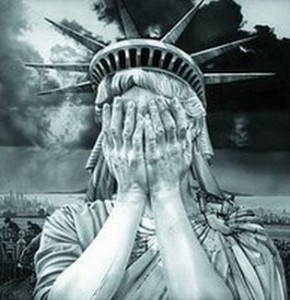
I’ve got a new essay up over at the City Journal about John Nichols and Robert McChesney’s proposal to have the government heavily subsidize failing media enterprises to “save journalism.” It follows below:


Socializing Media in Order to Save It by Adam D. Thierer

City Journal March 27, 2009

With proposals to nationalize or heavily subsidize various segments of our economy more in vogue than ever, it was probably only a matter of time before someone suggested that America’s media marketplace should be brought into the government fold. John Nichols of The Nation and the prolific neo-Marxist media theorist Robert W. McChesney have now provided the road map for media’s march to serfdom. The cost to the American taxpayer would be at least $60 billion, but the cost for the First Amendment and our democracy would be incalculable.

Nichols and McChesney have coauthored several books and essays about media policy that view the world through the prism of class struggle, “manufactured consent” (á la Noam Chomsky), and the rest of the typical Marxoid tripe about history and economics. In their view, private, for-profit media cannot be trusted. As they stated in their 2003 call to arms, Our Media, Not Theirs: The Democratic Struggle Against Corporate Media, media-reform efforts must begin with “the need to promote an understanding of the urgency to assert public control over the media.” “Our claim,” they continue, “is simply that the media system produces vastly less of quality than it would if corporate and commercial pressures were lessened.”

In a new Nation essay, “The Death and Life of Great American Newspapers,” the authors bring their earlier work to its logical conclusion. Saving journalism, they argue, essentially requires that media become an appendage of the state. Journalism, they claim, is a “public good,” which—like education and defense—requires constant government oversight and support: “A moment has arrived at which we must recognize the need to invest tax dollars to create and maintain news gathering, reporting and writing with the purpose of informing all our citizens.” They propose that government devote $60 billion to “subscription subsidies, postal reforms, youth media and investment in public broadcasting.” Think of it as a “free press ‘infrastructure project,’” they say. “It would keep the press system alive. And it has the added benefit of providing an economic stimulus.” (Isn’t it amazing how everything stimulates the economy these days?)

Continue reading →