Posts tagged as:

[Originally published on the Cato Institute blog.]

A pandemic is no time for bad governance. As the COVID-19 crisis intensified, bureaucrats and elected officials slumbered. Government regulations prevented many in the private sector from helping with response efforts. The result was a sudden surge of evasive entrepreneurialism and technological civil disobedience. With institutions and policies collapsing around them, many people took advantage of cutting‐​edge technological capabilities to evade public policies that were preventing practical solutions from emerging.

Examples were everywhere. Distilleries started producing hand sanitizers to address shortages while average folks began sharing do‐​it‐​yourself sanitizer recipes online. The Food and Drug Administration (FDA) looked to modify hand sanitizer guidelines quickly to allow for it, but few really cared because those rules weren’t going to stop them. Gray markets in face masks, medical face shields, and respirators developed. Some people and organizations worked together to make medical devices using off‐​the‐​shelf hardware and open source software. More simply, others just fired up sewing machines to make masks—and then, faced with an emerging public health consensus, the guidance from the federal government shifted dramatically: where formerly ordinary people were instructed not to buy or use masks, within a matter of days, the policy reversed, and all were encouraged to make and use cloth protective masks. Continue reading →

The Mercatus Center at George Mason University has just released a new paper by Patrick A. McLaughlin, Matthew D. Mitchell, and me entitled, “A Fresh Start: How to Address Regulations Suspended during the Coronavirus Crisis.” Here’s a quick summary.

As the COVID-19 crisis intensified, policymakers at the federal, state, and local levels started suspending or rescinding laws and regulations that hindered sensible, speedy responses to the pandemic. These “rule departures” raised many questions. Were the paused rules undermining public health and welfare even before the crisis? Even if the rules were well intentioned or once possibly served a compelling interest, had they grown unnecessary or counterproductive? If so, why did they persist? How will the suspended rules be dealt with after the crisis? Are there other rules on the books that might transform from merely unnecessary to actively harmful in future crises?

Once the COVID-19 crisis subsides, there is likely to be considerable momentum to review the rules that have slowed down the response. If policymakers felt the need to abandon these rules during the current crisis, those same rules should probably be permanently repealed or at least comprehensively reformed to allow for more flexible responses in the future.

Accordingly, when the pandemic subsides, policymakers at the federal and state levels should create “Fresh Start Initiatives” that would comprehensively review all suspended rules and then outline sunsetting or reform options for them. To this end, we propose an approach based on the successful experience of the Base Realignment and Closure (BRAC) Commission.

Read the entire paper here to see how it would work. This is our chance to finally do some much-needed spring cleaning for the regulatory state.

by Adam Thierer and Trace Mitchell

This essay originally appeared on The Washington Examiner on September 12, 2019.

You won’t find President Trump agreeing with Hillary Clinton and Barack Obama on many issues, but the need for occupational licensing reform is one major exception. They, along with many other politicians and academics both Left and Right, have identified how state and local “licenses to work” restrict workers’ opportunities and mobility while driving up prices for consumers.

Of course, not everybody has to agree with high-profile Democrats and Republicans, but let’s at least welcome the chance to discuss something important without defaulting to our partisan bunkers.

This past week, for example, ThinkProgress published an article titled “Koch Brothers’ anti-government group promotes allowing unlicensed, untrained cosmetologists.” Centered around an Americans for Prosperity video highlighting the ways in which occupational licensing reform could lower some of the barriers that prevent people from bettering their lives, the article painted a picture of an ideologically driven, right-wing movement.

In reality, it’s anything but that. Continue reading →

[This essay originally appeared on the AIER blog on May 23, 2019 under the title, “Spring Cleaning for the Regulatory State.”]


Spring is in full blossom, and many of us are in the midst of our annual house-cleaning ritual. A regular deep clean makes good sense because it makes our living spaces more orderly and gets rid of the gunk and grime that has amassed over the past year.

Unfortunately, governments almost never engage in their own spring-cleaning exercise. Statutes and regulations continue to accumulate, layer by layer, until they suffocate not only economic opportunity, but also the effective administration of government itself. Luckily, some states have realized this and have taken steps to help address this problem.

Mountains of Regulations

First, here are some hard facts about regulatory accumulation:

  • Red tape grows: Since the first edition of his annual publication Ten Thousand Commandments in 1993, Wayne Crews has documented how federal agencies have issued 101,380 rules. Other reports find agency staffing levels jumped from 57,109 to 277,163 employees from 1960 to 2017, while agency budgets swelled in real terms from $3 billion in 1960 to $58 billion in 2017 (2009$).
  • Nothing ever gets cleaned up: A Deloitte survey of U.S. Code reveals that 68 percent of federal regulations have never been updated and that 17 percent have only been updated once. If a company never updated its business model, it would fail eventually. But governments get away with doing the same thing without any fear of failure. “If it were a country, U.S. regulation would be the world’s eighth-largest economy, ranking behind India and ahead of Italy,” Crews notes.
  • The burden of regulatory accumulation is getting worse: “The estimate for regulatory compliance and economic effects of federal intervention is $1.9 trillion annually,” Crews finds, which is equal to 10 percent of the U.S. gross domestic product for 2017. When federal spending is added to regulatory costs are added to federal spending, Crews finds, the burden equals $4.173 trillion, or 30 percent of the entire economy. Mercatus Center research has found that “economic growth in the United States has, on average, been slowed by 0.8 percent per year since 1980 owing to the cumulative effects of regulation.” This means that “the US economy would have been about 25 percent larger than it actually was as of 2012” if regulation had been held to roughly the same aggregate level it stood at in 1980.

In sum, the evidence shows that the red tape is growing without constraint, hindering entrepreneurship and innovation, deterring new investment, raising costs to consumers, limiting worker opportunities/wages, and undermining economic growth.

Regulations accumulate in this fashion because the administrative state is on autopilot. Legislatures pass broad statutes delegating ambiguous authority to agencies. Bureaucrats are then free to roll the regulatory snowball down the hill until it has become so big that its momentum cannot be stopped.

The Death of Common Sense

Policy makers enact new rules with the best of intentions, of course, but we should not assume that the untrammeled growth of the regulatory state produces positive results. There is no free lunch, after all. Every regulation is a restriction on opportunities for experimentation with new and potentially better ways of doing things. Sometimes such restrictions make sense because regulations can pass a reasonable cost-benefit test. It would be foolish to assume that all regulations on the books do.

Spring cleaning for the regulatory state, therefore, should be viewed as an exercise in “good governance.” The goal is not to get rid of all regulations. The goal is to make sure that rules are reasonable and cost-effective so that the public can actually understand the law and get the highest value out of their government institutions.

Philip K. Howard, founder and chair of the nonprofit coalition Common Good and the author of The Death of Common Sense, has written extensively about how regulatory accumulation has become a chronic problem. “Too much law,” he argues, “can have similar effects as too little law.” “People slow down, they become defensive, they don’t initiate projects because they are surrounded by legal risks and bureaucratic hurdles,” Howard notes. “They tiptoe through the day looking over their shoulders rather than driving forward on the power of their instincts. Instead of trial and error, they focus on avoiding error.”

In such an environment, risk-taking and entrepreneurialism are more challenging and economic dynamism suffers. But regulatory accumulation also hurts the quality of government institutions and policies, which become fundamentally incomprehensible or illogical. “Society can’t function when stuck in a heap of accumulated mandates of past generations,” Howard concludes. This is why an occasional regulatory house cleaning is essential to unleash economic opportunity and improve the functioning of our democratic institutions.

Regulatory House Cleaning Begins

Reforms to address this problem are finally happening. In a series of new essays, my colleague James Broughel has documented how several states — including IdahoOhioVirginia, and New Jersey — are undertaking serious efforts to get regulatory accumulation under control. They are utilizing a variety of mechanisms, including “regulatory reduction pilot programs” and “red tape review commissions.” Recently, Idaho actually initiated a sunset of its entire regulatory code and will now try to figure out how to clean up its 8,200 pages of regulations containing 736 chapters of state rules.

Meanwhile, other states are undertaking serious reform in one of the worst forms of regulatory accumulation: occupational licenses. The Federal Trade Commission notes that roughly 30 percent of American jobs require a license today, up from less than 5 percent in the 1950s. Research by economist Morris Kleiner and others finds that “restrictions from occupational licensing can result in up to 2.85 million fewer jobs nationwide, with an annual cost to consumers of $203 billion.” And many of the rules do not even serve their intended purpose. A major 2015 Obama administration report on the costs of occupational licensing concluded that “most research does not find that licensing improves quality or public health and safety.”

ArizonaWest Virginia, and Nebraska are among the leaders in reforming occupational-licensing regimes using a variety of approaches. In some cases, the reforms sunset licensing rules for specific professions altogether. Other proposals grant workers reciprocity to use a license they obtained in another state. Finally, some states have proposed letting most professions operate without any license at all but then requiringall, but then require them to make it clear to consumers that they are unlicensed.

The Need for a Fresh Look

Sunsets are not silver-bullet solutions, and the recent experience with sunsetting and “de-licensing” requirements at the state level has been mixed because many legislatures ignore or circumvent requirements. Nonetheless, sunsets can still help prompt much-needed discussions about which rules make sense and which ones no longer do.

Sunsets can be forward-looking, too. I have proposed that when policy makers craft new laws, especially for fast-paced tech sectors, they should incorporate a clause that what we might think of as “the Sunsetting Imperative.” It would demand that any existing or newly imposed technology regulation should include a provision sunsetting the law or regulation within two years. Reforms like these are also sometimes referred to as “temporary legislation” or “fresh look” requirements. Policy makers can always reenact rules that are still relevant and needed.

By forcing a periodic spring cleaning, sunsets and fresh-look requirements can help stem the tide of regulatory accumulation and ensure that only those policies that serve a pressing need remain on the books. There is no good reason for governments not to clean up their messes on occasion, just like the rest of us have to.
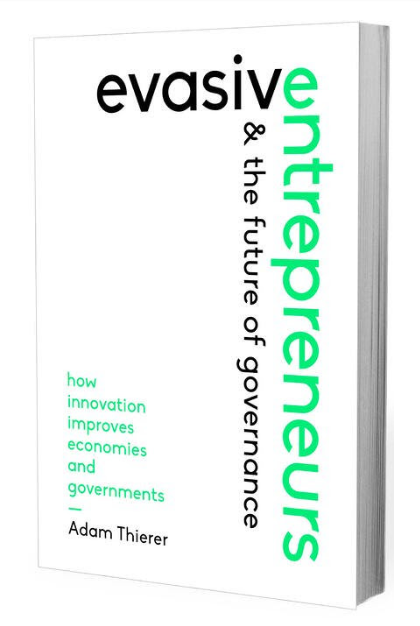
In recent months, my colleagues and I at the Mercatus Center at George Mason University have published a flurry of essays about the importance of innovation, entrepreneurialism, and “moonshots,” as well as the future of technological governance more generally. A flood of additional material is coming, but I figured I’d pause for a moment to track our progress so far. Much of this work is leading up to my next on the freedom to innovate, which I am finishing up currently.

Continue reading →

Over at the Mercatus Center Bridge blog, Trace Mitchell and I just posted an essay entitled, “A Non-Partisan Way to Help Workers and Consumers,” which discusses the new Federal Trade Commission’s (FTC) Economic Liberty Task Force report on occupational licensing.

We applaud the FTC’s calls for greater occupational licensing uniformity and portability, but regret the missed opportunity to address root problem of excessive licensing more generally. But while FTC is right to push for greater occupational licensing uniformity and portability, policymakers need to confront the sheer absurdity of licensing so many jobs that pose zero risk to public health & safety. Licensing has become completely detached from risk realities and actual public needs.

As the FTC notes, excessive licensing limits employment opportunities, worker mobility, and competition while also “resulting in higher prices, reduced quality, and less convenience for consumers.” These are unambiguous facts that are widely accepted by experts of all stripes. Both the Obama and Trump Administrations, for example, have been completely in league on the need for comprehensive  licensing reforms. Continue reading →

The FCC has signaled that it may vote to overhaul the Lifeline program this month. Today, Lifeline typically provides a $9.25 subsidy for low-income households to purchase landline or mobile telephone service from eligible providers. While Lifeline has problems–hence the bipartisan push for reform–years ago the FCC structured Lifeline in a way that generally improves access and mitigates abuse (the same cannot be said about the three other major universal service programs).

A direct subsidy plus a menu of options is a good way to expand access to low-income people (assuming there are effective anti-fraud procedures). A direct subsidy is more or less how the US and state governments help lower-income families afford products and services like energy, food, housing, and education. For energy bills there’s LIHEAP. For grocery bills there’s SNAP and WIC. For housing, there’s Section 8 vouchers. For higher education, there’s Pell grants.

Programs structured this way make transfers fairly transparent, which makes them an easy target for criticism but also promotes government accountability, and gives low-income households the ability to consume these services according to their preferences. If you want to attend a small Christian college, not a state university, Pell grants enable that. If you want to purchase rice and tomatoes, not bread and apples, SNAP enables that. The alternative, and far more costly, ways to improve consumer access to various services is to subsidize providers, which is basically how Medicare the rural telephone programs operate, or command-and-control industrial policy, like we have for television and much of agriculture.

Because the FCC is maintaining the consumer subsidy and expanding the menu of Lifeline options to include wired broadband, mobile broadband, and wifi devices, there’s much to commend in the proposed reforms. Continue reading →

Yesterday, the White House Council of Economic Advisers released an important new report entitled, “Occupational Licensing: A Framework for Policymakers.” (PDF, 76 pgs.) The report highlighted the costs that outdated or unneeded licensing regulations can have on diverse portions of the citizenry. Specifically, the report concluded that:

the current licensing regime in the United States also creates substantial costs, and often the requirements for obtaining a license are not in sync with the skills needed for the job. There is evidence that licensing requirements raise the price of goods and services, restrict employment opportunities,  and make it more difficult for workers to take their skills across State lines. Too often, policymakers do not carefully weigh these costs and benefits when making decisions about whether or how to regulate a profession through licensing.

The report supported these conclusions with a wealth of evidence. In that regard, I was pleased to see that research from Mercatus Center-affiliated scholars was cited in the White House report (specifically on pg. 34). Mercatus Center scholars have repeatedly documented the costs of occupational licensing and offered suggestions for how to reform or eliminate unnecessary licensing practices. Most recently, my colleagues and I have explored the costs of licensing restrictions for new sharing economy platforms and innovators. The White House report cited, for example, the recently-released Mercatus paper on “How the Internet, the Sharing Economy, and Reputational Feedback Mechanisms Solve the ‘Lemons Problem,’” which I co-authored with Christopher Koopman, Anne Hobson, and Chris Kuiper. And it also cited a new essay by Tyler Cowen and Alex Tabarrok on “The End of Asymmetric Information.” Continue reading →

The Federal Trade Commission (FTC) is taking a more active interest in state and local barriers to entry and innovation that could threaten the continued growth of the digital economy in general and the sharing economy in particular. The agency recently announced it would be hosting a June 9th workshop “to examine competition, consumer protection, and economic issues raised by the proliferation of online and mobile peer-to peer business platforms in certain sectors of the [sharing] economy.” Filings are due to the agency in this matter by May 26th. (Along with my Mercatus Center colleagues, I will be submitting comments and also releasing a big paper on reputational feedback mechanisms that same week. We have already released this paper on the general topic.)

Relatedly, just yesterday, the FTC sent a letter to Michigan policymakers about restricting entry by Tesla and other direct-to-consumer sellers of vehicles. Michigan passed a law in October 2014 prohibiting such direct sales. The FTC’s strongly-worded letter decries the state’s law as “protectionism for independent franchised dealers” noting that “current provisions operate as a special protection for dealers—a protection that is likely harming both competition and consumers.” The agency argues that:

consumers are the ones best situated to choose for themselves both the vehicles they want to buy and how they want to buy them. Automobile manufacturers have an economic incentive to respond to consumer preferences by choosing the most effective distribution method for their vehicle brands. Absent supportable public policy considerations, the law should permit automobile manufacturers to choose their distribution method to be responsive to the desires of motor vehicle buyers.

The agency cites the “well-developed body of research on these issues strongly suggests that government restrictions on distribution are rarely desirable for consumers” and the staff letter continues on to utterly demolish the bogus arguments set forth by defenders of the blatantly self-serving, cronyist law. (For more discussion of just how anti-competitive and anti-consumer these laws are in practice, see this January 2015 Mercatus Center study, “State Franchise Law Carjacks Auto Buyers,” by Jerry Ellig and Jesse Martinez.) Continue reading →

Robert-GraboyesI want to bring to everyone’s attention an important new white paper by Dr. Robert Graboyes, a colleague of mine at the Mercatus Center at George Mason University who specializes in the economics of health care. His new 67-page study, Fortress and Frontier in American Health Care, seeks to move away from the tired old dichotomies that drive health care policy discussions: Left versus Right, Democrat versus Republican, federal versus state, and public versus private, and so on. Instead, Graboyes seeks to reframe the debate over the future of health care innovation in terms of “Fortress versus Frontier” and to highlight what lessons we can learn from the Internet and the Information Revolution when considering health care policy.

What does Graboyes mean by “Fortress and Frontier”? Here’s how he explains this conflict of visions:

The Fortress is an institutional environment that aims to obviate risk and protect established producers (insiders) against competition from newcomers (outsiders). The Frontier, in contrast, tolerates risk and allows outsiders to compete against established insiders. . . .  The Fortress-Frontier divide does not correspond neatly with the more familiar partisan or ideological divides. Framing health care policy issues in this way opens the door for a more productive national health care discussion and for unconventional policy alliances. (p. 4)

He elaborates in more detail later in the paper: Continue reading →