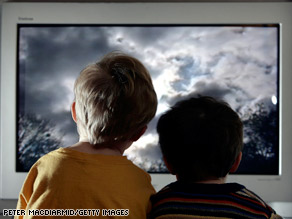
 In a recent PFF paper I argued that “We Are Living in the Golden Age of Children’s Programming,” and showed how, despite incessant complaints by many policymakers:
the overall market for family and children’s programming options continues to expand quite rapidly. Thirty years ago, families had a limited number of children’s television programming options at their disposal on broadcast TV. Today, by contrast, there exists a broad and growing diversity of children’s television options from which families can choose.
I then documented there and in my book, Parental Controls & Online Child Protection:
- the many excellent family- or child-oriented networks available on cable, telco, and satellite television today;
- the growing universe of religious / spiritual television networks;
- the many family or educational programs that traditional TV broadcasters offer; or
- the massive market for interactive computer software or Internet websites for children.
And every time I turn around I find another great show, service, or site for families to choose from. Continue reading →
The Parents Television Council (PTC) released a new report today entitled Women in Peril: A Look at TV’s Disturbing New Storyline Trend. The report argues that “by depicting violence against women with increasing frequency, or as a trivial, even humorous matter, the broadcast networks may ultimately be contributing to a desensitized atmosphere in which people view aggression and violence directed at women as normative, even acceptable,” said PTC President Tim Winter. As evidence the report cites… Nicole Kidman. OK, it cites more than Nicole Kidman, but the 7-page report and accompanying press release does seem to place a lot of stock in the fact that, while being questioning by a House Foreign Affairs subcommittee hearing about violence against women overseas, “Ms. Kidman conceded that Hollywood has probably contributed to violence against women by portraying them as weak sex objects, according to the Associated Press.” I’m not sure what Ms. Kidman was doing testifying before Congress on the matter of violence against women overseas — dare I suggest some congressmen were out for another photo-op with a Hollywood celeb? — but the better question is whether Ms. Kidman’s opinion has any bearing on the question of what relationship, if any, there is between televised violence and real-world violence against women. (Incidentally, if she really feels passionately about all this, is she prepared to go back and recut some of her old scenes in “Dead Calm,” “To Die For,” and “Eyes Wide Shut“?)
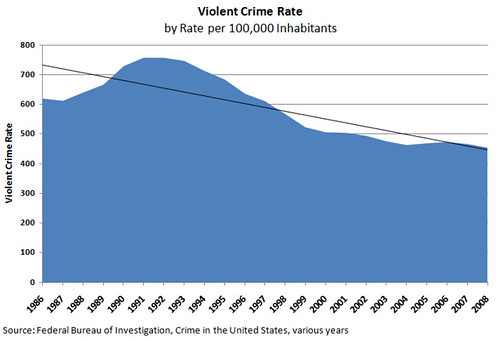
But let’s not nitpick about the credentials Ms. Kidman brings to the table or whether it makes any sense for PTC to elevate her opinions to proof of theory when it comes to a supposed connection between depictions of violence against women in film or television and real world acts of violence against women. PTC, however, suggests that’s exactly what is going on today. They allude to a few lab studies which are of the “monkey see, monkey do” variety — where the results of artificial lab experiments are used to claim that watching depictions of violence will turn us all into killing machines, rapists, robbers, or just plain ol’ desensitized thugs.
There’s just one problem with such studies, and the PTC report: Reality. Continue reading →
 The Senate Commerce Committee held a hearing yesterday where a number of Senators as well as Julius Genachowski, the new Chairman of the Federal Communications Commission, did a lot of fretting about the state of the modern children’s television programming marketplace. According to the Wall Street Journal, Senate Commerce Committee Chairman Jay Rockefeller (D-WV):
suggested that a “little red button” be required on TVs so that a child could push the button to find out how a show is rated. Democratic Sen. Mark Pryor of Arkansas agreed that a red button might help since parents often have difficulties figuring out which shows are appropriate for their children to watch.
Well, I have some good news for the Senators: There are already quite a few little buttons on every remote control made today, and at least one of those buttons can pull up an on-screen guide to get more program info! (Another of them can turn the TV off!) Moreover, the ratings for just about every program already appear at the beginning of each show, and sometimes in between. And you can find out plenty more online about every TV show under the sun if you care to look. So, I’m not sure what that fuss is all about, and we certainly don’t need to mandate “little red buttons” on every TV set when program information can be found in so many other ways.
What is more troubling about all the hand-wringing taking place at the hearing, as well as the talk of reopening the Children’s Television Act of 1990 to potentially impose more content mandates on video programmers and distributors, is that: (1) there doesn’t seem to be much appreciation for just how much wonderful children’s programming is out there today compared to the past, and (2) there doesn’t seem to be much recognition of the serious First Amendment issues at stake when government gets involved in the messy business of regulating video programming.
Continue reading →
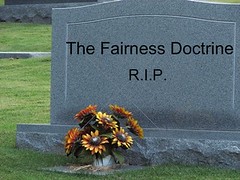 When the history books are finally written documenting America’s failed experiment with broadcast industry content regulation, this past week may go down as a critical moment in the story. The obvious reason this week was so important was the Senate’s 87-11 vote on Thursday to prevent the Federal Communications Commission (FCC) from reinstating the Fairness Doctrine. But an equally important development this past week was the release of a new white paper by the radical Leftist activist group Free Press.
The Free Press, which was founded by the socialist media theorist Robert McChesney, doesn’t typically publish many things admitting to the failures of coercive government regulation. Nonetheless, in “The Fairness Doctrine Distraction,” a paper by Josh Silver and Marvin Ammori, the media reformistas at Free Press told their Big Government comrades in Congress and academia that it was finally OK to let go of at least this one old pet project of theirs. In their paper, Silver and Ammori note that, “The Fairness Doctrine put the federal government in the position of judging content and controlling speech” and “Reinstating the Doctrine will not result in greater viewpoint diversity in broadcasting.” They continue:
The Fairness Doctrine, while originally well-intentioned, is not wise public policy. [T]he Doctrine places the FCC in charge of determining what is fair in political speech — a difficult task in the best of circumstances. Placing the government in the role of monitoring and judging political speech will inevitably produce controversy that is impossible to resolve.
I applaud the Free Press for finally fessing up to the Fairness Doctrine’s many failings. This First Amendment-violating abomination should have never been allowed to be enforced by the FCC to begin with, but at least we can now all finally agree it should stay off the books for good.
Of course, the radicals at the (Un)Free Press weren’t about to let one of the Left’s old favorite regulations go so away without asking for something in return. One of the reasons that Silver and Ammori are suddenly willing to give their blessing to the Doctrine’s burial is because they want to get on with the more far-reaching agenda of micro-managing media markets using a variety of less visible regulations.
Continue reading →

 The Technology Liberation Front is the tech policy blog dedicated to keeping politicians' hands off the 'net and everything else related to technology.