One of the old saws we hear from those who wish to impose more stringent regulations on advertising or product placement is that “it’s for the children.” That is, critics such at the Campaign for a Commercial-Free Childhood and other organzations fear that, because children’s brains are less developed or they have not yet learned to differentiate commercial appeals from other types of information flows, kids may be more susceptible to persuasive commercial messaging. I think there’s some truth to that, but I also believe that (a) kids aren’t quite the sheep we make them out to be, (b) the potential “harm” here is not as great as the critics make it out to be and (c) parental supervision should be the primary the solution to the problem.
But let’s ask a different question entirely: Are we willing to forgo additional, and potentially more diverse, forms of children’s programming simply because we want to keep commercial messaging or product placement away from kids? Consider the case study of The Hub, recently featured in
The New York Times:
With imports of European cartoons, a smattering of Hasbro ads and a rerun of the movie “Garfield,” Hasbro and Discovery Communications unveiled a new television brand for children on Sunday, called The Hub. Over time, the two companies hope to prove that there is room for a fourth player alongside Nickelodeon, the Disney Channel and the Cartoon Network, the three heavyweights of children’s TV, said David M. Zaslav, the chief executive of Discovery Communications. […]
Continue reading →
In late June, the Federal Communications Commission (FCC) opened a Notice of Inquiry and Notice of Proposed Rulemaking regarding “Sponsorship Identification Rules and Embedded Advertising” (MB Docket No. 08-90). Basically, it’s an inquiry into the product placement and embedded advertising practices on television. Some at the FCC want such practices regulated.
PFF filed comments in the matter today. Ken Ferree and I argue that that FCC regulation of such advertising practices would be unnecessary and unwise. “If the Notice demonstrates anything,” we argue, “it is that a majority of the current Commissioners live in a world wholly alien and unfamiliar to most Americans; indeed, a world long forgotten if it ever existed.” We continue:
The Notice alludes menacingly to new, “subtle and sophisticated means” of commercial messaging, to “sneaky commercials” (quoting a senescent order topped with nearly fifty-years of dust) and to “vindicat[ing]” the policy goals of the Communications Act – as if the FCC must exact vengeance on those who would try – horror of horrors – to sell goods and services to the American public. The melodramatic tone of the Notice is intended, of course, to set the stage for the Commission’s latest effort to micromanage the free marketplace of ideas, i.e., the media. Only by portraying “embedded” advertising as something new and nefarious can the Commission hope to justify a new portfolio of intrusive and burdensome speech regulations in the name of preserving the “public’s right to know who is paying to air commercials or other program matter on broadcast television and radio and cable.”
And, as we make clear in the filing, we don’t buy the argument that the public are nothing more than mindless sheep:
Continue reading →
 Last month I posted a tongue-and-cheek piece thanking policymakers for taking steps to save us from loud TV ads and product placements. The whole thing just strikes me as the height of absurdity; it’s a stupid way for regulators to spend their time and it’s a complete waste of taxpayer dollars. Backers of such regulations assume that we in the public are little more than ignorant sheep whose minds will be subliminally programmed to want to drink certain colas or drive certain cars just because they saw them in a TV show. Absurd.
The other thing that kills me about this debate is how some people seem to imagine that product placement has somehow come out of nowhere recently and taken over broadcast TV and radio to an unprecedented extent. That’s either revisionist history or ignorance of it. The fact is, broadcasting has been filled with product placement for years. Media guru Jack Myers points this out in a good piece on the issue this week:
Those old enough to recall the early days of television news recall that Camel cigarettes and Timex sponsored the NBC News with John Cameron Swayze. On-set signage was prominent. Local radio personalities have always used their relationships with consumers to advance their sponsors’ interests.
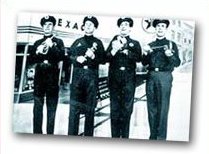
But it goes way beyond that. For God’s sake, has everyone forgotten about the “Texaco Star Theater“? It was the top-rated show of the 1950s, pulling in a stunning 61.6 rating in 1950-51 alone. How did the show begin? Here’s how the Wikipedia entry describes it:
On television, continuing a practice long established in radio, Texaco included its brand name in the show title. When the television version launched, Texaco also made sure its employees were featured prominently throughout the hour, usually appearing as smiling “guardian angels” performing good deeds of one or another kind, and a quartet of Texaco singers opened each week’s show with the following theme song:
Continue reading →

 The Technology Liberation Front is the tech policy blog dedicated to keeping politicians' hands off the 'net and everything else related to technology.