Christopher Wolf, director of the law firm Hogan Lovells’ Privacy and Information Management group, addresses his new book with co-author Abraham Foxman, Viral Hate: Containing Its Spread on the Internet. To what extent do hateful or mean-spirited Internet users hide behind anonymity? How do we balance the protection of the First Amendment online while addressing the spread of hate speech? Wolf discusses how to define hate speech on the Internet; whether online hate speech leads to real-world violence; how news sites like the Huffington Post and New York Times have dealt with anonymity; lessons we should impart on the next generation of Internet users to discourage hate speech; and cases where anonymity has proved particularly beneficial or valuable.
Download
Related Links
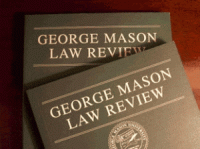 I’m pleased to announce the release of my latest law review article, “A Framework for Benefit-Cost Analysis in Digital Privacy Debates.” It appears in the new edition of the George Mason University Law Review. (Vol. 20, No. 4, Summer 2013)
This is the second of two complimentary law review articles I am releasing this year dealing with privacy policy. The first, “The Pursuit of Privacy in a World Where Information Control is Failing,” was published in Vol. 36 of the Harvard Journal of Law & Public Policy
this Spring. (FYI: Both articles focus on privacy claims made against private actors — namely, efforts to limit private data collection — and not on privacy rights against governments.)
My new article on benefit-cost analysis in privacy debates makes a seemingly contradictory argument: benefit-cost analysis (“BCA”) is extremely challenging in online child safety and digital privacy debates, yet it remains essential that analysts and policymakers attempt to conduct such reviews. While we will never be able to perfectly determine either the benefits or costs of online safety or privacy controls, the very act of conducting a regulatory impact analysis (“RIA”) will help us to better understand the trade-offs associated with various regulatory proposals. Continue reading →
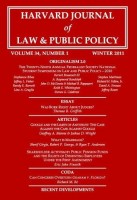 I’m excited to announce the release of my latest law review article, “The Pursuit of Privacy in a World Where Information Control is Failing,” which appears in the next edition (vol. 36) of the Harvard Journal of Law & Public Policy. This is the first of two complimentary law review articles that I will be releasing this year dealing with privacy policy. The second, which will be published later this summer by the George Mason University Law Review, is entitled, “A Framework for Benefit-Cost Analysis in Digital Privacy Debates.” (FYI: Both articles focus on privacy claims made against private actors — namely, efforts to limit private data collection — and not on privacy rights against governments.)
The new
Harvard Journal article is divided into three major sections. Part I focuses on some of normative challenges we face when discussing privacy and argues that there may never be a widely accepted, coherent legal standard for privacy rights or harms here in the United States. It also explores the tensions between expanded privacy regulation and online free speech. Part II turns to the many enforcement challenges that are often ignored when privacy policies are being proposed or formulated and argues that legislative and regulatory efforts aimed at protecting privacy must now be seen as an increasingly intractable information control problem. Most of the problems policymakers and average individuals face when it comes to controlling the flow of private information online are similar to the challenges they face when trying to control the free flow of digitalized bits in other information policy contexts, such as online safety, cybersecurity, and digital copyright.
If the effectiveness of law and regulation is limited by the normative considerations discussed in Part I and the practical enforcement complications discussed in Part II, what alternatives remain to assist privacy-sensitive individuals? I address that question in Part III of the paper and argue that the approach America has adopted to deal with concerns about objectionable online speech and child safety offers a path forward on the privacy front as well. Continue reading →
My Romanian space lawyer (and improbably-named) friend Virgiliu Pop has made the front page of Space.com today in a great interview with leading space journalist Leonard David about his new book Who Owns the Moon?: Extraterrestrial Aspects of Land and Mineral Resources Ownership. Virgil slams the “Common Heritage of Mankind” socialism behind the 1979 Moon Treaty, which was killed in the U.S. Senate by the free-market space movement, which later gave birth to the Space Frontier Foundation (which I chair).
Virgil once famously claimed ownership of the sun to demonstrate the absurdity of serious assertions made by a number of charlatans to ownership of lunar territory (Dennis Hope) or the entire Eros asteroid (Greg Nemitz). Virgil’s point was “to show how ridiculous a property rights system in outer space would be if it were to be based solely on claim unsubstantiated by any actual possession.”
I’m looking forward to reading Virgil’s book–and to writing a proper review. For now, I’ll just say that I think Virgil and I see eye-to-eye on three key premises (something of a rarity among space lawyers on the ultra-contentious issue of property rights):
- The Outer Space Treaty of 1967 prohibits nations from appropriating territory in space and also prohibits individuals from asserting any territorial claims (generally accepted) except to a narrowly-limited area under actual use (not accepted by all space lawyers).
- The Outer Space Treaty, properly understood, does not bar claims to ownership of movable objects such as extracted resources or even (if they can be moved in a meaningful way) entire asteroids or comets.
- Securing such property rights is essential to the economic development of space.
Here are a few choice excerpts from Virgil’s new book on the big picture of property rights in space: Continue reading →

 The Technology Liberation Front is the tech policy blog dedicated to keeping politicians' hands off the 'net and everything else related to technology.