If the techno-pessimists are right and robots are set to take all the jobs, shouldn’t employment in Amazon warehouses be plummeting right now? After all, Amazon’s sorting and fulfillment centers have been automated at a rapid pace, with robotic technologies now being integrated into almost every facet of the process. (Just watch the video below to see it all in action.)
And yet according to this
Wall Street Journal story by Laura Stevens, Amazon is looking to immediately fill 50,000 new jobs, which would mean that its U.S. workforce “would swell to around 300,000, compared with 30,000 in 2011.” According to the article, “Nearly 40,000 of the promised jobs are full-time at the company’s fulfillment centers, including some facilities that will open in the coming months. Most of the remainder are part-time positions available at Amazon’s more than 30 sorting centers.”
How can this be? Shouldn’t the robots have eaten all those jobs by now?
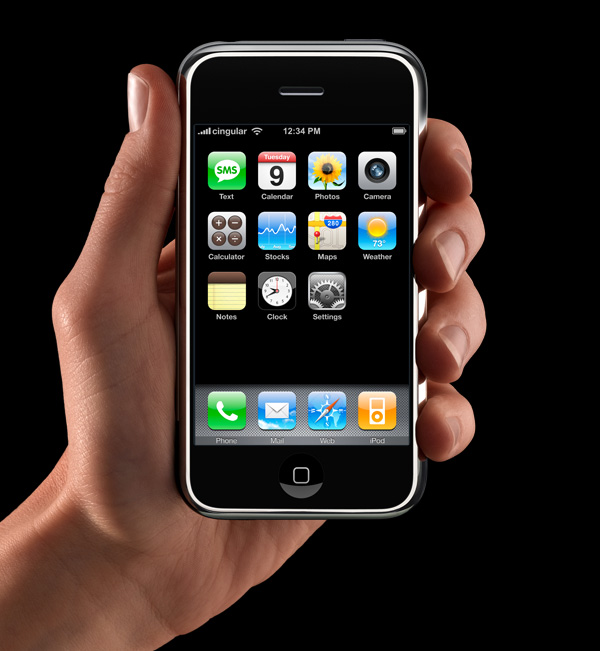
Today marks the 10th anniversary of the launch of the Apple iPhone. With all the headlines being written today about how the device changed the world forever, it is easy to forget that before its launch, plenty of experts scoffed at the idea that Steve Jobs and Apple had any chance of successfully breaking into the seemingly mature mobile phone market.
After all, those were the days when BlackBerry, Palm, Motorola, and Microsoft were on everyone’s minds. Perhaps, then, it wasn’t so surprising to hear predictions like these leading up to and following the launch of the iPhone:
In December 2006, Palm CEO Ed Colligan summarily dismissed the idea that a traditional personal computing company could compete in the smartphone business. “We’ve learned and struggled for a few years here figuring out how to make a decent phone,” he said. “PC guys are not going to just figure this out. They’re not going to just walk in.”
In January 2007, Microsoft CEO Steve Ballmer laughed off the prospect of an expensive smartphone without a keyboard having a chance in the marketplace as follows: “Five hundred dollars? Fully subsidized? With a plan? I said that’s the most expensive phone in the world and it doesn’t appeal to business customers because it doesn’t have a keyboard, which makes it not a very good e-mail machine.”
In March 2007, computing industry pundit John C. Dvorak argued that “Apple should pull the plug on the iPhone” since “There is no likelihood that Apple can be successful in a business this competitive.” Dvorak believed the mobile handset business was already locked up by the era’s major players. “This is not an emerging business. In fact it’s gone so far that it’s in the process of consolidation with probably two players dominating everything, Nokia Corp. and Motorola Inc.”
As I noted in my recent paper, “A Brief History of Media Merger Hysteria: From AOL-Time Warner to Comcast-NBC,” every time a media merger is proposed we hear all sorts of silly Chicken Little predictions of impending doom. Among the more entertaining claims we hear are conspiracy theories about supposed nefarious schemes to take over the media universe and control our minds, predictions of the death of journalism or democracy, or just good ol’ fashion screw-the-consumer price hikes. But, as I showed in my paper, those predictions have always proven to be bunk once the historical record is in–which usually only takes a few years. While most media mergers do end in misery–it’s for the merging firms and their shareholders, not the public. Unforeseen technological innovations and expanding media marketplace options typically doom most media mergers, while the viewing and listening public enjoys the fruits of continued marketplace evolution.
But the critics never acknowledge any of this. And, sadly, history repeats. The media worrywarts just keep mouthing the same lines and conveniently avoid any reference to their past predictions. No one bothers looking back and trying to match up those past predictions with present day facts. I’m out to change that. I am going to attempt to keep a running inventory all the Chicken Little predictions about the Comcast-NBC Universal deal so that, a few years from now, we can look back and see how well those predictions match up with reality. I suspect that, as was true of those earlier case studies, reality will look quite different than the rhetoric we are hearing today.
A Comcast-NBC combination is brazenly anti-competitve and anti-democratic. It would give one company far too much ownership over not just professionally produced media but also the ways media consumers can receive it.
Worse, if approved, it could mark the tipping point in Big Media’s push to
take control over the Internet itself. That’s where we need to focus our attention.
The Technology Liberation Front is the tech policy blog dedicated to keeping politicians' hands off the 'net and everything else related to technology. Learn more about TLF →

 The Technology Liberation Front is the tech policy blog dedicated to keeping politicians' hands off the 'net and everything else related to technology.